"The Curriculum They Stole In Broad Daylight" - 19 September 2026
Two Men From A Business Lobby Wrote Your Child's Curriculum. Two Tribunal Rulings Told This Government To Stop. It Did Not — And Now We Know Exactly Who Benefits.

He Kupu Whakataki — What This Essay Is Going To Show You
Kia ora koutou.
Ko Ivor Jones tōku ingoa — Te Arawa, Ngāti Pikiao tōku Māori whakapapa, he Welsh anō tōku ūkaipō.
I don't do false balance in this mahi, and I'm not starting today.
Before I open the blade, let me tell you exactly where it's going to land, because I don't believe in ambushing my own readers the way this government ambushed Māori education.
This essay is going to show you three things, each with a name, a date, and a source attached.
 RNZ | Te Reo Irirangi o Aotearoa
First, that the Curriculum Ministerial Advisory Group chaired by a business-lobby fellow and staffed with a mātauranga-Māori sceptic was not an accident of appointment
— it was the plan, written into a coalition agreement before a single classroom was consulted.
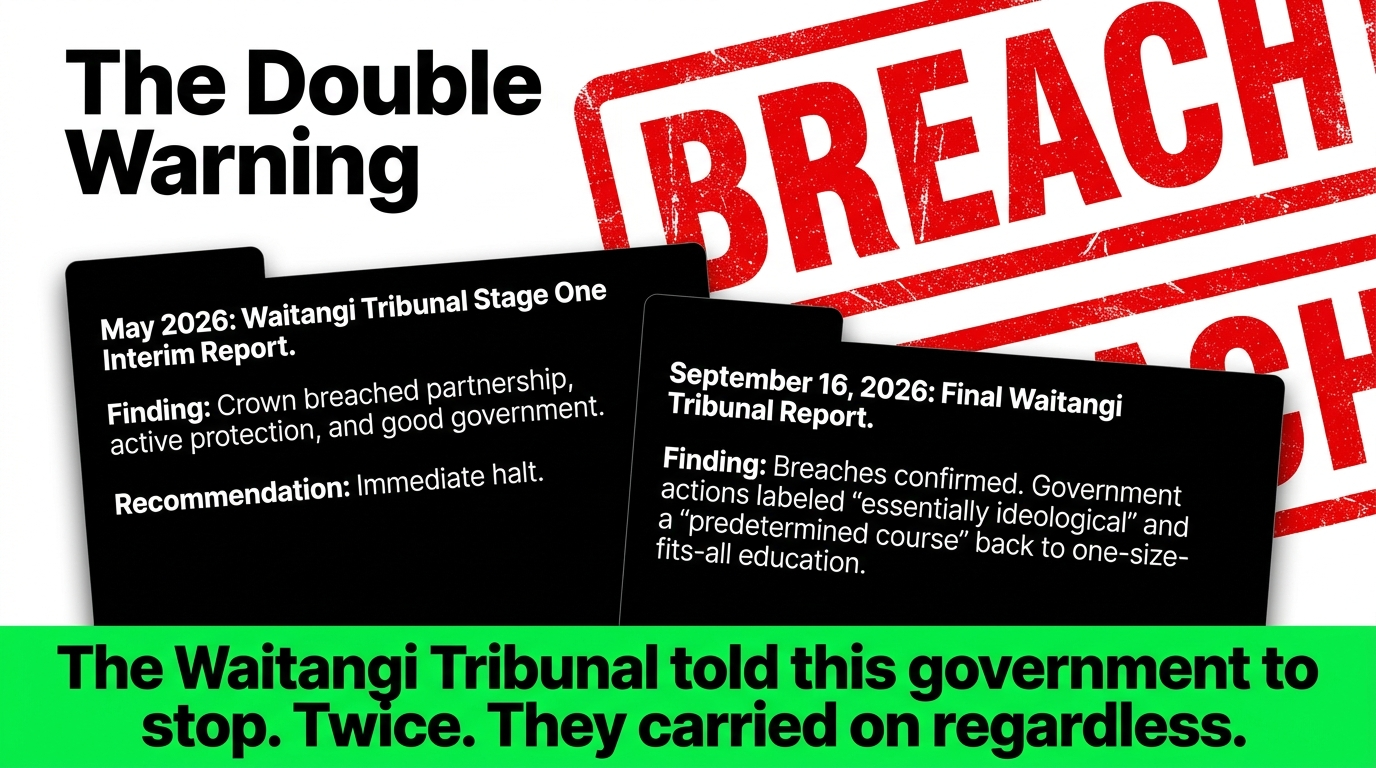
Second, that the Waitangi Tribunal told this government, twice, in two separate reports four months apart, that this whole programme breaches Te Tiriti — and twice this government carried on regardless.
Third, that while the country watched one bill get voted down in Parliament, Cabinet was quietly weakening Treaty duties across nineteen other laws nobody was told to watch.
I'm going to run every one of those three claims through Tika and Pono — was the process right, and was it honest — because those two words expose this government faster than any English word I could reach for.
If you want the full 3,000-word cited version of this argument, you're reading it right now — every claim below is sourced, hyperlinked, and dated.
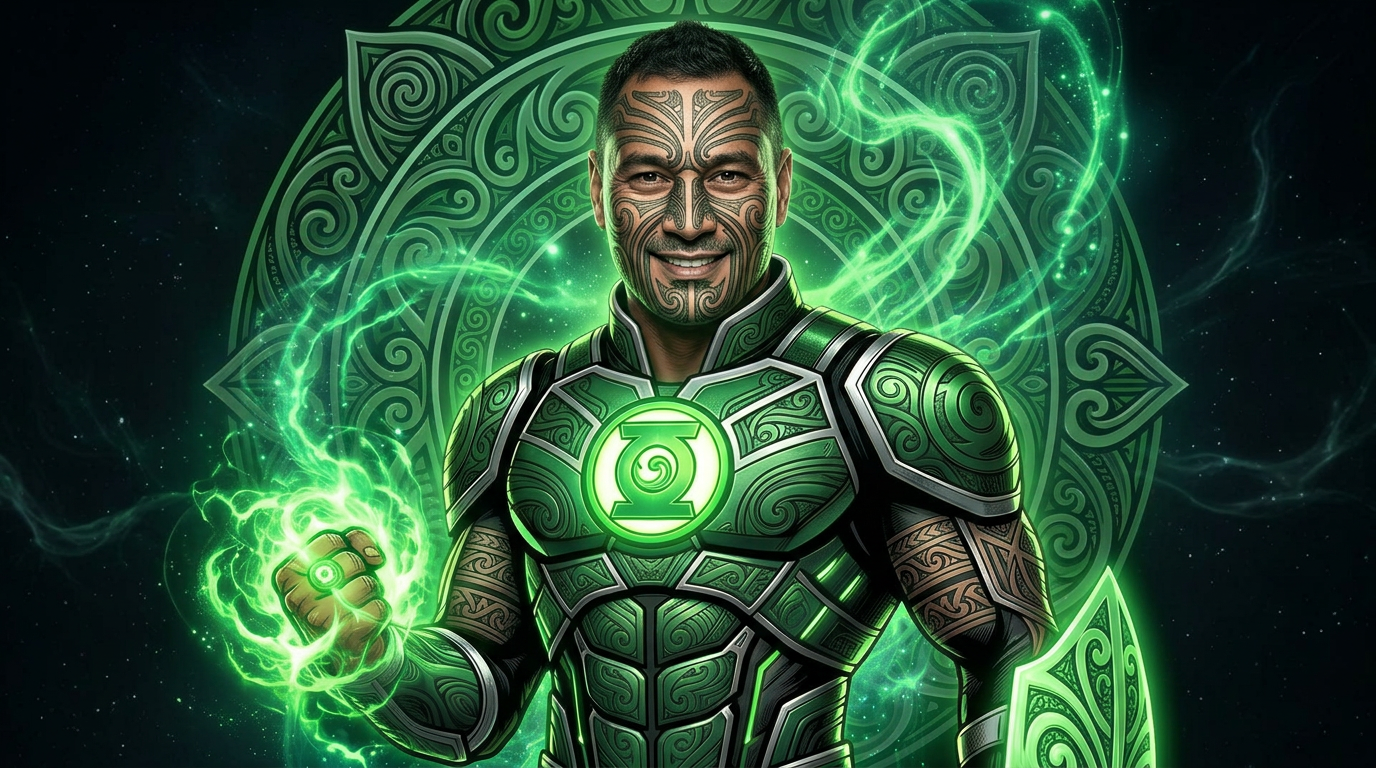
If you'd rather listen, the Māori Green Lantern's Deep Dive Podcast walks through this same kaupapa in conversation form.
If you want the short version to send to your cousin who won't read past the third paragraph, there's a companion video doing exactly that.
Click on whichever one fits your life today — I built all three because I want this to actually reach whānau, not just sit pretty on a website.
He Horopaki — Tika And Pono As The Measuring Stick
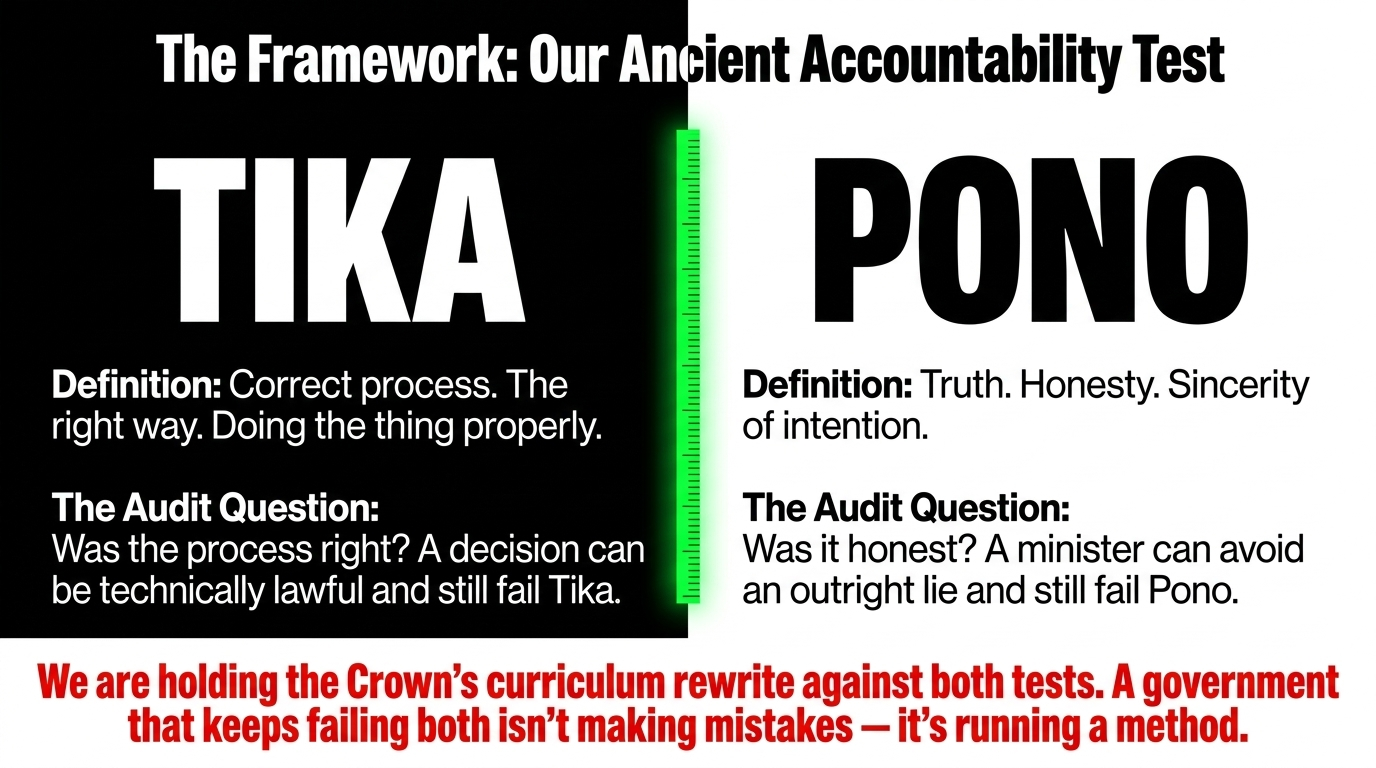
Tika means the right way — correct process, right relationship, doing the thing properly. Pono means truth — honesty, integrity, sincerity of intention.
Together they are not decoration; they are the oldest accountability test my tūpuna had, older than any Cabinet Manual, older than any regulatory impact statement.
A decision can be lawful and still fail Tika. A minister can avoid an outright lie and still fail Pono. I'm going to hold this government's curriculum rewrite against both tests, one at a time, because a government that keeps failing both isn't making mistakes — it's running a method.
In November 2023, the incoming National–ACT–NZ First coalition wrote a commitment to "restore balance" to the histories curriculum directly into its coalition agreement, a commitment NZCER traces to ACT Party objections about "the focus on Māori history and histories of colonisation."
The conclusion was written before the evidence existed. That single fact fails Pono before we've even opened the curriculum document — you cannot claim an evidence-based process produced a conclusion that predates the evidence by three years.
The Deep Dive Podcast
Listen to a lively conversation between two hosts, unpacking and connecting topics in the sources of this essay. I apologise in advance for the AI's very harsh pronounciation of reo. Please dont shoot me, :).
Youtube Video
Like video? Here is a short video suppporting the essay. Again, don't shoot the messenger please because of AI's pronounciation. 😄
Koha Consideration

You might ask who's paying me to trace a business-lobby fellow and a mātauranga-Māori sceptic all the way from a 2023 coalition agreement to your child's classroom.
The answer is you do. Nobody at the New Zealand Initiative is supporting this essay. No Ministry press office is behind it. There is no corporate cheque funding this mahi — only koha from whānau who want the accountability the Crown and the think tanks clearly won't provide themselves.
Every koha tells Erica Stanford, Michael Johnston and Elizabeth Rata that their appointment chains and their curriculum decisions will keep being read out loud, in public, whether they like it or not. That's rangatiratanga in practice.
Kia kaha, whānau. Stay vigilant. Stay connected. And if you are able, consider a koha to ensure this voice continues.
If you are unable to koha, no worries! Subscribe or follow the Māori Green Lantern at themaorigreenlantern.maori.nz, kōrero and share with your whānau and friends — that is koha in itself.
Four pathways exist:
Koha — Support this mahi directly: app.koha.kiwi
Subscribe to receive essays directly and support through subscription: themaorigreenlantern.maori.nz/#/portal/support
Direct bank transfer: Ivor Jones, account number 03-1395-0099387-000
Facebook: facebook.com/Themaorigreenlantern
Toru Ngā Tauira Mō Te Hunga Pākehā — Three Examples For The Western Mind
Tauira Tuatahi — The Men Who Wrote The Room They Weren't Invited Into
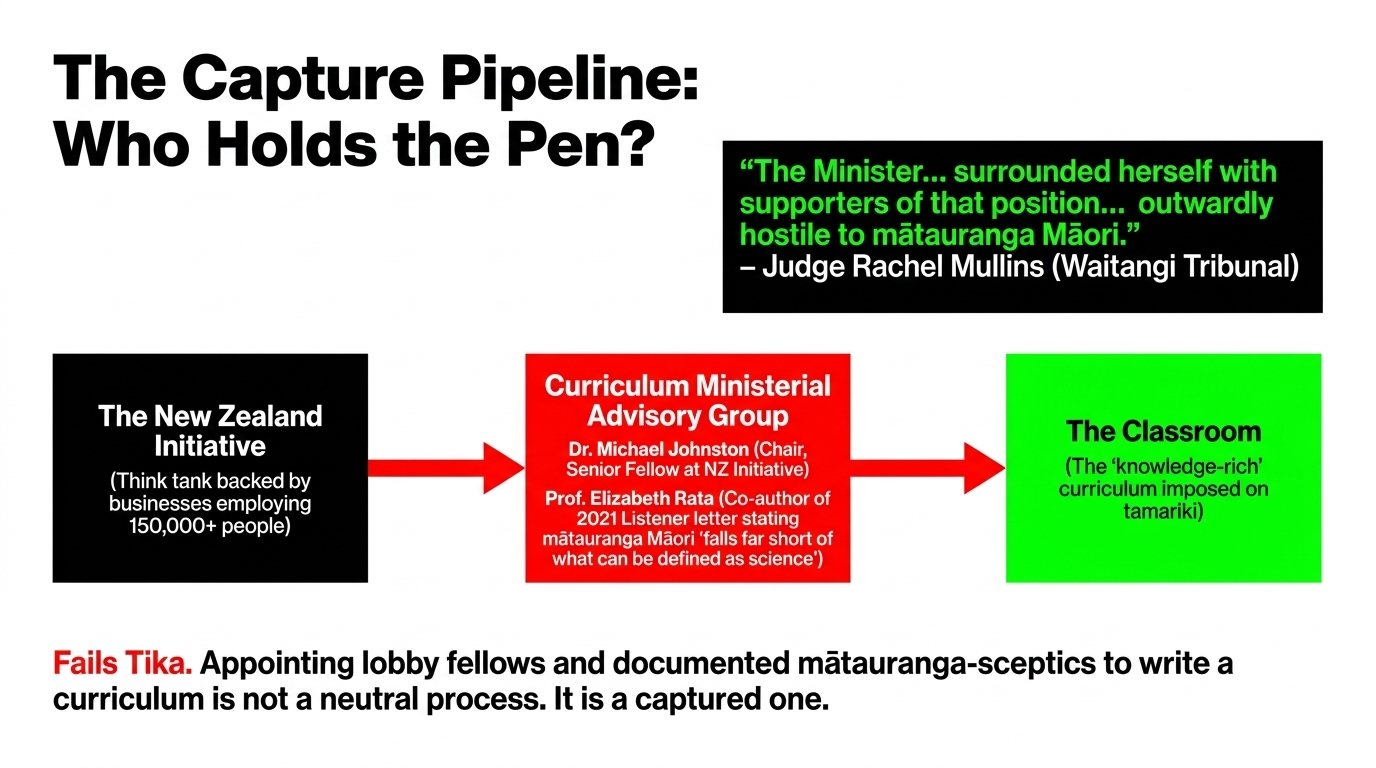
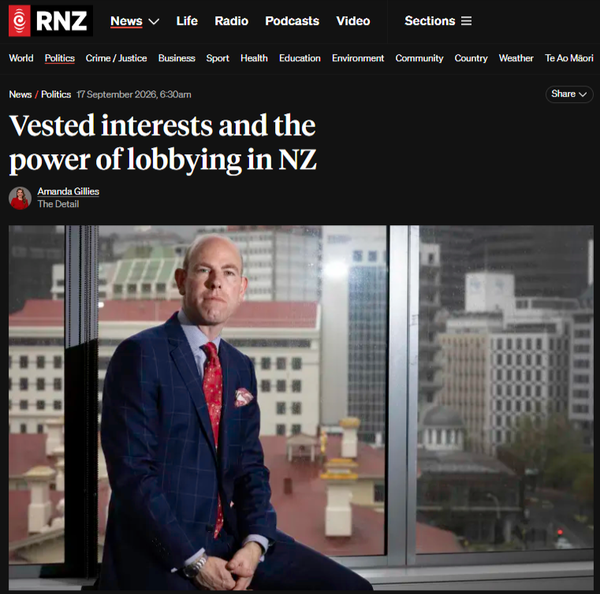
Core claim: Dr Michael Johnston, chair of Erica Stanford's Curriculum Ministerial Advisory Group, is a Senior Fellow at The New Zealand Initiative, a think tank formed from the merger of the Business Roundtable and the NZ Institute and supported by New Zealand businesses employing more than 150,000 people — directly reported.
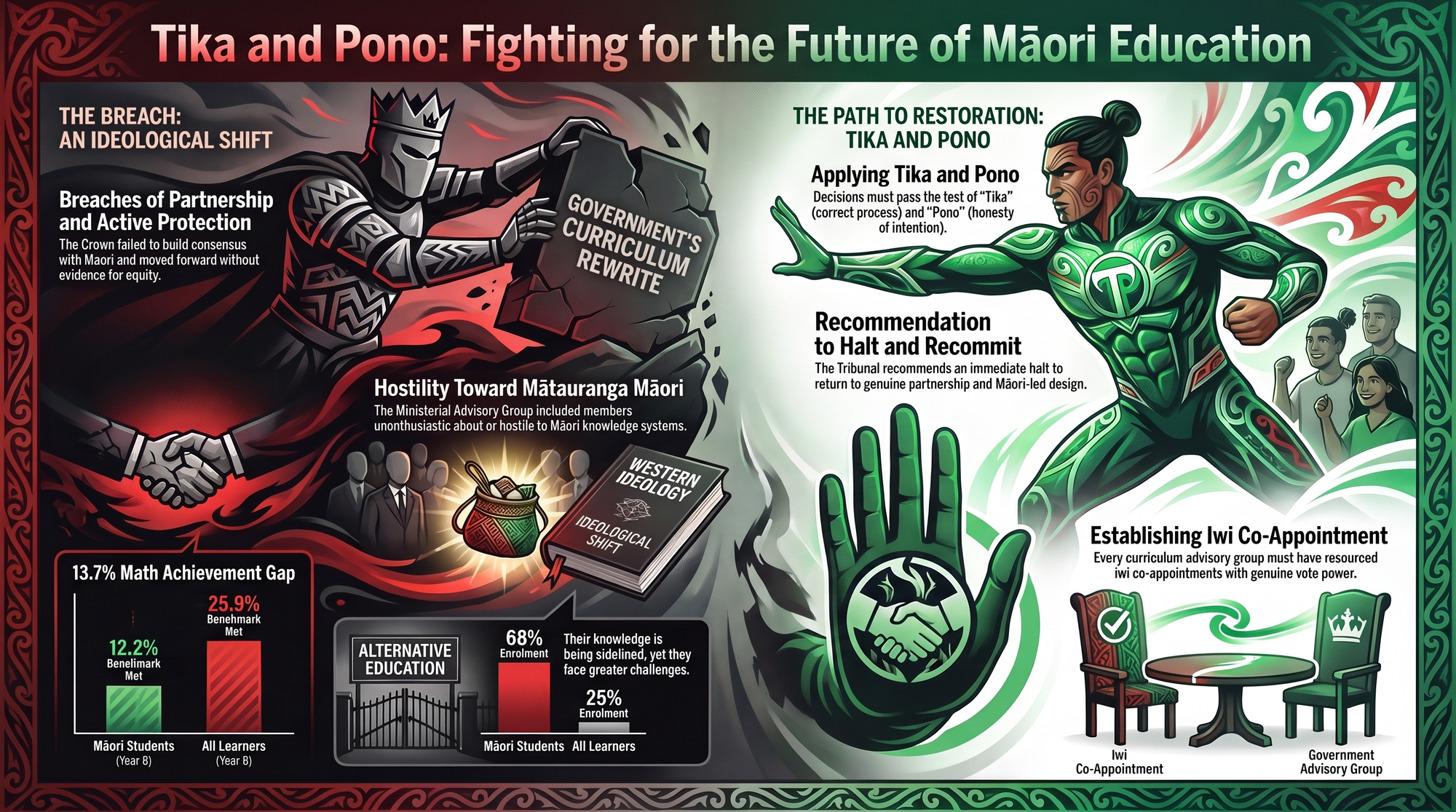
His fellow appointee, Professor Elizabeth Rata, co-authored the 2021 Listener letter stating mātauranga Māori "falls far short of what can be defined as science," a position she restates in her own published paper in her own words. Judge Rachel Mullins found the Minister "surrounded herself with supporters of that position" — a group including members "either unenthusiastic about or outwardly hostile to mātauranga Māori."
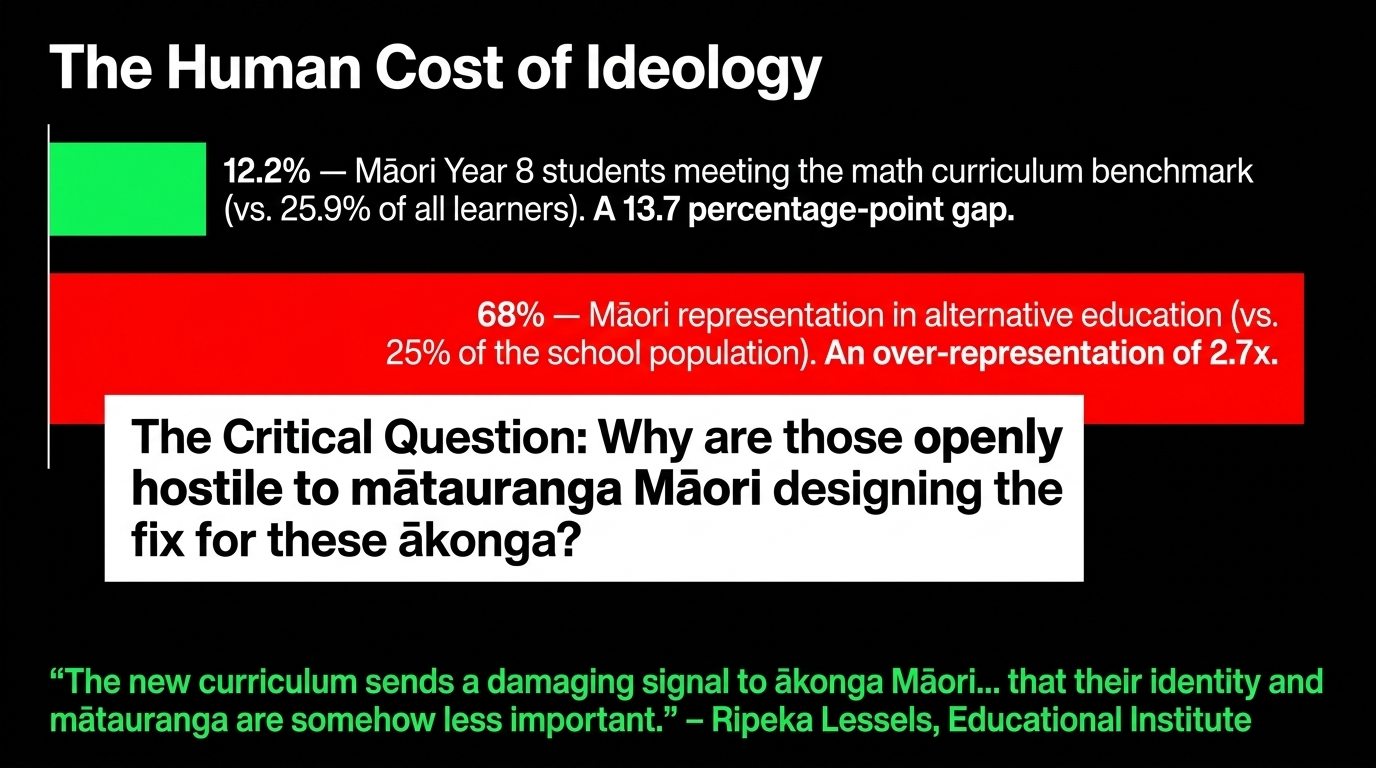
Quantified harm: The Ministry's own data shows only 12.2% of Māori Year 8 students met the maths curriculum benchmark against 25.9% of all learners — a 13.7 percentage-point gap (directly reported figures, gap derived by simple subtraction) — while Māori make up 68% of alternative education enrolments against 25% of the school population, a rate of over-representation of roughly 2.7 times (derived from those two figures). That is the population a business-lobby fellow and a mātauranga-Māori sceptic were handed the pen to write for.
Solution: No curriculum body with statutory reach may include a member with an undeclared institutional conflict of interest, and every curriculum advisory group must carry a guaranteed, resourced iwi co-appointment with genuine veto power — not a consultation slot that can be outvoted.
Tika: Was the process right? No. Appointing the fellow of a private, business-funded lobby group to chair a public curriculum body, alongside a publicly documented critic of the knowledge system that curriculum is legally required to protect, is not a neutral process — it is a captured one.
Pono: Was it honest? No. Erica Stanford told the Guardian she "absolutely rejected" claims Māori history was being sidelined. The Tribunal she answers to has now said, in writing, the opposite. One of those two statements is not Pono.
Read the whakapapa of this appointment chain in full in my earlier mahi, The Curriculum Coup: Stanford's Three-Act Colonial Performance and The Crowbar In The Classroom, where I first traced Johnston and Rata's fingerprints on this document.
Tauira Tuarua — Told To Stop Twice, Stopped Zero Times
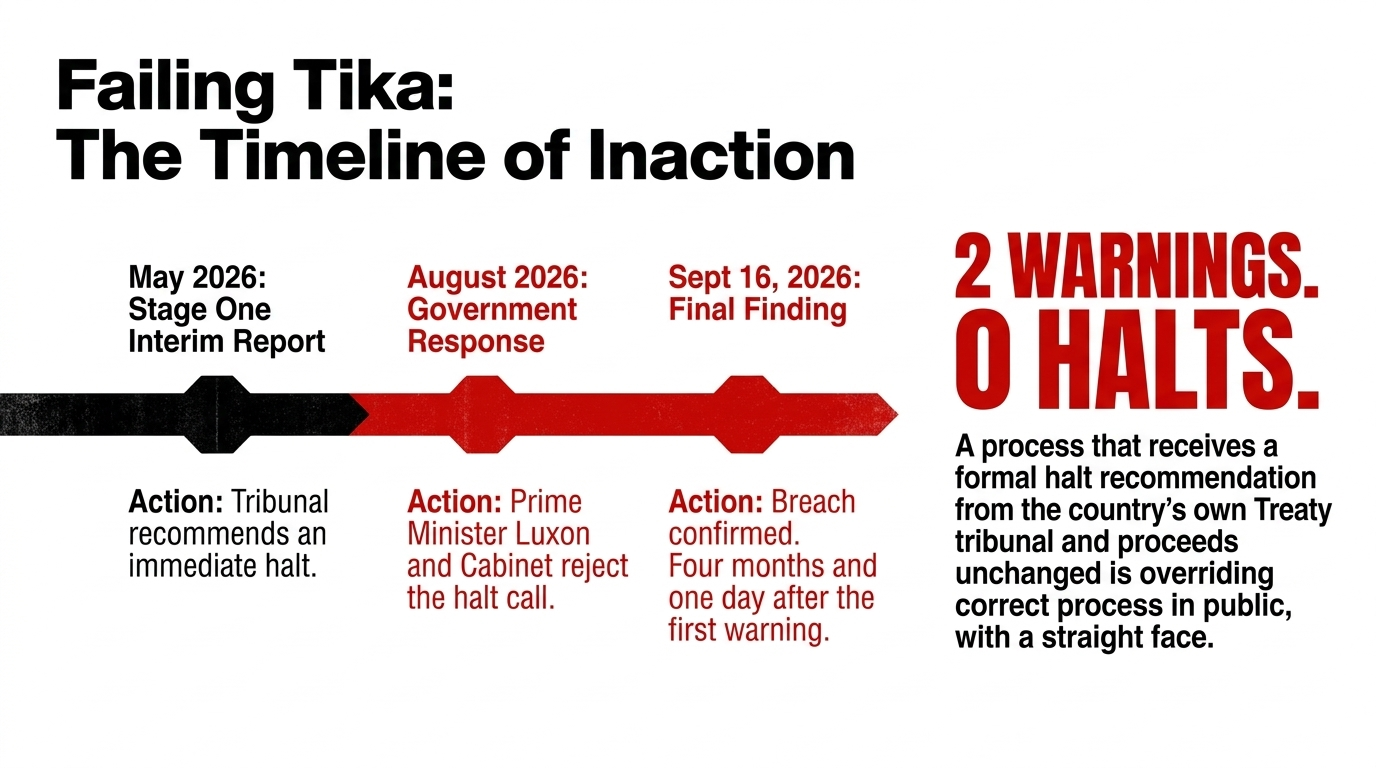
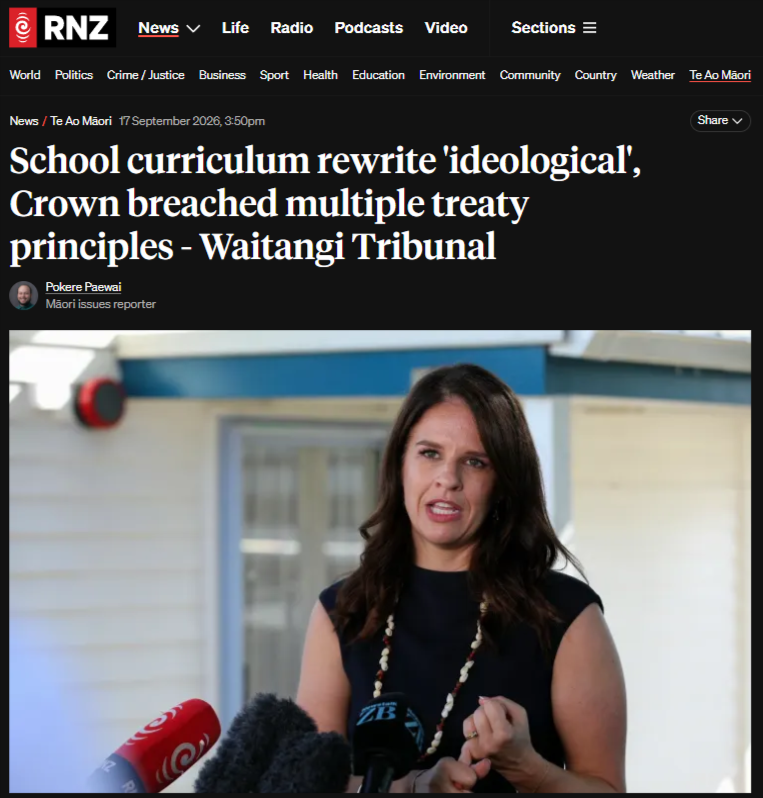
Core claim: In May 2026, the Tribunal's interim Stage One report found the Crown breached partnership, active protection and good government, and recommended an immediate halt. Te Ao News confirmed Prime Minister Christopher Luxon pressed on regardless. By August 2026, Te Ao News reported the government rejected a second halt call. On 16 September 2026, the Tribunal issued its final finding — a breach, confirmed, four months and one day after the first warning (directly calculated date difference).
Quantified harm: Two urgent inquiries. Two breach findings. Zero pauses. That ratio — 2 warnings, 0 halts — is the whole story, and I don't need to dress it up further.
Solution: A statutory consequence for ignoring a Tribunal halt recommendation twice within one government term — not moral suasion, an actual legal trigger, because moral suasion has now failed on the record twice.
Tika: Was the process right? A process that receives a formal halt recommendation from the country's own Treaty tribunal and proceeds unchanged is not following correct process — it is overriding it, in public, with a straight face.
Pono: Was it honest? Erica Stanford said she "always respects the Waitangi Tribunal's findings" while proceeding to do the opposite of what those findings recommended, twice. Respect that produces zero behavioural change is not respect. It's theatre.
I documented the first of these two breaches as it happened in The Curriculum Con, and traced the pattern's roots further back in The Grave Robbers In Suits.
Tauira Tuatoru — Nineteen Laws Nobody Was Told To Watch
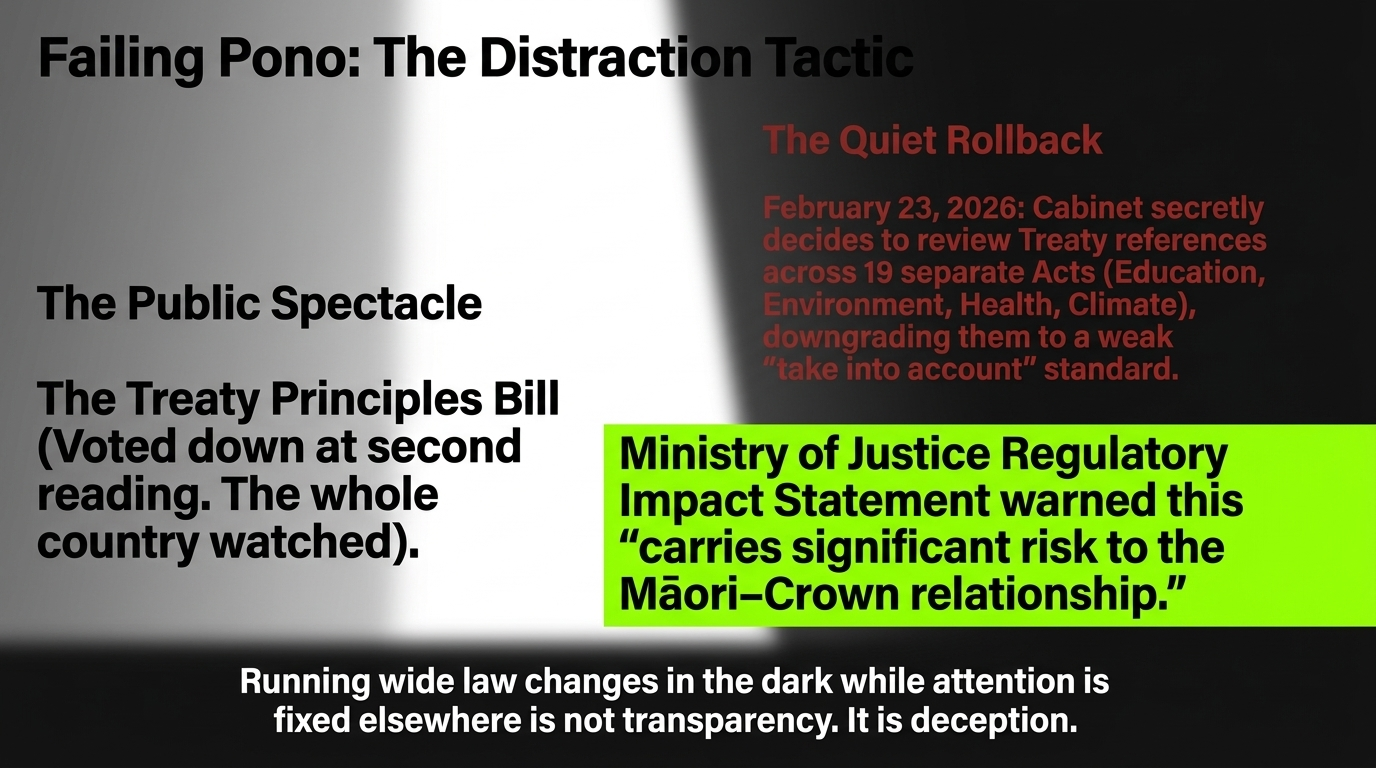
Core claim: While the country watched the Treaty Principles Bill get defeated at second reading, Cabinet decided on 23 February 2026 (directly reported date) to review Treaty references across 19 separate Acts, downgrading many to a weaker "take into account" standard. Tiriti lawyer Jack Potaka's detailed account for E-Tangata reports the government's own Ministry of Justice regulatory impact statement warned this "carries significant risk to the Māori–Crown relationship."
Quantified harm: 19 Acts, directly counted from the government's own published list — covering education, environment, health and climate — weakened while public attention sat on a single, more visible bill.
Solution: Every Act under Treaty-clause review published on a single, independently maintained public register, updated live, so the public is not relying on a Ministry of Justice policy page buried three clicks deep to know what's happening to their own founding document.
Tika: Was the process right? A government's own department warning against an action, and the government proceeding regardless, is the textbook definition of a process that has stopped being right and started being ideological.
Pono: Was it honest? Running the wider law change quietly while the country's attention was fixed on the more visible bill is not transparency. It is, in Potaka's own word, tinihanga — deception.
Ngā Whakaaro Whakamutunga — Name The Beneficiaries, Name The Whānau Being Destroyed
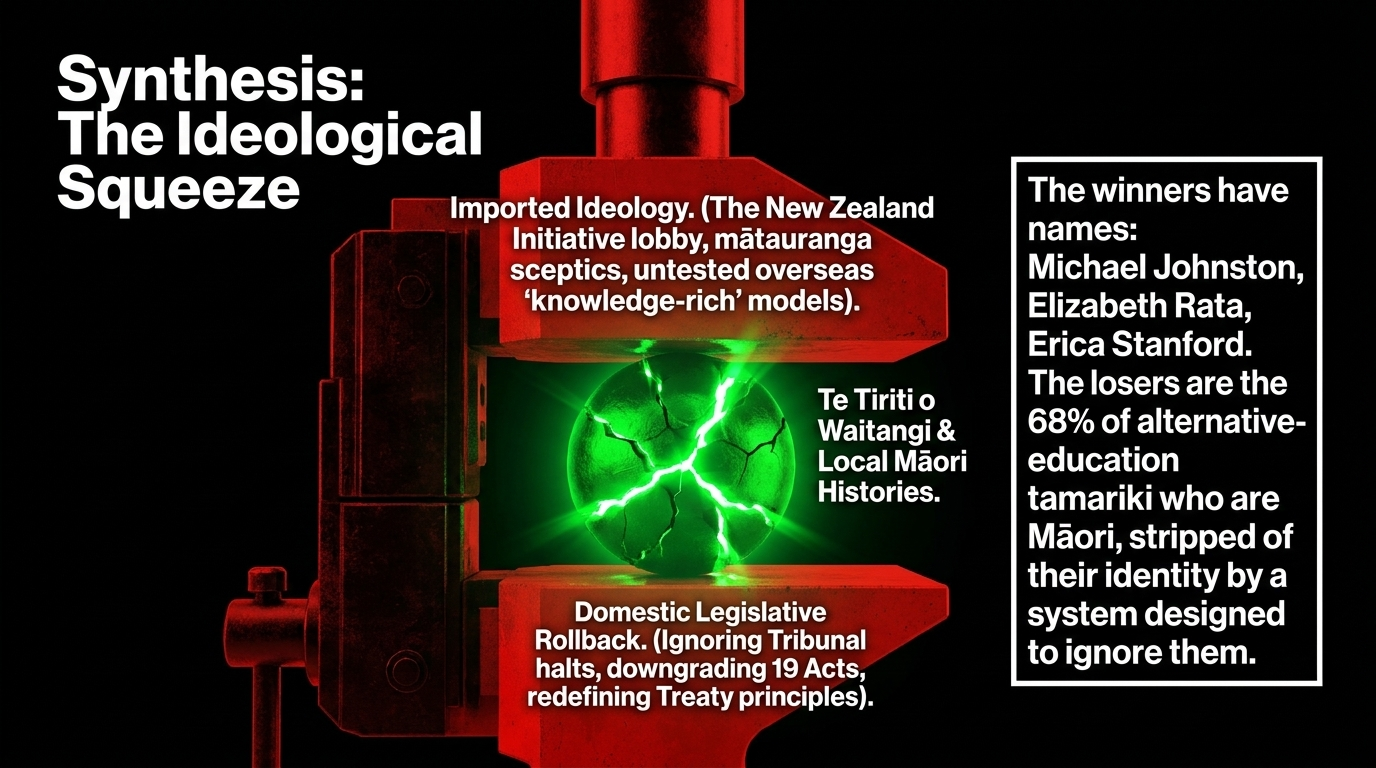
The winners here have names and job titles.
Michael Johnston gets a ministerial chairmanship for the same organisation that pays his fellowship.
Elizabeth Rata gets and Damehood and to shape a national curriculum around a position she's spent her career publishing.
Erica Stanford gets to call this evidence-based while her own tribunal calls it ideological. Christopher Luxon gets to say "clarity and certainty" while two Tribunal panels say "breach."
The losers are the 68% of alternative-education tamariki who are Māori.
They are the Year 8 students sitting more than a year behind in writing while being taught by a curriculum built by people who, on the public record, doubt the legitimacy of their own knowledge system.
They are the kaiako in Ngā Kura ā Iwi watching a framework built specifically for them get shelved for an imported model the Tribunal itself said was "untested in Aotearoa New Zealand."
Rangatiratanga means Māori decide what serves Māori tamariki. Not a business-lobby fellow. Not a Listener-letter signatory. Not a coalition agreement drafted in 2023, three years before the classroom saw a single page of it. Two Tribunal panels have already told this government it breached Te Tiriti. Kāore te mahi i te oti. The next report — on school boards' Treaty obligations — is still coming, and I will be here when it lands.

Disclaimer: This essay concerns ministers, a ministry and publicly appointed advisors acting in public capacity on a matter of significant public interest — Te Tiriti o Waitangi's place in the national curriculum. Facts are drawn from the cited sources; characterisations such as "white supremacist neoliberal" and "stole in broad daylight" reflect the author's stated opinion and editorial position, consistent with The Māori Green Lantern's published body of work, and are not assertions of criminal conduct against any named individual. No malice is intended toward any person; the criticism addresses institutional pattern, policy and process. Corrections issued promptly on request.