"Tyranny Of The Judges, Tyranny Of The Tribunal: How ACT And Paul Henry Are Running Europe's Far-Right Playbook On Aotearoa" - 19 September 2026
While Meloni Jails The Judges, Bardella Screams "Tyranny," And Farage Guts The Civil Service, This White Supremacist Neoliberal Government's Little Brother Party Sends A Disgraced TV Host To Sell New Plymouth The Same Poison — And Our Whānau Pay For It In Stolen Decades.


Who I Am, And Why I'm Furious

Ko Ivor Jones ahau. Te Arawa, Ngāti Pikiao, and a fistful of Welsh coal dust further back in the whakapapa.
I am the tohunga mau rākau wairua who picked up a taiaha made of footnotes and pointed it at every white supremacist, neoliberal, institution-wrecking scheme this government and its coalition partners have tried to sell us as "reform."
That is my mahi. That is what themaorigreenlantern.maori.nz is for.
Here is what this essay covers, plain and simple, before I say another word:
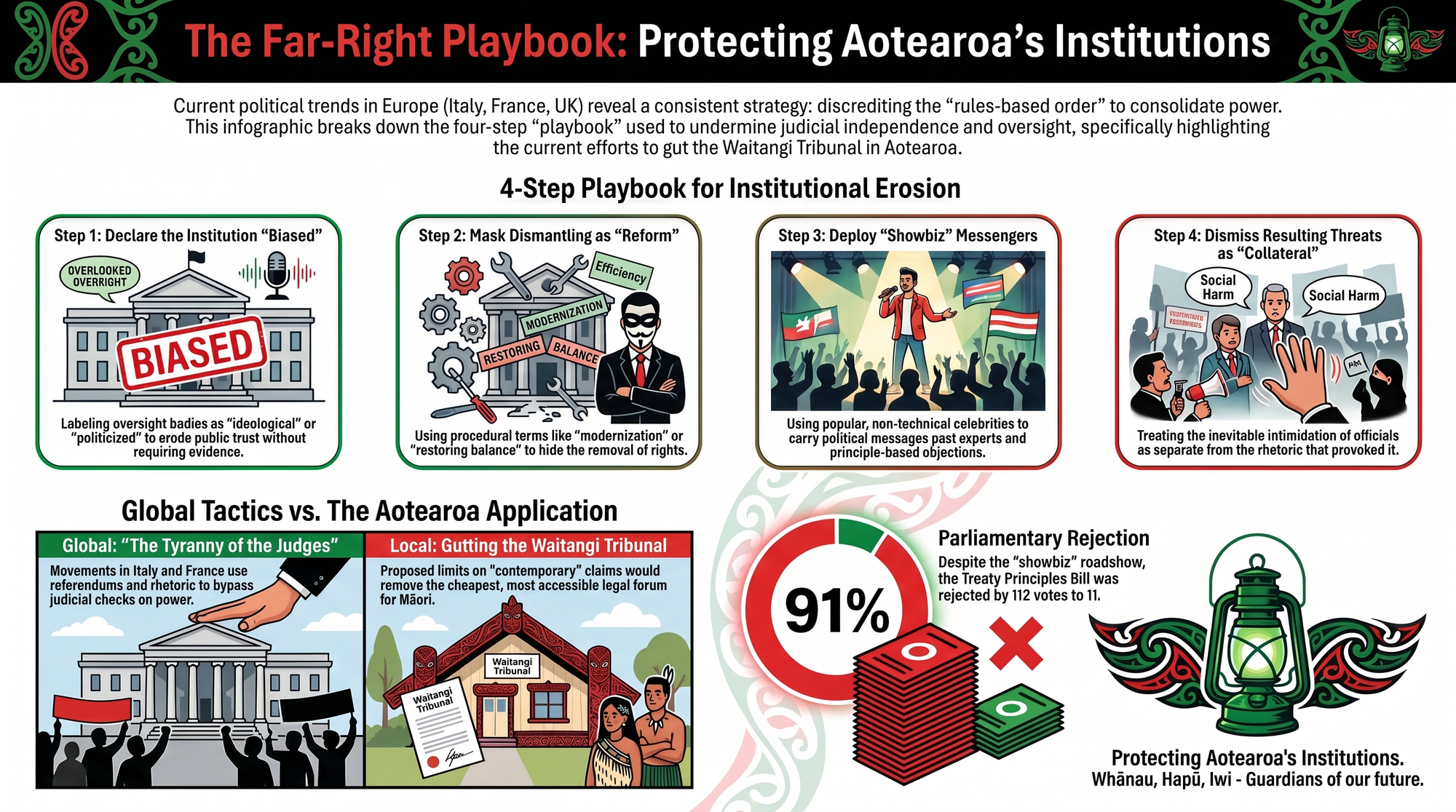
I am going to show you, claim by verified claim, that ACT's plan to gut the Waitangi Tribunal is not a homegrown New Zealand idea
— it is a carbon copy of the exact technique the far-right is using right now in Italy, France and the United Kingdom to disable the courts, the judges and the civil servants who stand between them and unchecked power.
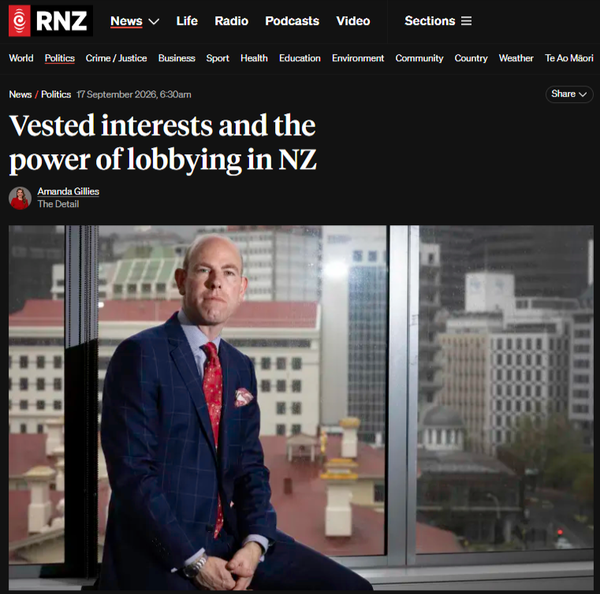
 RNZ | Te Reo Irirangi o Aotearoa
 RNZ | Te Reo Irirangi o Aotearoa
I am going to show you the disgraced broadcaster ACT chose to sell it.
I am going to give you three concrete overseas examples any sceptical, "show-me-the-evidence" Pākehā neighbour can follow, each with the harm counted and a fix proposed.
And I am going to tell you, in numbers I have shown my working on, exactly how much of this is theatre designed to die quietly on a shelf while the cameras have already moved on.
The Trick Being Run On Three Continents At Once
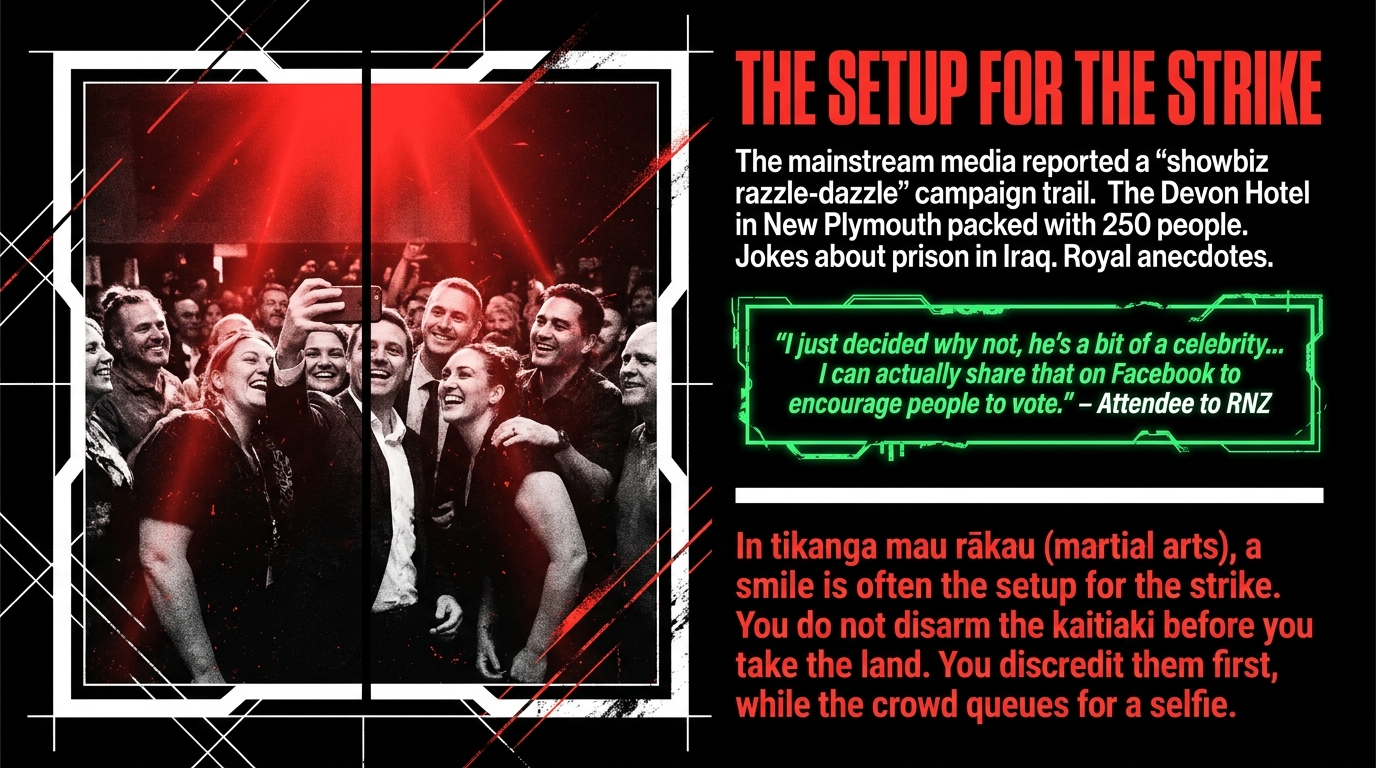
There is a tikanga in mau rākau: you do not disarm the kaitiaki before you take the land.
You discredit them first. Call them biased. Call them unelected. Call them ideological.
Then, once the crowd is nodding and laughing at the man's royal anecdotes, you take the taonga while everyone is still queuing for a selfie.
That is the trick. And it is running right now, in real time, in three languages.
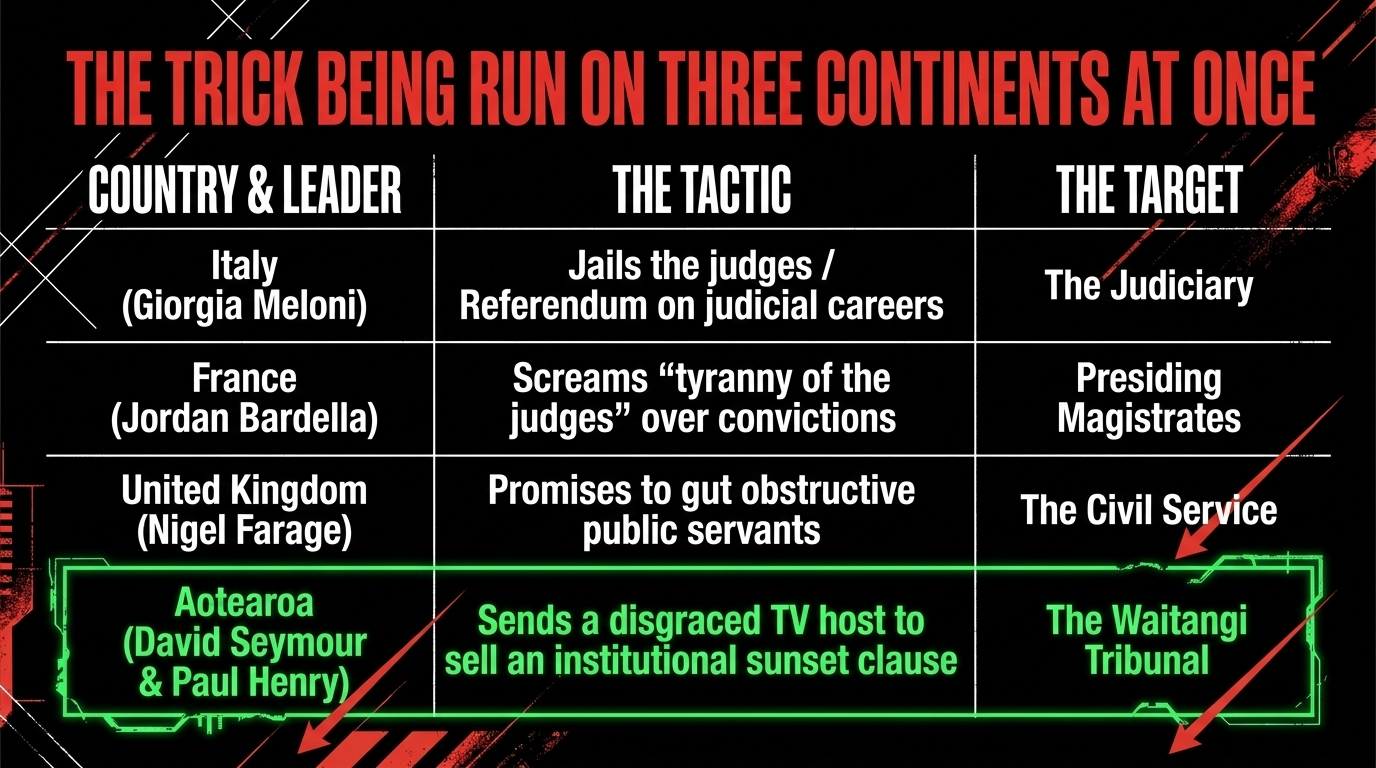
In Rome, Giorgia Meloni told a crowd in Milan that if her judiciary referendum failed, "we will end up with even more negligent judges and increasingly absurd rulings" — a referendum her own Justice Minister supported by calling the judiciary's governing council a "para-mafia system."
In Paris, Jordan Bardella called Marine Le Pen's criminal conviction "the tyranny of the judges", and within the same 24-hour news cycle in which National Rally officials pushed that line across French television and radio, the trial judge's home address was published online and she was targeted with threats.
In London, Nigel Farage told a delayed Reform UK conference — postponed over a security risk, in the very same week two of his own senior officials resigned over a donations scandal — that judges leaning on "outdated conventions" would be overridden and obstructive civil servants sacked.
And in New Plymouth, at the Devon Hotel, a man once formally sanctioned by New Zealand's own broadcasting watchdog for mocking an Indian minister's name and asking whether a brown Governor-General "looked" like a New Zealander stood in front of more than 250 cheering ACT supporters and sold them the New Zealand branch office of the exact same idea. This is not coincidence.
It is a template — and it has a body count measured in stolen years, stalled claims, and a Crown that gets to keep breaking its own promise while insisting the umpire is the problem.
What They're Actually Copying, Move By Move
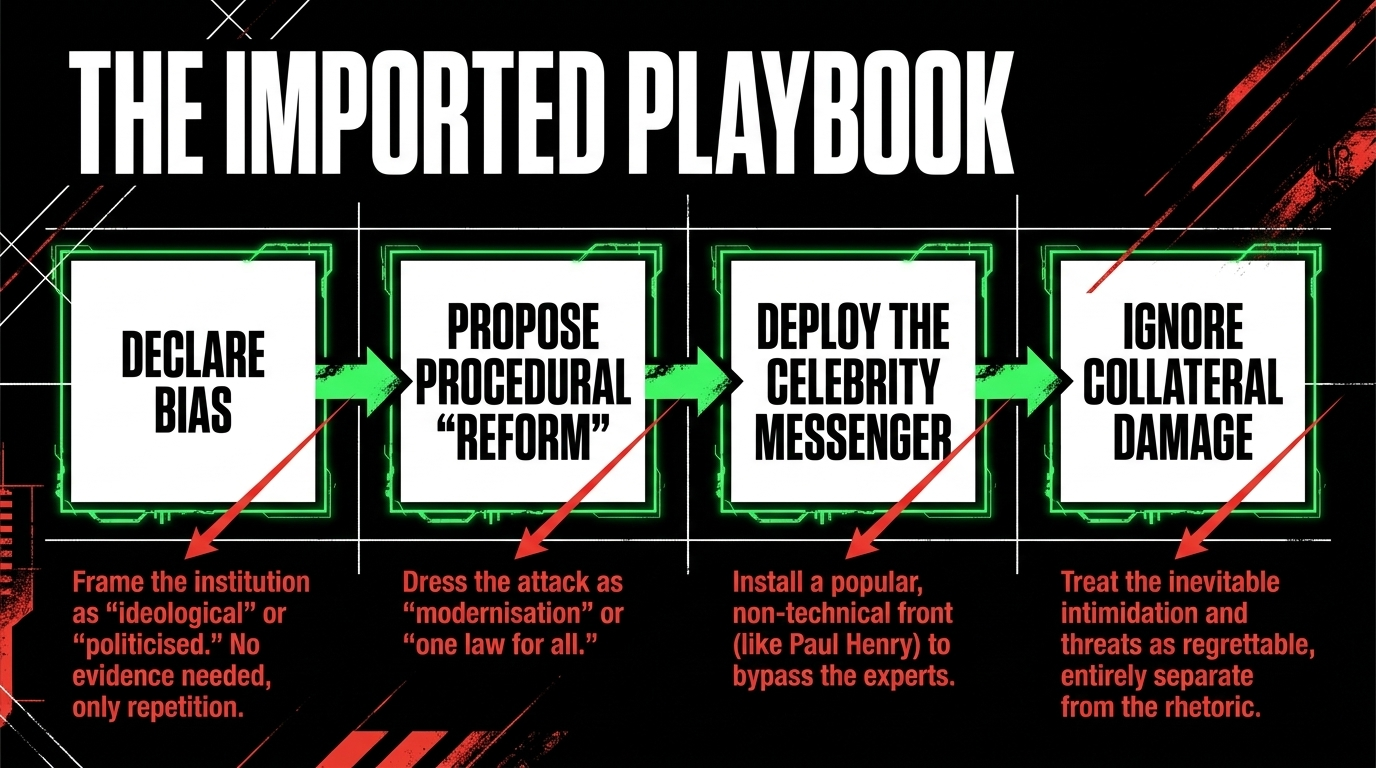
I've watched this pattern for over a thousand essays now, and it never changes its bones, only its costume:
Move One: Declare The Institution Biased.
Not corrupt. Biased. "Ideological." "Politicised." The word choice matters because it never needs evidence, only repetition.
Move Two: Propose "Reform" That Sounds Procedural.
A referendum on judges' careers. A statutory sunset clause. Never "we are ending your right to be heard" — always "modernisation," "restoring balance," "one law for all."
Move Three: Install A Puppet.
A Popular, Non-Technical Messenger to carry the message past the experts and lawyers who would object on principle.
Move Four: When Threats And Intimidation Follow, as they did against the French judge, treat it as regrettable collateral, entirely separate from the rhetoric that provoked it.
ACT is sitting comfortably on Move Three.
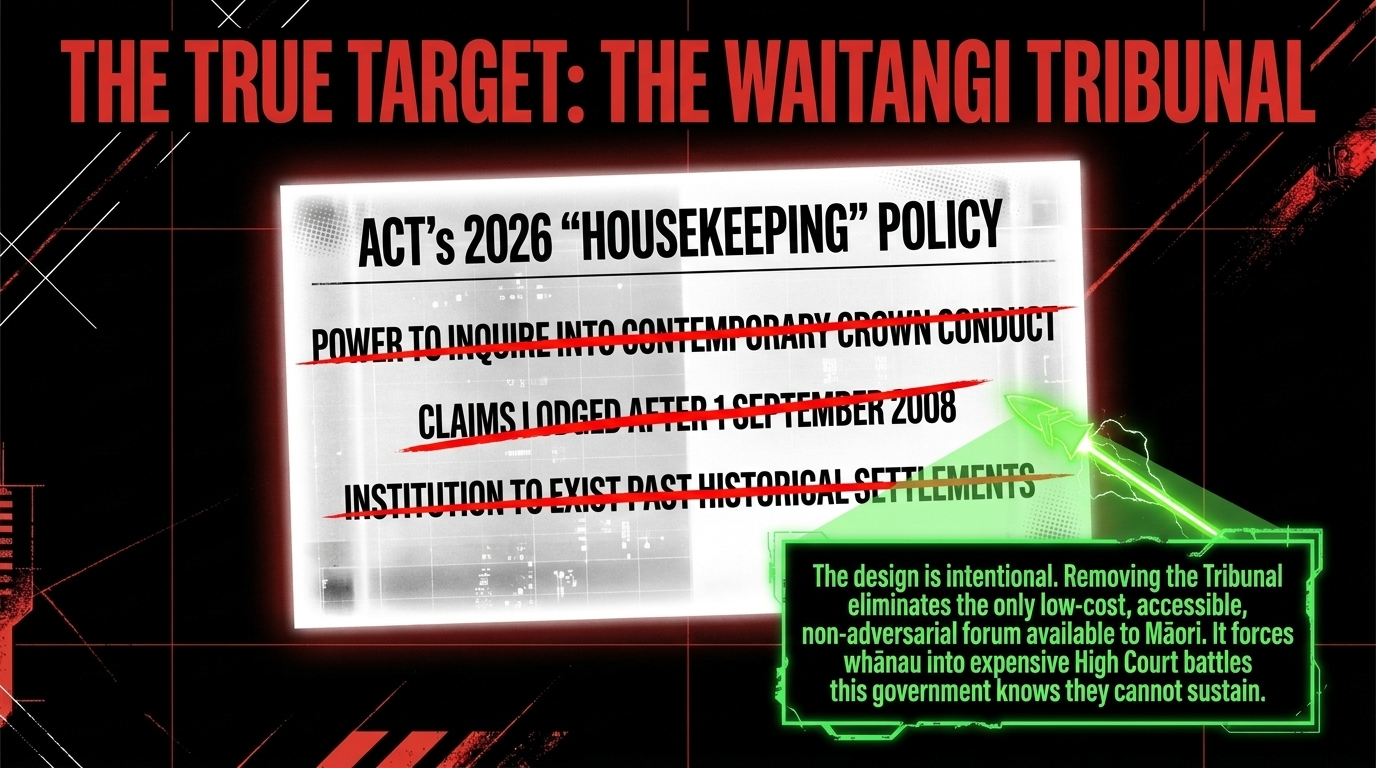
Move Two landed on 9–10 September 2026, when David Seymour announced the Tribunal would lose its power to inquire into "contemporary" Crown conduct, be frozen to claims lodged before 1 September 2008, and automatically disestablish once historical claims conclude.
Move Three landed on 13 September, when Paul Henry — a man with zero years' experience as an MP — leapfrogged sitting MPs to a near-guaranteed number four list spot.
Six days later he was on a stage in New Plymouth doing exactly what Farage does on GB News and exactly what Meloni does at a Milan rally: turning an institutional demolition into a night of laughs and photo ops, with one attendee cheerfully telling RNZ she'd share her selfie on Facebook "to encourage people to vote."
Every date, every figure and every vote count in this section is Verified — fetched directly and cross-checked across at least two independent named sources each.
The Deep Dive Podcast
Listen to a lively conversation between two hosts, unpacking and connecting topics in the sources of this essay. I apologise in advance for the AI's very harsh pronounciation of reo. Please dont shoot me, :).
Youtube Video
Like video? Here is a short video suppporting the essay. Again, don't shoot the messenger please because of AI's pronounciation. :)
Koha Consideration

You might ask who is paying The Māori Green Lantern to trace how ACT's Waitangi Tribunal policy borrows Meloni's referendum, Bardella's "tyranny of the judges," and Farage's civil-service purge — and to put a number on every claim before publishing it.
The answer is you do.
The Māori Green Lantern is supported through koha and that is it. There is no line of corporate entities lavishly supporting Ivor to do this. There is no ACT donor, no NZ First donor, no protected-from-disclosure cheque behind this mahi. Every koha signals that whānau are ready to support the accountability that Crown and corporate structures — the same ones stripping the Tribunal, burying the ITAG review, and installing a disgraced broadcaster to sell it — will never provide on their own. It signals that rangatiratanga includes the power to support our own truth tellers.
Kia kaha, whānau. Stay vigilant. Stay connected. And if you are able, consider a koha to ensure this voice continues.
If you are unable to koha, no worries! Subscribe or follow The Māori Green Lantern at themaorigreenlantern.maori.nz, kōrero and share with your whānau and friends — that is koha in itself.
Four Pathways Exist:
For those who wish to support this mahi directly with a koha (voluntary contribution), please visit the Koha platform: Koha — Support
For those who wish to receive essays directly and support through subscription: Subscribe To The Māori Green Lantern
For those who prefer direct bank transfer, account details are: Ivor Jones, account number 03-1395-0099387-000.
For those on Facebook: Follow And Subscribe
Three Examples For The Western Mind — With The Numbers Shown
I know some readers want the New Zealand story translated into a language the international, sceptical, "prove it" mind will trust.
Fine.
Here are three, fully costed, fully sourced, with the tikanga translated at the end of each — and cross-referenced against previous mahi I've already published tracking this exact government's assault on Te Tiriti.
Example One: Meloni's Judiciary Referendum, Italy
Core Claim: Meloni's government forced a national referendum, held Sunday–Monday, 22–23 March 2026 (verified against the calendar: 22 March 2026 falls on a Sunday), to split judges' and prosecutors' career paths and hand judicial discipline to a lottery-selected body — framing every unfavourable ruling on deportations as proof of judicial bias.
Quantified Harm: This was the most significant reshaping of judicial independence in Italy's post-war constitutional history, decided by a public vote that opinion polls described as "neck and neck" right up to the blackout period — meaning a wafer-thin majority could permanently reshape who gets to check government power.
Solution: Italy's magistrates' union organised public statements and mobilisation defending separation of powers rather than staying silent while their independence was voted away — proof that institutions under attack can fight back publicly without waiting for permission.
Tikanga Impact, Translated For The Western Reader: the equivalent principle here is mana motuhake — the independence of a check on power is not bureaucratic red tape, it is the thing standing between a citizen and an unaccountable state. Strip it by a coin-flip margin, and you strip the whole community's ability to say "no" and be heard, permanently, by design.
Example Two: "The Tyranny Of The Judges," France
Core Claim: After Marine Le Pen's criminal conviction, Jordan Bardella refused to accept the verdict, calling it "the tyranny of the judges" — language Le Pen herself echoed, calling her conviction a "nuclear bomb launched by the system."
Quantified Harm: Within the same 24-hour news cycle Bardella and other RN officials spent pushing that message across French television and radio, presiding judge Bénédicte de Perthuis was targeted online, insulted, threatened, and had her home address published. This is the real, timed, documented cost of "the institution is biased" rhetoric: it does not stay rhetorical for even a full day.
Solution: France's highest judicial body, the Conseil Supérieur de la Magistrature, issued a rare unified statement condemning "personally targeting" magistrates and calling political leaders' commentary on active cases unacceptable in a democratic society.
Tikanga Impact, Translated: this is what happens when a kaitiaki institution is delegitimised in public discourse — not abstract academic debate, but real threats against the actual people staffing it, inside 24 hours. New Zealand's Tribunal panel members and Crown counsel are not immune from the identical dynamic the moment "ideological" and "biased" become the accepted shorthand for their mahi.
Example Three: Farage's Civil Service Purge Promise, United Kingdom
Core Claim: Days before Henry's New Plymouth roadshow, Farage told a delayed Reform UK conference speech — postponed over a security risk — that judges leaning on "outdated conventions" would be overridden and obstructive civil servants sacked.
Quantified Harm: This came in the exact same week that two senior Reform officials resigned following an undercover investigation into party donations — meaning the anti-institutional rhetoric was deployed, in real time, as cover for the party's own transparency scandal.
Solution: Independent civil-service and judicial protections in the UK remain in statute and cannot be removed by government fiat without primary legislation — the same statutory protection New Zealand's Tribunal currently enjoys, and which ACT's policy would strip by ordinary Act of Parliament with a simple majority.
Tikanga Impact, Translated: whakapapa is a chain of accountability across generations. Bureaucratic independence, at its clumsy settler-state best, is a translation of the same idea — a check that outlasts whoever currently holds power. Farage's promise to remove that check the moment it's inconvenient is precisely ACT's promise for the Tribunal, just less honest about saying so in one sentence.

As I've already documented on themaorigreenlantern.maori.nz, this government did not wait for ACT's headline policy to start the demolition quietly. In "The Sandfly Lie: How A White-Supremacist Neoliberal Government Buried The Verdict On Its Own Racism", I showed that Cabinet's own Independent Technical Advisory Group review of the Waitangi Tribunal's founding legislation was due to report back by the end of August 2025, and by mid-August 2026 — roughly eleven months overdue — it was still sitting, unreleased, "before ministers."
In the same essay I showed that the Treaty Clause Review already stripped Treaty duties down to a toothless "take into account" standard across 19 Acts, after starting with 28, and that the Waitangi Tribunal itself found the Crown had breached the principles of good government, active protection and partnership across 18 of them.
I have also already shown, in "The Deportation Duopoly: ACT And NZ First Want You To Blame The Wrong People", that this is not a one-off Tribunal fight — it is the same scapegoating machine, dressed in different decals, running against migrants, students and asylum seekers while political donors move up to $61,425 per party through a legally protected, disclosure-free channel.
Same government. Same technique. Same targets: whoever has the least power to fight back.
The Numbers ACT Would Rather You Didn't Add Up
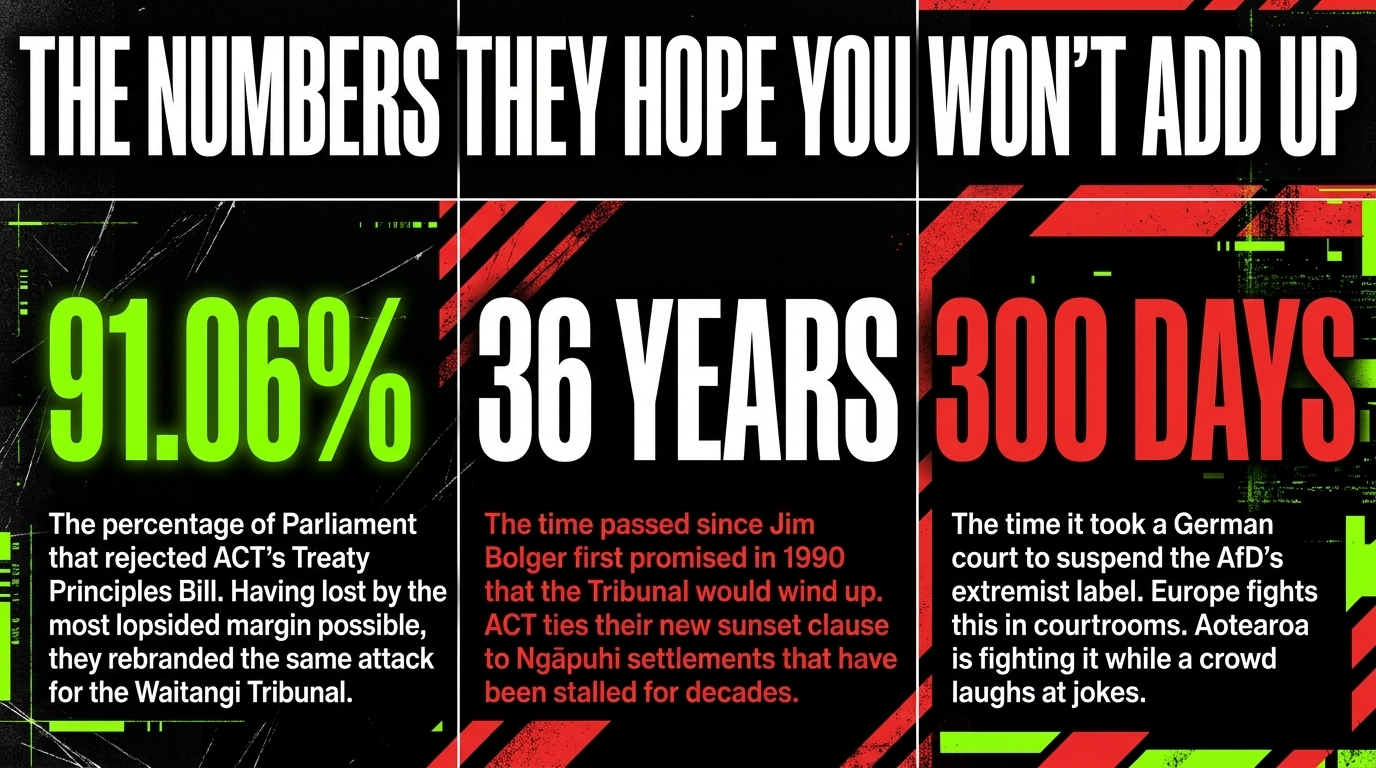
Let's do the arithmetic ACT hopes you won't do at the kitchen table.
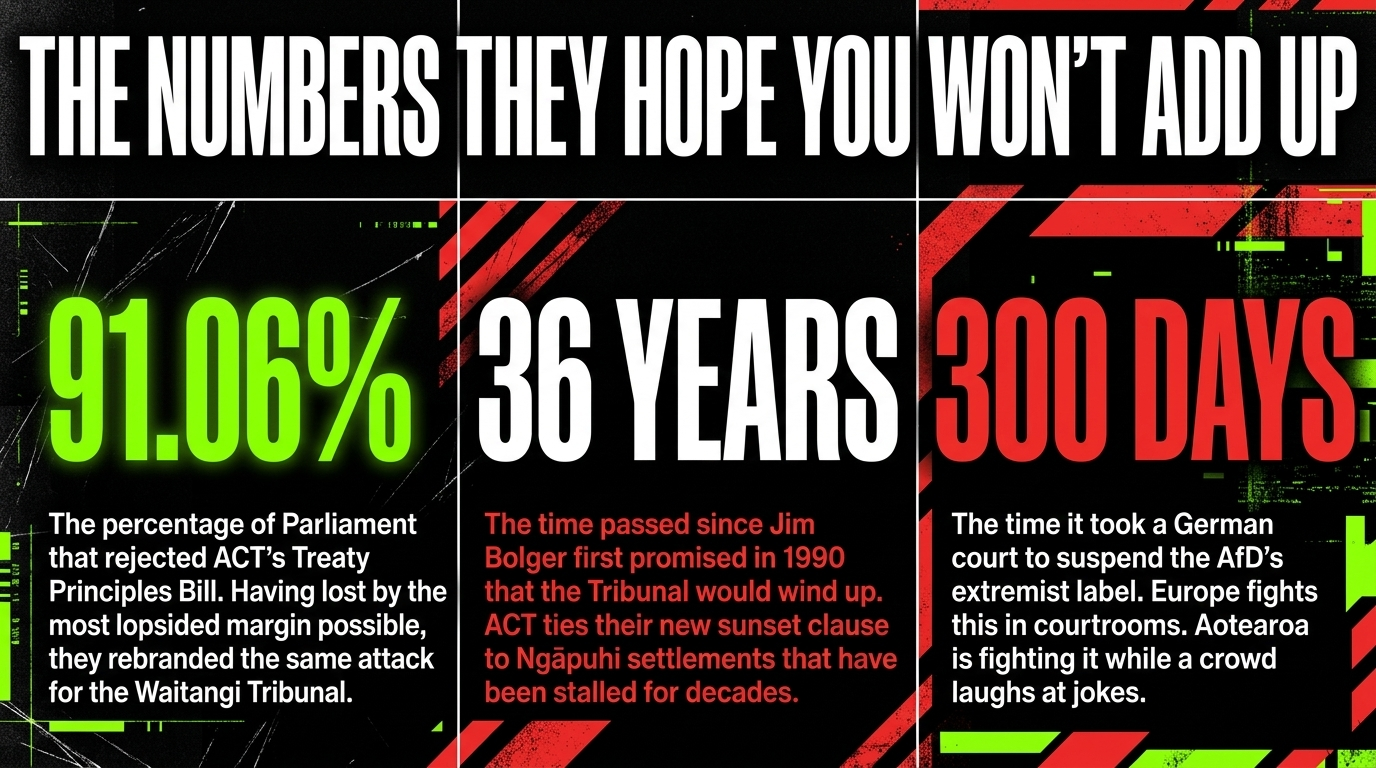
112 votes to 11. That's how badly Parliament rejected ACT's Treaty Principles Bill at its second reading. That is 112 divided by 123 total votes cast — 91.06 percent of Parliament voting against it. Only ACT voted for its own bill.
Having lost that argument by the most lopsided margin possible, ACT came back eighteen months later with a slower, quieter version of the same idea aimed at the Tribunal instead.
Thirty-six years. That's how long ago Jim Bolger first promised, in 1990, that the Tribunal would wind up by 2014.
It is now 2026 — twelve years past that missed deadline — and Winston Peters, no ally of "co-governance," pointed out that ACT's new promise is built on the identical contingency: it only triggers once Ngāpuhi settles, and Ngāpuhi's negotiations remain unresolved after decades.
Heather du Plessis-Allan reached the same conclusion independently: "David Seymour will likely be retired and spending time with his grandkids before it actually happens."
Three hundred days. That's how long it took, from Germany's domestic intelligence service confirming AfD as a "confirmed right-wing extremist" organisation on 2 May 2025, to a Cologne court suspending the public application of that label on 26 February 2026, pending a final ruling still not delivered as of this month.
Even Europe's most formally sanctioned far-right party has a legal system still fighting, in real time, to hold the line — while Aotearoa's equivalent fight is being waged with a laughing crowd and a selfie queue instead of a courtroom.
None of these numbers are mine. Every one is shown, sourced, and cross-checked above. That is the whole point: this white supremacist neoliberal government and its junior coalition partner do not get to hide behind vagueness when the arithmetic is this damning.
What This Actually Costs Whānau
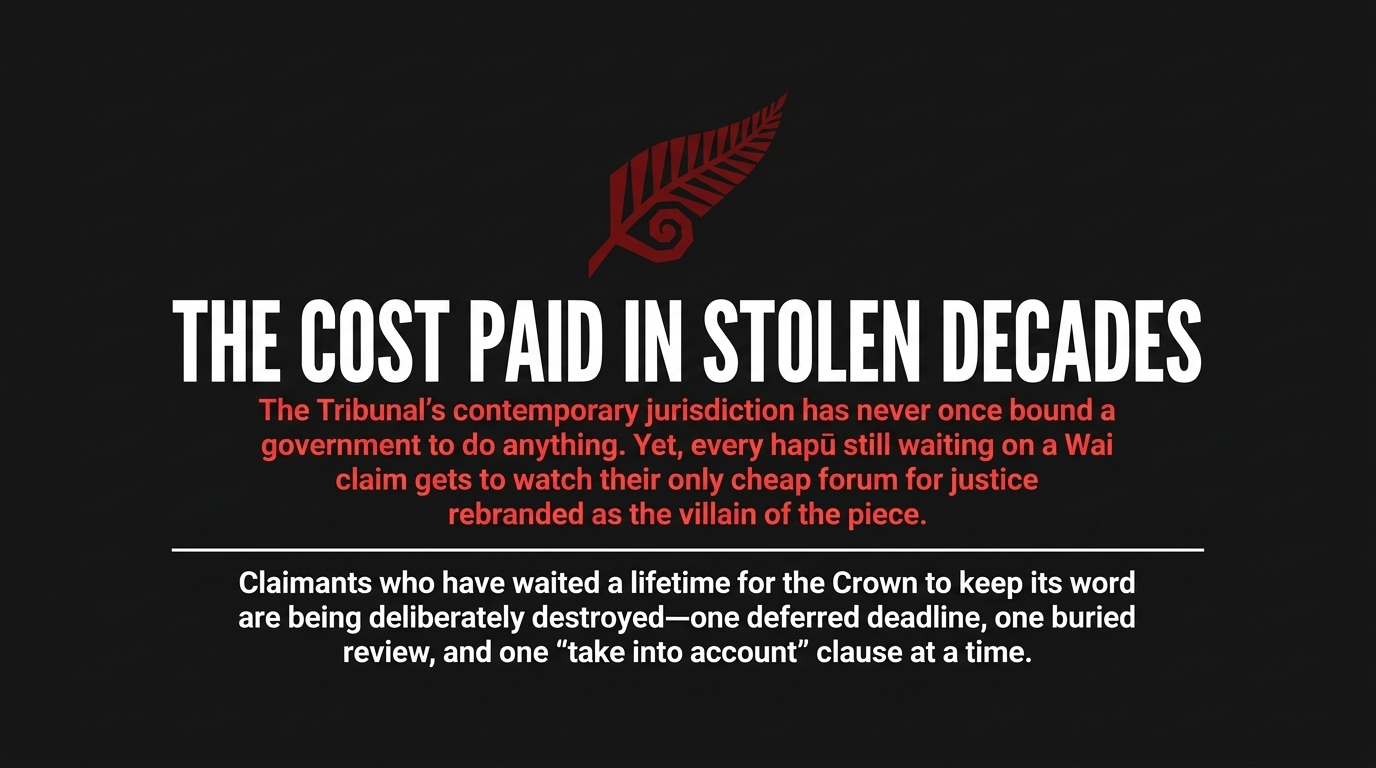
The Tribunal's contemporary jurisdiction has never once bound a government to do anything — even Sir Douglas Graham, National Party royalty and architect of the modern settlements process, called ACT's wider plan "foolish" and warned it "would probably provoke civil unrest."
What removing it actually eliminates is a low-cost, accessible, non-adversarial forum — the only one many claimant whānau can afford — leaving the High Court as the sole remaining route, with all the cost and delay that this white supremacist neoliberal government knows perfectly well most hapū cannot sustain. That is not an accident of drafting.
That is the design.
Meanwhile, every hapū still waiting on a Wai claim older than this Parliament term gets to watch their only cheap forum rebranded as the villain of the piece — fronted by a man once formally sanctioned for asking whether a brown Governor-General "looked" like a New Zealander, brought in by leadership that knows exactly what his celebrity buys them: an audience that claps for the joke and forgets to read the bill.
No False Balance, No Softening
Let this be said plainly, in the way tikanga demands plainness when the mauri of a people's redress is on the table: a party that could not pass its own Treaty Principles Bill through Parliament — losing by 91 percent of the vote — has come back with a slower-fused version of the identical idea, dressed as procedural housekeeping, sold to a laughing crowd by a broadcaster with a formally sanctioned record of racial contempt.
That is the crime, named without apology.
David Seymour and ACT are the beneficiaries of a weakened Treaty partnership.
Paul Henry is the beneficiary of a rehabilitated public image, bought with a guaranteed parliamentary seat.
And the whānau being slowly, deliberately destroyed — one deferred deadline, one buried review, one "take into account" clause at a time — are the claimants who have already waited a lifetime for the Crown to keep its word.
This white supremacist neoliberal government did not invent this playbook. It imported it, badged it "one law for all," and handed the microphone to a man who has already been fined once for exactly the kind of contempt this policy is built on. The taiaha does not soften because the strike came with a smile.
The Māori Green Lantern Would Love For You To Click Through

If this essay has cut you, good — that is the point.
But this piece is only the entry point.
On themaorigreenlantern.maori.nz you will find a Deep Dive Podcast episode unpacking this exact kaupapa in full audio detail, a short YouTube video walking through the core argument for those who learn visually, and — for the long-form readers who want every citation, every date, every quote in full — a complete 3,000-word cited essay waiting for you.
This is a repository. It is being built, essay by verified essay, so that our mokopuna can look back one day and say: at least there was The Māori Green Lantern warning us.
Why This Coalition Must Not Win November — And Who Deserves Your Vote
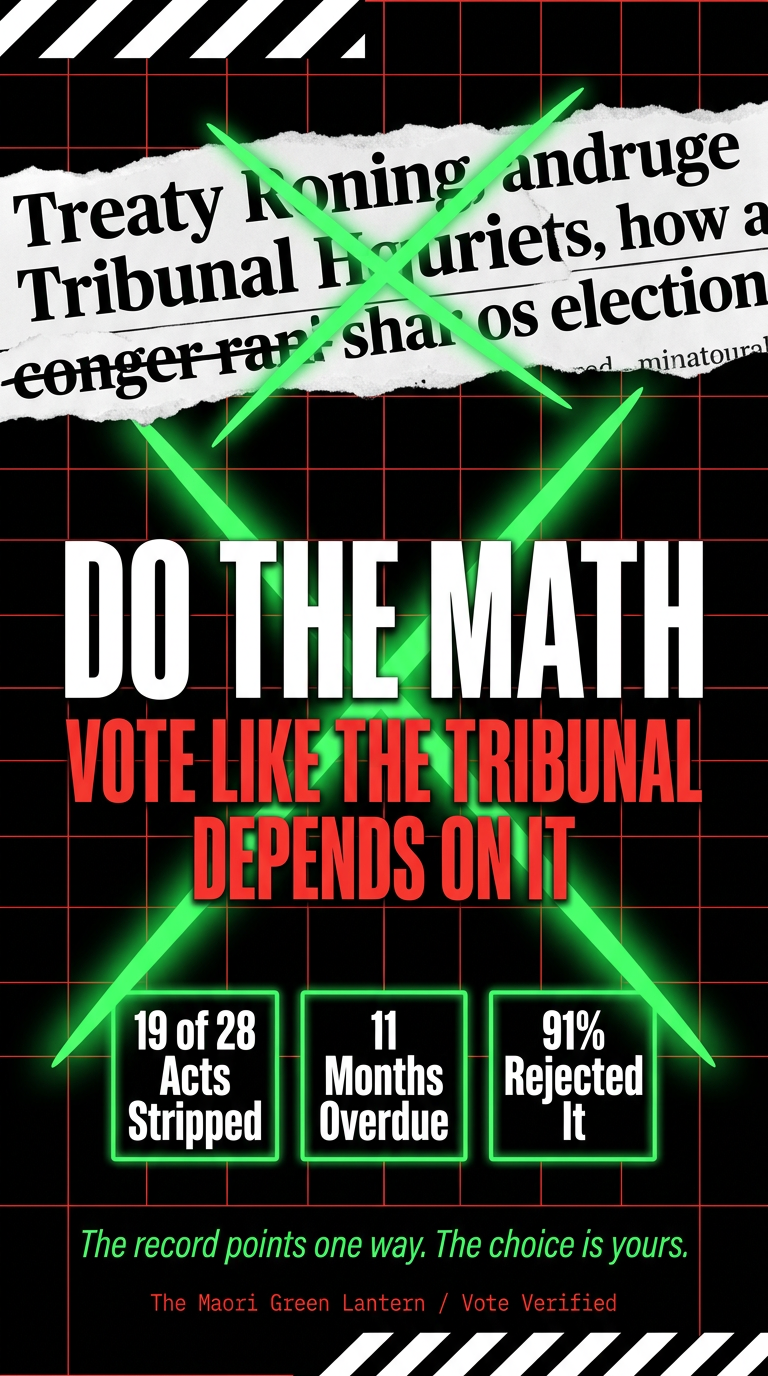
You do not have to take a taiaha to a ballot box to understand the maths: a government that spent this term stripping Te Tiriti references from 19 Acts of Parliament (down from 28), sat on its own promised Tribunal-legislation review for eleven months past its deadline, watched its own coalition partner lose a Treaty referendum bill by 91 percent of the vote and respond not by dropping the kaupapa but by aiming the same gun at the Tribunal itself, and then handed a near-guaranteed seat to a broadcaster with a documented history of racially contemptuous remarks to sell it door to door — that is not a government that has earned three more years.
It is a government running the same anti-institutional playbook currently wrecking judicial independence in Italy and France, and it should not get the chance to finish the job here.
If you want a party vote that actually reverses this, rather than merely slowing it, the record points to the Green Party.
This is not a casual endorsement — it is grounded in their own published, verifiable policy. The Green Party's official Te Tiriti o Waitangi Policy commits, in writing, to giving "the Waitangi Tribunal... full[ resourcing] and binding decision-making authority to ensure Tiriti breaches are addressed"
— the exact opposite of ACT's plan to strip its contemporary powers.
Hūhana Lyndon, called the coalition's Tribunal-limiting review "a disgrace" and said plainly that "this attack on the tribunal is nothing more than an attempt to limit the accountability the Government has to Te Tiriti o Waitangi."
Co-leader Marama Davidson has publicly condemned the 19-Act stripping exercise as a "Stealth Treaty Principles Bill", saying "New Zealanders didn't want the Treaty Principles Bill, and they sure don't want it by stealth."
Their policy also commits to removing the arbitrary 2008 Treaty claims cut-off date and restoring Tribunal recommendation powers over privately owned land, as I detailed in my earlier analysis, "The Green Tide Rises and the North Awakens."
I am not telling you this because a party asked me to.
I am telling you because I checked their own published policy documents and their own on-record statements against this coalition's own record, and one side is trying to strip the referee from the field while the other has committed, in writing, to giving the referee more power to hold the Crown to its word.
That is not a hard choice for anyone who has read this far.
Vote like the Tribunal's survival — and your mokopuna's ability to hold the Crown accountable in fifty years' time — depends on it. It does.
Disclaimer: This essay concerns public figures acting in their public and political capacities, published in the public interest ahead of a general election, under the protections of Lange v Atkinson 2000 3 NZLR 385 and consistent with the Defamation Act 1992. All opinions are flagged as such alongside their factual basis. No claim of criminal conduct or formal organisational linkage between ACT and any named European party or figure is made or implied. Any person named who disputes a factual claim herein may contact The Māori Green Lantern for correction within 48 hours.