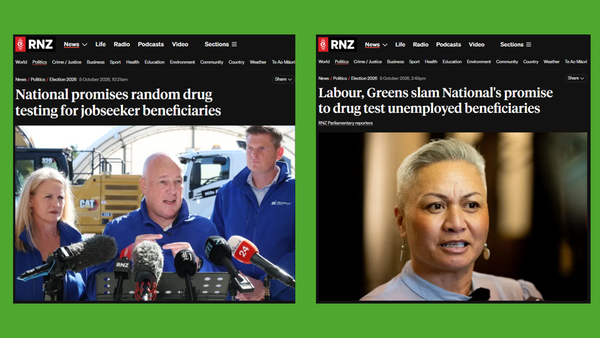
"YOU CAN'T LEAVE BUSINESS OUT": An MGL Answer to RNZ's Case for Selling New Zealand Sport" - 20 August 2026
Justin Nelson says handing over the keys is inevitable. Richard Irvine says rugby's soul fight was "hit and miss." Here is what actually happened when we checked their homework

A Taniwha Loose in the Whare Tapere
Kia ora ano Aotearoa,
There is an old story every marae knows:
invite the taniwha in to guard the river, and one day you wake up to find it has eaten the fish, the eel weirs, and is now eyeing the whare itself.
You cannot un-invite a taniwha once it has learned the taste of your kai. You can only watch it grow.
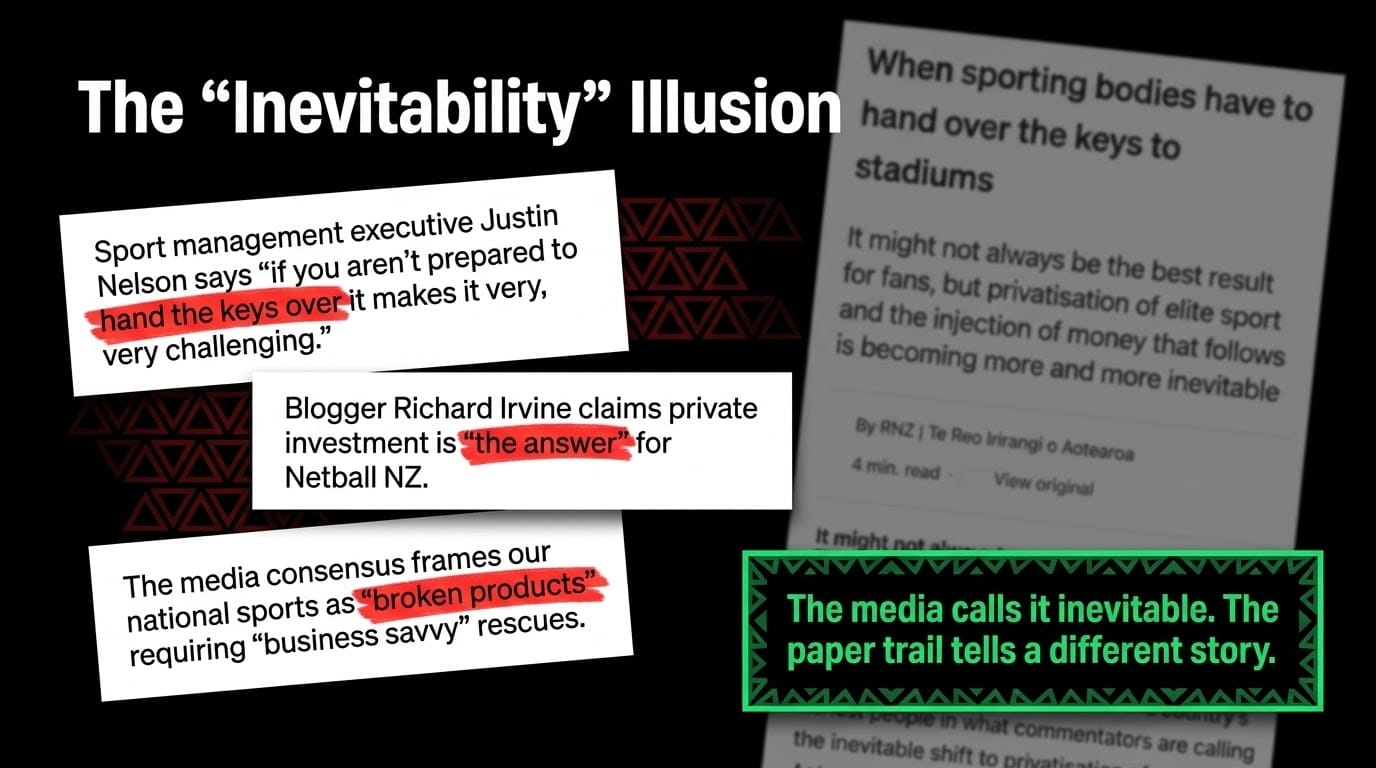
 RNZ | Te Reo Irirangi o Aotearoa
On 20 August 2026, RNZ's The Detail published a piece that reads like an invitation card for the taniwha.
Sport management executive Justin Nelson tells RNZ that handing
"the keys" of national sporting bodies to private owners is simply what happens next.
Sports blogger Richard Irvine agrees privatisation is
"the answer," while warning some examples have "gone too far."
Between them, they build a case that privatisation is inevitable, mostly harmless, and occasionally regrettable at the extreme edges — FIFA, say, or Trump.
I want to answer that case directly, claim by claim, against the actual paper trail New Zealand's own sporting bodies have already generated.
Because RNZ's framing is not new.
It is the same "special bond" argument the New Zealand Rugby Players' Association lost in 2022, and it is happening again, right now, to netball, while the ink on rugby's own scars is barely dry.
 Ivor Jones The Māori Green Lantern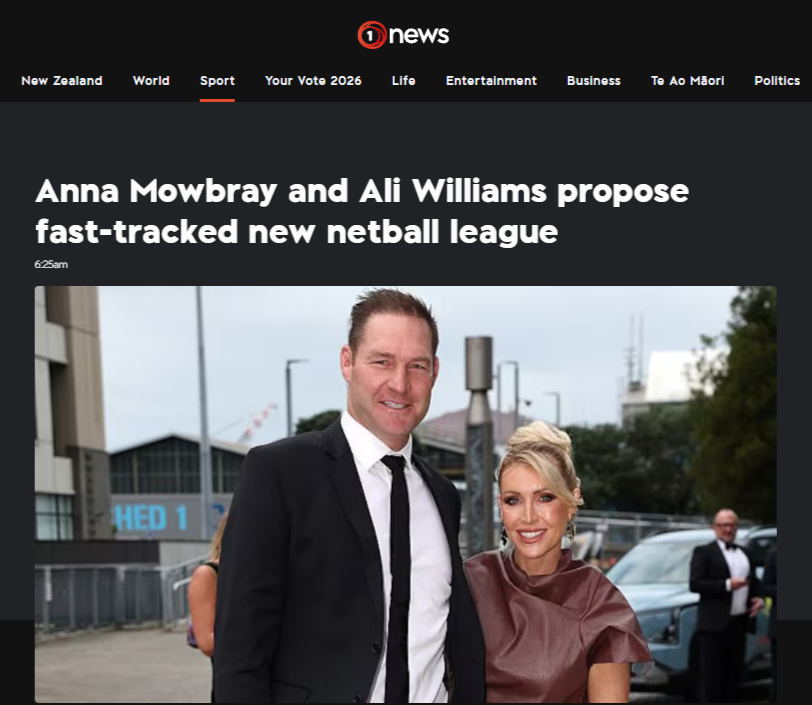
This essay stands alongside, and builds directly on, my 14 August essay on the Mowbray-Williams netball bid, which named this exact pattern before RNZ's piece ran.
The Deep Dive Podcast
Listen to a lively conversation between two hosts, unpacking and connecting topics in the sources of this essay. I apologise in advance for the AI's very harsh pronounciation of reo. Please dont shoot me, :).
Youtube Video
Like video? Here is a short video suppporting the essay. Again, don't shoot the messenger please because of AI's pronounciation. 😄
Koha Consideration
This one answered RNZ point for point, whānau
— Nelson's "inevitable," Irvine's "hit and miss," all of it checked against the paper trail nobody else joined up.
If holding the record to account against the headline matters to you, a koha keeps the taiaha sharp for the next "inevitability" story.
Koha: Support The Māori Green Lantern | Subscribe: themaorigreenlantern.maori.nz | Bank: HTDM 03-1546-0415173-000 | Facebook: The Māori Green Lantern
Claim 1: "You can't leave business out of the conversation... if you aren't prepared to hand the keys over it makes it very, very challenging to get the best result."
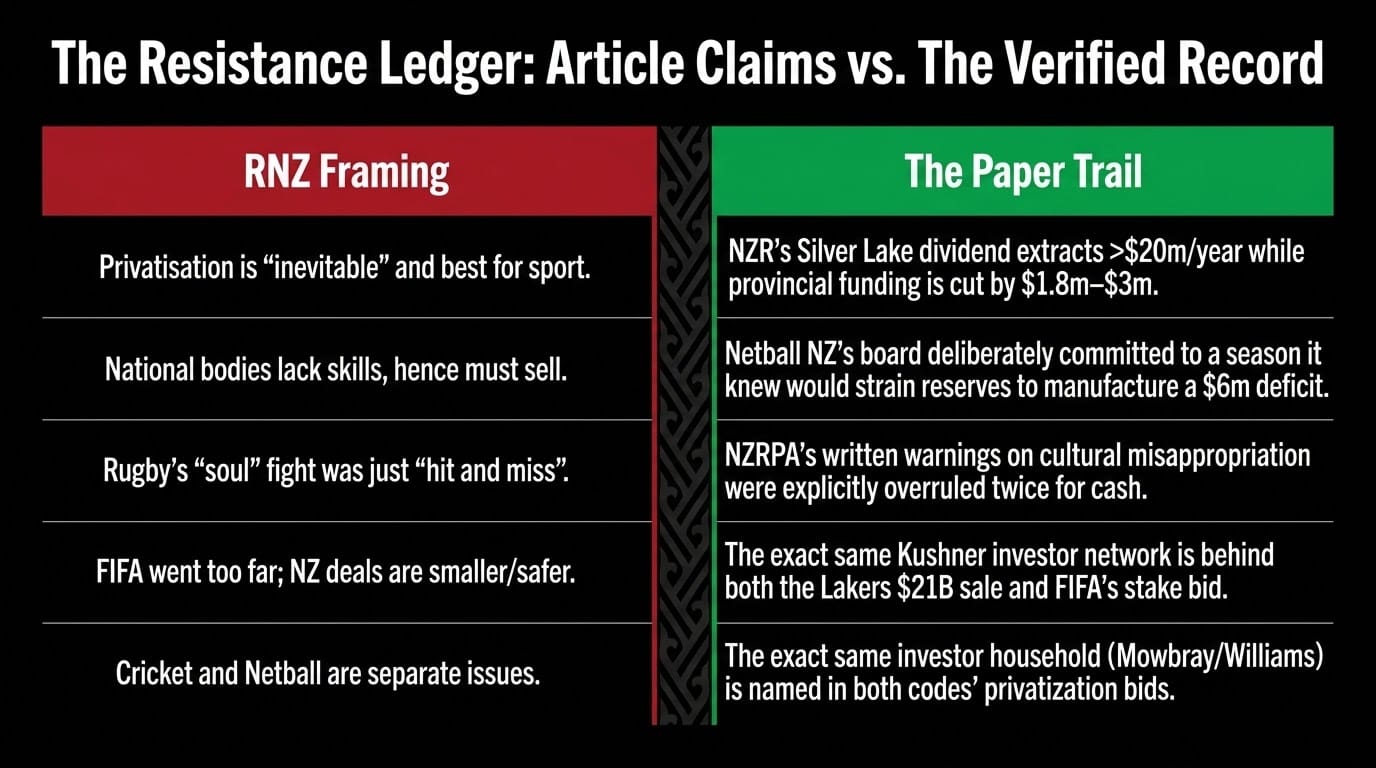
This is Nelson's central claim in RNZ's article, and it is true as far as it goes
— professional sport does need capital. What Nelson does not say, and what RNZ did not ask him, is what happens after the keys change hands.
The record answers it.
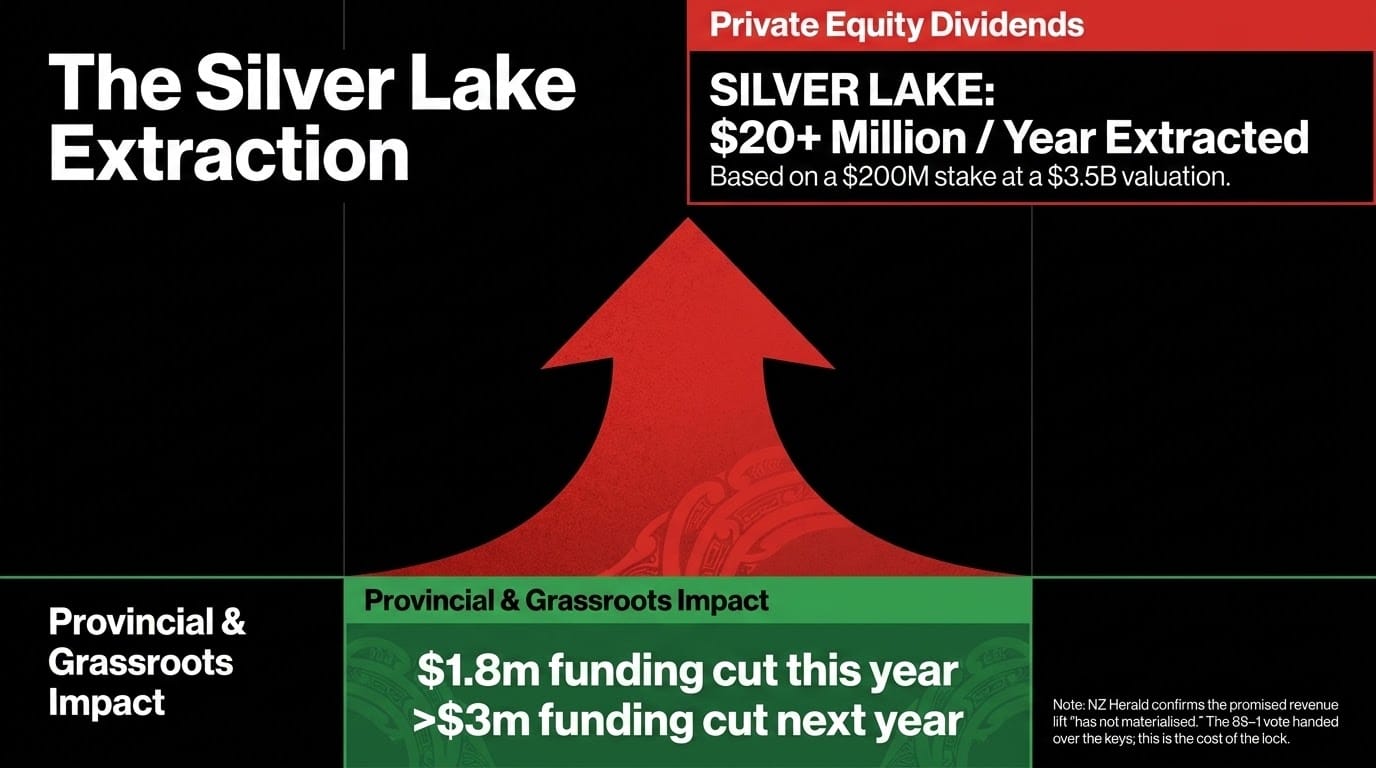
New Zealand Rugby handed the keys to Silver Lake in 2022 — an 89–1 provincial union vote for a $200 million stake at a $3.5 billion valuation, confirmed identically by Silver Lake's own release and Seattle Times/AP wire reporting.
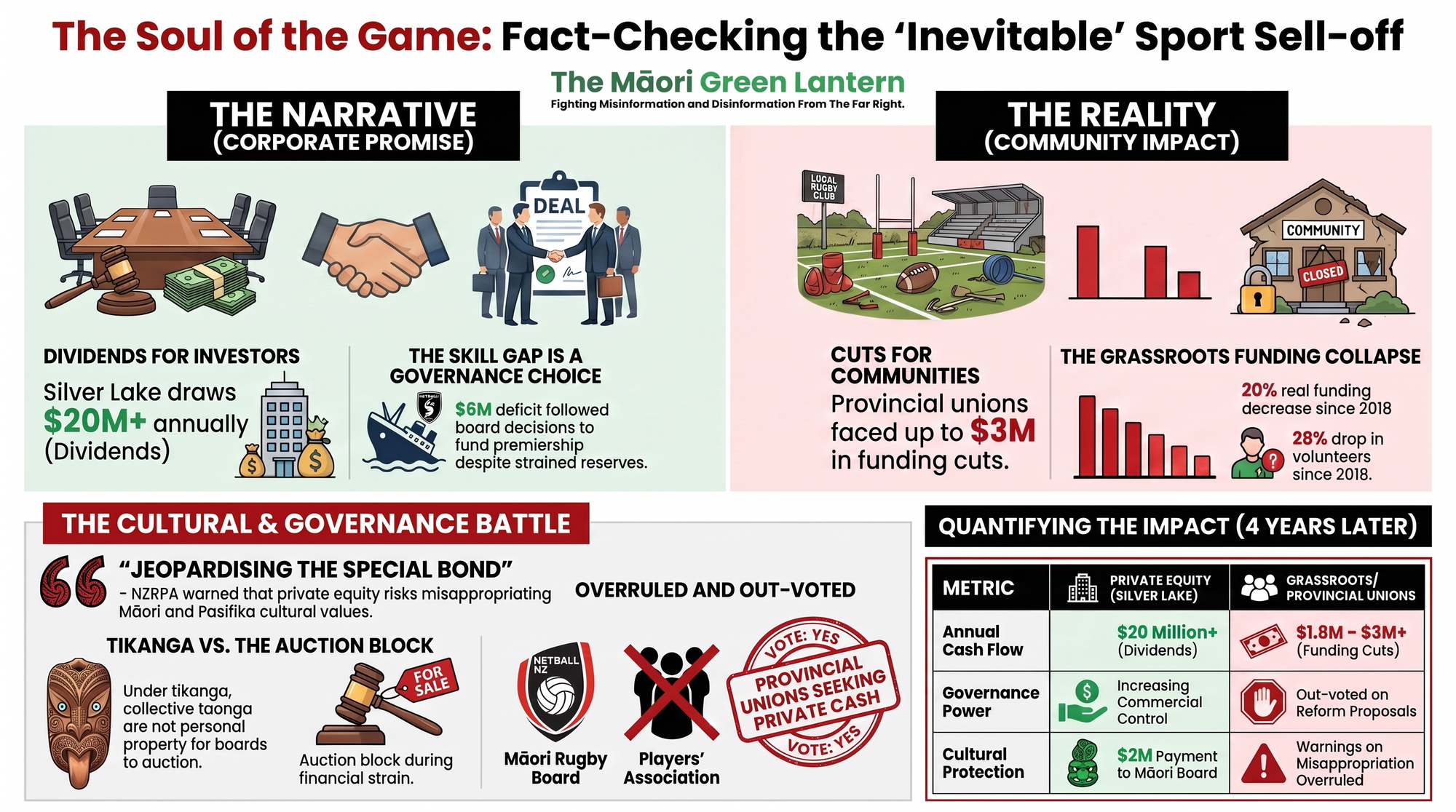
Four years on, Silver Lake is drawing more than $20 million a year in dividends, while provincial unions absorbed a $1.8 million funding cut this year and more than $3 million next year, confirmed by NZ Herald's "Silver Lake shambles" analysis.
Nelson's "best result" for handing over the keys, tested against the actual four-year outcome of New Zealand's most prominent version of exactly this deal, is a cash extraction that outpaced the promised revenue lift NZ Herald separately confirmed "has not materialised."
Claim 2: National sporting bodies "aren't geared up and don't have the skill sets to run an entertainment product."
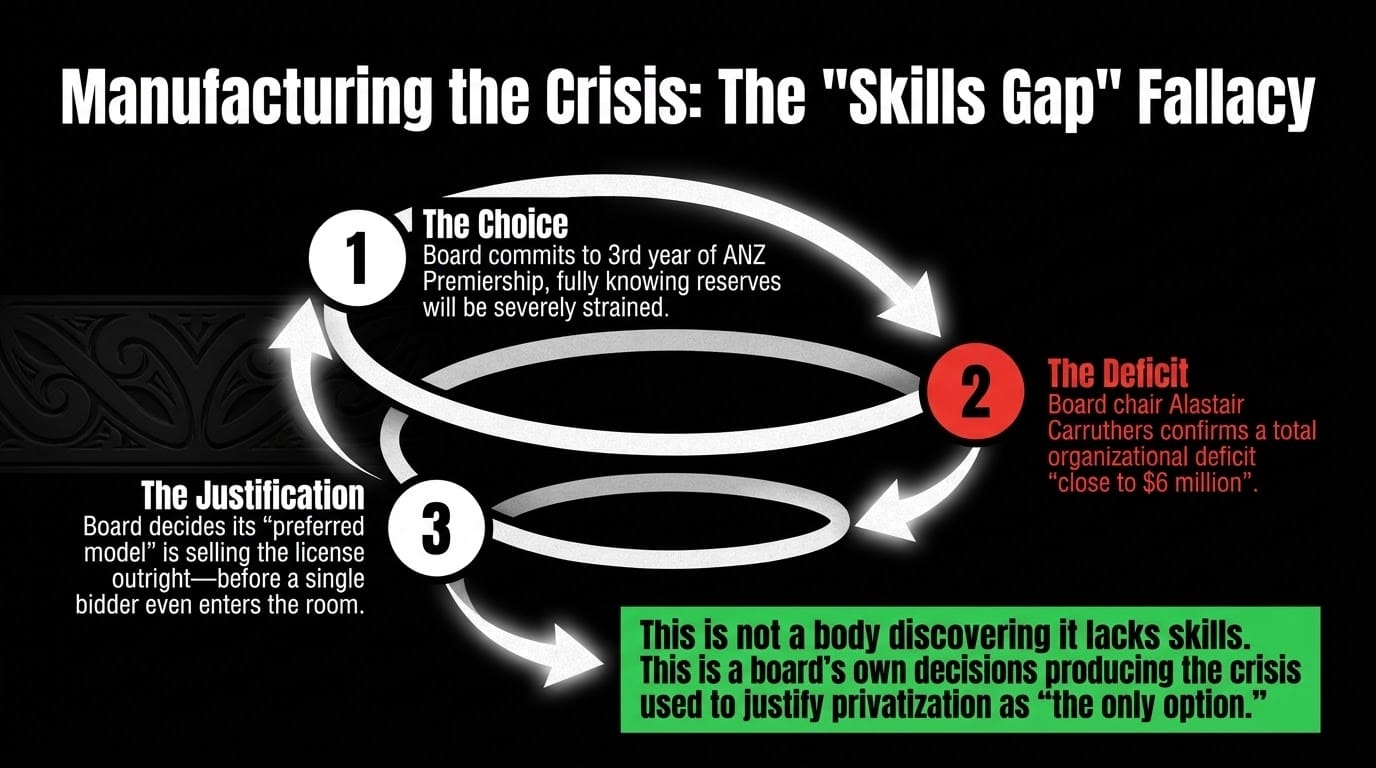
Nelson frames this as an inherent institutional failing. RNZ's article does not ask whether that skills gap was created — by underfunding, governance neglect, or the same boards now negotiating their own exit.
The record answers it.
Netball NZ's own board chair Alastair Carruthers confirmed the ANZ Premiership would post a $3.7 million loss in 2026, with total organisational deficit
"close to $6 million" — after the board itself "committed to the third year of this premiership" knowing reserves would be strained, per Newstalk ZB's own transcript of Carruthers, corroborated by 1News.
The "preferred model" the board landed on was to sell the licence outright, confirmed by NZ Herald — a decision made before any bidder walked in the door.
This is not a body discovering it lacks skills. This is a board's own decisions producing the crisis Nelson then cites as proof privatisation is "the only option."
Claim 3 (Irvine): NZ Rugby's Silver Lake deal shows "it's that eternal battle for the soul of the sport, who truly owns it... dragged on for years... a massive argument between provincial unions, the players union and New Zealand Rugby."
This is the single most important sentence in RNZ's whole article, and Irvine says it almost in passing. It deserves to be taken seriously — because he is right that a battle happened, and RNZ's readers deserve to know what it was actually about.
The record answers it.
The New Zealand Rugby Players' Association wrote directly to NZR warning the Silver Lake deal "could jeopardise the 'special bond' New Zealanders have with the game," and separately flagged fears that Māori and Pasifika cultural values could be misappropriated by a foreign private equity owner — confirmed identically in Stuff's contemporaneous reporting and RNZ's own 2022 vote analysis, which quotes the NZRPA letter directly.
The Māori Rugby Board received a $2 million payment as part of the deal, confirmed by Silver Lake's release and The Independent's AP wire report.
The battle did not end there.
By 2024 it had escalated into open governance civil war: NZR's Board, the Māori Rugby Board, and the Players' Association jointly backed one governance reform proposal — only for the 26 provincial unions to force through their own, with the Players' Association threatening to withdraw its collective agreement recognition of NZR entirely, confirmed by RugbyPass and The Conversation.
Irvine calls the result "hit and miss."
I call it what the paper trail shows: a specific, on-the-record warning about cultural misappropriation and a "special bond" that was overruled twice, by the same 26 provincial votes, for cash that a private equity firm's own later filings admit underperformed. That $2 million payment to the Māori Rugby Board bought no lasting leverage
— two years later the same board was out-voted on governance by the unions who took the deal.
Claim 4 (Irvine): "It goes to show that you can bend things to a certain extent but at some point it's going to break and FIFA's found the line."
Irvine uses FIFA's 64-team World Cup expansion and stake-sale plan as the extreme example
— the place where privatisation goes "too far," implying New Zealand's smaller deals sit safely on this side of the line.
The record complicates that comfort.
FIFA's stake sale is being structured through Thrive Eternal, the investment vehicle of Josh Kushner
— the same investor who, in the same fortnight, purchased the Los Angeles Lakers for a record US$12.5 billion (NZ$21.3 billion), confirmed across Reuters, BBC Sport, and 1News.
Josh Kushner is the brother of Jared Kushner, US President Donald Trump's son-in-law, a connection The Independent confirms Trump himself addressed publicly after UEFA accused FIFA of putting the game's "soul" up for sale
— the exact same word the NZRPA used about rugby, four years earlier, an ocean away.
The "line" Irvine says FIFA found is drawn by scale, not by kind.
It is the same mechanism NZ Rugby signed onto in miniature:
a national or global body facing a funding gap, inviting a private capital vehicle to fill it, in exchange for control. New Zealand did not avoid this dynamic — it pioneered a smaller version of it, years before FIFA's version made global headlines.
Claim 5 (Irvine): NZ cricket privatisation "works for some of the players... doesn't work for our fans."
RNZ frames cricket's franchise model as a player-friendly, fan-costly trade-off — independent contractors chasing global money, at the expense of local supporters wanting to see the best players locally.
The record adds the piece RNZ left out.
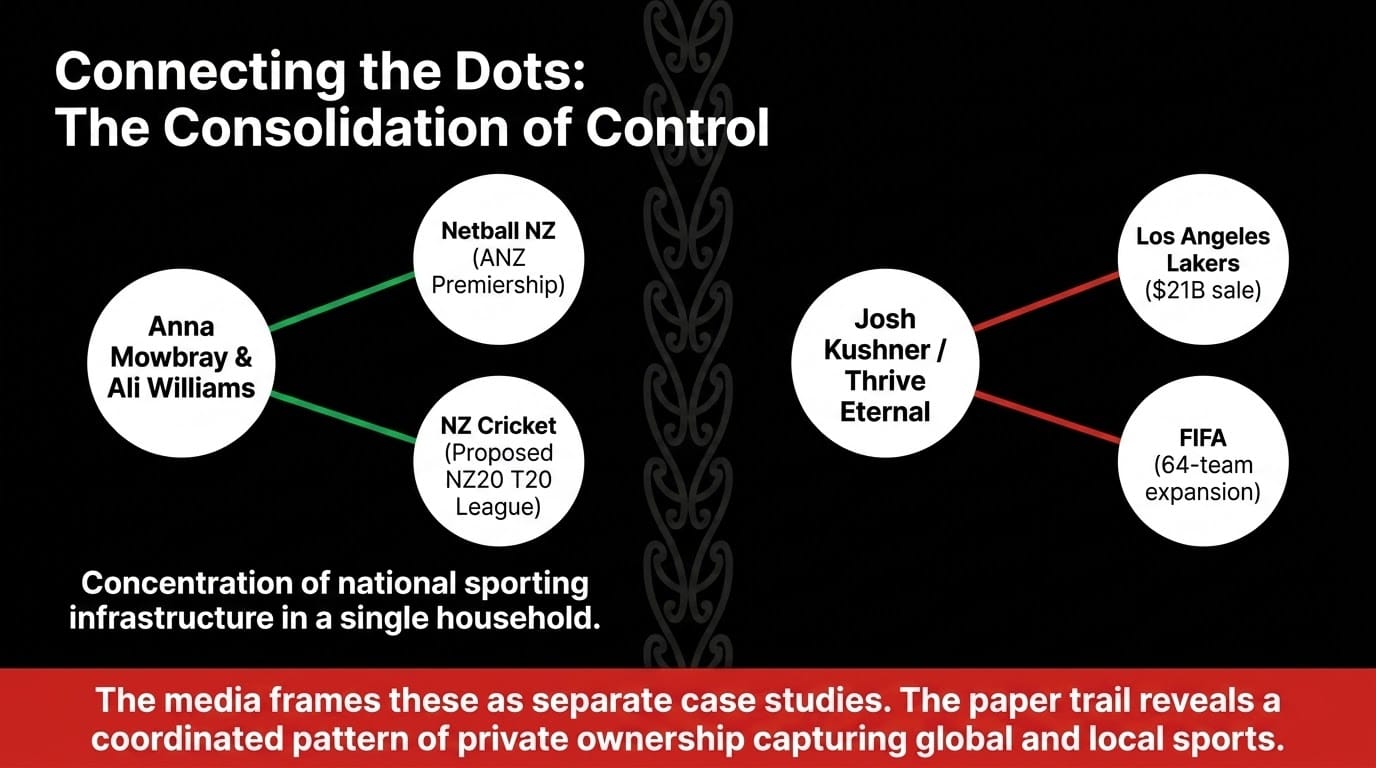
RNZ's own investigative reporting into NZ Cricket's governance crisis names Anna Mowbray and Ali Williams
— the same couple RNZ's article frames as netball's rescuers — among the "high net-worth Kiwis" who expressed interest in NZ20, a proposed privatised T20 franchise league that triggered a governance meltdown and the resignation of NZ Cricket's chief executive, confirmed in RNZ's "A CEO ousted, a board divided" investigation.
Irvine discusses cricket and netball as separate case studies. They are not separate.
The same household is positioned to acquire commercial control of two national codes inside a single year
— a concentration of private ownership over the country's sporting infrastructure that RNZ's article never joins up for its readers.
Claim 6 (Nelson, implicitly): Privatisation lets bodies "still have control of the grassroots" while accelerating the elite product.
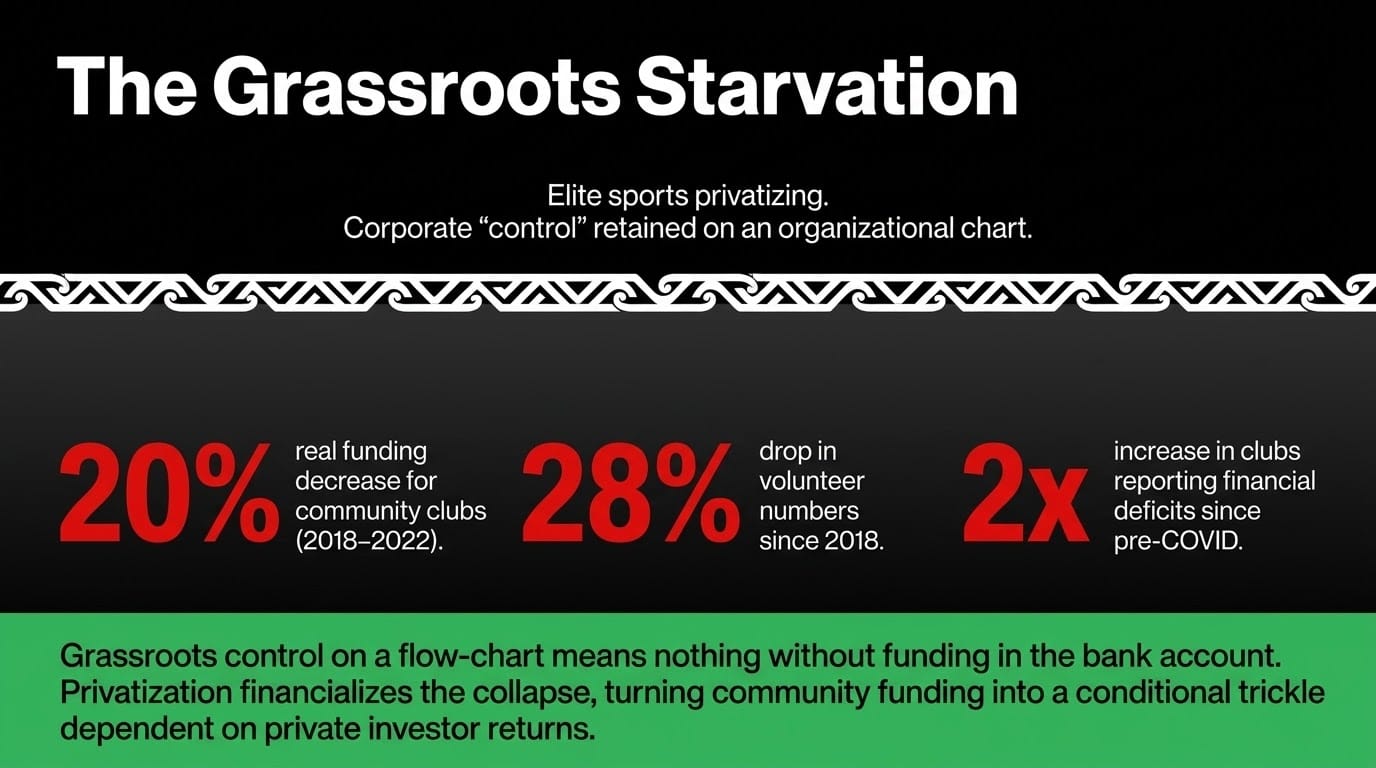
RNZ's article implies grassroots sport is insulated from privatisation's costs
— that boards retain grassroots control even after selling elite competitions.
The record answers it directly.
Sport NZ's own research found community clubs experienced a 20% real funding decrease from 2018 to 2022, per Sport NZ's funding uncertainty report.
A 2025 national survey found volunteer numbers down 28% since 2018, with 72% of clubs worried about long-term sustainability, confirmed by 1News, and the number of clubs reporting financial deficits has doubled since pre-COVID, confirmed by Scoop's coverage of the follow-up survey.
Netball specifically was flagged as "the sport which was worst affected by falling surpluses" among codes studied, per Community Research NZ's financing analysis.
To be fair to the record: NZ Rugby's Silver Lake trust did fund fee-free registration for kids at some clubs, confirmed by RNZ — but this is trust interest, a rounding error against Silver Lake's $20 million-plus annual dividend.
Grassroots "control" retained on an organisational chart is not grassroots funding retained in a bank account. Community sport was already collapsing before privatisation arrived, and privatisation financialises that collapse rather than solving it
— turning community funding into a conditional trickle dependent on a private investor's returns being hit first.
Fans and Local Communities: The Cost RNZ Left Off the Ledger
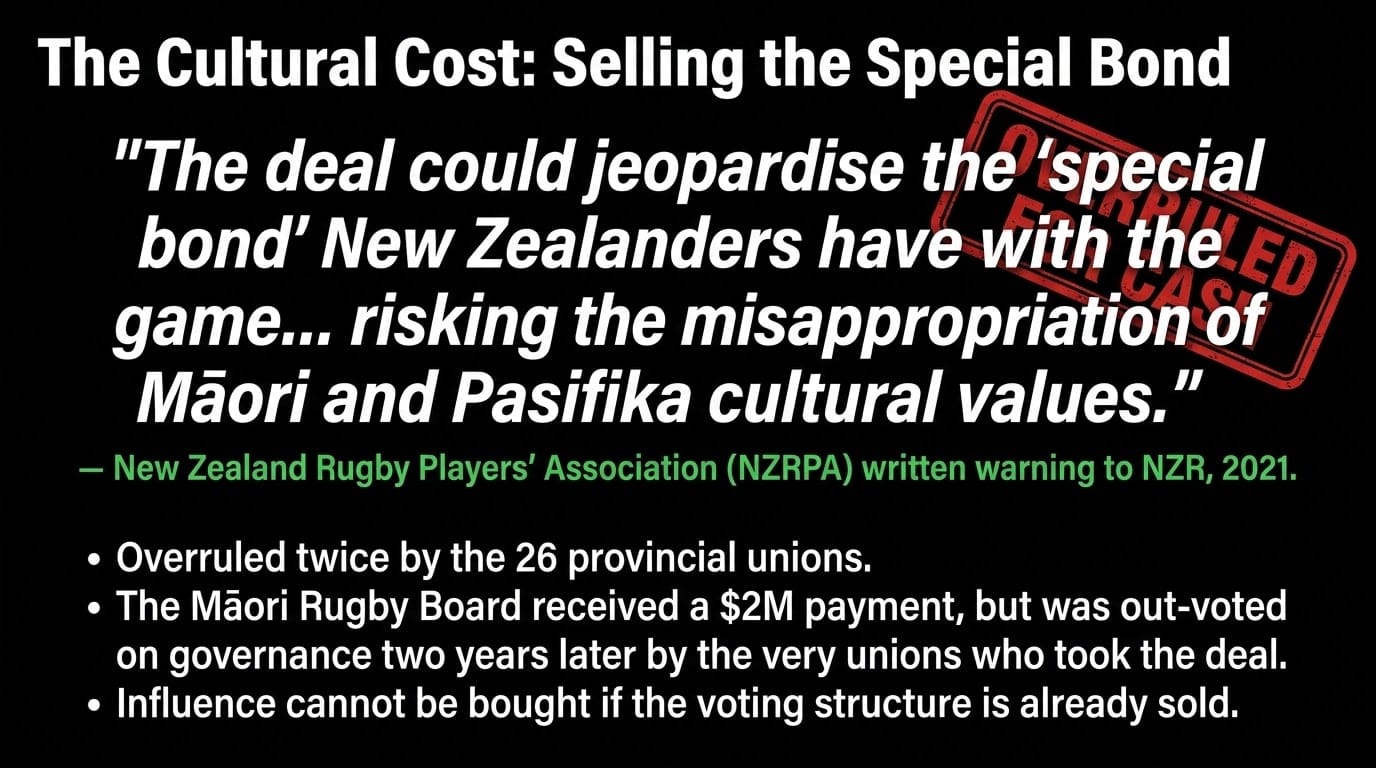
For fans, the pattern across rugby, and now cricket and netball, has meant broadcast access increasingly paywalled, less influence over pricing once private operators must hit return targets set by investors on the other side of the world, and the slow erosion of exactly the "special bond" the NZRPA warned about in writing in 2021
— a warning that was overruled, not disproven.
For local communities, the cost is structural, not incidental. Every dollar promised to "flow from the grassroots up" through a trust or legacy fund is a dollar that had to be extracted as profit for the private investor first.
Sport NZ's own numbers above prove the grassroots funding gap already existed before these deals
— privatisation does not create it, it turns an existing community crisis into a bargaining chip for national bodies negotiating their own commercial futures.
Quantified Harm: Article Claim vs Verified Record
| RNZ article's framing | What the paper trail actually shows | Source |
|---|---|---|
| Privatisation is "inevitable," best for the sport | NZR's Silver Lake dividend now exceeds $20m/year; provincial funding cut $1.8m–$3m+ | NZ Herald |
| National bodies lack skills, hence must sell | Netball NZ's own board committed to a season it knew would strain reserves | 1News |
| Rugby's "soul" fight was "hit and miss" | NZRPA's written warning on cultural misappropriation was overruled twice, in 2022 and 2024 | Stuff, RugbyPass |
| FIFA is the extreme case, NZ's deals are smaller/safer | Same Kushner investor network behind both the Lakers sale and FIFA's stake bid | Reuters, BBC |
| Cricket and netball are separate, player-vs-fan trade-offs | Same investor household (Mowbray/Williams) named in both codes' privatisation bids | RNZ |
| Grassroots stays protected even as elite level privatises | 20% real funding cut, 28% volunteer drop, deficits doubled since pre-COVID | Sport NZ, 1News, Scoop |
Rangatiratanga Over Receivership
RNZ's article gives two men — one who has spent a decade "picking up broken products" for private investors, and one who agrees privatisation is "the answer" — the final word on whether New Zealand sport should sell its taonga.
Neither is asked to answer for what happened the last time this exact trade was made, four years ago, in the code that is meant to define the country.
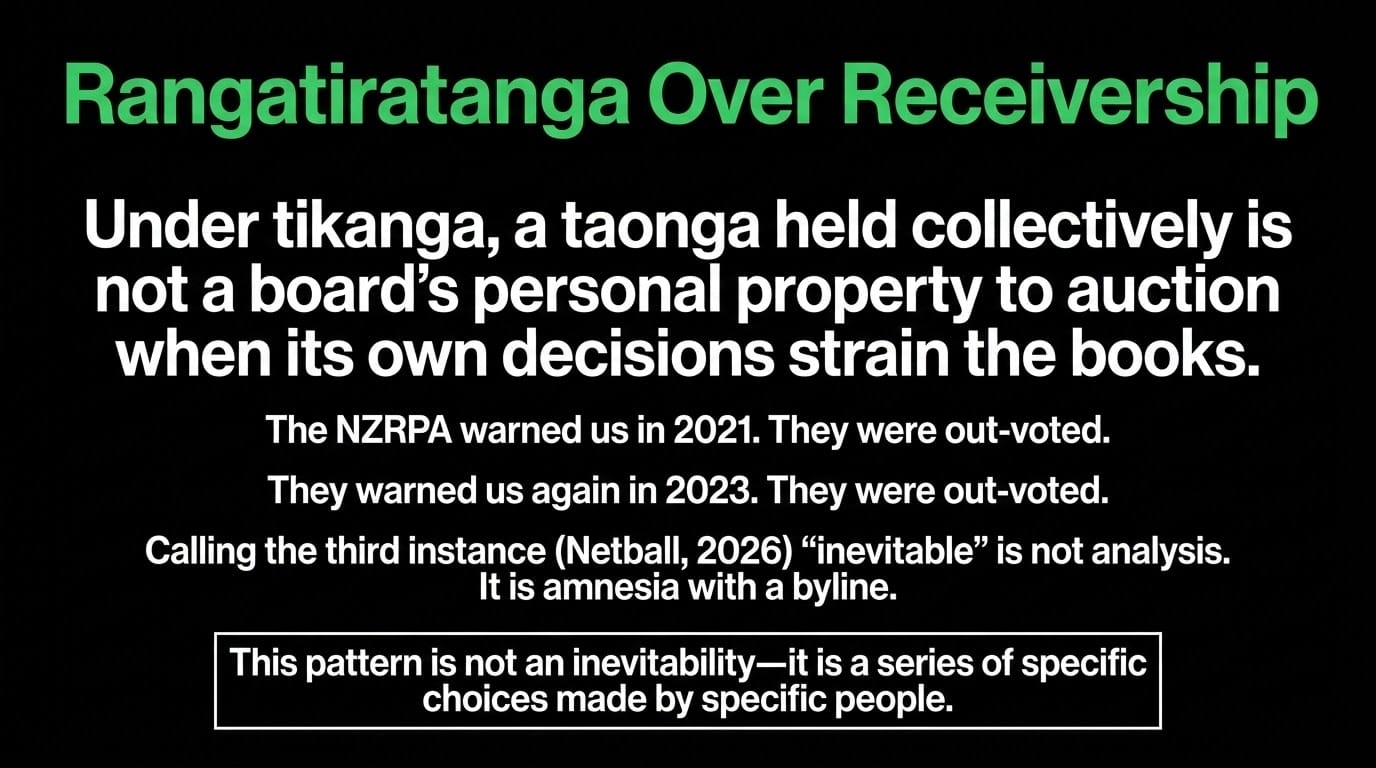
Under tikanga, a taonga held collectively is not a board's personal property to auction when its own decisions strain the books. The NZRPA said as much, in writing, in 2021.
They were out-voted.
Two years later, they were out-voted again.
RNZ calling the third instance of this same pattern — netball, this month — "inevitable" is not analysis. It is amnesia with a byline, and I am not willing to let that amnesia stand unanswered.
Kia kaha, whānau. Read what the players' associations and the Māori Rugby Board actually wrote before every vote, not the press release that followed it. The pattern is not inevitable. It is a series of specific choices, made by specific people, that we can still name.
Ngā mihi,
Ivor Jones
The Māori Green Lantern — Fighting Misinformation and Disinformation From The Far Right
Disclaimer
This essay is a work of opinion journalism and political commentary published by The Māori Green Lantern (Ivor Jones), written as a direct response to RNZ's 20 August 2026 article "When sporting bodies have to hand over the keys to stadiums." All financial figures, quotes, dates and vote counts are drawn directly from the sources cited above, independently verified via live fetch, and believed accurate as of publication. Connections drawn between separately reported facts are clearly the author's analysis, disclosed as such and distinguished from the underlying verified facts. This essay does not constitute financial, legal, or investment advice.