"MARAMA DAVIDSON ON MATA - THEY CALLED IT ECONOMIC LUNACY, WE CALL IT ARITHMETIC - 22 June 2026
The Pātaka Has Been Locked. Your Whānau Are Starving at the Bottom. And the Man Holding the Key Just Called It "Growth."

THE PĀTAKA WITH ONLY ONE KEY
Mōrena Aotearoa,
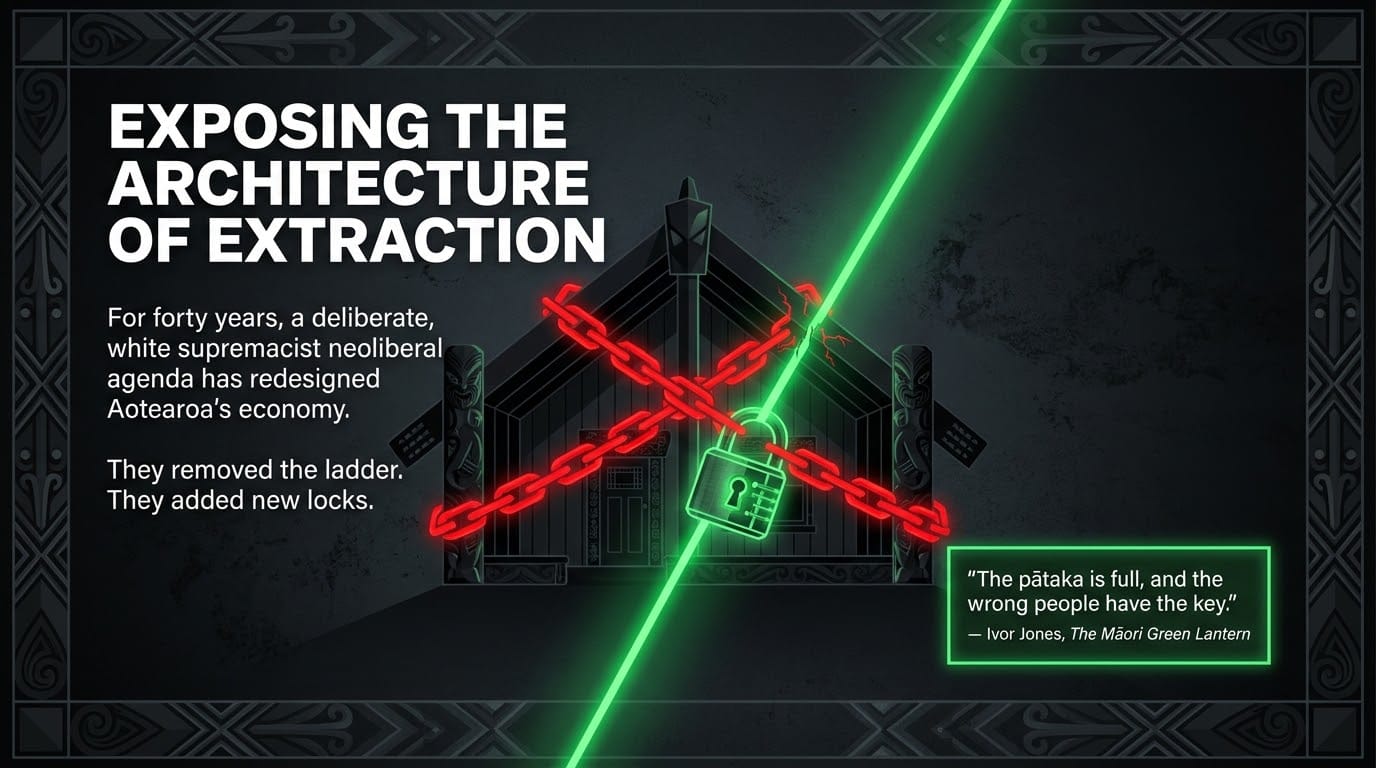
I want you to picture a pātaka — a storehouse, raised on its post, carved with the faces of the ancestors. In te ao Māori, the pātaka is communal. Its contents feed the people. Its elevation protects the kai from rats.
Now picture what has been done to Aotearoa's pātaka over forty years of deliberate, architectured, white supremacist neoliberal governance. The ladder has been removed. New locks have been added. And the man holding the key is standing behind a glass wall in the Beehive, flanked by lobbyists for the four big Australian banks, telling you — from behind his seventh investment property — that redistribution is "economic lunacy."
That is not a metaphor.
That is Budget 2026. That is the Luxon government's entire economic programme. That is what forty years of Roger Douglas's diseased legacy has constructed: a pātaka for the 0.3%, guarded by politicians, maintained by media, and paid for by the hunger of 169,300 of our tamariki.
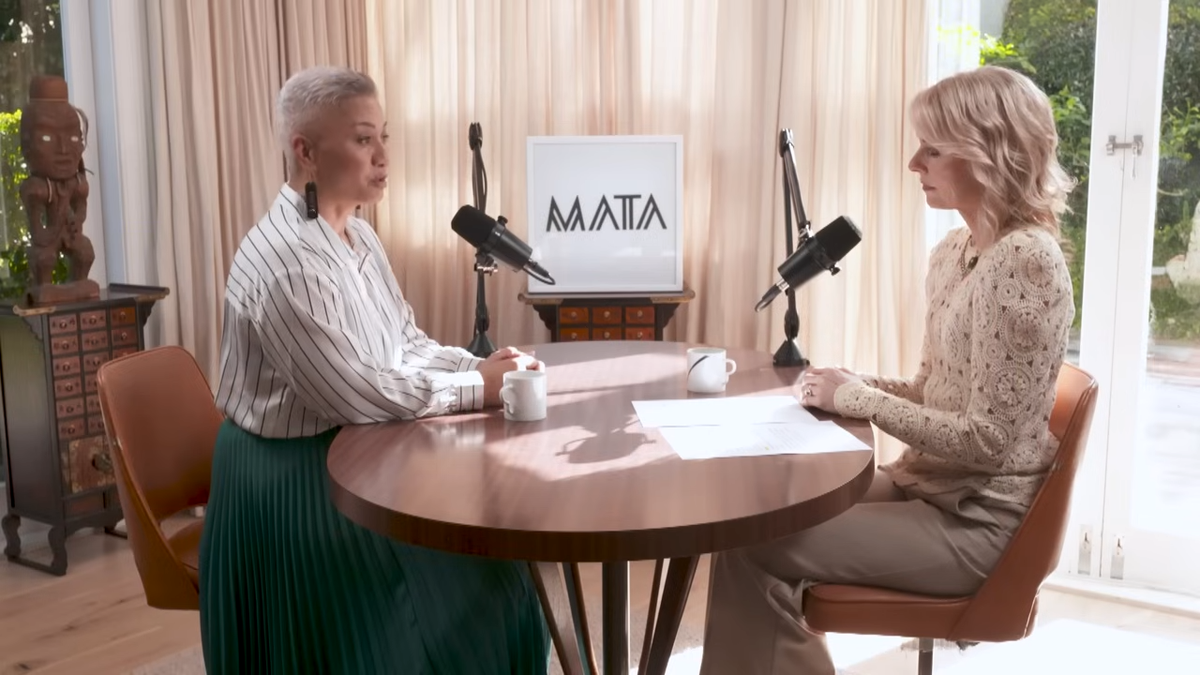
On 22 June 2026, Green Party co-leader Marama Davidson — Ngāpuhi, Te Rarawa, Ngāti Porou, Ngāti Tahinga — sat down with Mihingarangi Forbes on RNZ's MATA Episode 11 and said what forty years of politicians have been too afraid, too bought, or too comfortable to say: the pātaka is full, and the wrong people have the key.
Christopher Luxon said it would "stunt investment." Simeon Brown called it "economic lunacy." The four Australian banks whose profits drain $6.5 billion a year out of this country said nothing. They don't need to. Their silence is the policy.
The taiaha is in the numbers. Let me show you.
🎙️ THE DEEP DIVE PODCAST
Listen to a lively conversation between two hosts, unpacking and connecting every thread in this essay — the wealth data, the bank extraction, the bottom trawling, the child poverty numbers, and why Davidson's MATA interview matters far beyond a pre-election announcement.
I apologise in advance for the AI's very harsh pronunciation of reo. Please don't shoot me. 😅
📺 YOUTUBE VIDEO
Like video? Here is a short video supporting this essay — unpacking the Green Party's tax package, the bank profit extraction, the child poverty numbers, and the moana under the trawl nets.
Again, don't shoot the messenger because of AI's pronunciation. 😅
THE REAL NUMBERS: WHO OWNS AOTEAROA
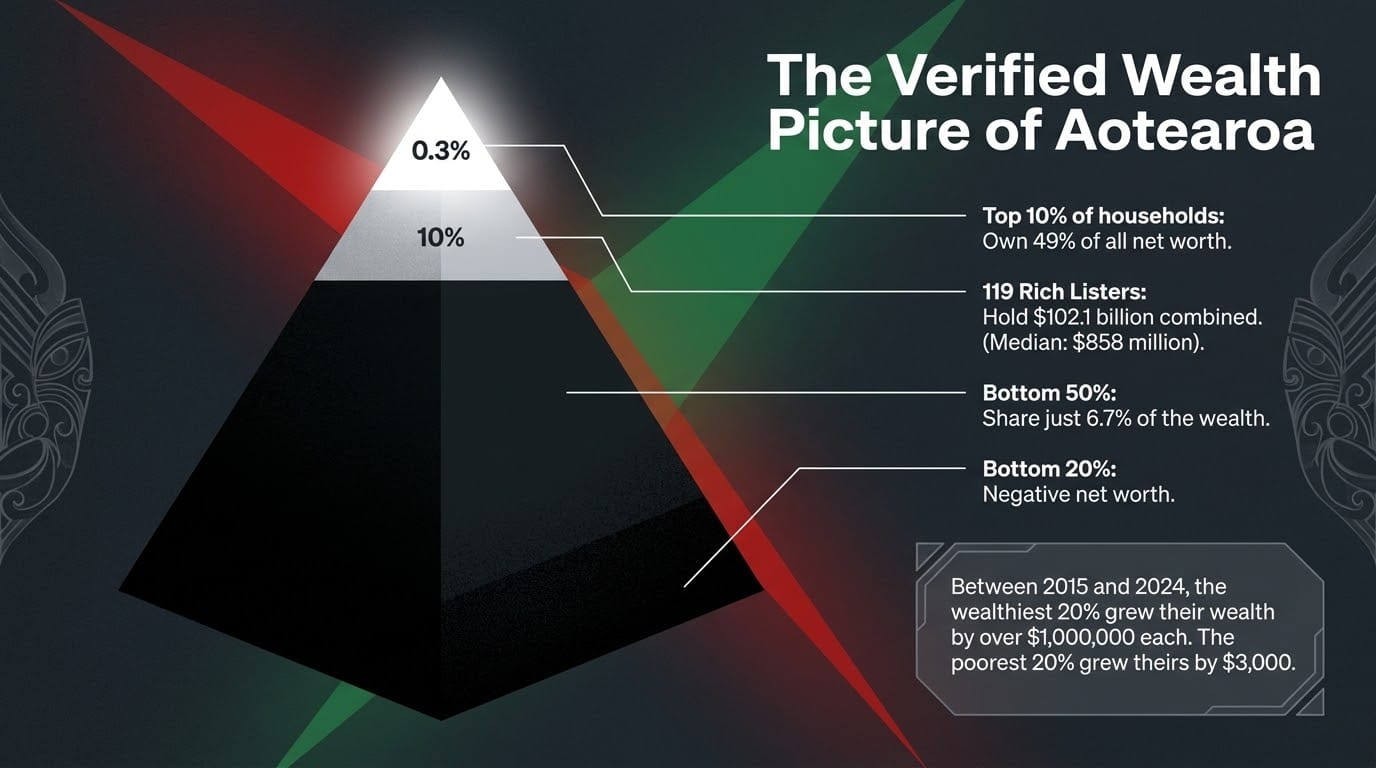
Before a single rebuttal from the right deserves a hearing, we must establish what we are actually talking about.
| Who | What They Hold |
|---|---|
| Top 10% of households | 49% of all household net worth |
| Top 20% of households | Two-thirds of all household net worth |
| Bottom 50% of households | 6.7% of all household net worth |
| Bottom 20% of households | Negative net worth |
| 119 Rich Listers (combined) | $102.1 billion — 4.9% of all household wealth |
| Median Rich Lister | $858 million |
| Median NZ worker | $151,000 in total assets |
Between 2015 and 2024, the wealthiest fifth of households grew their wealth by over $1 million each. The poorest fifth grew theirs by $3,000. The wealth gap between those cohorts increased by over $1 million in a single decade.
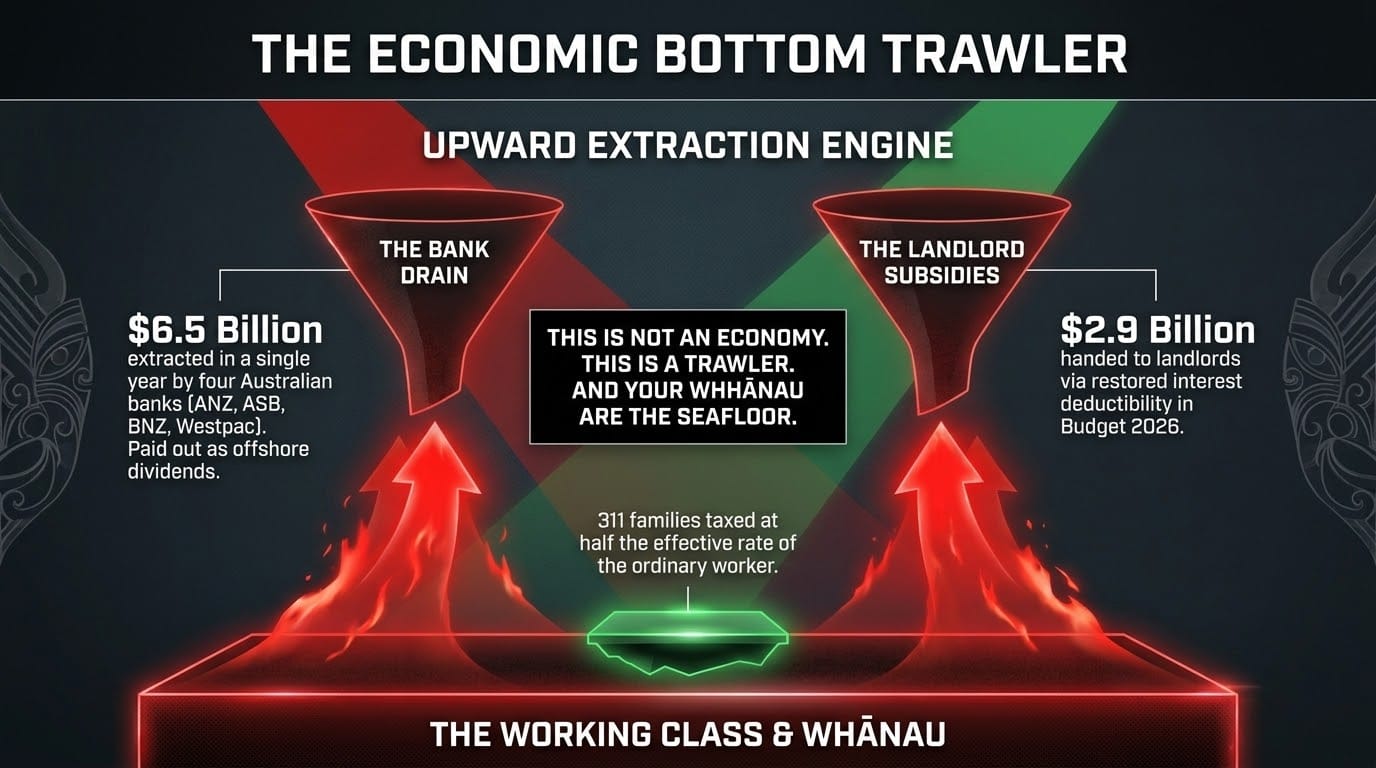
In the same period, ANZ, ASB, BNZ and Westpac recorded a combined profit of $6.5 billion in a single year — more than all 200 of New Zealand's other largest companies combined. That money did not stay in Aotearoa. It crossed the Tasman as dividends to Australian parent companies while 169,300 tamariki went to bed in material hardship.
Your mortgage interest — gone. Your overdraft fees — gone. The profits harvested from your debt — gone. And Nicola Willis called it a "strong economy."
This is not an economy. This is a trawler. And your whānau are the seafloor.
THE CHILDREN: WHAT THE "GROWTH" ECONOMY ACTUALLY PRODUCES
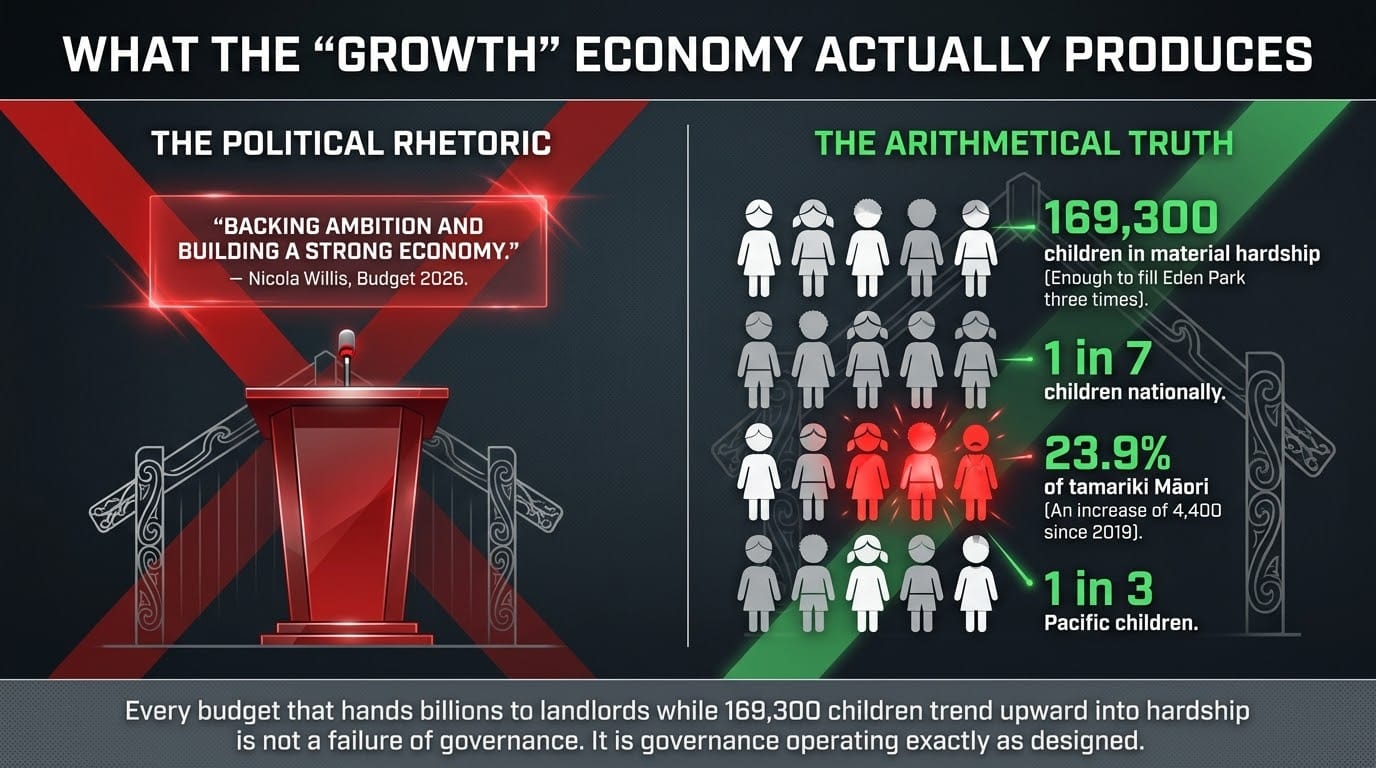
The Stats NZ Child Poverty Statistics for the year ended June 2025 — published 26 February 2026 — do not require interpretation. They require confrontation.
- 169,300 children in material hardship — enough to fill Eden Park more than three times
- 1 in 7 children nationally living in material hardship
- 23.9% of tamariki Māori in poverty — an increase of 4,400 since 2019
- 1 in 3 Pacific children in material hardship
- Material hardship for children has been trending upward since 2022
- Budget 2026 contained no meaningful reduction in any child poverty measure
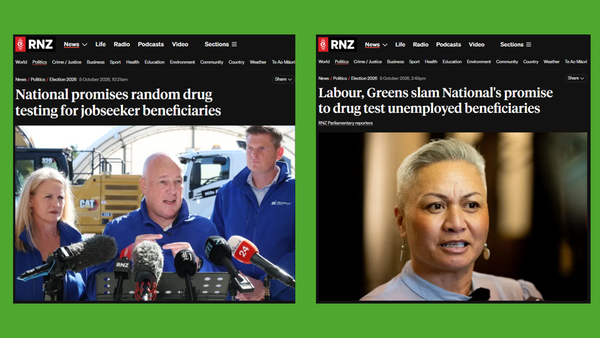
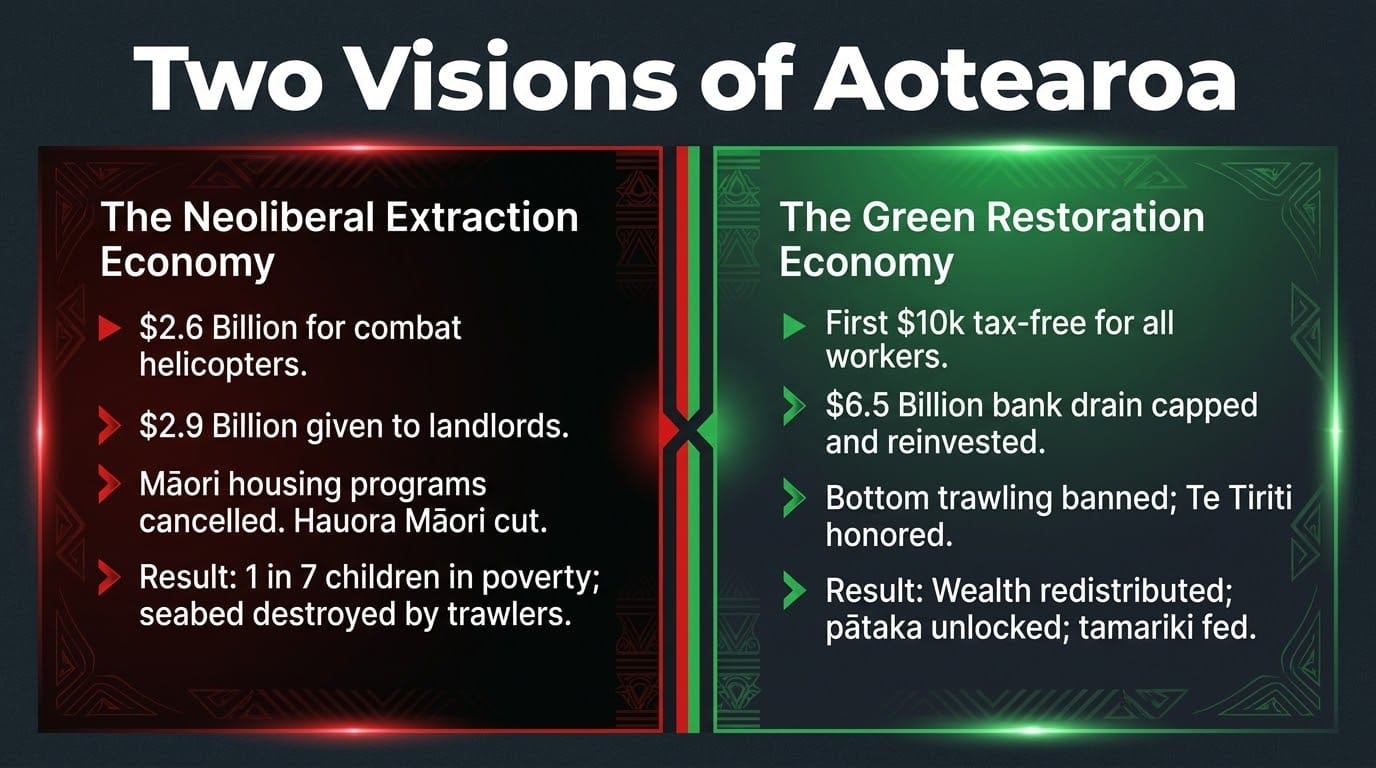
Now read Nicola Willis's Budget 2026 speech, which declared she was "backing ambition" and "building growth." The same budget that handed $2.9 billion to landlords via restored interest deductibility. The same budget that locked in $2.6 billion for combat helicopters. The same budget where Marama Davidson confirmed: "Te Tiriti o Waitangi is a promise of protection for whānau and for taiao: a promise Nicola Willis has broken for a third year in a row."
Three years in a row.
That is not negligence. That is policy. That is a choice. And the choice has a name: white supremacist neoliberalism — the deliberate organisation of the state to serve capital over people, Pākehā asset-owners over Māori communities, and offshore shareholders over your tamariki.
Every budget that hands billions to landlords while 169,300 children trend upward into hardship is not a failure of governance. It is governance operating exactly as designed — for exactly the people it was designed to serve.
THREE EXAMPLES FOR THE WESTERN MIND
Example 1: The Norwegian Wealth Tax — What "Economic Lunacy" Looks Like in Practice
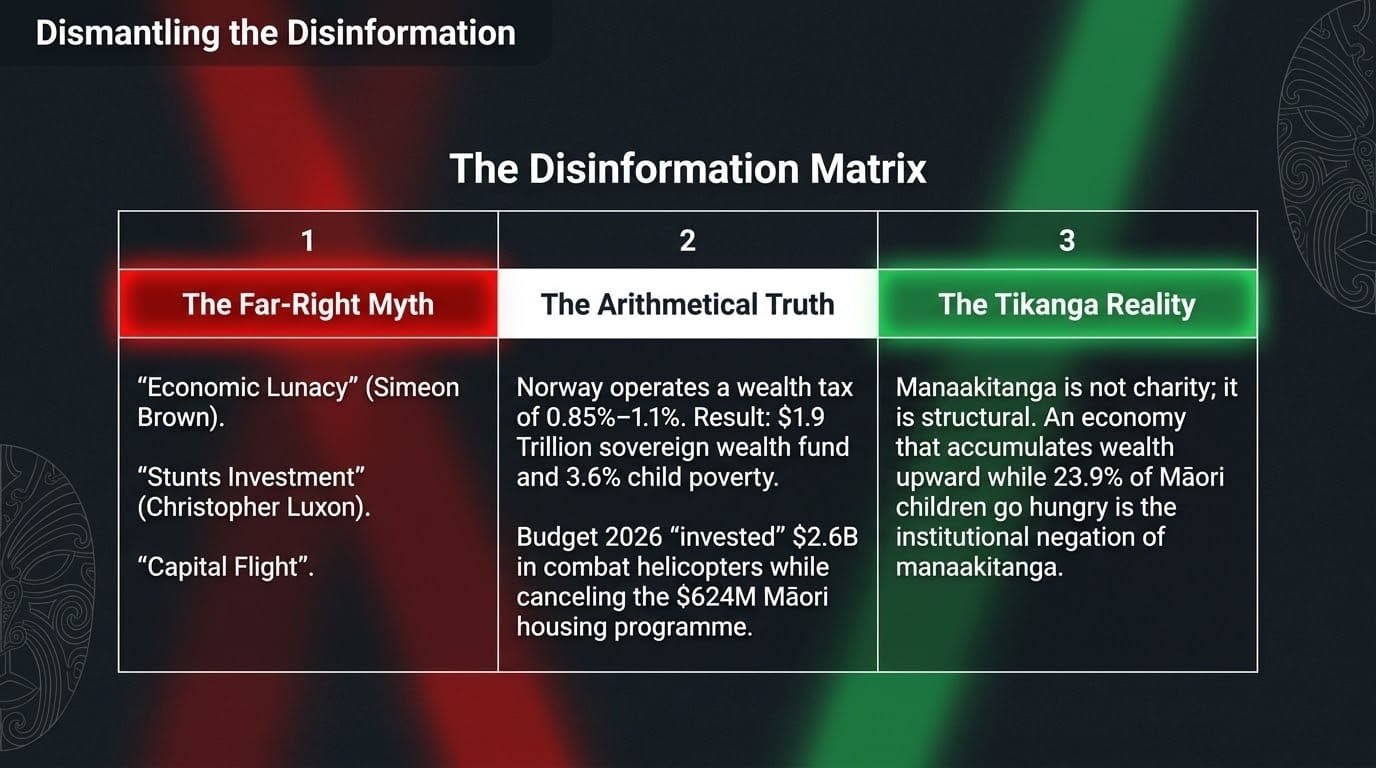
For those trained by forty years of Rogernomics to reflexively fear wealth taxes, let us look at Norway. Norway has operated a wealth tax — at rates between 0.85% and 1.1% on assets above a threshold — for decades. Norway's economy has not collapsed. Capital has not fled. What Norway has instead is a sovereign wealth fund worth over $1.9 trillion USD, a child poverty rate of approximately 3.6%, and universal healthcare.
New Zealand, with no wealth tax, has 169,300 children in material hardship, a housing crisis that has locked a generation out of home ownership, and a government that just handed $2.9 billion to landlords.
The Greens propose 2.5% on net assets above $10 million — the family home exempt — affecting 0.3% of New Zealanders. Norway taxes wealth at 0.85% starting far lower. If Norway's wealth tax is not economic lunacy, then the only thing "lunatic" about the Green proposal is that it is so modest given the scale of the crisis.
Tikanga impact for the western mind: In te ao Māori, the concept of manaakitanga — the obligation to uplift the dignity and wellbeing of others — is not charity. It is structural. It is woven into how a community organises its resources. A tax system that accumulates wealth upward while 23.9% of Māori children go hungry is not a neutral economic arrangement. It is the structural opposite of manaakitanga. It is the institutionalisation of its negation.
Example 2: Shane Jones, the Kermadec Sanctuary, and $26,950
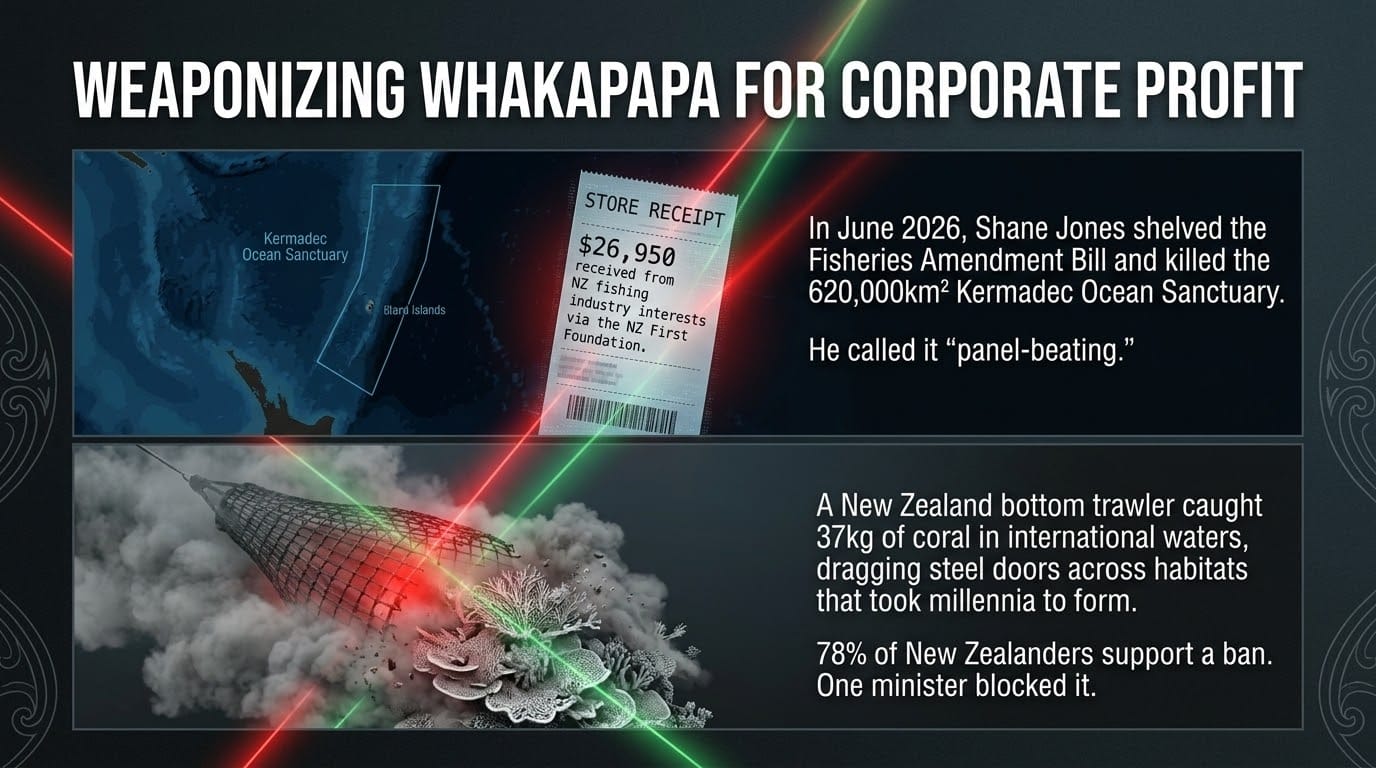
In October 2024, a New Zealand bottom trawler caught 37kg of coral in international waters — triggering suspension of all fishing in the area until 2026. This was not a rogue operator. This is what bottom trawling does: it drags steel doors and weighted nets across the seafloor, destroying in minutes habitat that took millennia to form.
Shane Jones — Minister for Oceans and Fisheries — responded by shelving the Fisheries Amendment Bill in June 2026 and calling it "panel-beating." The same Shane Jones whose political vehicle received $26,950 from NZ fishing industry interests via the NZ First Foundation. The same Shane Jones who killed the 620,000km² Kermadec Ocean Sanctuary — an area the size of France, Germany and Spain combined — so bottom trawlers could keep dragging the seafloor.
The solution is straightforward: ban bottom trawling on seamounts and in the Kermadec region, implement mandatory on-board cameras (as proposed under the original Fisheries Amendment Bill), and enforce the Treaty obligation to protect taonga of the sea. A November 2025 survey confirmed 78% of New Zealanders support this. Jones blocked it for $26,950 and a ministerial warrant.
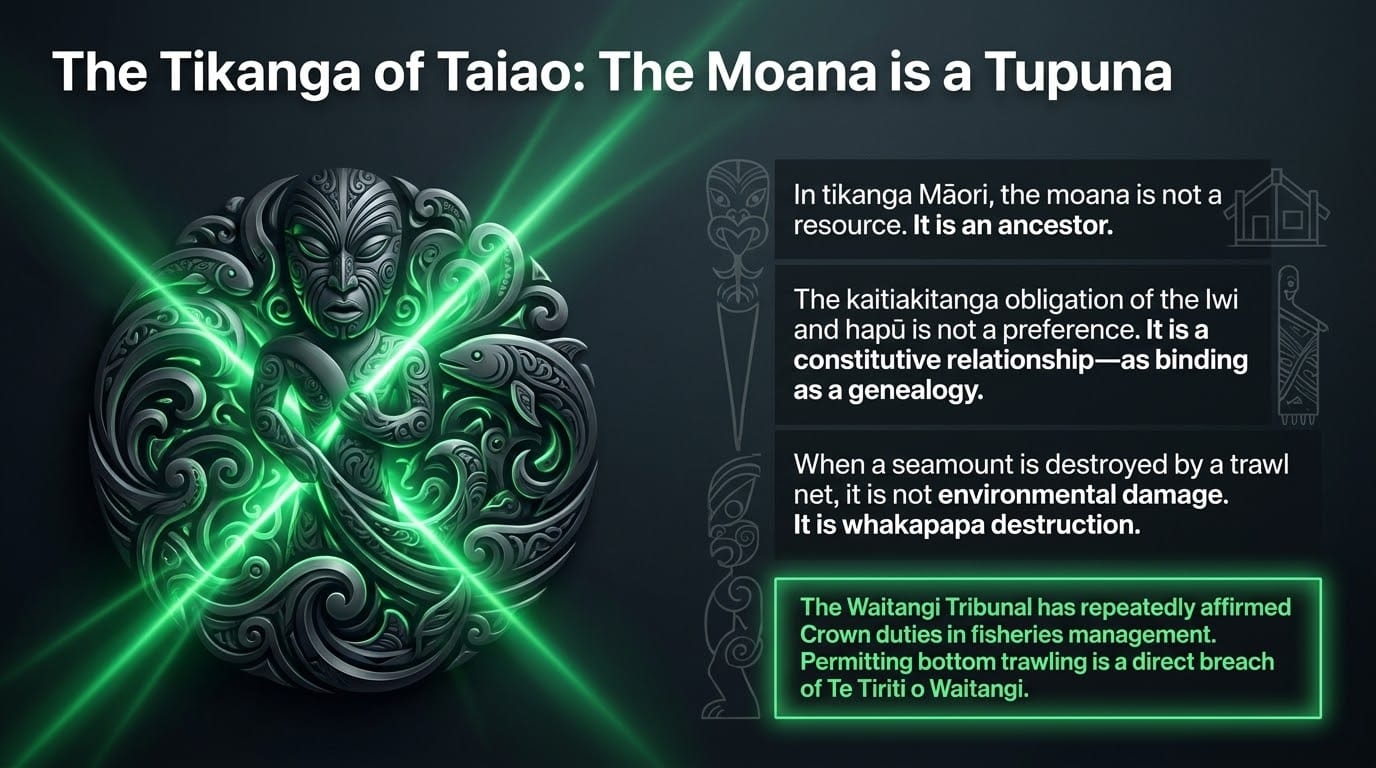
Tikanga impact for the western mind: In tikanga Māori, the moana is not a resource. It is a tupuna — an ancestor. The Tangaroa who governs the sea is not a metaphor. The kaitiakitanga obligation of the iwi and hapū whose rohe extends to the ocean floor is not a preference. It is a constitutive relationship — as binding as a marriage, as profound as a genealogy. When a seamount is destroyed by a trawl net, it is not environmental damage. It is whakapapa destruction. The Waitangi Tribunal has affirmed Crown duties in fisheries management repeatedly. Shane Jones is in breach of them. That is not an opinion. It is the Tribunal's consistent finding.
Example 3: The Inheritance Tax That Would Affect 1,100 People — and Change Everything
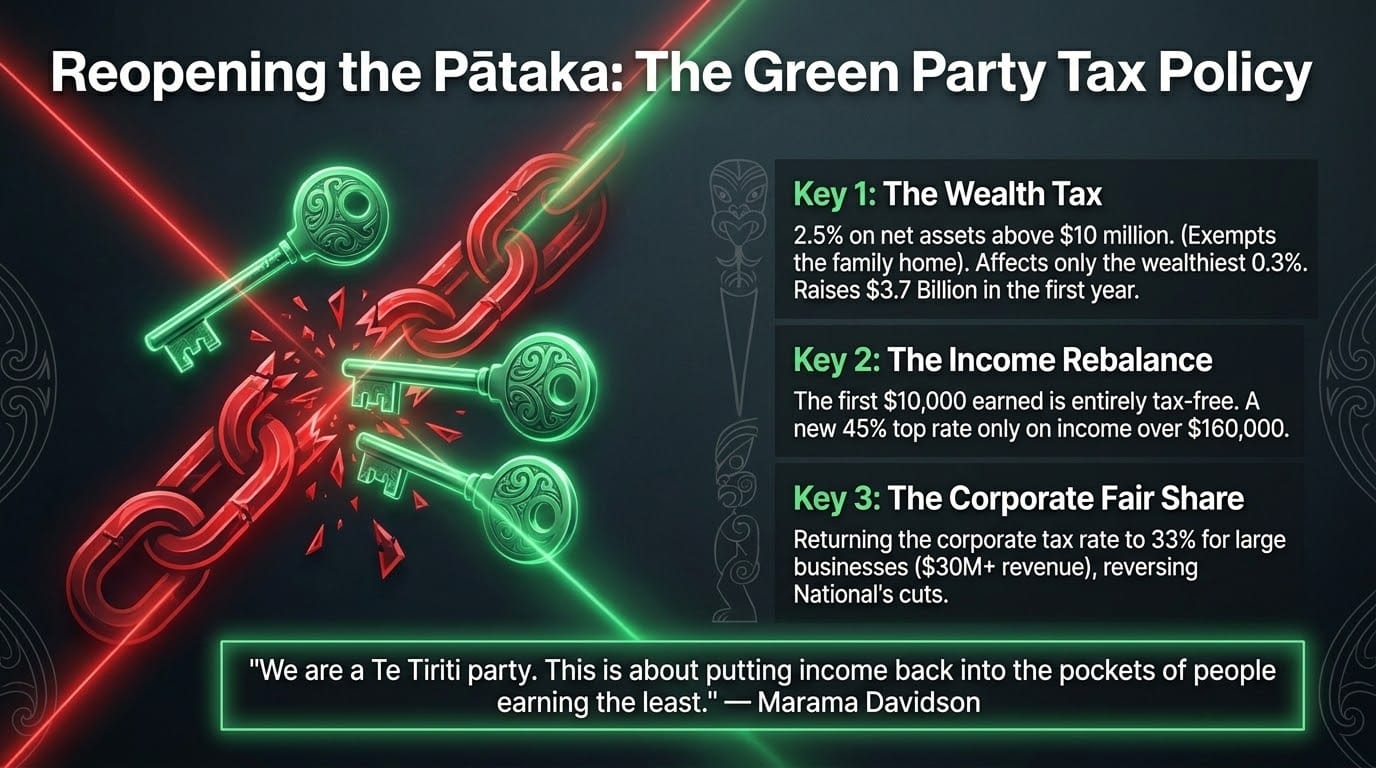
The Greens propose a Capital Acquisitions Tax of 33% on inheritances above $1 million — affecting approximately 1,100 people per year. Luxon and Willis oppose it.
What they are defending is this: in Aotearoa, every dollar of inter-generational wealth transfer above any amount is entirely tax-free. A billionaire can pass $100 million to their children and the Crown receives nothing. Meanwhile, a Māori solo parent earning $52,000 a year pays income tax from dollar one above $14,000, GST on every purchase including food, and rates if they can afford a home — which, since the government cancelled KO's Māori housing programme, is becoming less and less likely.
The inheritance tax would affect 1,100 people. The absence of it compounds the wealth advantage of those 1,100 families across every generation, in perpetuity. The top 10% already hold 49% of everything. Without an inheritance tax, that figure only moves in one direction.
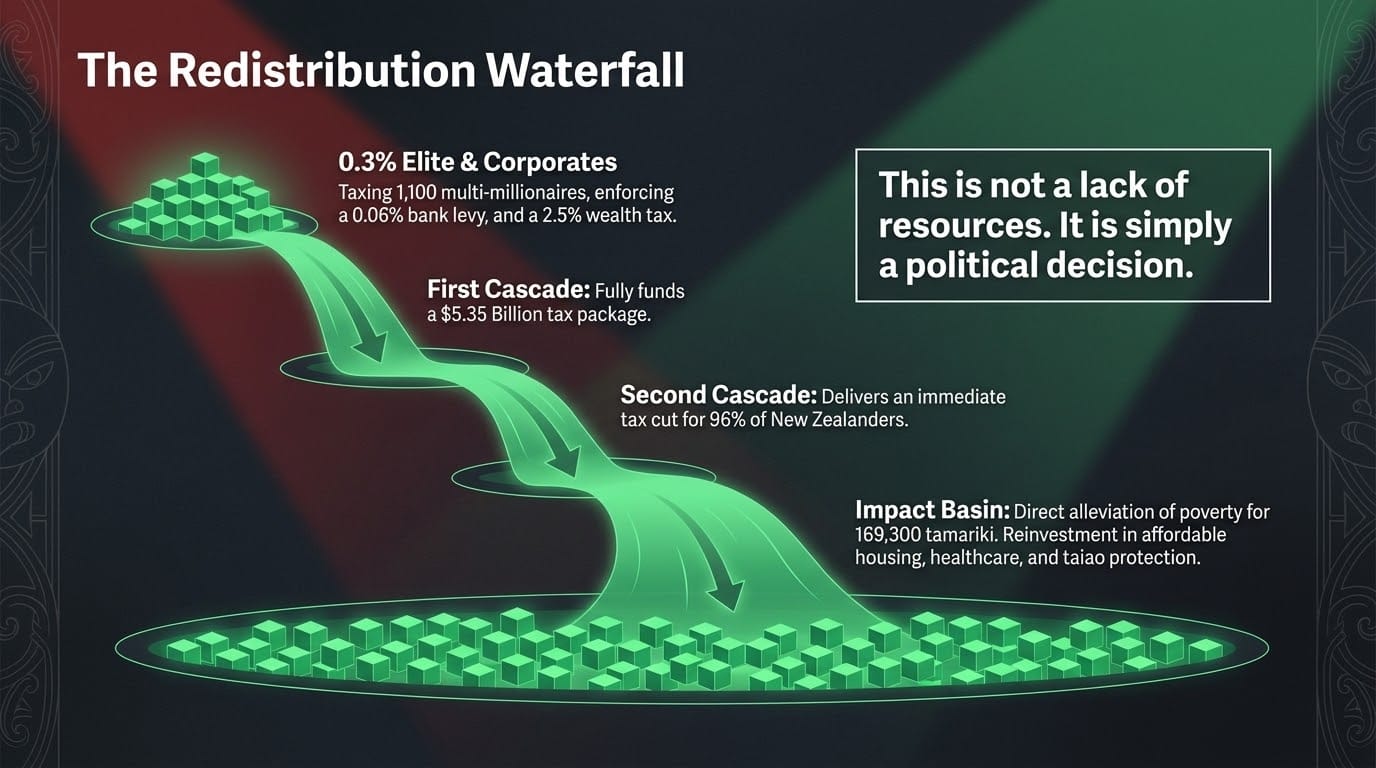
The solution is structural: implement the capital acquisitions tax, redirect the revenue to the $5.35 billion package that cuts taxes for 96% of New Zealanders, and begin reversing the Māori housing shortfall this government created by scrapping the $624 million programme.
Tikanga impact for the western mind: In te ao Māori, whakapapa is not just genealogy. It is an organising principle of relationship, responsibility and resource. When wealth passes through generations untaxed in a system that has historically excluded Māori from asset accumulation through land confiscation, alienation, and structural racism, it does not merely perpetuate inequality. It institutionalises the gains of colonisation and compounds them with interest. Every untaxed inheritance in a system built on Māori dispossession is a dividend paid on the original theft. The Greens' inheritance tax is not punitive. It is the beginning of structural restitution.
THE FIVE HIDDEN CONNECTIONS (VERIFIED)
1. The Bank Levy They Call "Radical" Already Exists — In Australia
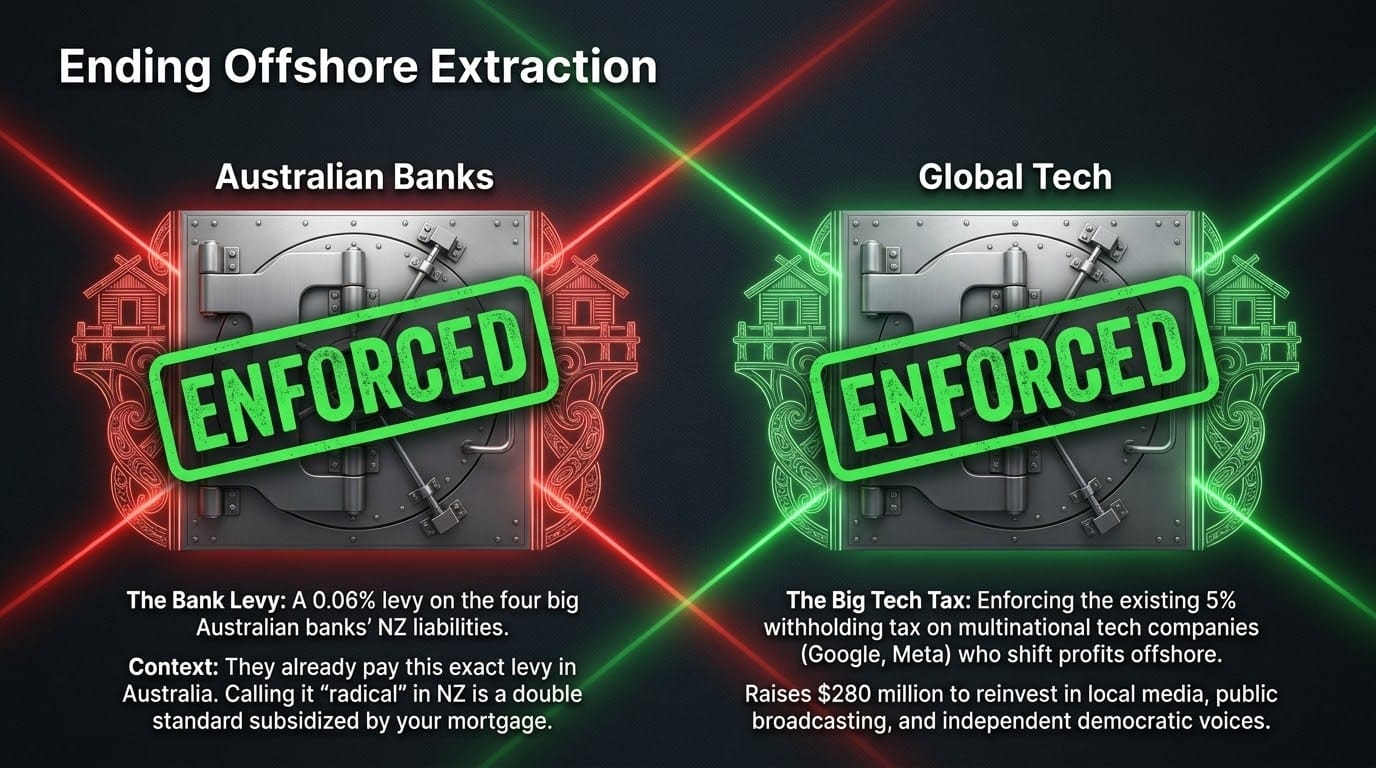
The Greens propose a 0.06% bank levy on the four big Australian banks' NZ liabilities. Australia already levies its major banks — ANZ, ASB, BNZ and Westpac pay that levy in Australia — but not in New Zealand, where they extracted $6.5 billion in profits in a single year and paid no equivalent recapture. Calling the NZ proposal "radical" while accepting its Australian equivalent as routine is not an economic argument. It is a double standard subsidised by your mortgage. It costs your whānau $6.5 billion annually in extracted profit. Luxon calls that "growth."
2. Luxon's "Growth" Framing Is Directly Contradicted by His Own Budget
Luxon said the wealth tax would "stunt investment." His own Budget 2026 invested — in things. $2.6 billion for combat helicopters. $2.9 billion for landlords. Te Puni Kōkiri was cut by $23.6 million in Budget 2026 with $73.6 million more locked in for future years. The Māori housing programme was cancelled. Hauora Māori was cut by a net $11.5 million. This is investment in the infrastructure of wealth protection — not in the people who need it.
3. Nicola Willis Broke Te Tiriti Three Years In A Row
"Budget 2026 neglects its Tiriti obligations to make way for the super-rich and powerful," said Davidson after the budget was delivered. This was not a new critique. It was a third consecutive finding. The Waitangi Tribunal has made the same finding. Willis said Māori "should have confidence" the budget would deliver for them. 23.9% of tamariki Māori living in poverty is what delivery looks like under this government.
4. The Same Coalition That Opposes Wealth Taxes Killed the Māori Health Authority
Te Aka Whai Ora — the Māori Health Authority — was abolished within six months of this government taking office. It was the institutional mechanism through which Māori could exercise rangatiratanga over their own health outcomes. Its abolition, combined with net cuts to Hauora Māori, is the direct structural context in which 23.9% of tamariki Māori live in poverty. You cannot separate fiscal policy from health policy from child poverty. They are the same policy — organised against the same people — by the same government.
5. Shane Jones Weaponised Whakapapa to Serve Corporate Fishing
As I documented in "Shane Jones, Corporate Thief in a Taiaha Costume", Jones deployed Māori identity and language to provide cover for one of the most egregious corporate handouts in New Zealand fisheries history. He killed the Kermadec Ocean Sanctuary — 620,000km² — and called it sovereignty. He shelved the Fisheries Amendment Bill and called it "panel-beating." He took $26,950 from fishing industry interests and called it governance. The Greens, via Davidson in MATA, are the only major political voice calling this what it is: corporate capture dressed in a taiaha costume.
THE FALLACIES: NAMED AND DISMANTLED
The response to Davidson's policy from the government and its media infrastructure relied on three fallacies. They deserve to be named and destroyed.
Fallacy 1: "Capital Flight" — the claim that taxing the wealthy will cause them to leave.
Evidence does not support capital flight at these thresholds. The 2.5% wealth tax applies only above $10 million, with the family home exempt. Similar wealth taxes operate in Norway, Spain, and Switzerland without capital flight crises. The "capital flight" argument is a scare story deployed by wealthy donors to politicians to protect their own portfolios. It is not economics. It is client management.
Fallacy 2: "Anti-Growth" — Luxon's framing.
Growth is not an end in itself. Growth that accumulates at the top while 169,300 children go hungry is not success. It is managed inequality with a press release. The question is not whether the economy grows. The question is: who does it grow for? The answer, under this government, is demonstrably the same 0.3% Davidson proposes to tax.
Fallacy 3: "Economic Lunacy" — Brown's framing.
The lunacy — by the arithmetic — is the current system: $6.5 billion leaving the country annually through bank profits, $2.9 billion handed to landlords, zero inheritance tax on inter-generational wealth transfers, and a child poverty rate trending upward since 2022. If that is sanity, then I am honoured to be called lunatic.
THE MGL ARCHIVE: THIS IS NOT A NEW FIGHT
I have been documenting this pattern for years. Every thread in this essay connects to a wider genealogy of corporate capture and deliberate Māori dispossession that I have traced across hundreds of essays. If you want to go deeper, here is where to start:
- "THE GREAT REBALANCING: Aotearoa Has Enough for Everyone — It Is Time to Prove It" — my full analysis of the Greens' 2026 tax package, the NBR Rich List wealth gap, and why this is the most significant redistribution proposal in a generation.
- "Shane Jones, Corporate Thief in a Taiaha Costume" — how Jones shelved the Fisheries Amendment Bill for a $26,950 donation and handed 620,000km² of ocean sanctuary to corporate trawlers.
- "The NZ Neoliberal Pantomime: Why Every Major NZ Party Serves the Same Masters" — tracing the structural capture of New Zealand's political economy, where 68% of New Zealanders support taxing billionaires and no major party except the Greens will do it.
- "POTAKA — The Neoliberal Māori and the Five-Million-Hectare Betrayal" — the most efficient tool of colonisation ever invented is not a musket. It is a briefcase, a ministerial warrant, and a Māori face doing the Crown's work.
- "Growth Without Mana: How Luxon's Economic Vision Perpetuates Colonial Exploitation" — how "growth" discourse is weaponised to neutralise structural critiques of an economy that produces 23.9% Māori child poverty.
- "The Green Tide Rises and the North Awakens" — three years of documenting what this white supremacist neoliberal government has done to whānau. The tide is turning.
- "How National's Compulsory KiwiSaver Is Wage Theft Dressed in a Baby Bonnet" — the latest: every essay published by The Māori Green Lantern follows the same genealogy to the same source. This government is not governing. It is extracting.
THE TIKANGA STAKES: WHAT IS ACTUALLY BEING DECIDED
I am Ivor Jones. I am Te Arawa, Ngāti Pikiao. My Welsh whakapapa sits alongside my Māori tūpuna and both lines taught me the same lesson: you do not let the powerful take everything while the vulnerable starve and call the arrangement "freedom."
Davidson's interview with Mihingarangi Forbes on MATA is not a pre-election policy announcement. It is a question about the soul of Aotearoa's economy
— and who it is organised to serve.
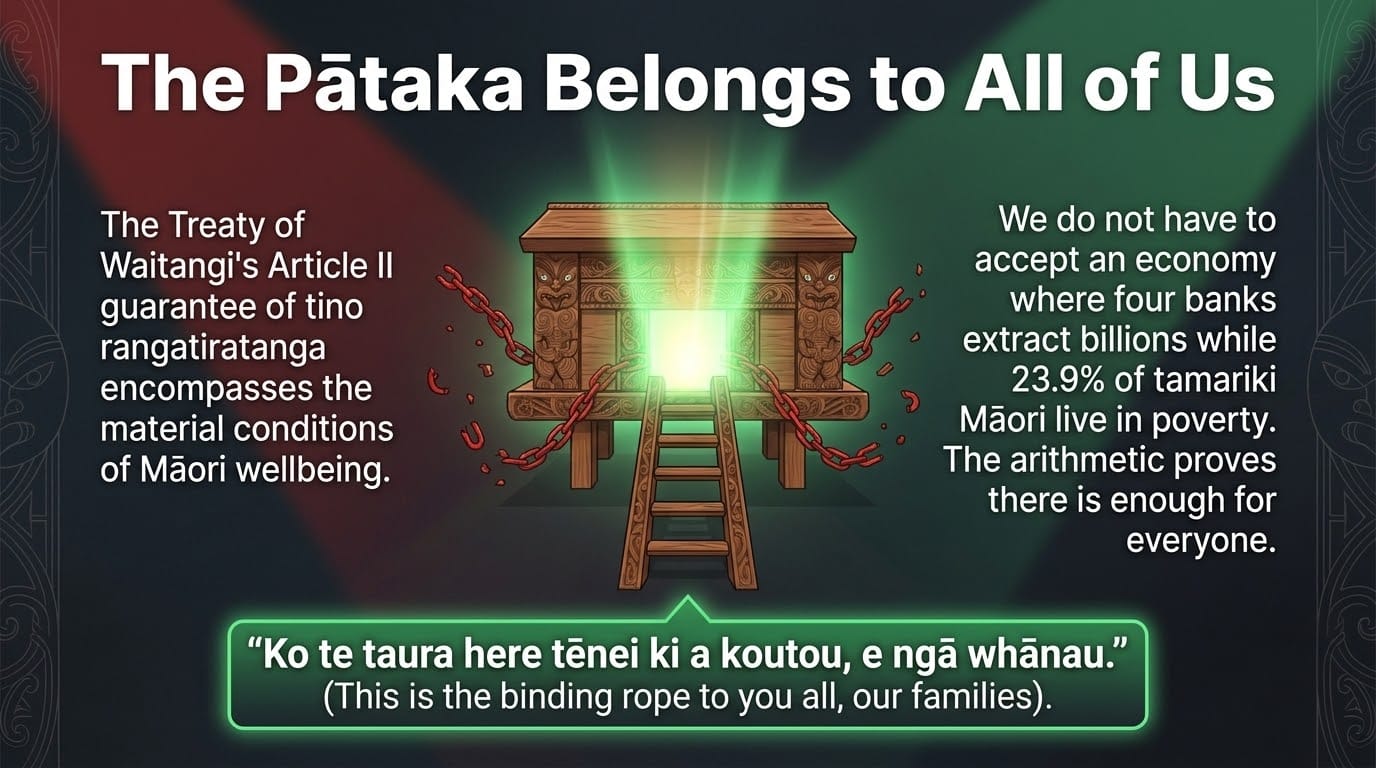
The tikanga principle at the centre is manaakitanga: the obligation to care for others, to elevate the dignity of the community, to ensure the pātaka feeds everyone. When 23.9% of tamariki Māori live in poverty, when the bottom 50% of households share 6.7% of all wealth, when four Australian banks extract $6.5 billion annually and pay no levy for the privilege, manaakitanga is being violated by policy.
The Treaty of Waitangi's Article II guarantee of tino rangatiratanga encompasses the material conditions of Māori wellbeing. A tax system that allows inter-generational wealth to flow untaxed to a Pākehā-dominated elite while Māori children go hungry is not a neutral economic arrangement. It is a continuation of the structural dispossession the Waitangi Tribunal has condemned for forty years.
Davidson is proposing that 0.3% of New Zealanders pay 2.5% annually on what they own above $10 million. She is proposing that 1,100 people a year pay tax on inheritances above $1 million. She is proposing that four Australian banks pay a levy already standard in their home country.
The system that calls this "lunacy" produced 169,300 children in material hardship, a 23.9% Māori child poverty rate, and a top 10% holding half of everything.
Name the crime. Policy-designed inequality, compounded by forty years of Rogernomics, maintained by a white supremacist neoliberal coalition government.
Name the beneficiaries. The 119 Rich Listers with $102.1 billion combined. The four Australian banks extracting $6.5 billion annually. The landlords who received $2.9 billion from a government that found nothing new for Māori housing.
Name the whānau being destroyed. The 169,300 tamariki — enough to fill Eden Park three times over — going to bed in material hardship tonight while the Beehive debates whether a 2.5% tax on billionaires is "good for growth."
The taiaha does not soften for politeness. The evidence is the taiaha.
Ko te taura here tēnei ki a koutou, e ngā whānau.
🌿 KOHA — SUPPORT THIS MAHI
Every koha signals that whānau are ready to support the accountability that Crown and corporate structures will not provide. This essay — like every essay on this site — was built on weeks of research, source verification, and the kind of sustained attention that the four Australian banks and the Luxon government are counting on you not to have.
While 169,300 tamariki go hungry and the moana is dragged by steel nets for corporate profit, this platform keeps naming the harm, tracing the network, and serving the whānau. That work requires support.
If you can: koha is rangatiratanga in action. It signals that we have the power to support our own truth tellers — not just consume the ones funded by the wealthy.
If you cannot koha right now: no worries, no judgment. Subscribe, follow, kōrero about this essay with your whānau and friends. That is koha in itself. Every share is a taiaha in someone else's hand.
Four pathways to support this mahi:
- Koha directly: Support The Māori Green Lantern here
- Subscribe for essays direct to you: themaorigreenlantern.maori.nz/#/portal/support
- Direct bank transfer: HTDM — 03-1546-0415173-000
- Facebook: Follow and subscribe here
Kia kaha, whānau. Stay vigilant. Stay connected. The pātaka belongs to all of us.
Nā Ivor Jones — The Māori Green Lantern

Ko Ivor Jones tōku ingoa. He uri ahau nō Te Arawa, Ngāti Pikiao, me ōku tūpuna Wēra. Ka whakahāngai au i ngā kōrero ki runga i ngā tikanga o te iwi Māori, me te kōrero tika ki te ao.
⚖️ Legal disclaimer: This essay is published in the public interest under qualified privilege (Lange v Atkinson 3 NZLR 385). All factual claims are sourced and cited. Opinions are identified as such and grounded in verified evidence. The characterisation of government policy as harmful is based on verified statistical outcomes, not personal malice. The term "white supremacist neoliberal" describes an identifiable political ideology and policy pattern, documented across MGL essays, not a personal characteristic of any individual. Any person or organisation named has the right to respond — corrections will be published with equal prominence. NZ Defamation Act 1992 compliant. Pre-publication checklist complete.