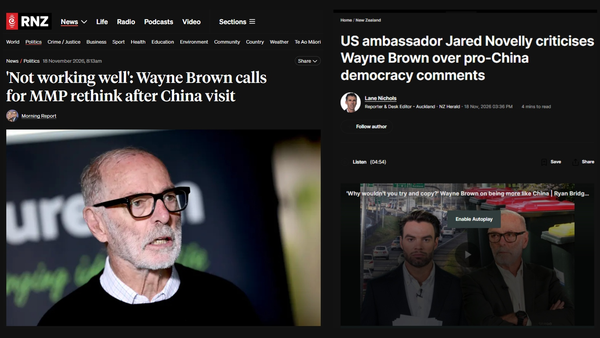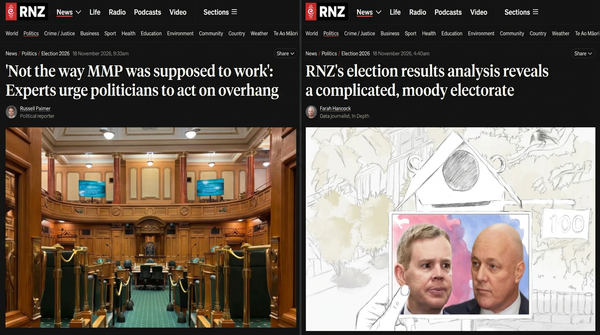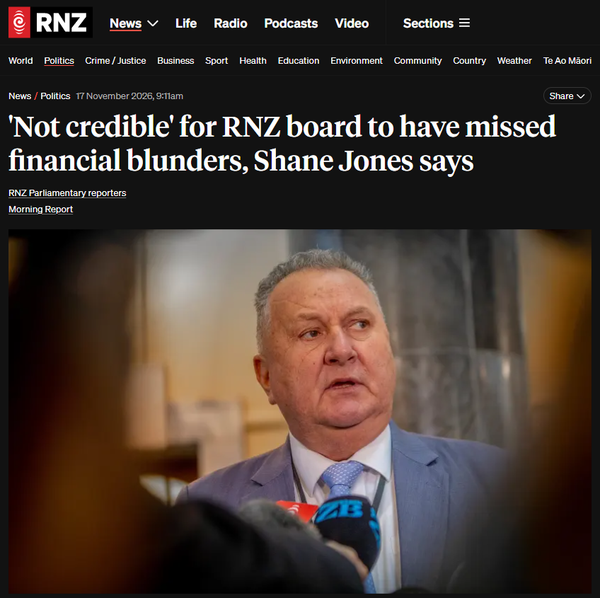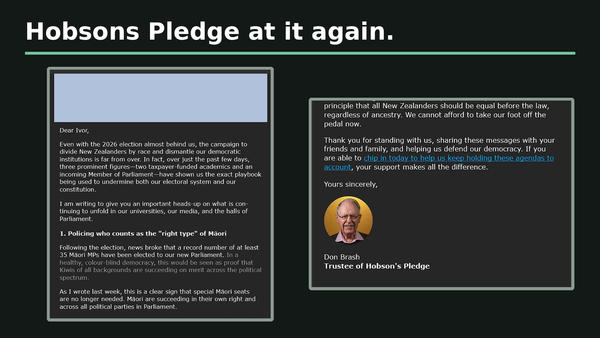
"National, Stop Insulting Our Intelligence" - 11 November 2026
Luxon Wants The Power, Bishop Wants Sympathy, And Whānau Are Expected To Forget Who Made The Decisions



Mōrena ano Aotearoa,
I am Ivor Jones, The Māori Green Lantern, and I am tired of politicians treating accountability as something they can leave behind with their campaign signs.
Listen to what National’s people are saying.
 RNZ | Te Reo Irirangi o Aotearoa
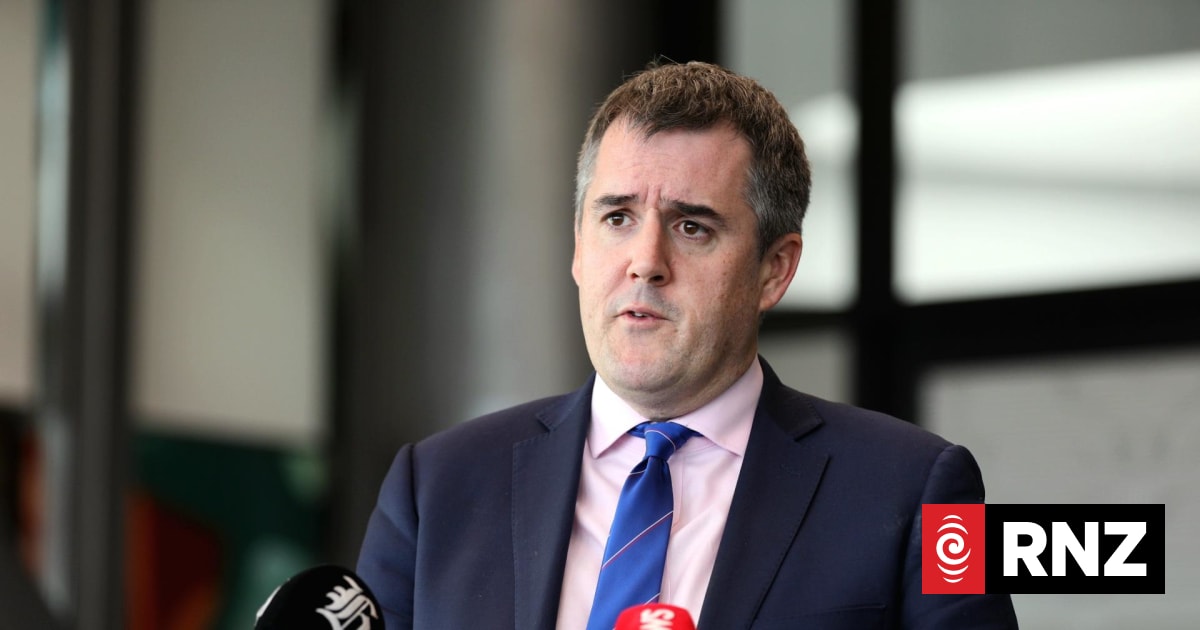
Chris Bishop says the overhang campaigns were bad for democracy.
 RNZ | Te Reo Irirangi o Aotearoa
 RNZ | Te Reo Irirangi o Aotearoa
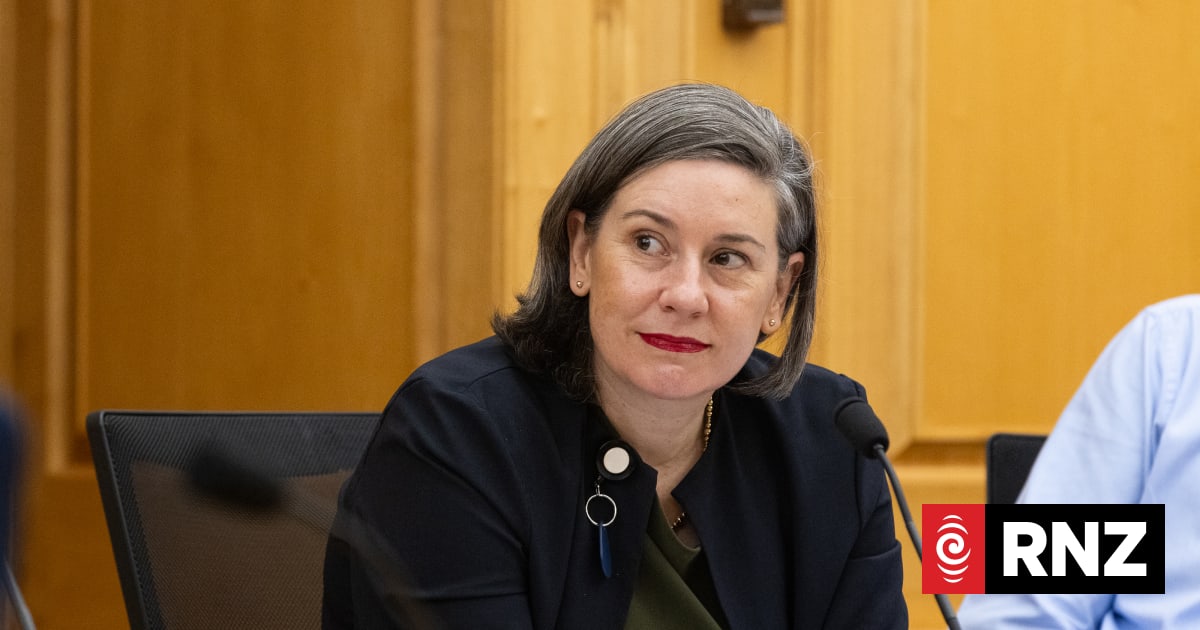
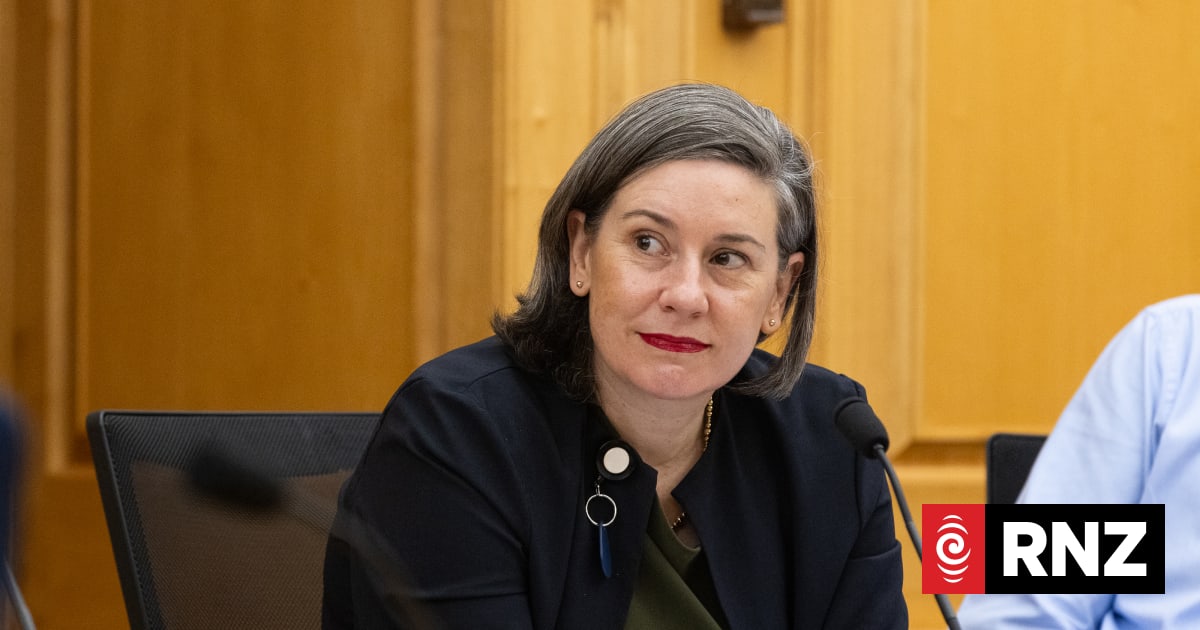
Vanessa Weenink says the coalition’s Treaty compromise hurt the country.
 RNZ | Te Reo Irirangi o Aotearoa
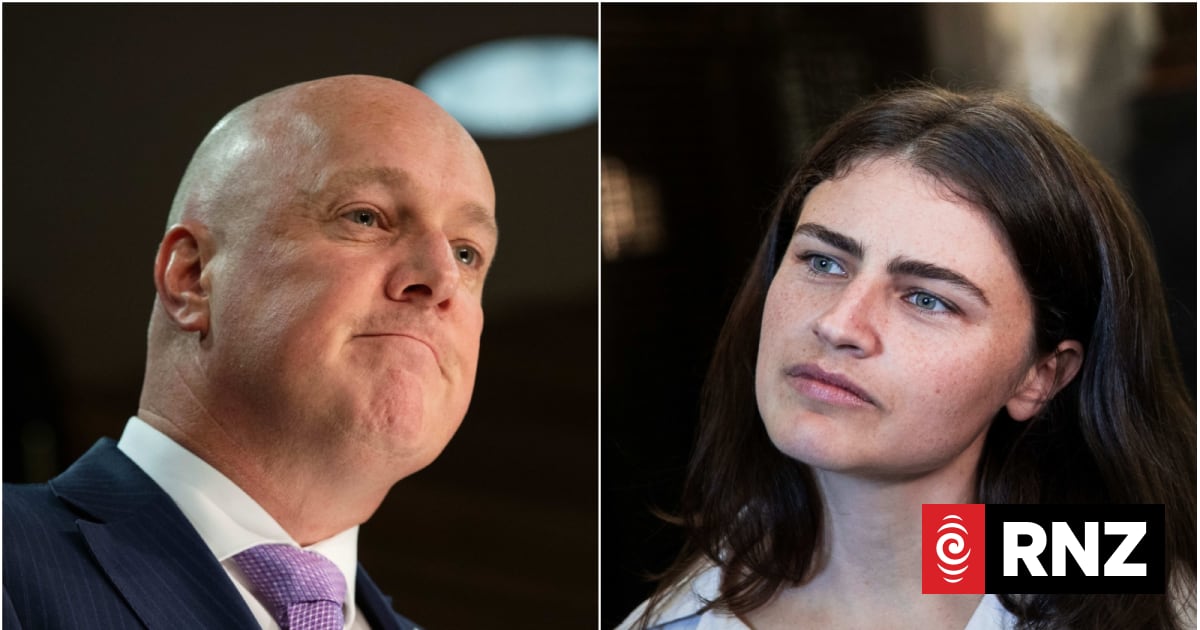
Mark Mitchell says voters have not rejected National because it still has the most seats. These are their accounts, not an opposition script. RNZ reports Bishop’s criticism, Weenink’s assessment and Mitchell’s defence.
 RNZ | Te Reo Irirangi o Aotearoa
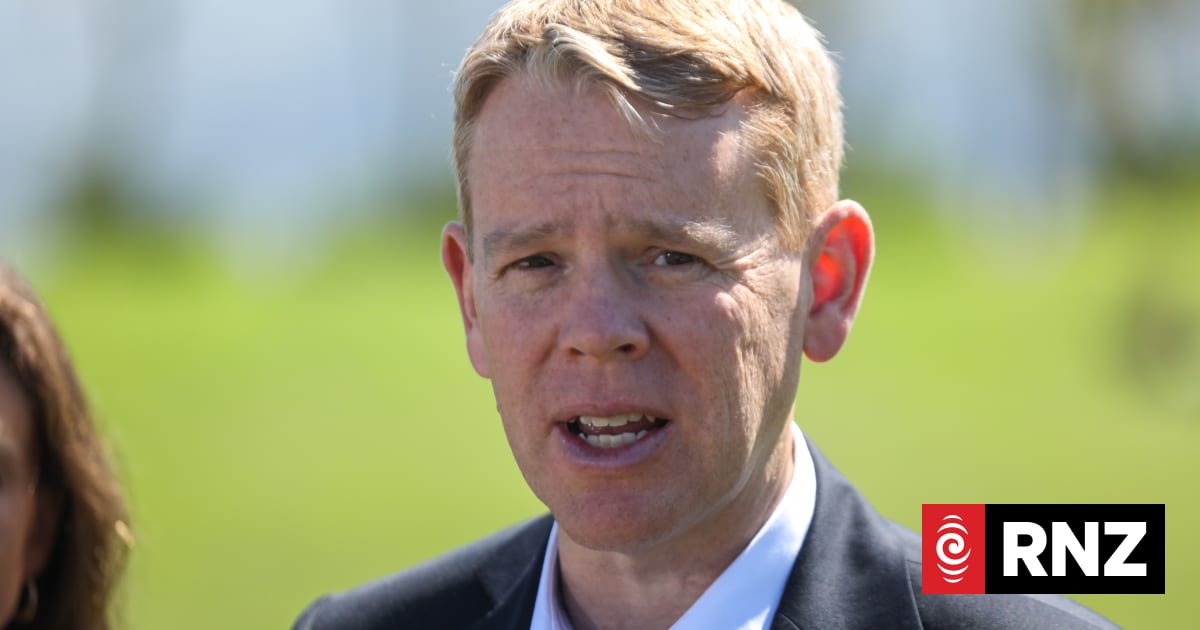
What I hear is a party trying to keep possession of the power while returning responsibility to sender.
No. You governed. You made the compromises. You do not get to shake your heads at the wreckage as though somebody borrowed your government without asking.
This essay examines the enrolment barrier, National’s overhang, Bishop’s complaints, Weenink’s admissions and the difference between winning seats and earning trust. I will also explain what the numbers actually show, what remains unproved, and what needs to change.
I am bringing Tika, Pono and Tikanga to that examination—not as decoration, but as the standard I expect power to meet.
Come Into The Kōrero

I would love you to click through and spend time with this mahi. I build these essays to give you information you can use when somebody repeats a political talking point at work, around the dinner table or in your whānau chat.
If listening or watching works better for you, my earlier related investigation, The Donor Wants A Thank-You Card: Whānau Want Their Democracy Back, brings together a long-form audio discussion, a YouTube video and the written argument.
I am building this repository for our mokopuna. I have described it as more than 1,000 essays documenting neoliberalism, misinformation and disinformation in Aotearoa. That is the purpose I set out in that earlier explanation of the kaupapa.
I want our mokopuna to look back and know that somebody was keeping the record. The Māori Green Lantern and others were documenting what happened, challenging it and trying to protect them.
Not waiting until the damage became respectable history.
Start With The Door They Closed
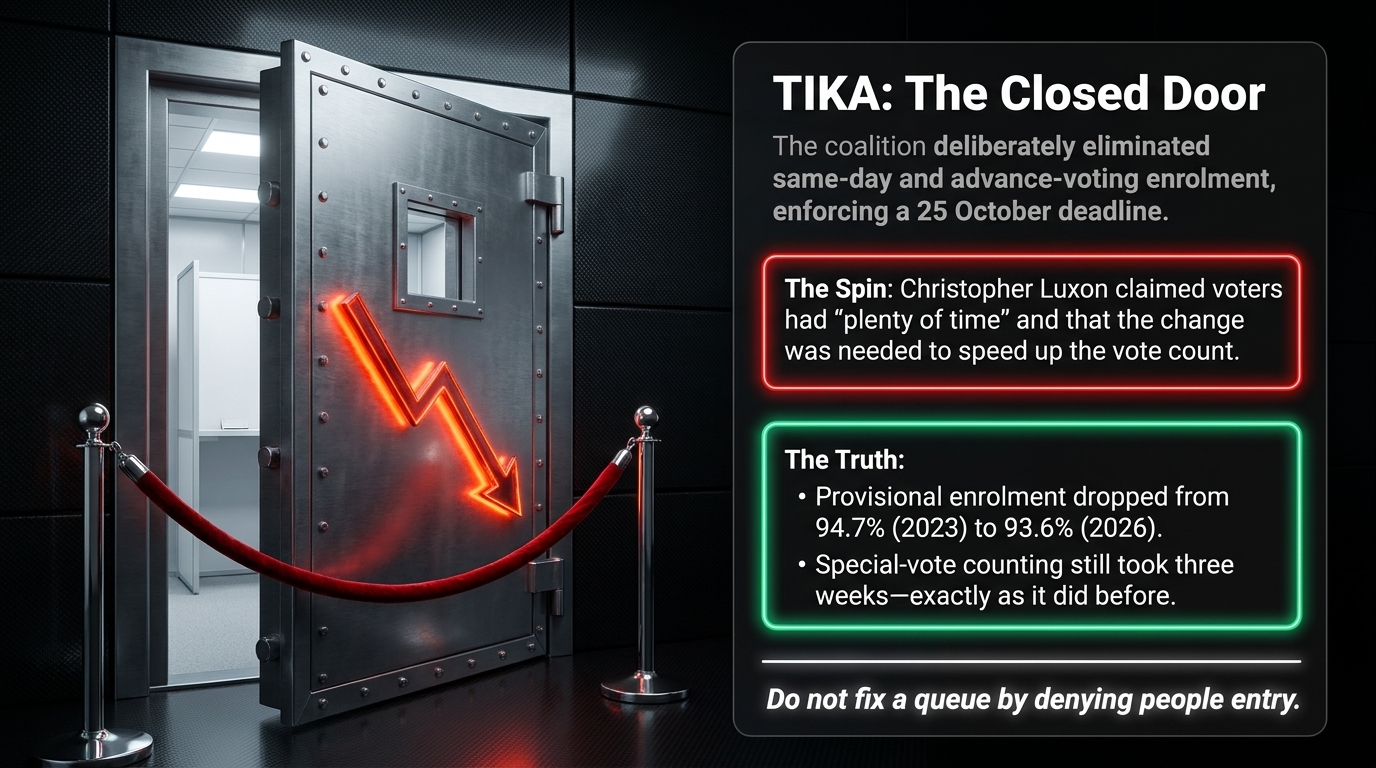
The coalition removed the ability to enrol during advance voting and on election day. The deadline for this election was 25 October. That was a deliberate change to the rules, not a broken printer at a polling booth. RNZ explains the restriction.
Luxon said people had “plenty of time” to enrol. He also defended the change by referring to the Electoral Commission’s workload and the counting process. RNZ records those explanations.
Well, Christopher, “plenty of time” is not an answer to why your government removed an existing opportunity to participate.
It is a scolding.
You put the barrier there, then talk as though anyone caught behind it has only themselves to blame. That might make a tidy interview answer. It does not make a decent democratic principle.
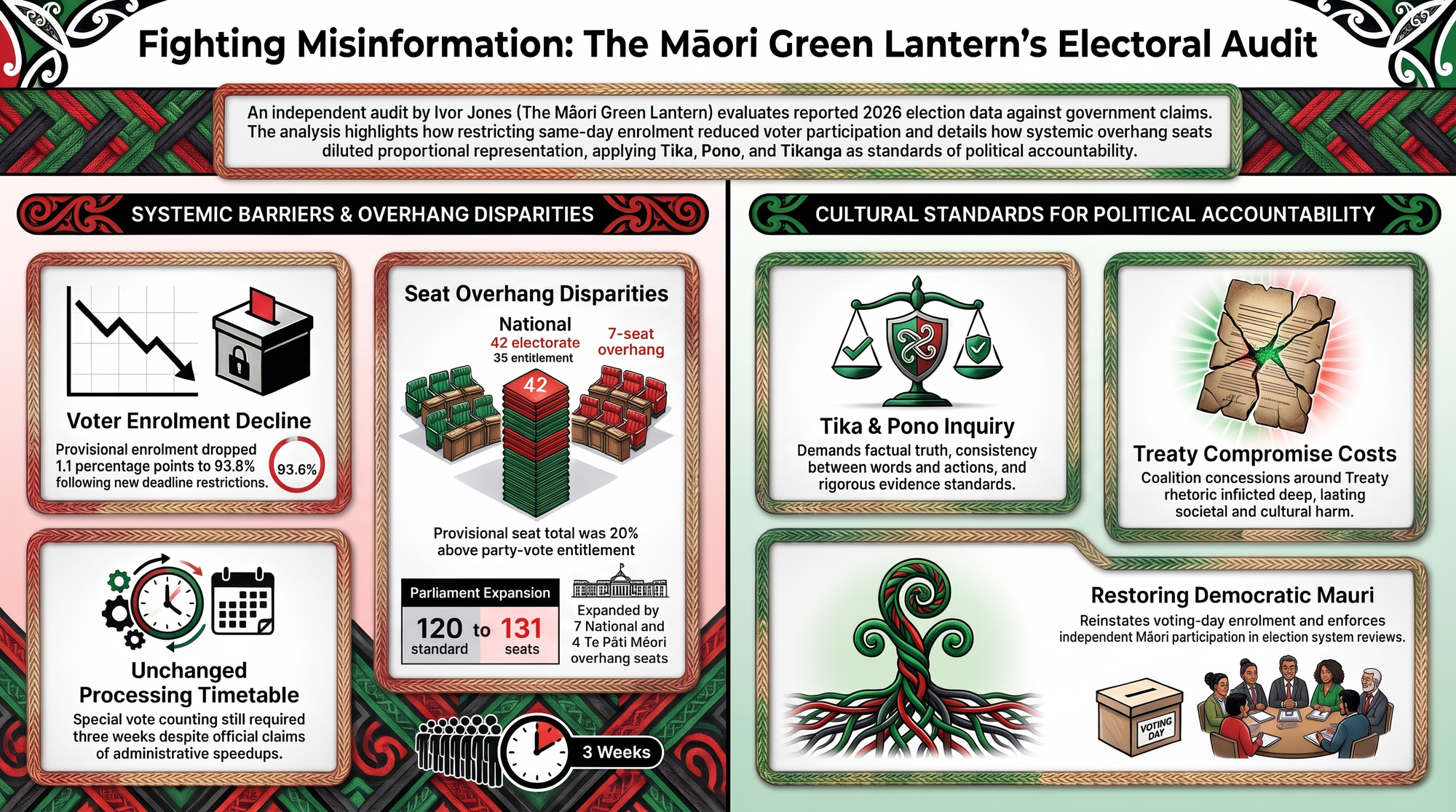
The provisional enrolment rate was 93.6 percent, compared with 94.7 percent in 2023—a decline of 1.1 percentage points. Special votes were still expected to take three weeks to count, as they had after the previous election. RNZ reports the rates and timetable.
I will not pretend those figures tell us exactly how many people the deadline excluded. They do not.
But I am certainly not accepting the government’s justification as proven when the publicly reported timetable has not shortened and the enrolment rate has fallen.
Show us the benefit. Show us the harm. Show us the evidence that the former justified the latter.
Until then, stop dressing a restriction on participation as though it were merely competent housekeeping.
Swarbrick’s Language Is Not The Main Problem
Chlöe Swarbrick accused the government of knowingly indulging in voter suppression and accused Luxon of lying about the justification. Opportunity leader Qiulae Wong thought “lied” was strong language, but also opposed the changes and questioned whether their stated benefits had materialised. RNZ records both positions and Luxon’s response that he had nothing to add.
I am not interested in making this another conversation where everybody examines the critic’s tone while the government’s decision slips out the back door.
Whether Luxon knowingly made a false statement requires evidence about what he knew. His prediction being wrong would not, by itself, settle that question.
The restriction itself is not in doubt.
A government removed a way people could enrol and vote. It must justify that decision. It does not get to demand softer language as the price of answering.
Bishop, Bring A Mirror
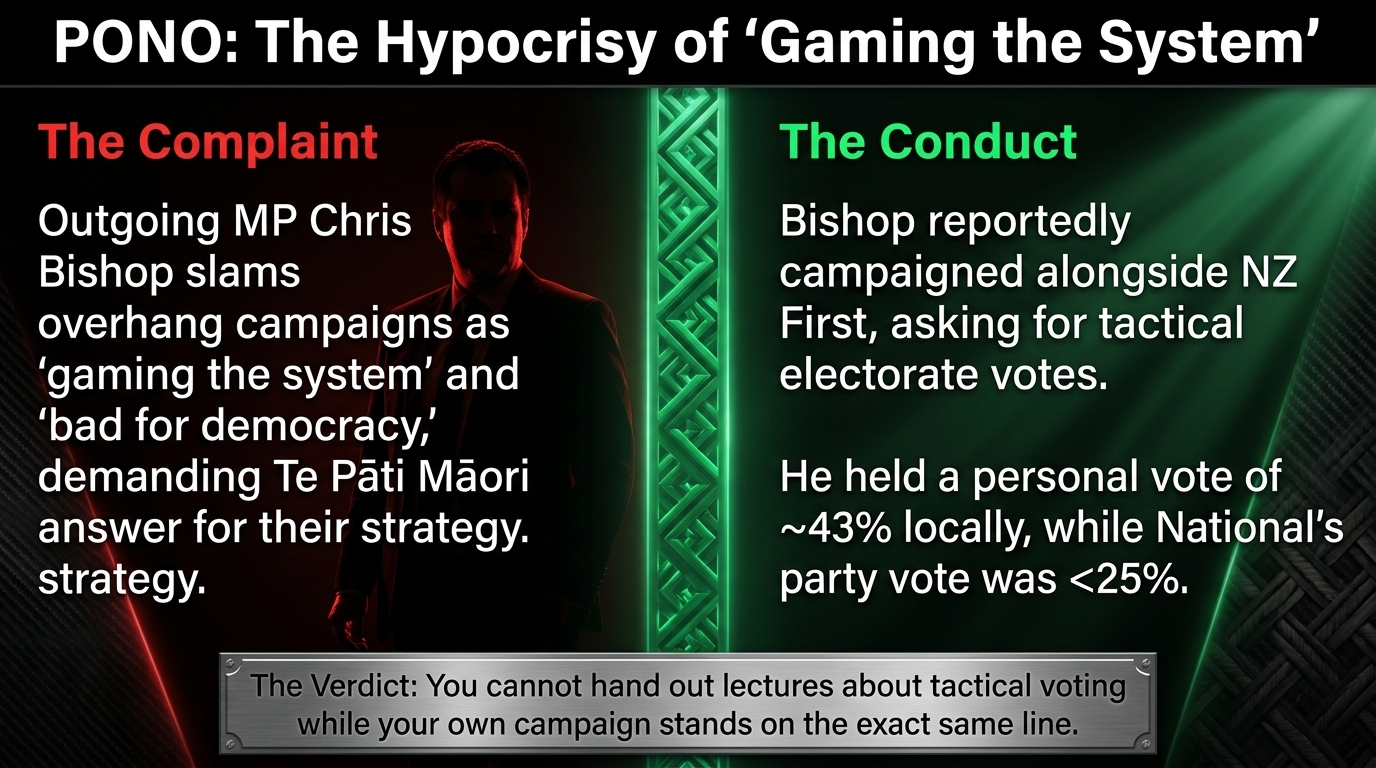
Bishop says the overhang campaigns were “gaming the system”. He says Te Pāti Māori and “Harry and his crew” have “a lot to answer for”. Those comments followed his defeat in Hutt South and National’s failure to win list seats. RNZ reports his comments and circumstances.
He is allowed to criticise the system. Losing does not make him wrong.
But it does not make him exempt from questions either.
Hipkins alleges that he saw Bishop beside Winston Peters, asking New Zealand First supporters to give their electorate vote to National. RNZ records Hipkins’s specific account.
So explain it, Chris.
What exactly did you encourage? Where do you draw the line between legitimate cross-party voting and electoral gaming? Does that line remain in the same place when your own campaign is standing on it?
An appeal for another party’s electorate support does not automatically prove participation in an organised overhang scheme. I am not claiming otherwise.
I am saying that a politician handing out lectures about tactical voting should expect his own tactics to be examined.
Bishop reported approximately 43 percent personal support while National’s party vote locally was below 25 percent. RNZ reproduces his statement.
Those figures are a reminder that voters can distinguish a candidate from a party. National cannot claim the benefit of that distinction when it helps its candidates, then pretend every electorate victory is an endorsement of the whole government.
The Deep Dive Podcast
Listen to a lively conversation between two hosts, unpacking and connecting topics in the sources of this essay. I apologise in advance for the AI's very harsh pronounciation of reo. Please dont shoot me, :).
Youtube Video
Like video? Here is a short video suppporting the essay. Again, don't shoot the messenger please because of AI's pronounciation. :)
Mitchell’s Seat Count Does Not Answer The Question
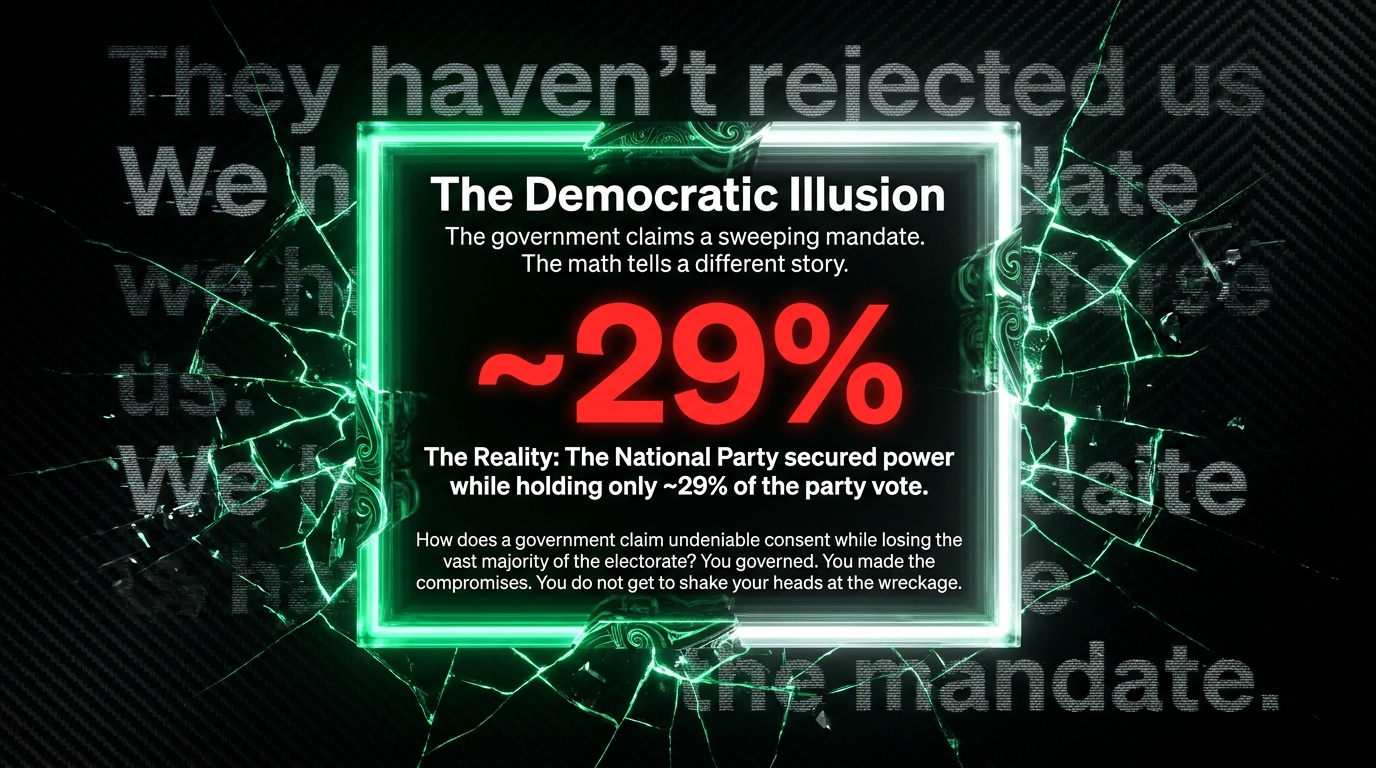
Mitchell’s defence was that National had not been rejected because it was returning as the biggest parliamentary party, despite a reported party vote of approximately 29 percent. Asked about the overhang, he said, “it’s MMP”. RNZ records the exchanges.
Yes, Mark. We know the name of the system.
We are discussing what happened inside it.
RNZ’s preliminary analysis gives National 42 electorate seats against an approximately 35-seat party-vote entitlement—a seven-seat overhang. Te Pāti Māori had a four-seat overhang, taking the provisional Parliament from 120 seats to 131. RNZ explains the arithmetic.
Those seats exist under the rules. That does not make the rules beyond criticism.
Nor does being able to assemble parliamentary power prove the country approved of everything you did with it last time.
I am tired of this cheap substitution: ask about consent, receive a seat count; ask about responsibility, receive a coalition excuse.
Answer the question you were asked.
I Will Not Invent Luxon’s Private Conversations
Harry Mowbray promoted electorate votes for National and party votes for ACT or New Zealand First. He also said the parties that had not supported his campaign were benefiting from it. RNZ reports his strategy and statements.
The result warrants scrutiny. It does not establish that Luxon secretly endorsed the campaign.
Constitutional lawyer Graeme Edgeler offers a credible alternative explanation: unpopular major parties can retain electorate candidates while losing party support, producing overhangs without an organised tactical campaign being decisive. He says the Electoral Commission’s split-vote analysis will help clarify what occurred. RNZ reports his assessment.
That belongs in the argument.
I do not need to invent a secret meeting to criticise National. Doing so would hand its defenders an escape from the decisions we can already examine.
Hipkins’s claim that National could not otherwise retain power also needs the full arithmetic, not automatic acceptance because I share his anger. His accusation is reported here; it remains a proposition to test.
Pono does not mean believing the allegation that feels best.
It means refusing to corrupt your own case.
Weenink’s Honesty Does Not Absolve National
Weenink says people in Banks Peninsula told her they “literally hate us”. Others told her National had lost its way and listened too much to its coalition partners. RNZ records her account.
That is not a national poll. It is an account of real hostility she says she encountered.
It is also a rather inconvenient answer to colleagues insisting the public had not rejected them.
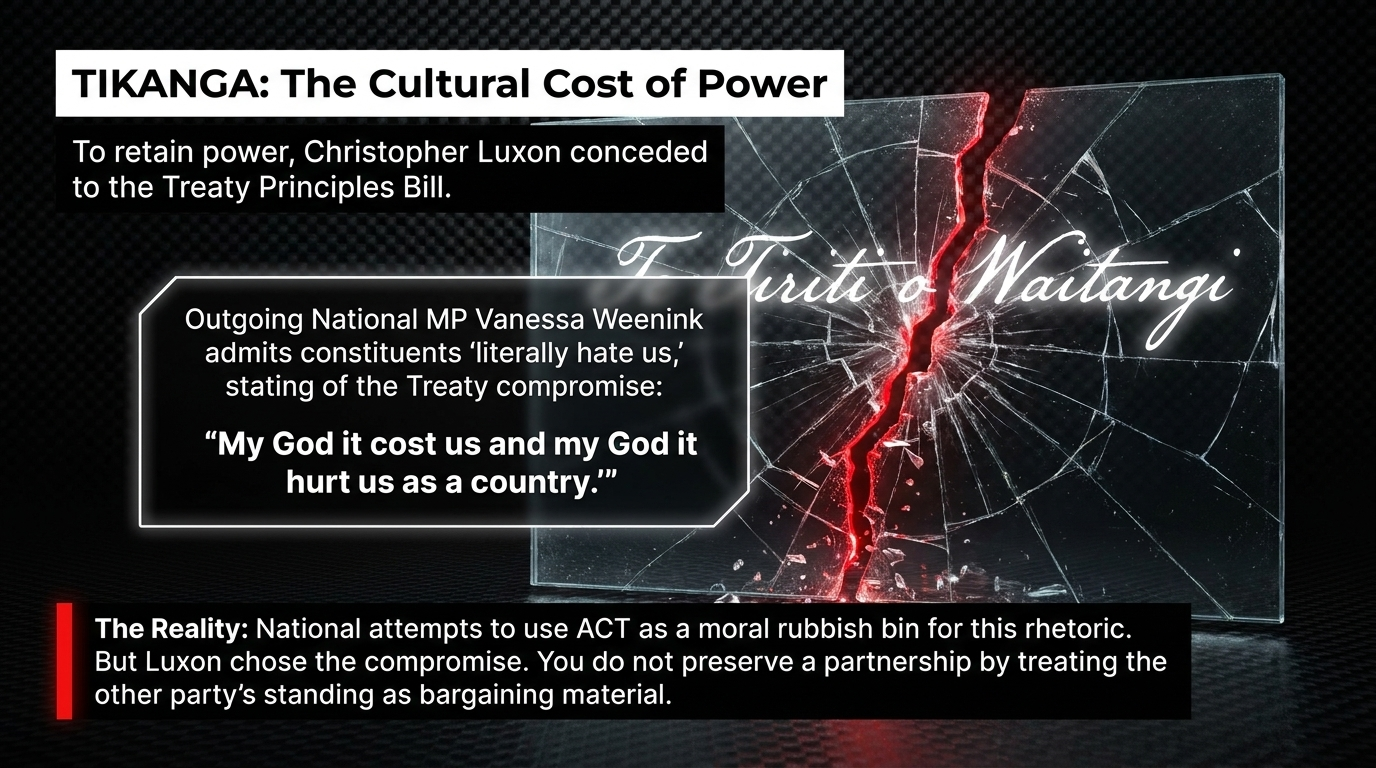
Her Treaty comments cut deeper. She described rhetoric around te reo Māori and Te Tiriti as deeply damaging. Of Luxon’s Treaty Principles Bill compromise, she said, “my God it cost us and my God it hurt us as a country”. RNZ records the statement in context.
Then she attributed that conduct to the coalition partners, particularly ACT, while continuing to defend Luxon’s leadership. The same interview contains that defence.
No. National does not get to use ACT as a moral rubbish bin.
Luxon chose the compromise. Weenink herself says so.
If he deserves applause for keeping the coalition together, he owns the concessions that kept it together. You cannot praise the captain for completing the voyage while insisting the holes in the hull were somebody else’s department.
And if an MP recognises the harm, the next question is what they did while they still had the power to resist it.
Regret matters. It is not repayment.
Anger Is Not Permission To Abuse
Weenink also described harassment, damage to her vehicle and people telling her to kill herself. RNZ reports her account.
That is unacceptable. I will not excuse it.
But neither will I allow legitimate criticism to be bundled together with abuse so that politicians can dismiss the lot.
Asking who lost access to voting is not harassment. Asking Bishop to explain his campaigning is not cruelty. Holding Luxon responsible for decisions he made is not persecution.
A democracy that cannot distinguish accountability from intimidation is in trouble from both directions.
The Test I Am Applying
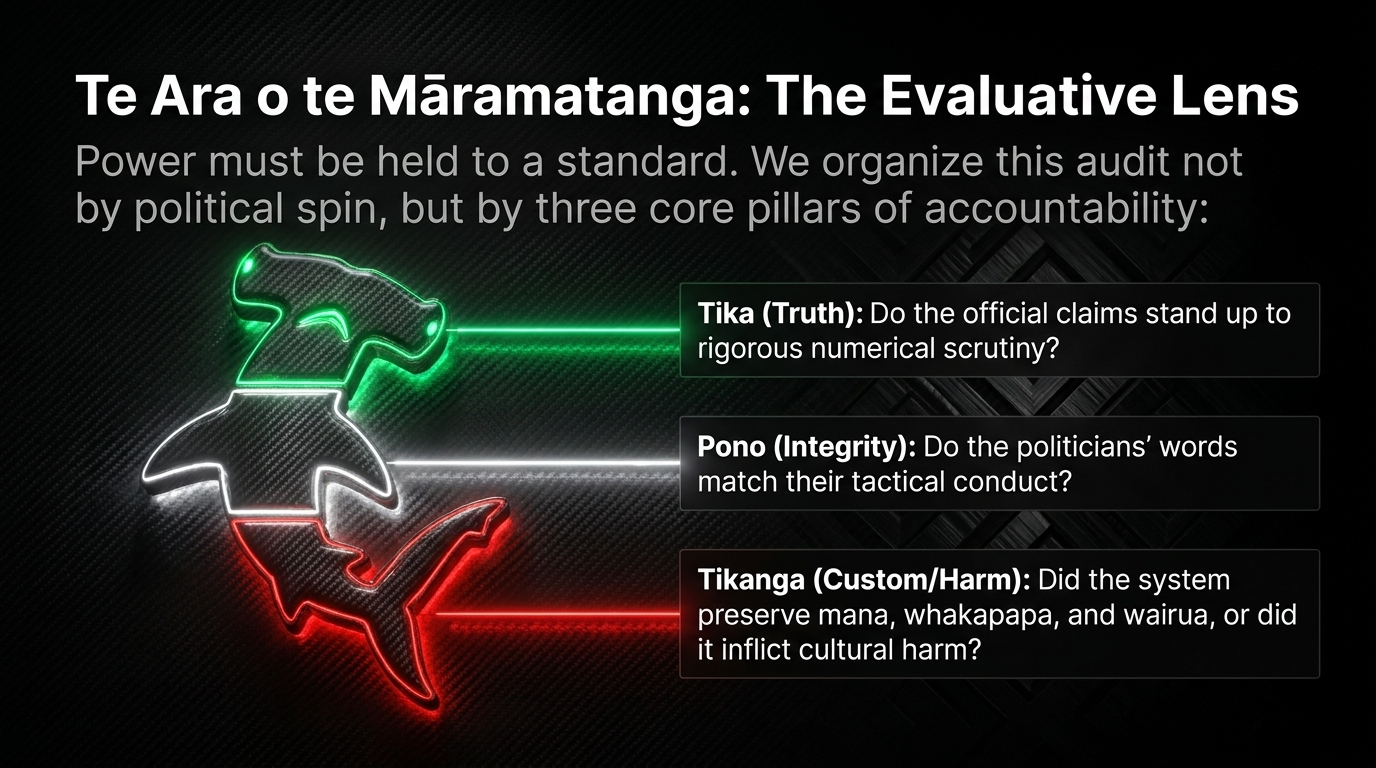
For this essay, Tika asks whether the claims and decisions stand up to scrutiny.
Pono asks whether the words match the conduct—and whether I am being honest about the limits of my own evidence.
Tikanga asks the questions the parliamentary scoreboard leaves out: did the system preserve people’s mana, recognise their whakapapa, respect their wairua, involve their whānau and return them towards wellbeing?
I am applying that framework as my editorial approach, not presenting it as a single exhaustive definition for every iwi or hapū. I used the same questions in The Ten-Point Con Job Has A Whakapapa.
Building mauri, in this approach, means strengthening people’s capacity to participate, belong, recover and shape what happens next.
A government does not pass because it survived. It passes by what its survival enabled people to become.
Three Examples For The Western Mind
Example One: The Reception Desk That Turns You Away
Imagine a public service that previously let an eligible person complete the paperwork at the desk. Management removes that option, then tells anyone turned away that they should have arrived earlier.
You would ask why management made access harder.
Apply that question here. The reported enrolment-rate difference is 1.1 percentage points. In an illustrative group of 1,000 eligible people, that is 947 enrolled at the earlier rate compared with 936 at the later rate: a difference of 11. The underlying rates come from RNZ.
That quantifies the rate change, not the number excluded by the law. Establishing the latter requires a proper investigation.
For a reader unfamiliar with tikanga, think beyond customer service. Being turned away can affect whether someone feels recognised as a person whose voice belongs in the room. That is the mana question.
My proposed solution is to restore enrolment during voting, resource the administration properly, and publish an independent assessment of exclusion under the changed rules.
Do not fix a queue by denying people entry.
Example Two: The Boardroom With Extra Chairs
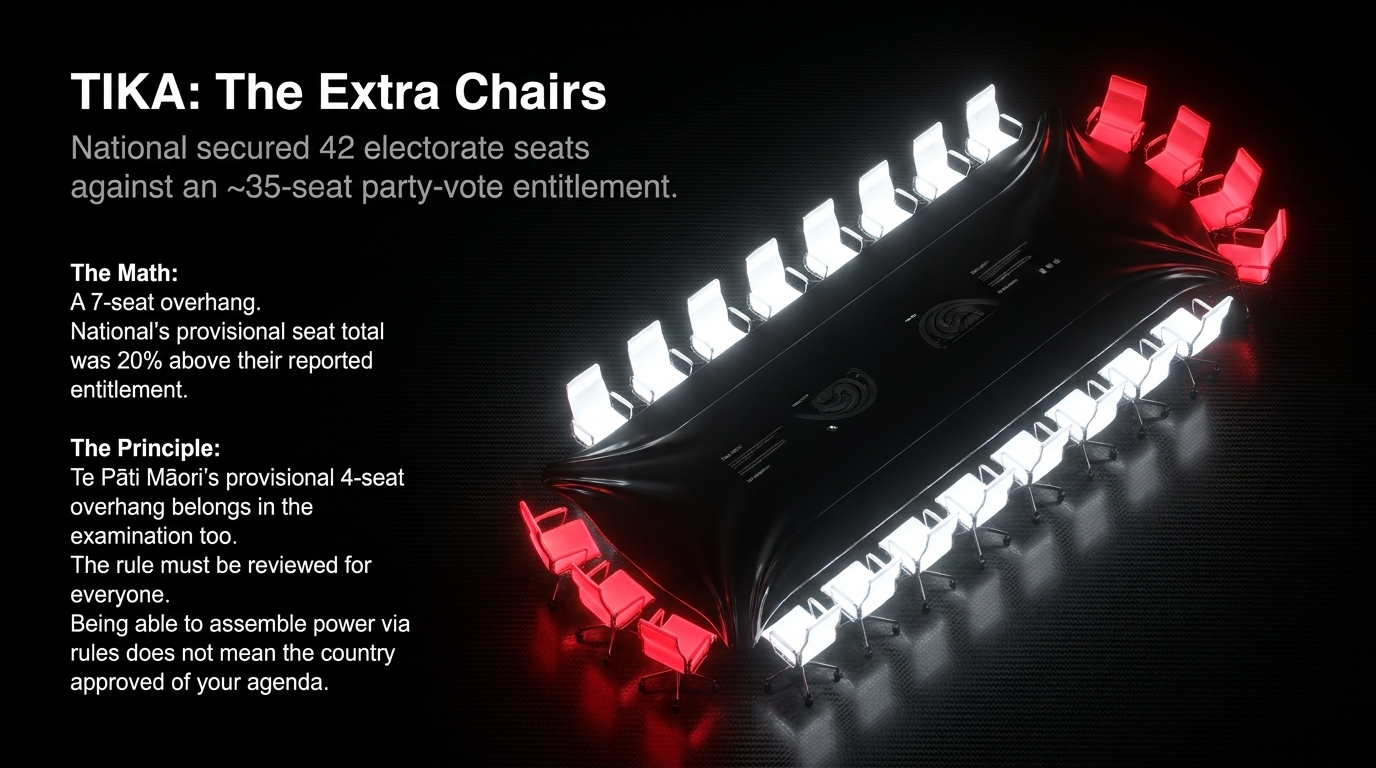
Imagine a representative board where the agreed allocation gives a group 35 places, but another rule lets it occupy 42.
The additional seven places amount to a seat total 20 percent above that entitlement: seven divided by 35, multiplied by 100. Those are National’s provisional figures in RNZ’s overhang analysis.
That does not establish fraud. It establishes a measurable departure from proportional allocation.
The tikanga question is not whether the extra chairs have technically valid labels. It is whether those affected can recognise the arrangement as a fair expression of their collective voice.
My proposed solution is an independent, publicly deliberated review of overhang rules, with Māori participation and any changes announced before a future election.
The rule must apply to everyone. Te Pāti Māori’s provisional four-seat overhang belongs in the examination too. RNZ reports its position alongside National’s.
Māori representation must not become the convenient scapegoat for a problem exposed across the system.
Example Three: The Partnership Where Only One Side Decides
Imagine an organisation agrees to a process affecting its partner’s standing, then congratulates itself for managing the resulting conflict.
When the partner objects, management explains how difficult its internal negotiations were.
That is how I read Weenink’s combination of respect for Luxon’s difficult choices and acknowledgment that his Treaty compromise hurt the country. Her interview contains both propositions.
There is no defensible numerical measure of that cultural harm in these articles. I will not invent a dollar value for damaged trust or wounded wairua.
The quantified electoral changes elsewhere in this essay cannot serve as substitutes for listening to the people affected.
For a Western reader, the comparison is good-faith partnership: you do not preserve a relationship by treating the other party’s standing as your bargaining material.
My proposed solution is meaningful Māori participation before decisions are made, transparent reasons for departures from that advice, and a repair process shaped with affected whānau.
An apology that leaves the same power imbalance untouched is not much of a repair.
What I Mean By White-Supremacist Neoliberal Politics
I use that description as a political judgement about systems, not a claim that I know every minister’s private beliefs.
I mean a governing approach that treats Crown authority as the unquestioned default and Māori authority as something available for political restriction or bargaining. I mean an economic outlook that asks whether the machinery is efficient before asking whether people can live with dignity.
I developed that interpretation in They Are Not Completing Te Tiriti — They Are Trying To Bury The Witness and The Ten-Point Con Job Has A Whakapapa.
The electoral evidence here supports a specific indictment: an access restriction, a disproportionate preliminary seat allocation, and politicians trying to make responsibility disappear between the coalition agreement and the interview microphone.
It does not prove every broader ideological claim by itself.
That distinction strengthens the criticism. National should have to answer for its conduct, not be given an invented allegation it can knock down instead.
No More Borrowed Innocence
Luxon cannot borrow innocence from ACT. Bishop cannot borrow it from his condemnation of Mowbray. Mitchell cannot borrow it from the seat count.
And I cannot borrow certainty from Hipkins or Swarbrick where the evidence still needs testing.
The public deserves an accounting: who was prevented from enrolling, what the restriction actually achieved, how tactical campaigns operated, what the final voting analysis shows, and whether the rules are serving the people they claim to represent.
Do that work openly. Apply the same standard across parties. Involve the people whose rights are at stake.
Then stop confusing possession of office with public forgiveness.
My judgement is that National’s conduct deserves a political reckoning, not another round of sympathetic explanations about how hard governing has been for National.
Whānau are not supporting characters in Luxon’s leadership story. Māori rights are not coalition bargaining chips. And democracy is not healthy simply because the people who benefited from its weaknesses assure us everything was within the rules.
I want a system that builds mauri: one that welcomes participation, tells the truth about power and leaves our mokopuna with more than a careful explanation of why their voices were inconvenient.
National can count its seats.
I will keep counting the decisions it wants us to forget.
Koha Consideration
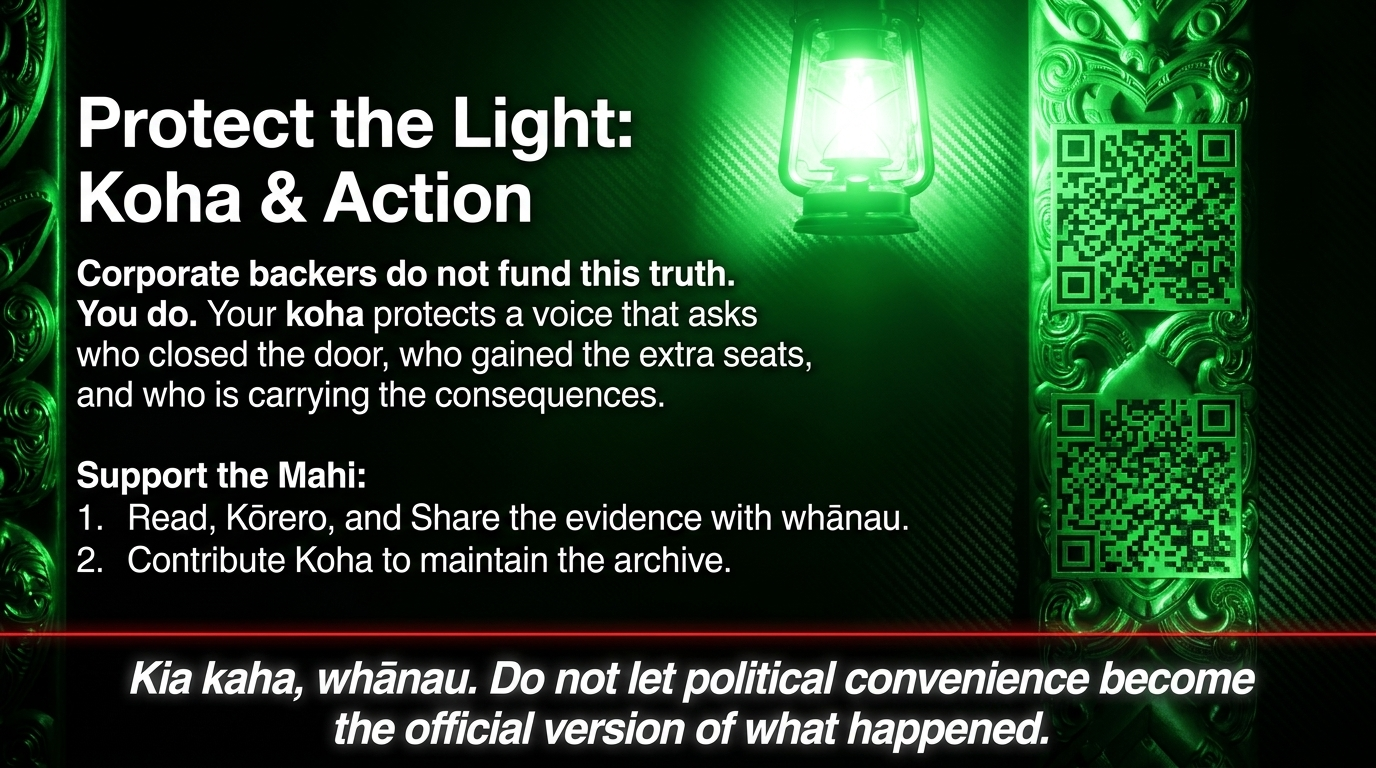
Who supports the work of reading these reports, checking the arithmetic and refusing to let powerful people replace answers with slogans?
You do.
There is no corporate backer purchasing the conclusions of this mahi. My independence is sustained through the support described in The Māori Green Lantern’s published kaupapa.
Your koha helps support and protect a voice that asks who closed the door, who gained the extra seats and who is being told to carry the consequences quietly.
It also helps preserve the record for our mokopuna.
If you can contribute, these pathways are available:
Koha — Support The Māori Green Lantern.
Subscribe To The Māori Green Lantern.
Direct bank transfer: Ivor Jones, account number 03-1395-0099387-000, as published on the verified Koha organiser page.
The Māori Green Lantern’s Facebook Subscription Page, supplied here as an alternative pathway; its current subscription availability could not be independently confirmed.
If money is tight, there is no pressure. Read, follow, kōrero and share the evidence with whānau and friends. That is koha too.
Kia kaha, whānau. Stay vigilant. Stay connected. Support and protect one another—and do not let political convenience become the official version of what happened.
Disclaimer: This is independent political commentary by Ivor Jones, The Māori Green Lantern. The RNZ screenshots are included for context; RNZ does not endorse this work. Allegations are not established facts, and provisional election figures may change.