"The Donor Wants A Thank-You Card: Whānau Want Their Democracy Back" - 8 November 2026
A Wealthy Family Engineered The Overhang, Demanded Gratitude, Hinted The Cheques Might Stop, And A Coalition That Has Spent Three Years Shrinking Māori Authority Expects Us To Call It A Mandate.

Kia ora whānau. I'm Ivor Jones, The Māori Green Lantern. Before the essay, a word about why it exists.
I'd love you to click on this one. I built it to hold a wealth of information you can use in your daily life. There's a longform audio podcast that explains the kaupapa in detail. There's a short YouTube video that explains it in about a minute. For the long-form readers, there's a 3,000-word cited essay waiting for you.
I'm building a repository for our mokopuna. One day they'll look back through these 1,000-plus essays on neoliberalism, misinformation and disinformation in Aotearoa. I want them to say that the Māori Green Lantern and a few others were documenting these events and trying to protect us.
What This Essay Covers
First, what the preliminary count shows and what it doesn't.
Second, what Harry Mowbray said and did, in his own words.
Third, how an overhang works and why National's was historic.
Fourth, why the same standard must apply to Te Pāti Māori.
Fifth, three examples for the Western mind, with the harm counted and solutions named. Sixth, the tikanga test. I finish with why this coalition shouldn't be returned.
A Billionaire's Father Wants Applause
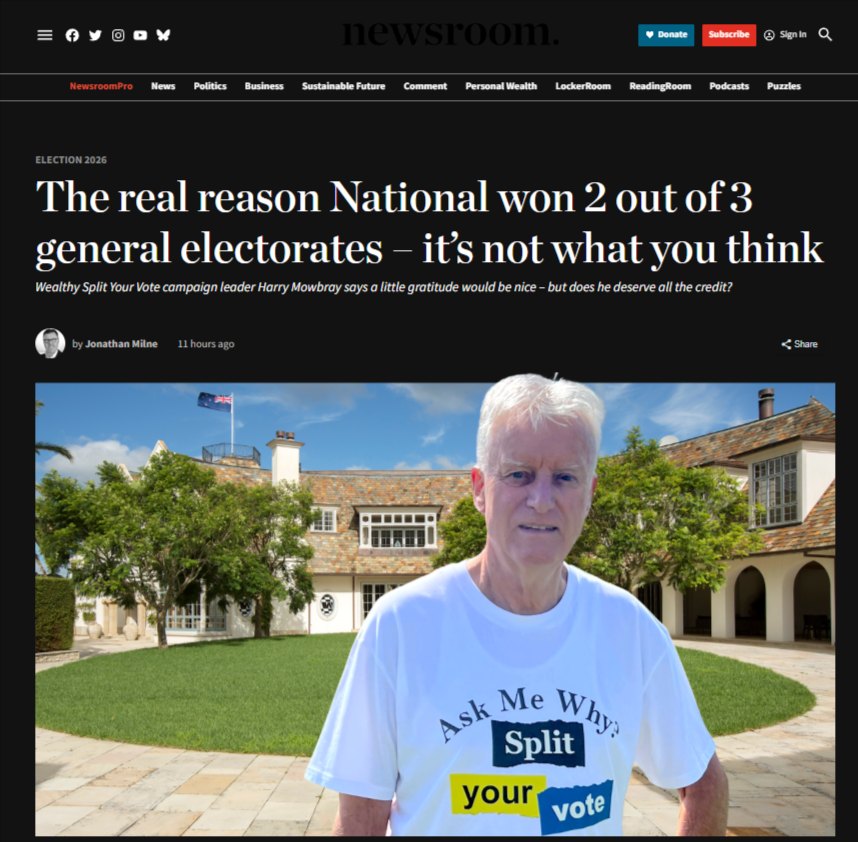
Harry Mowbray is the father of the Zuru siblings. Within hours of the polls closing, he told Newsroom that without Split Your Vote the centre-right would have no path to government. His question was: "When will this get acknowledged?"
 Jonathan Milne
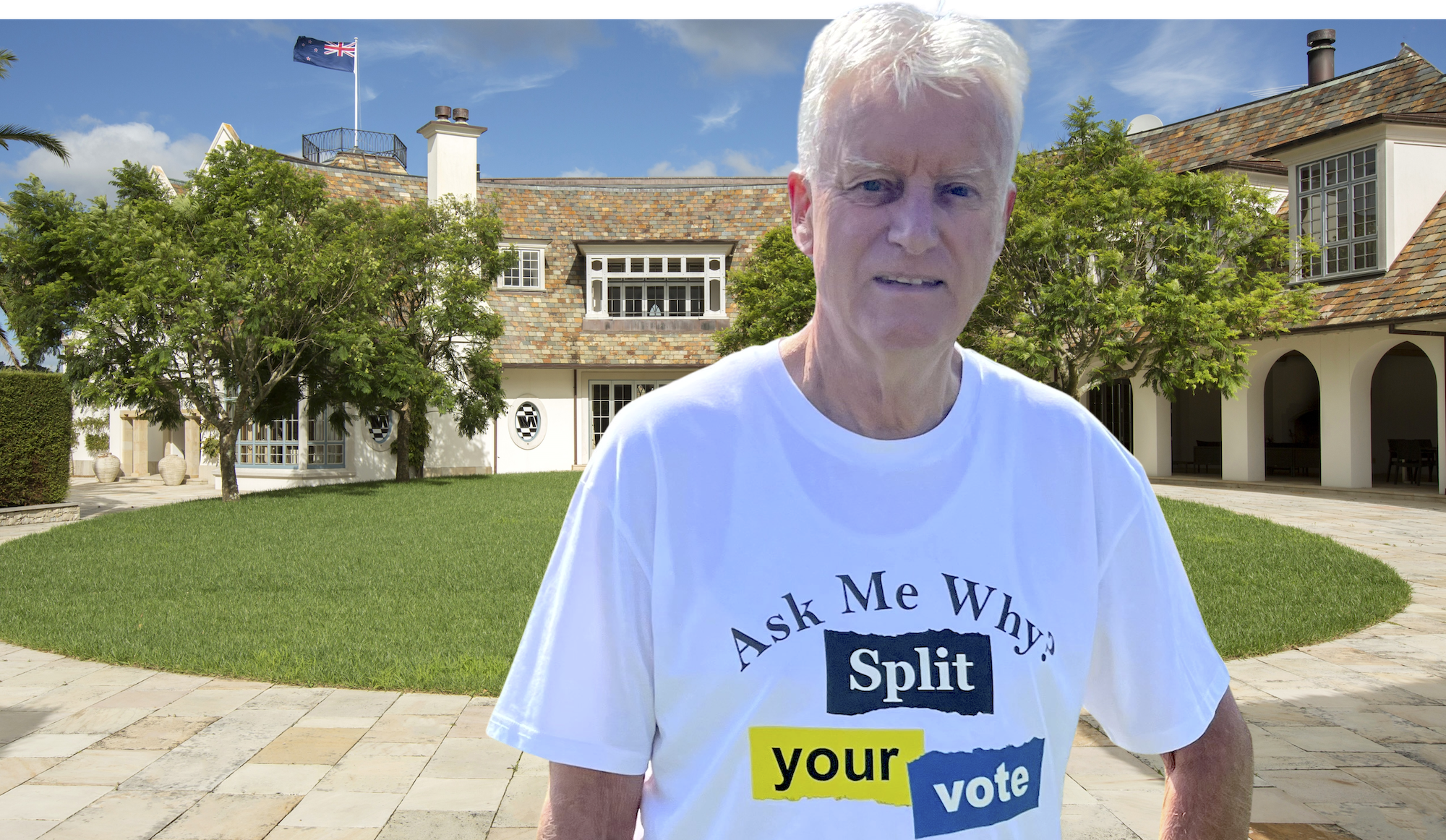
Acknowledged. Not examined. Not declared. A man who spent a campaign trying to bend the electoral system now wants a thank-you card.
He then told Henry Cooke of The Post there was "zero question" his campaign was the only thing that gave National a chance of holding the Treasury benches. He blamed Luxon and Seymour if the coalition ends up needing Opportunity. He said "a lot of money went to National" and that "we're going to think about how money is handled in future elections".
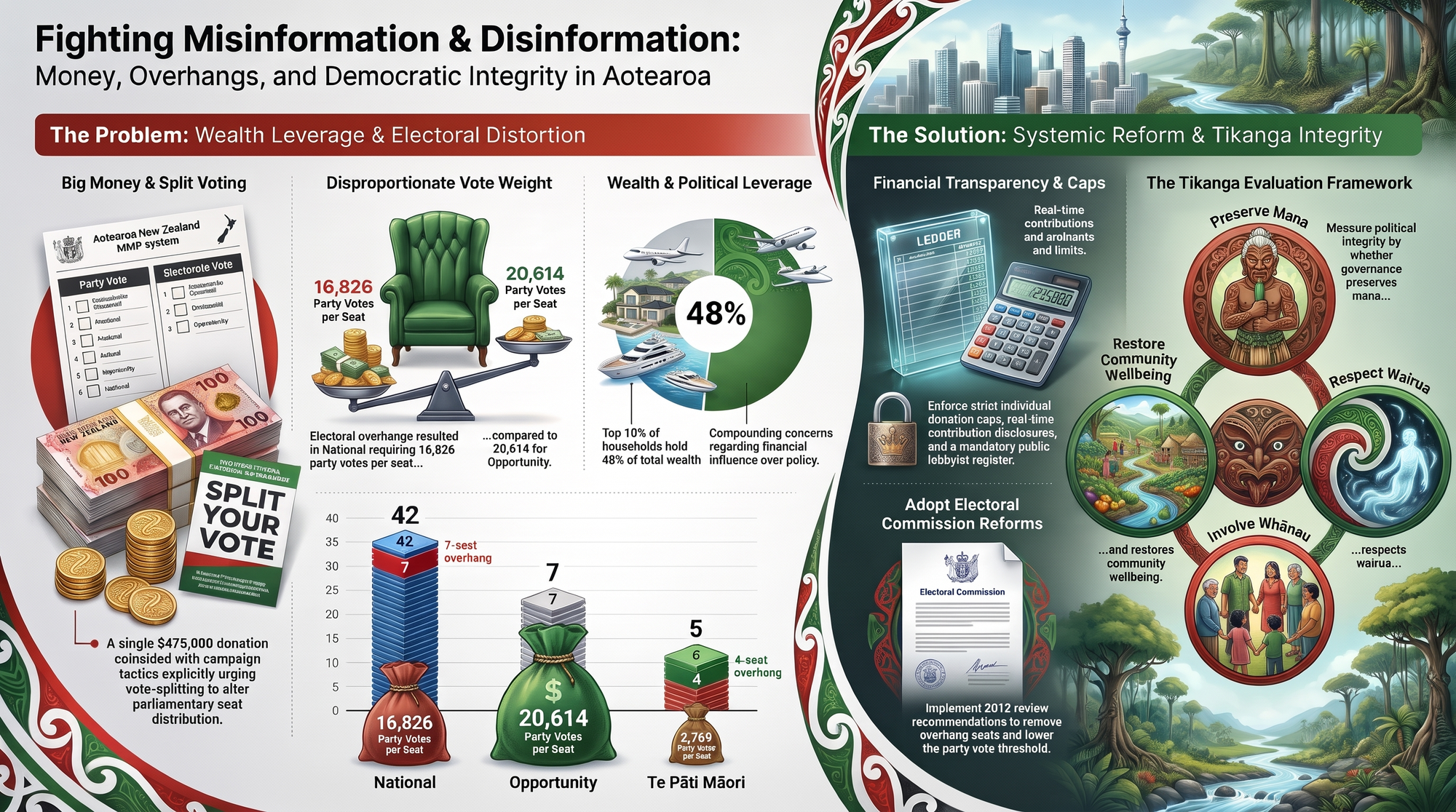
Asked whether that meant less money for National, he said he didn't know. He noted it was his kids who did the donating. His son Nick gave National $250,000 in 2026 and ACT $225,000, together $475,000. That was the largest individual donation to National that year.
I won't claim the cheques have been cancelled, because they haven't. But a rich man complaining about how a party spent donations, then musing about future money, is not a citizen offering an opinion. It is leverage, said out loud.
What He Actually Admitted
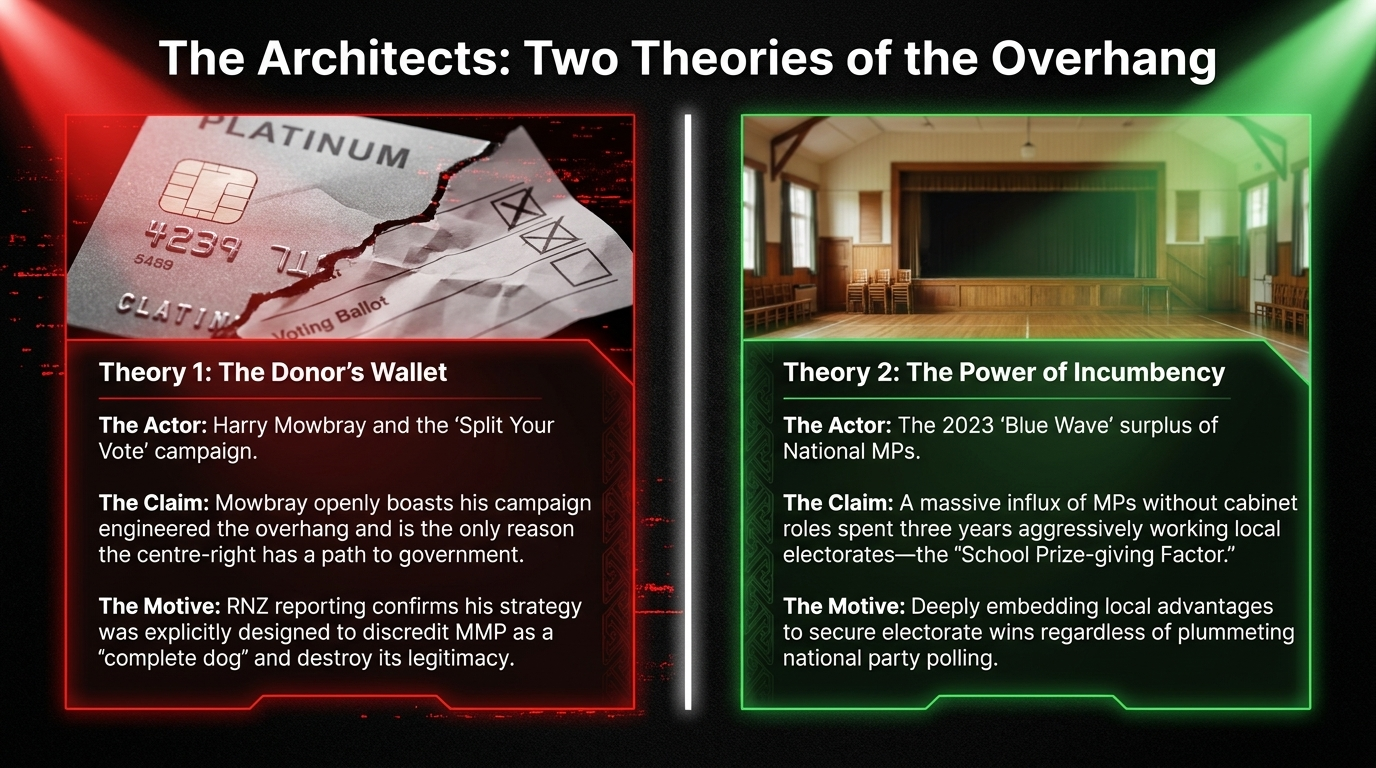
Milne's analysis says the campaign aimed to destroy MMP's legitimacy. Milne gives no direct evidence for that in his piece, but Mowbray supplied it himself.
RNZ reported he called MMP a "complete dog" and confirmed that part of his strategy was to discredit it and "show people how bad it is".
The same report says the Electoral Commission referred his website to police. National had complained. A police spokesperson said enquiries were ongoing. A referral isn't a finding, and nobody has been charged. Mowbray said he wasn't worried and that the attention helped promote the campaign.
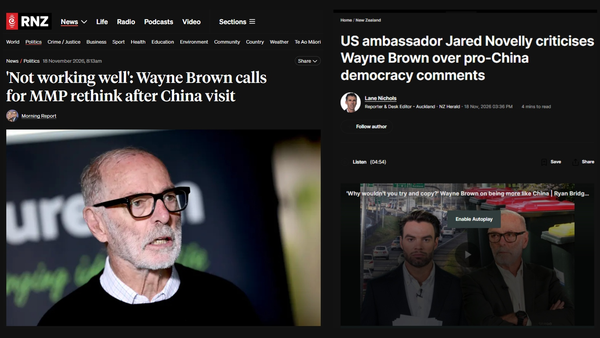
John Key called vote-splitting "the opposite of clever", and Chris Hipkins called it a "rort" by wealthy New Zealanders. Mowbray's reply was that he was only using the rules that exist. That is the oldest excuse in the book. It has been legal for the powerful to bend rules in Aotearoa for a very long time.
The Deep Dive Podcast
Listen to a lively conversation between two hosts, unpacking and connecting topics in the sources of this essay. I apologise in advance for the AI's very harsh pronounciation of reo. Please dont shoot me, :).
Youtube Video
Like video? Here is a short video suppporting the essay. Again, don't shoot the messenger please because of AI's pronounciation. :)
What Happened To The Votes
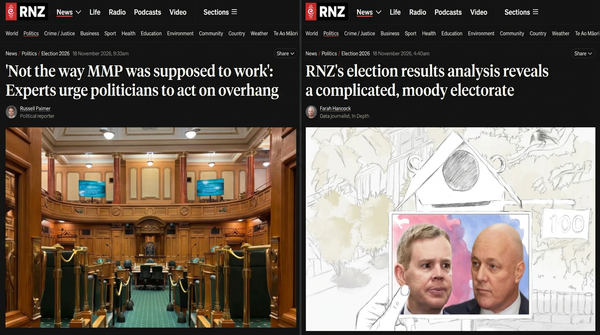
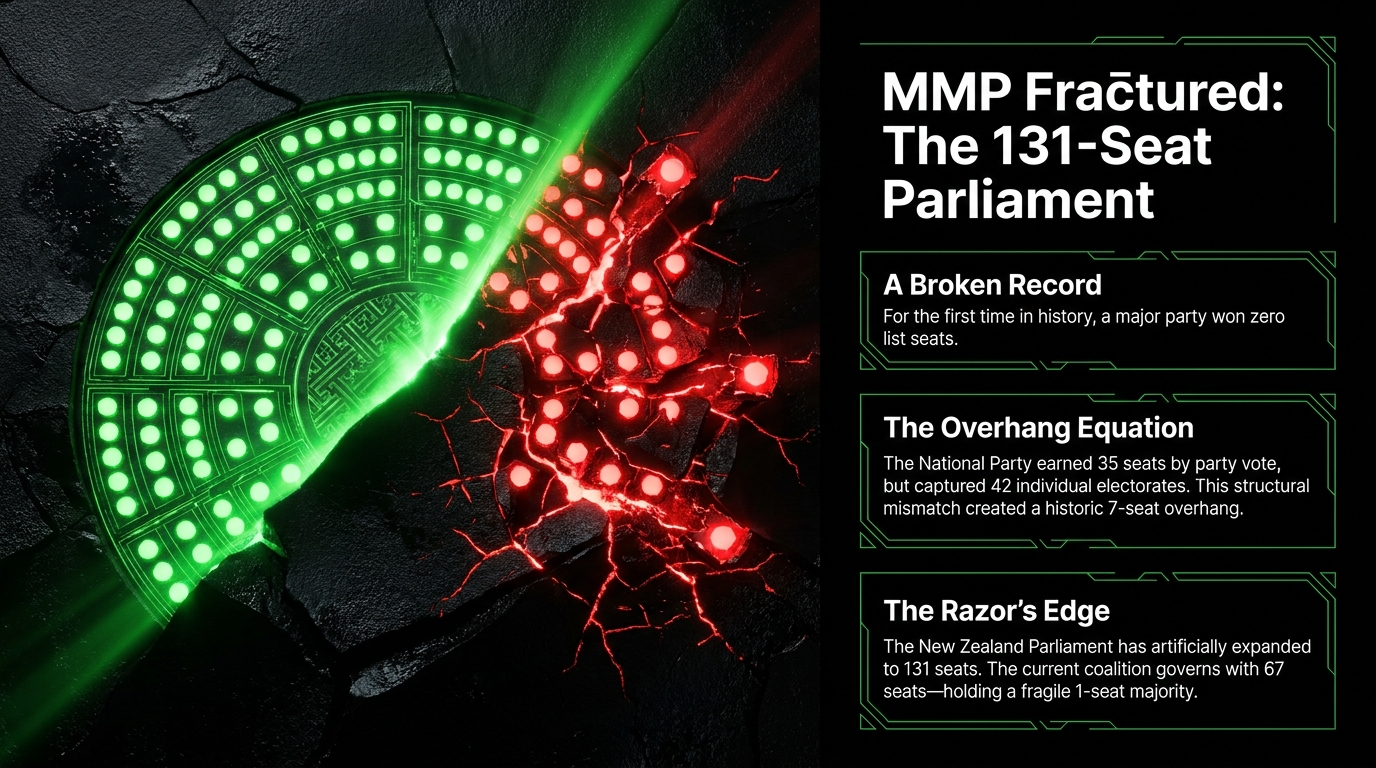
Here are the numbers, and they're preliminary. Labour got 29.4% of the party vote and National 29.2%. On party vote alone, National was entitled to about 35 seats. It won 42 electorates, a seven-seat overhang. RNZ reports it is the first time a major party has won no list seats under MMP. I ran Sainte-Laguë myself and got the same 35.
National candidates ran about 13 points ahead of the party vote, up from 5.6 points in 2023. That is 2.3 times the 2023 gap.
Who caused it? Milne says incumbency, with MPs at school prize-givings. Mowbray says his campaign alone. National's Simeon Brown says strong candidates. Nobody has produced electorate-by-electorate evidence. Be suspicious of anyone who claims certainty. Milne himself says he "suspects" incumbency.
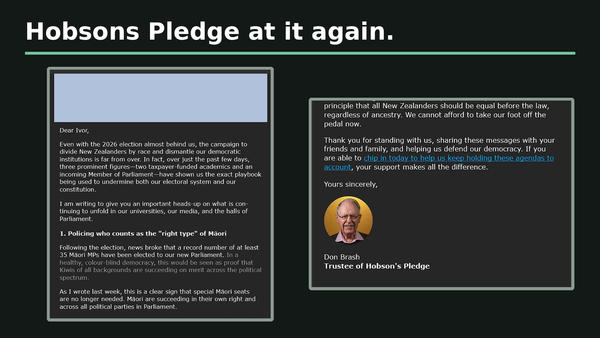
Here's what I can say. ACT and NZ First blessed Don Brash's newspaper ad telling right-leaning voters to split. National opposed it, and RNZ calls the overhang a "bitter consolation" for the party that explicitly opposed the strategy. National complained, but it still pockets the seats. It didn't ask for the help, and it will take the power anyway.
The right can say it won a majority of the party vote. The coalition parties sit at roughly 49.9% on my working, against 43.3% for Labour, the Greens and Te Pāti Māori. Without any overhang, the right's lead over the left exceeds Opportunity's share, so the right might still have governed. So no, the election wasn't stolen. The problem is fairness and the rules. It is not a fraud.
The Same Standard For Te Pāti Māori
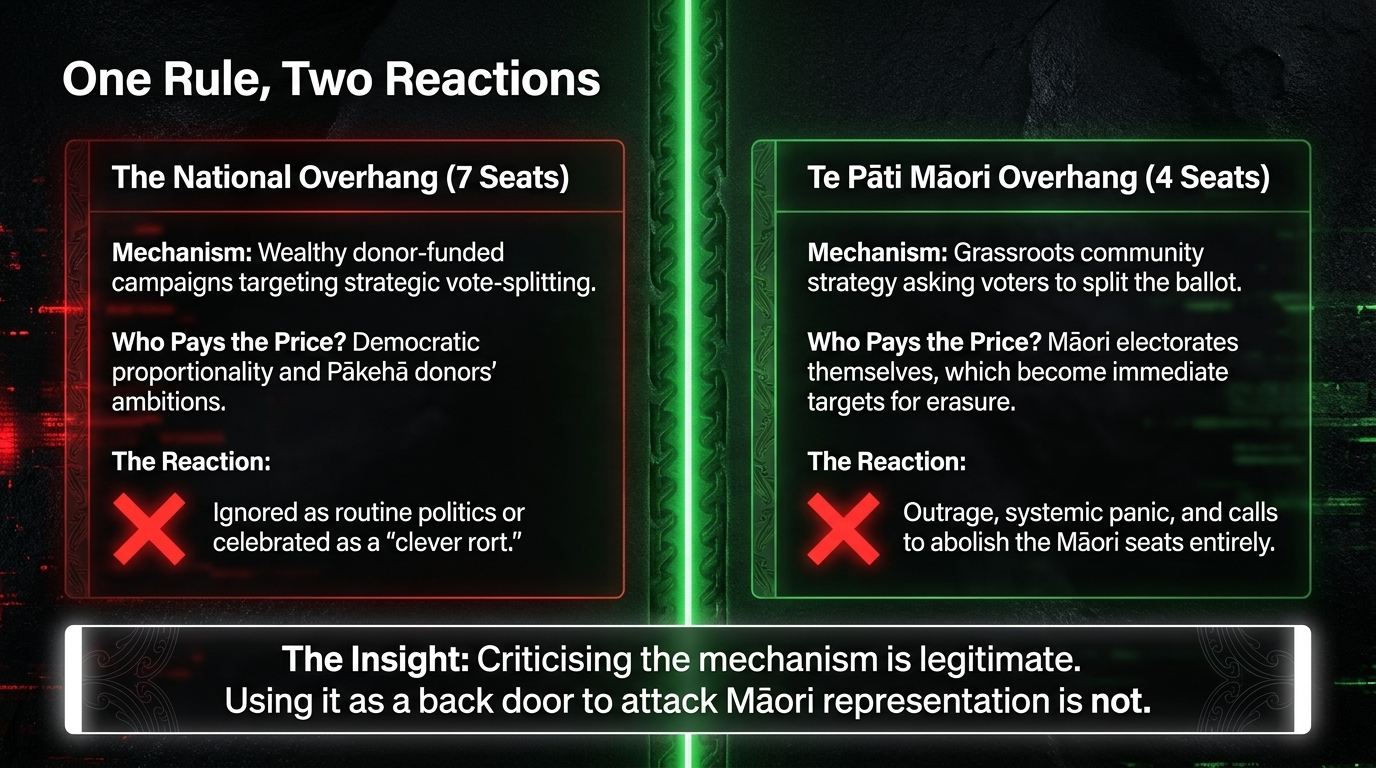
I'll hold my own side to the line. Te Pāti Māori's 13,845 party votes are 0.6% of the total. Its party vote entitled it to one seat. It won five electorates, a four-seat overhang. It asked supporters to give it the electorate vote and the party vote to someone else.
I wrote the same thing on 5 November: the standard does not change when our side benefits. And I said in Your Fortune Is Not A Mandate that any critique of engineered disproportionality has to face the Te Pāti Māori overhang rather than pretend the tactic is clean in friendly hands.
But there is a difference in who pays. When the right's overhang is attacked, the cost lands on Pākehā donors' ambitions. When Te Pāti Māori's four seats are attacked, the cost lands on Māori electorates, which are already a target for people who want them gone. Criticising a mechanism is legitimate. Using it as a back door to attack Māori representation is a separate case, and nobody has made it honestly.
Three Examples For The Western Mind
Example 1: The donor's leash. The Western reader asks: where's the harm? A person gave money and has an opinion.
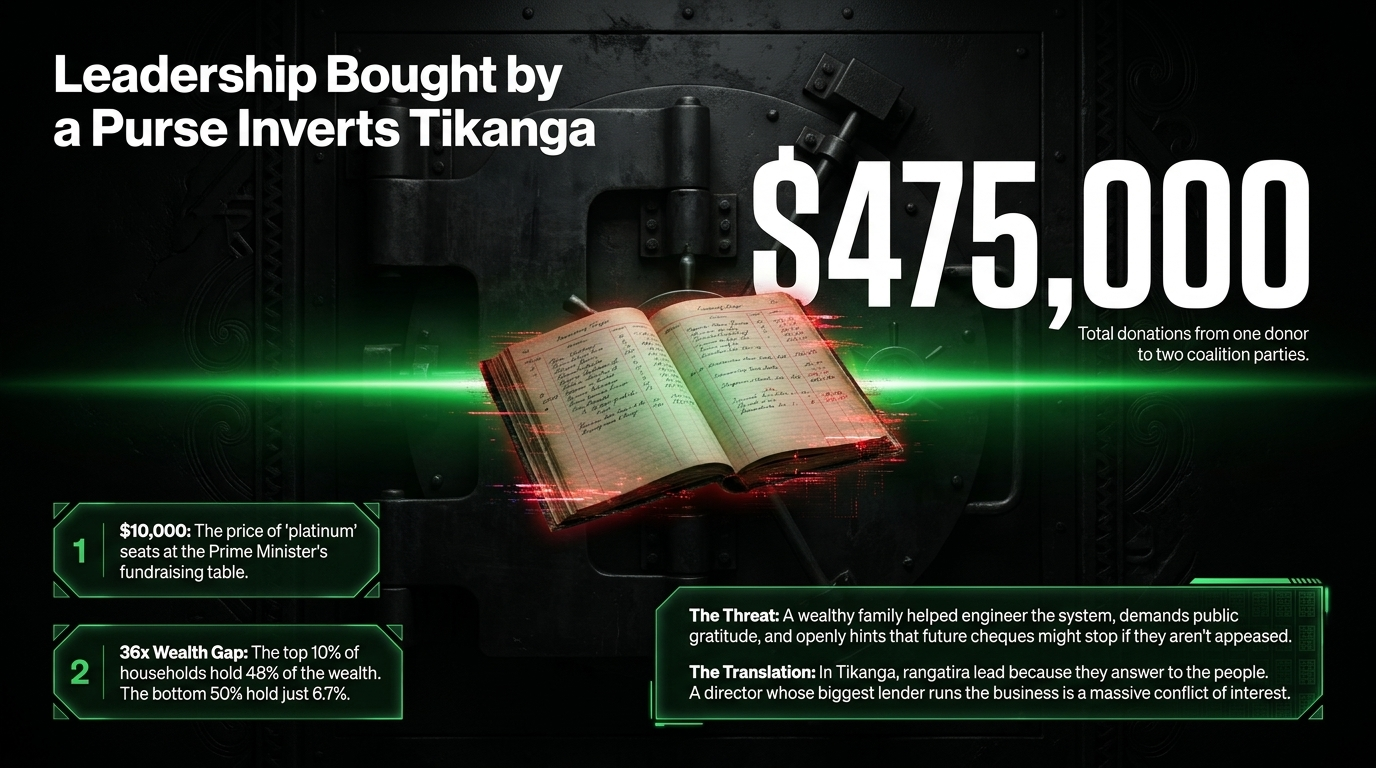
Count it. $475,000 went to two coalition parties from one individual. Graeme Hart's Rank Group gave National another $500,000. The NZ Herald reported a $10,000 "platinum" seat at the Prime Minister's table at a National fundraiser. An IRD study found 311 of the wealthiest families paid tax at less than half the rate of ordinary Kiwis. Economist Shamubeel Eaqub said so little data is collected on lobbying that it's unclear how much influence there is.
The top 10% of households hold 48% of wealth. The bottom 50% hold 6.7%. Per household, that is about 36 times as much for the top group.
In tikanga terms, rangatira lead because the people trust them, and they answer to the people. Leadership bought by a purse inverts that. Think of a company director whose biggest lender tells her how to run the business. The Western mind calls that a conflict of interest, and it's the same thing.
My solution: real-time donation disclosure, a hard cap per donor, and a public register of lobbying. I covered how this plays out in Blood Money And Ballot Papers.
Example 2: The vote that counts for less. The Western reader asks: why does an overhang matter if the government is lawful?
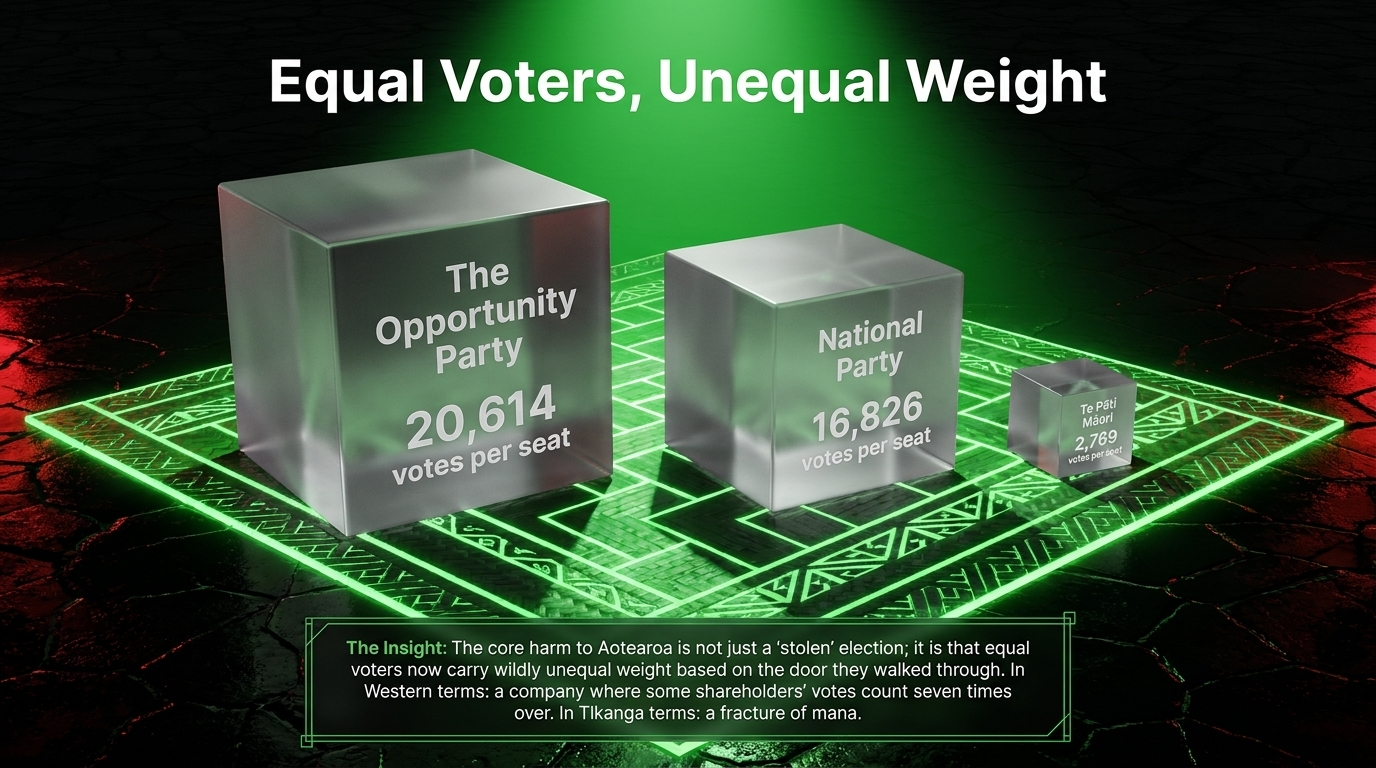
Here's the arithmetic from the preliminary table. National paid 16,826 party votes per seat. Opportunity paid 20,614. Te Pāti Māori paid 2,769. A vote's weight depends on which party and which door it went through. The harm isn't a stolen seat. It is that equal voters now carry unequal weight, and that weight can decide who governs by one seat (67 against a 66 majority).
In tikanga, a voice that weighs more than another voice breaks the idea of mana. In Western terms, imagine a company where some shareholders' shares count seven times over.
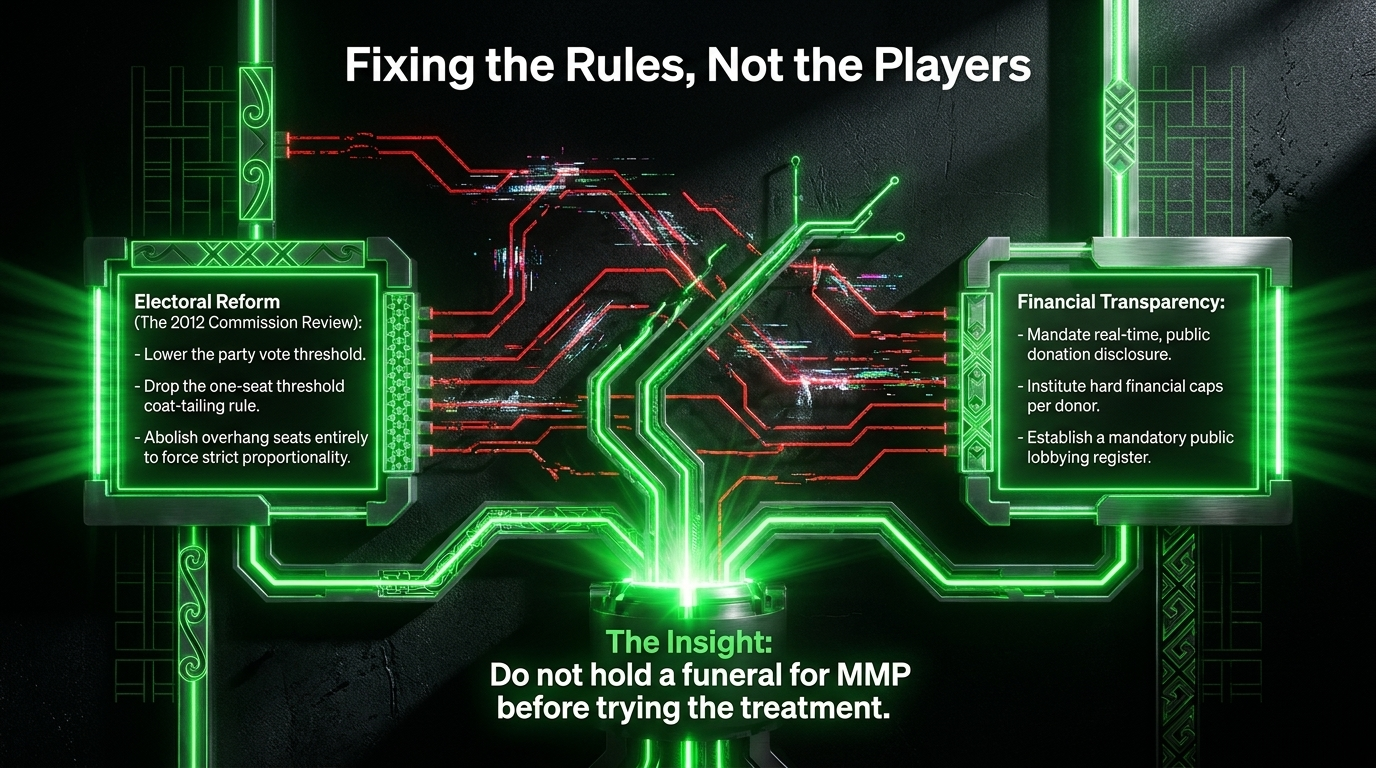
My solution: the 2012 Electoral Commission review already recommended lowering the threshold, dropping the one-seat threshold and ending overhang seats. Apply those fixes to every party. Don't hold a funeral for MMP before trying the treatment.
Example 3: A one-seat government on a razor's edge. The Western reader says: that's democracy, win by one and you govern.
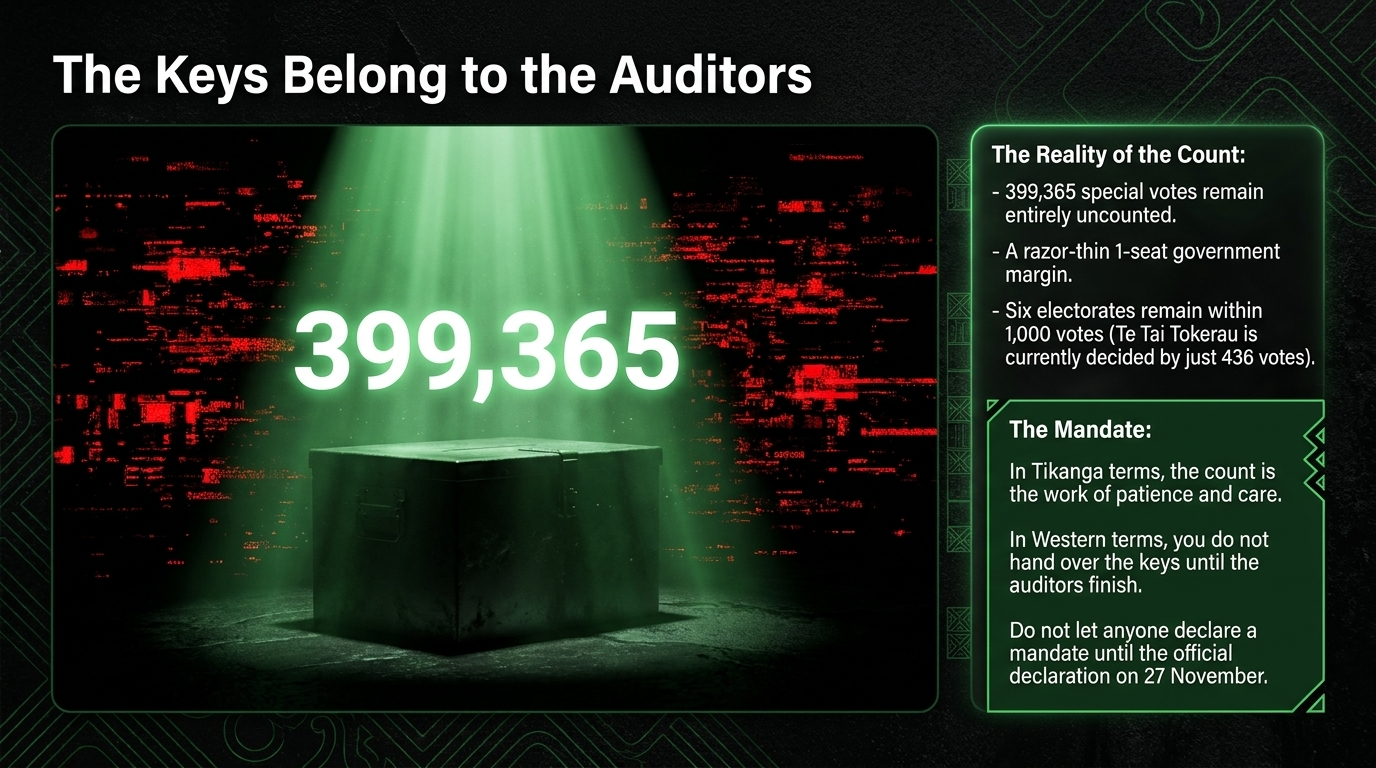
Fine. But 399,365 special votes are still to be counted, and six electorates are within 1,000 votes. In Wairarapa National leads by 139 votes, in Hamilton East by 456, and Te Tai Tokerau is a 436-vote Te Pāti Māori lead. The Commission declares official results on 27 November.
The stakes show up in the record. The Waitangi Tribunal found the Crown failed to consult Māori and breached Tiriti principles when it dismantled Te Aka Whai Ora. My earlier essay on Stop Changing The Managers Of The Damage cited the Ministry of Health survey: 18.7% of Māori adults skipped a GP visit because of cost, against 14.5% of European/Other adults. That is 4.2 points, or 29% higher. The gap doesn't prove Te Aka Whai Ora's removal caused it, but it is the inequity this government must answer for. Look at Five Kingmakers, No Conscience for the wider ledger.
In tikanga terms, the count is the work of patience and care. I said it on 8 November: the count is not surrender. In Western terms, you don't hand over the keys until the auditors finish.
My solution: protect the special-vote count, publish it transparently, and do not let anyone declare a mandate until 27 November.
The Tikanga Test
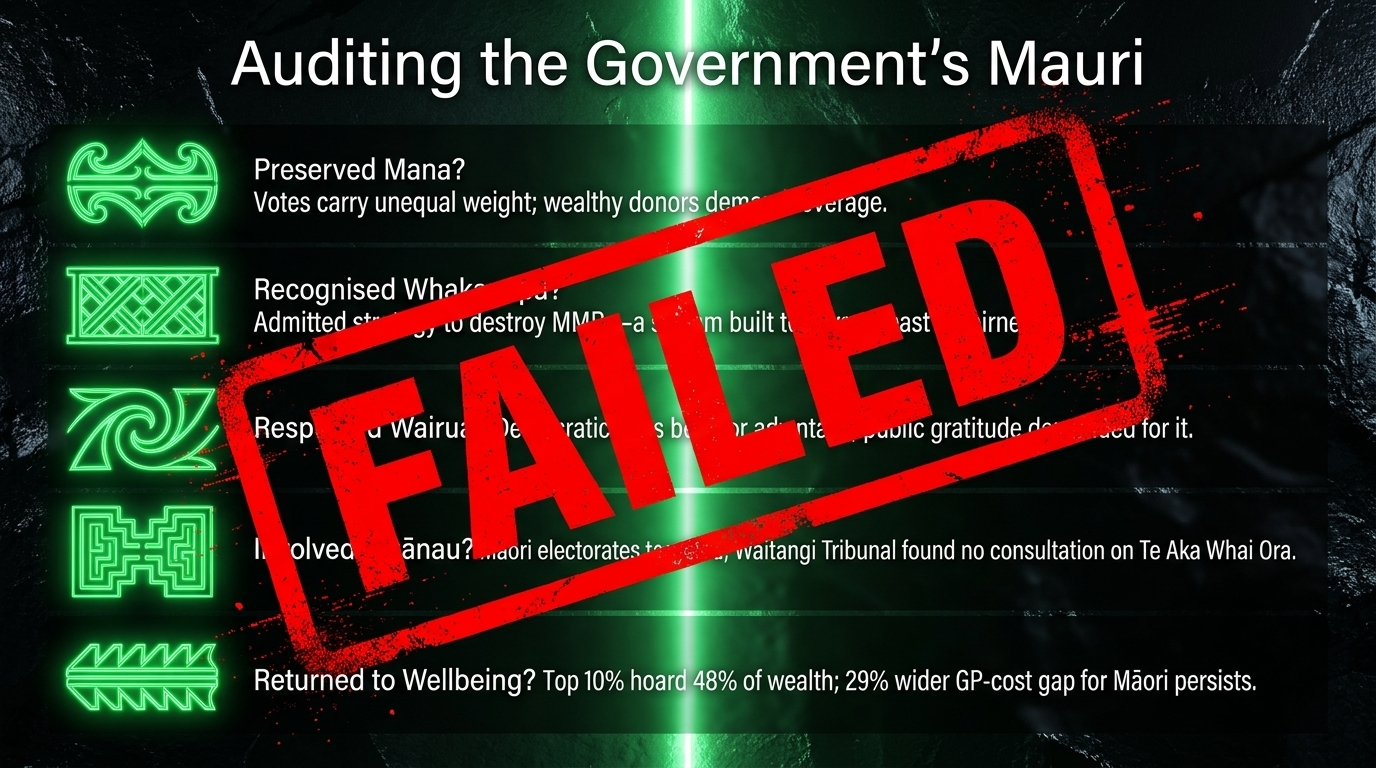
Tika is what is right. Pono is what is true. Tikanga asks whether the system preserved mana, recognised whakapapa, respected wairua, involved whānau and returned people to wellbeing. Building mauri means the answer has to be yes to all five.
| Tikanga Question | What The Record Shows | My Verdict (Opinion) |
|---|---|---|
| Preserved Mana? | Votes carry unequal weight; a donor reaches for leverage | Failed |
| Recognised Whakapapa? | Mowbray admitted aiming to discredit MMP, a system built to correct past unfairness | Failed |
| Respected Wairua? | Rules bent for advantage; gratitude demanded for it | Failed |
| Involved Whānau? | Māori electorates are the target when the debate turns on the mechanism; the Tribunal found no meaningful consultation on Te Aka Whai Ora | Failed |
| Returned People To Wellbeing? | Top 10% hold 48% of wealth; the GP-cost gap persists | Failed |
A Fair Counterargument
The strongest counter is that every party games the rules, and Te Pāti Māori started it. Mowbray says so. He is right that Te Pāti Māori used the two-vote structure first, and I said that above. The difference is scale and money: a wealthy family and its allies paying for influencers and ads, and a party asking its own people.
Why This Coalition Must Not Return
I've seen three years of choices: cuts, the dismantling of Māori health authority, the ordinary person left to pay. Now I see a government prepared to accept a boost from a rich man's gamble while its leader says he disagrees. That isn't leadership. It is passenger status.
The conclusion is my opinion. The Green Party is the party I recommend, because it did the opposite on the things that matter here. It makes the rich answer to the public and it commits to Te Tiriti. Check the party's record yourself against what I've set out.
Whānau, the ballot belongs to you. The government belongs to no donor.
Koha Consideration

You might ask who is paying the Māori Green Lantern to track a donor's attempt to bend the vote, count the overhang to the seat, and hold National, ACT, NZ First and Te Pāti Māori to the same line.
The answer is you do.
There are no corporates behind this mahi. No billionaire's cheque tells me what to say, which matters in an essay about a billionaire's family and what money tries to buy. Koha is how whānau support and protect an independent voice that keeps the count honest.
If you are able, consider a koha. If you can't, subscribe, follow, korero and share with your whānau. That is koha too.
Four pathways exist:
- Koha platform: Support The Māori Green Lantern
- Subscribe: Subscribe To The Māori Green Lantern
- Bank transfer: Ivor Jones, account number 03-1395-0099387-000
- Facebook: Subscribe On Facebook
Kia kaha, whānau. Stay vigilant. Stay connected.
Disclaimer:
This essay reflects the Māori Green Lantern's analysis and opinion, drawn from sources linked in the text. All election figures come from preliminary results. Special votes are still being counted, and official results are due on 27 November, so numbers may change. Statements about Harry Mowbray, the Split Your Vote campaign and political parties rest on published reporting and their own public statements. A police inquiry or Electoral Commission referral is not a finding of wrongdoing, and no one has been charged. Judgements about fairness, mandate and tikanga are my own opinion. I speak for myself, not for any iwi, hapū or organisation.