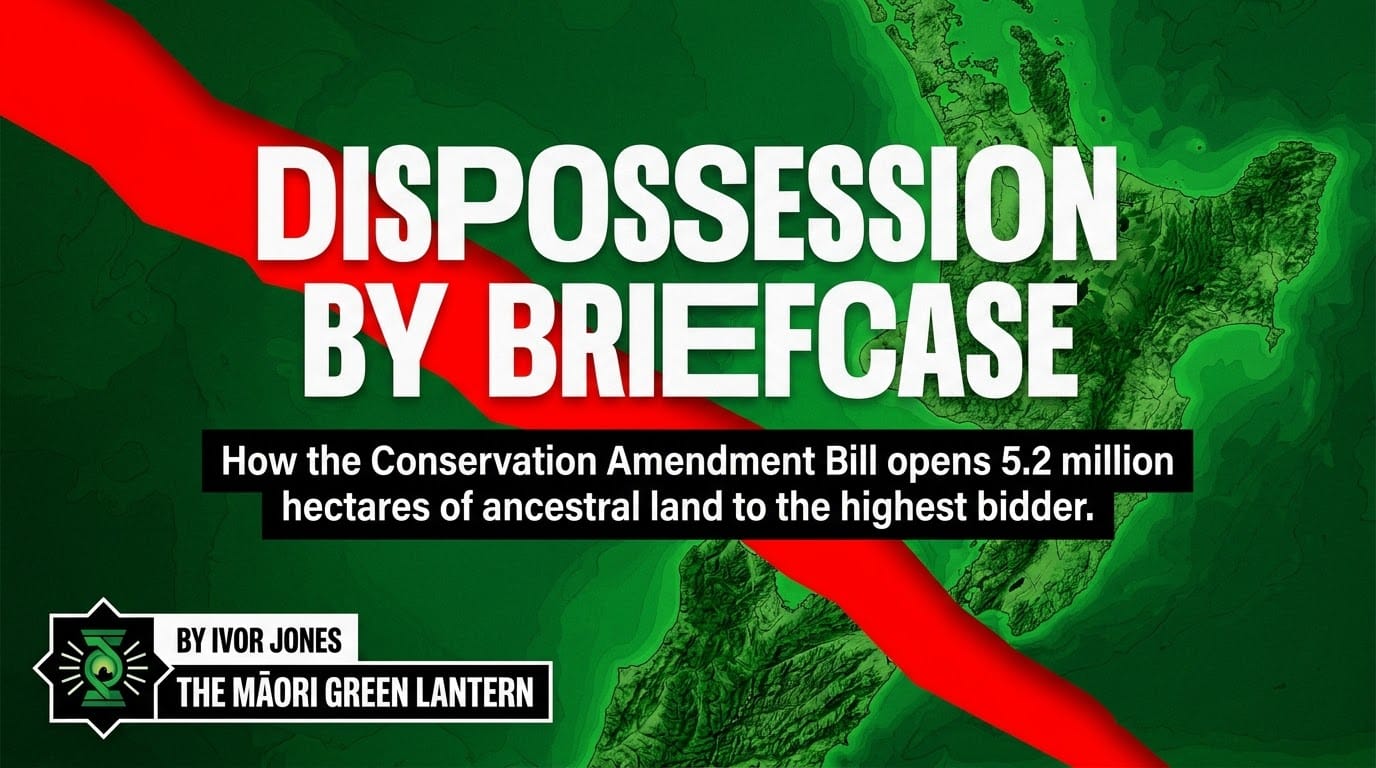
"Potaka - The Māori Minister Selling Your Ancestors to the Highest Bidder — And Calling It Conservation" - 25 June 2026
Tama Potaka stripped Section 4, narrowed Treaty settlements, and opened 5.2 million hectares of tribal territory to foreign capital. The briefcase is the new musket. And this time, a Māori man is carrying it.

Kia ora ano whānau,
"Every inch of the conservation estate is tribal territory."
— Waitangi Tribunal, Wai 262, 2011
The Briefcase Is The New Musket
I want you to picture something.
Picture a Māori man — whakapapa intact, kuia proud, marae behind him — standing at the dispatch box of the New Zealand Parliament. Picture him holding a bill. Picture that bill quietly stripping the single most important Treaty protection Māori have over 8.5 million hectares of ancestral land. Picture him calling the mountains, the forests, the rivers, the wāhi tapu, the burial grounds, the named landforms where whakapapa lives — "bits and bobs."
That is not fiction. That is Tama Potaka. That is the Conservation Amendment Bill. That is June 2026.
I have been tracking this government's war on Māori rights since the day they took the oath. I documented the dismantling of the Māori Health Authority. I exposed the Treaty Principles Bill for the constitutional vandalism it was. I named the Fast-Track Approvals architecture for what it is — a mechanism to bypass iwi authority over ancestral land and hand it to developers with ministerial friends. I wrote "Potaka: The Neoliberal Māori and the Five-Million-Hectare Betrayal" when this bill first passed its first reading in May. I documented "The Accelerator Has No Brakes" — the pattern of every legislation this government touches erasing Treaty obligations before moving on.
This essay is the next chapter. It goes deeper. It goes harder. And it names what this government is doing not as a series of unfortunate policy mistakes — but as a coherent, sequenced programme of colonial dispossession, this time administered by a Māori hand.
The musket was efficient. The briefcase is more so.
The Deep Dive Podcast 🎙️
Listen to a lively conversation between two hosts unpacking and connecting every source in this essay — the Crystal Valley precedent, the golden visa architecture, the Wairau Bar, and the Section 4 assassination.
A note: I apologise in advance for the AI's very harsh pronunciation of te reo Māori. Please don't shoot me — or the messenger. The kōrero matters more than the accent, and everything said is verified, cited, and true. Kia kaha. 😄
The YouTube Video 🎬
Like video? Here is a short video supporting the essay, walking through the five mechanisms and naming who benefits.
Again — please don't shoot the messenger for the AI's pronunciation of reo. The evidence speaks regardless. 😄
What The Bill Actually Does — In Plain Language
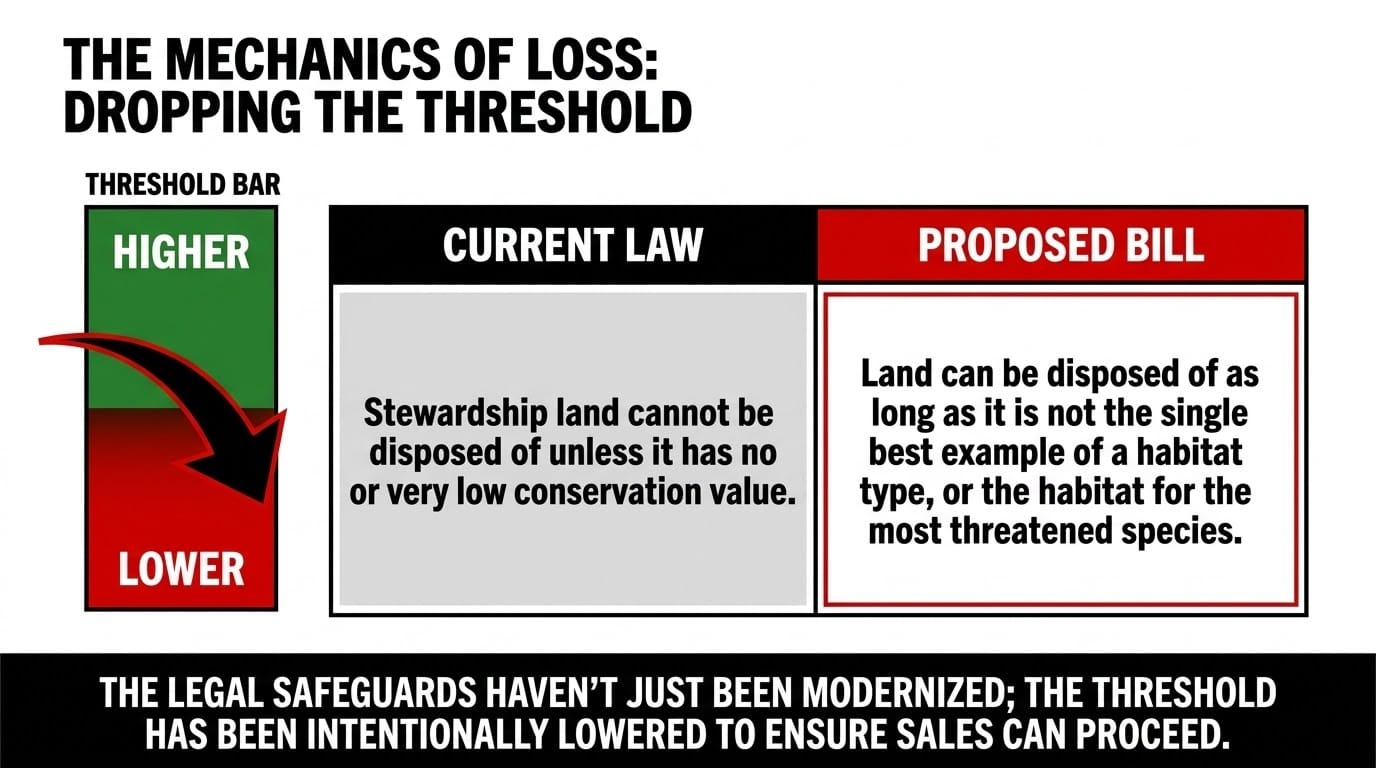
This is not complicated. The Conservation Amendment Bill passed its first reading on 12 May 2026 by 68 votes to 54 — every member of the governing coalition voting yes. Here is what it does:
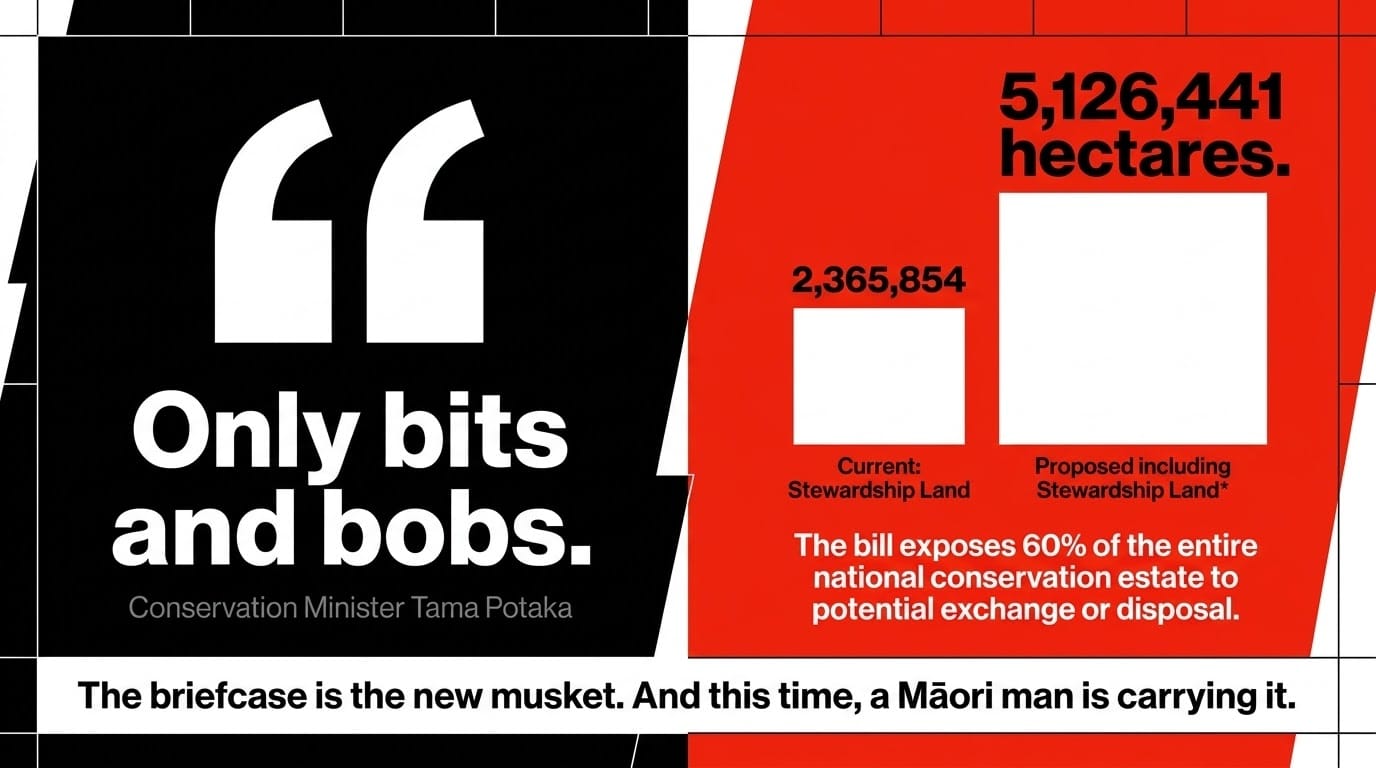
It opens 5.2 million hectares of conservation land to sale or disposal. New Zealand holds approximately 8.5 million hectares of public conservation land. The bill explicitly protects only 40% of that estate — national parks, wilderness areas, nature and scientific reserves. The other 60% — 5.2 million hectares — is potentially eligible for sale, exchange, or "disposal." Currently, only "stewardship land" (roughly 2.4 million hectares) can be sold. The bill adds a further 2.8 million hectares on top.
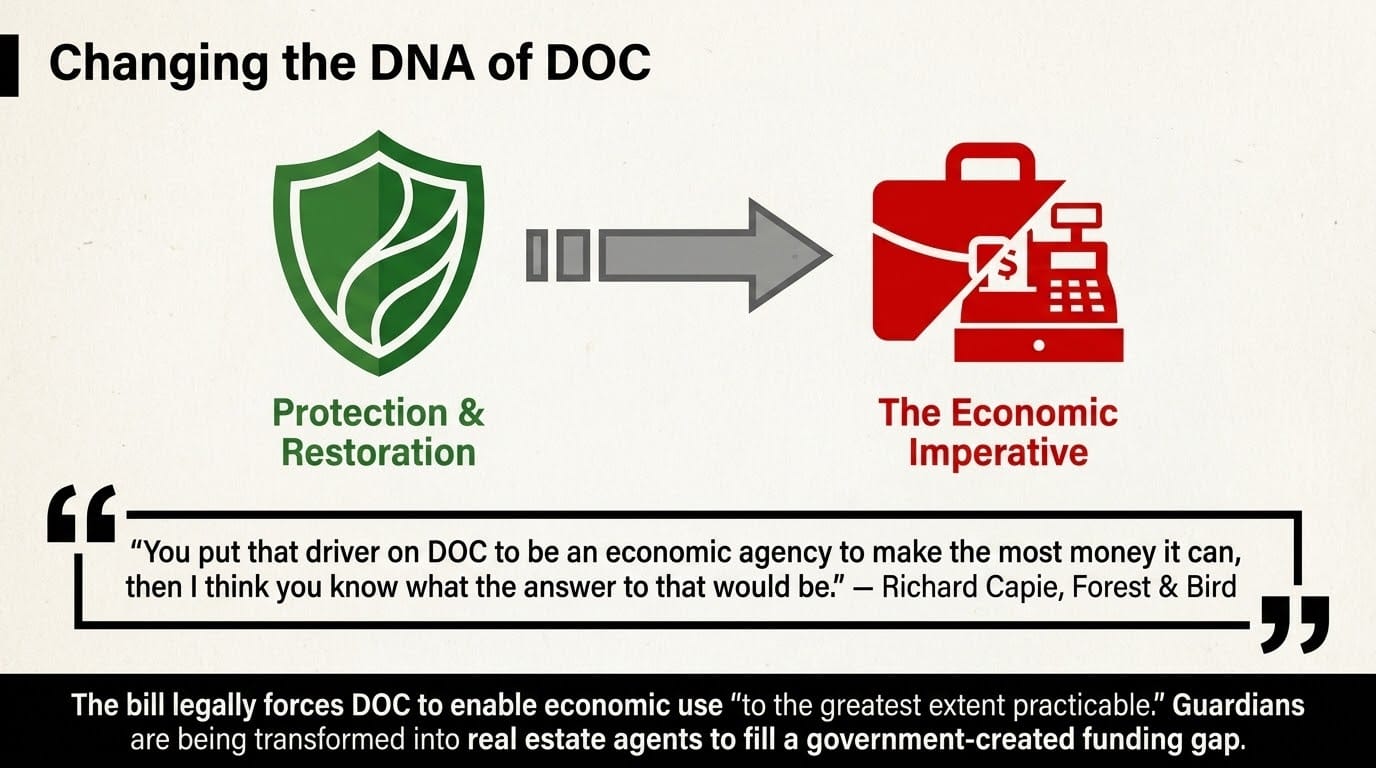
It mandates DOC to prioritise economics over ecology. The bill places a new statutory obligation on the Department of Conservation: it must enable economic use and development of public conservation land "to the greatest extent practicable." That is not guidance. That is law. DOC's founding mission — to protect and restore nature — is subordinated to a commercial imperative.
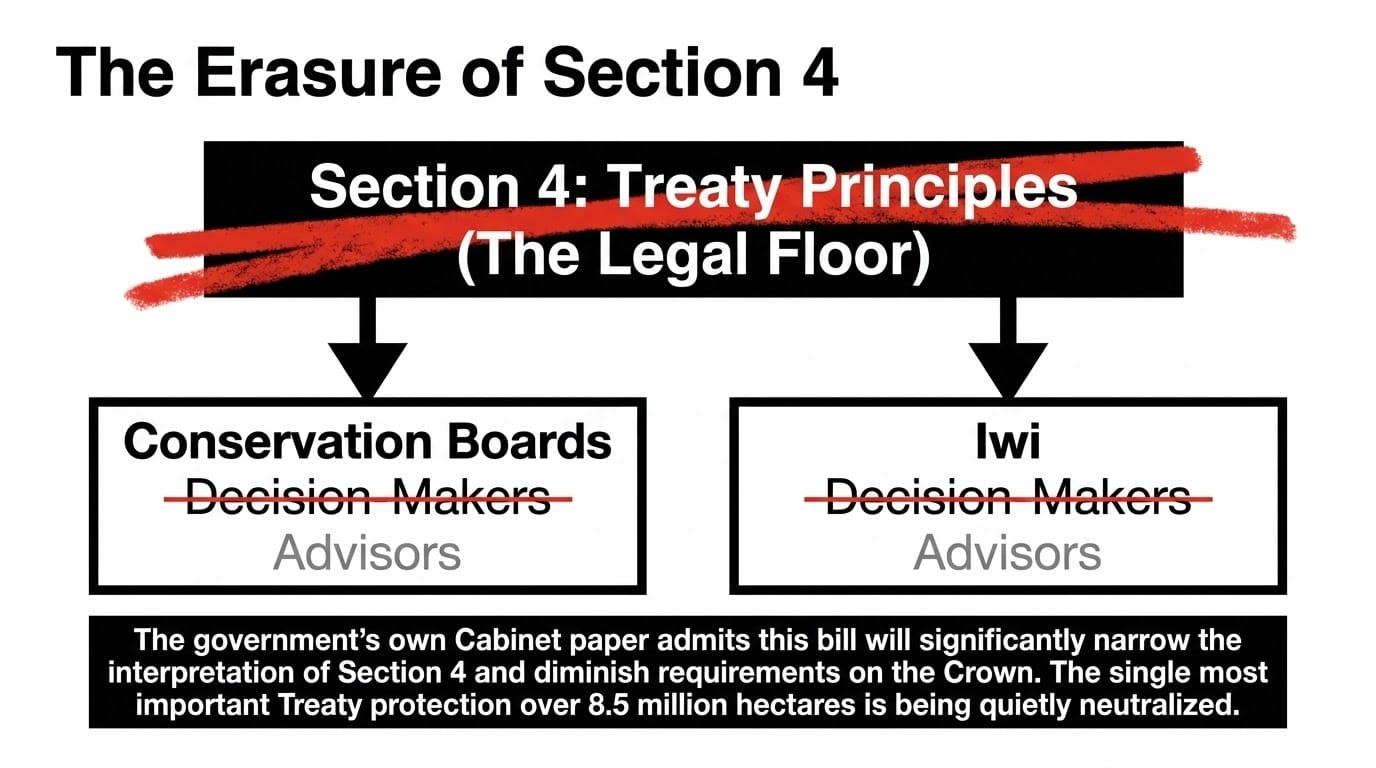
It strips Treaty oversight bodies of decision-making power. Conservation Boards — which include members appointed through Treaty settlement legislation — are reduced from decision-making bodies to advisory ones. The New Zealand Conservation Authority faces the same fate. Every iwi that fought to place a representative on those boards through a Treaty settlement just had that hard-won gain legislatively erased.
It removes Section 4's teeth. The Conservation Act 1987's Section 4 requires every person exercising functions under the Act to give effect to Treaty of Waitangi principles. The government's own Cabinet paper admits the bill will "significantly narrow its interpretation and application." The paper further concedes: "It is possible that many Iwi/Hapū will view the proposals as diminishing the requirements on the Crown." Not possible. Certain.
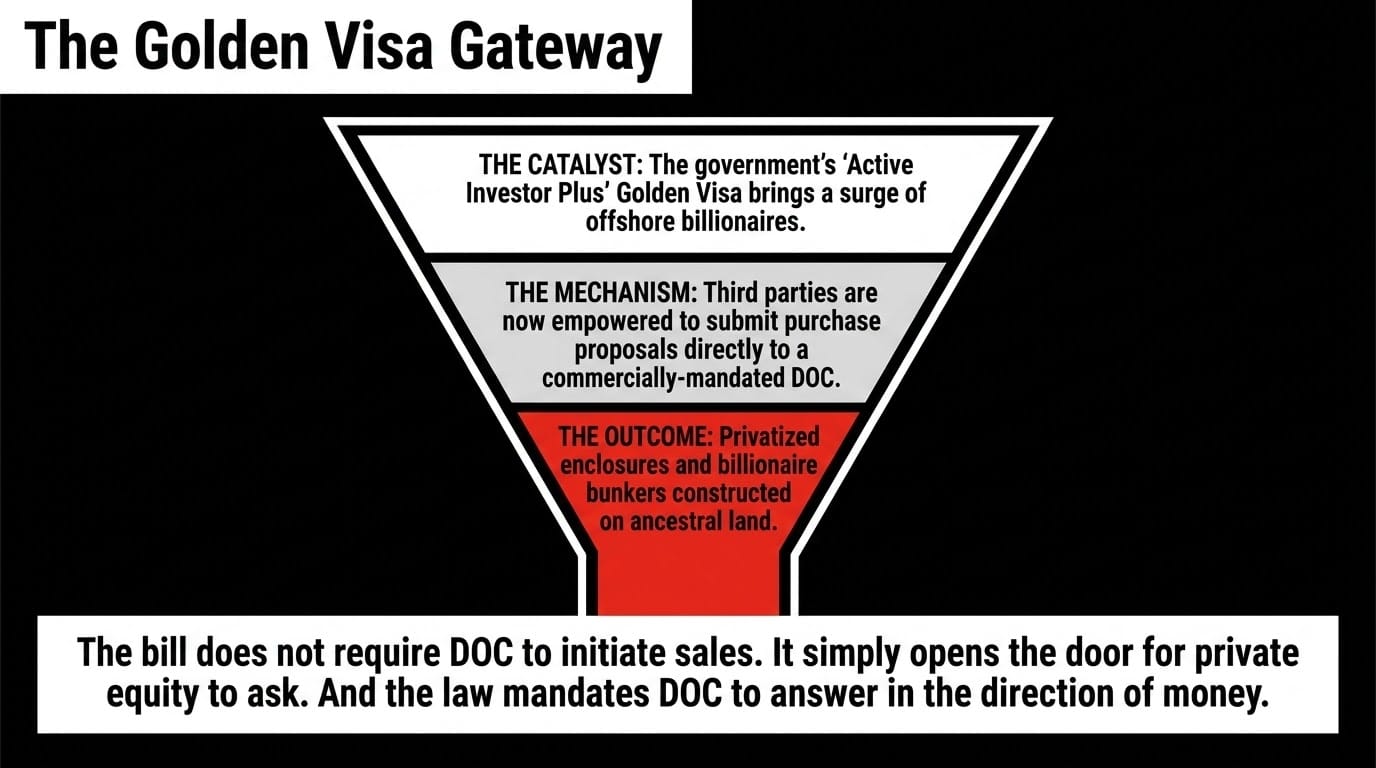
It opens the door to third-party purchase proposals. The bill creates a framework in which third parties can propose purchases, DOC produces a report, and if that report recommends the land could be sold, the process proceeds. An agency now legally required to maximise economic returns, receiving purchase proposals from wealthy private buyers, producing reports on whether land could be sold — you do not need a law degree to predict the direction of those reports.
This is the architecture. Memorise it. Because Tama Potaka will not explain it to you.
Destroying Potaka's Positions — One By One
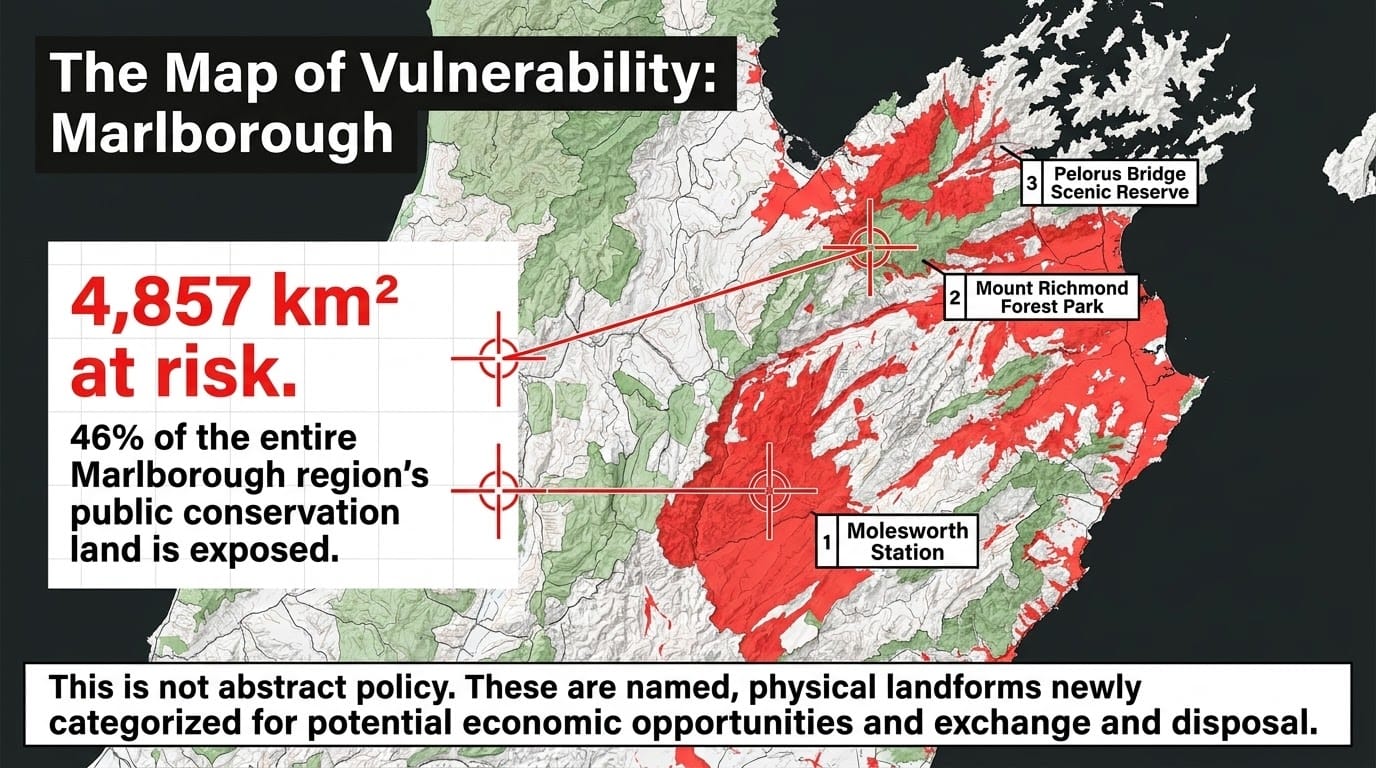
Position 1: "Only bits and bobs will be sold"
This phrase — repeated in Parliament, repeated on Morning Report, repeated in every media appearance — is the central deception of this entire legislative agenda. Let me destroy it with numbers.
In Marlborough alone, DOC manages 4,857 km² — 46% of the entire region's total area. The land at risk includes the Wairau Bar (Aotearoa's oldest confirmed settlement), Mount Richmond Forest Park, Pelorus Bridge Scenic Reserve, Molesworth Station (the country's largest farm), Ka Whata Tu o Rakihouia Conservation Park, and reserves throughout the Marlborough Sounds. That is not "bits and bobs." That is nearly half a region.
Nationally, Forest & Bird's maps show 60% of the national conservation estate sitting in orange and red zones — available for economic development or outright disposal. Potaka called those maps "spurious," "ridiculous," "fantasy land," and "the Olympic championships for exaggeration." The maps use the bill's own text. The Olympic championships for fabrication is the minister's press statement.
Position 2: "The bill doesn't direct or require any land to be sold"
This is the crown jewel of Potaka's misdirection — technically true, substantively a lie by omission.
No, the bill does not require sales. It enables them at a scale previously impossible. Forest & Bird's chief policy advisor Richard Capie made the distinction Potaka refuses to make: "We need to distinguish between what a specific minister might say they want to do and actually what any minister would be able to do under this legislation."
Potaka is the minister today. He will not be the minister forever. The law he is writing outlasts him. And the law he is writing gives whoever holds that portfolio — including any future minister with no commitment to Treaty obligations whatsoever — the power to approve the disposal of 5.2 million hectares at a lower legal threshold than currently exists, with Treaty oversight bodies reduced to advisory roles, and a statutory obligation to maximise economic returns built into DOC's founding purpose.
That is not nothing. That is everything.
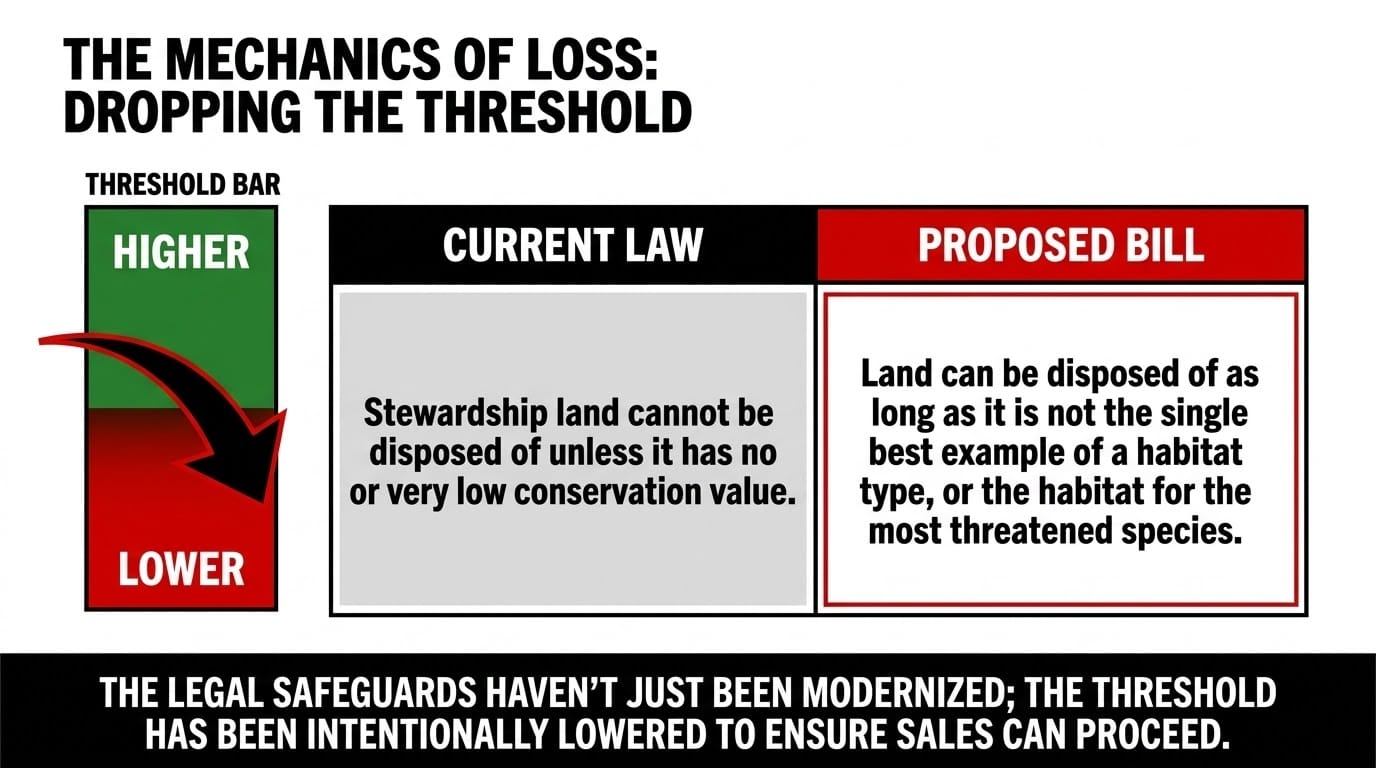
Position 3: "The new sales tests are stringent"
The current threshold: land can only be sold if it has no or very low conservation value.
"Stringent" means strict. The new test is demonstrably looser. Potaka used the word "stringent" to describe a standard he just lowered. This is not a communication error. This is the strategy: use technical language with high-trust connotations to disguise the opposite of what is being done.
The Section 4 Assassination — And What It Means For Whānau
If you are not a lawyer, Section 4 of the Conservation Act may sound abstract. Let me make it concrete.
Section 4 is the reason Ngāi Tahu has co-governance arrangements over parts of Kā Tiritiri o te Moana. It is the reason Ngāti Tūwharetoa has had meaningful consultation rights over Tongariro. It is the reason iwi whose tūpuna walked, hunted, gathered, buried their dead, and named every feature of the conservation estate have had any legal standing at all. The Conservation Amendment Bill narrows Section 4 — quietly, in a Cabinet paper that admits iwi will view this as "diminishing the requirements on the Crown." And it narrows it at the precise moment the bill expands the category of land available for disposal and removes Treaty-accountable oversight bodies from decision-making.
This is sequencing. It is not accident.
The Waitangi Tribunal found in Wai 262 that the conservation estate "is not only a vast landscape by New Zealand standards; it is also where most of the surviving taonga places can be found… And although it is owned by the Treaty partner, every inch of it is tribal territory." The Tribunal further found that without access to and authority over this land, "mātauranga Māori simply cannot survive."
The Crown has never formally responded to Wai 262. That report is fifteen years old. And instead of implementation, this government has written the opposite: legislation that narrows Treaty obligations over tribal territory, strips iwi from governance bodies, and hands a Māori minister's credibility to a programme of colonial land reform.
Three Examples for the Western Mind
Example 1: The Crystal Valley Precedent — The RFR That Wasn't
What happened: In 2004, the Nature Heritage Fund purchased Crystal Valley — 198 hectares of pristine high alpine basin in Kā Tiritiri o te Moana — specifically for perpetual conservation. In 2011, that land was exchanged with Blackfish Ltd, an Australian private equity firm, for 56 hectares on Banks Peninsula. Ngāi Tahu opposed the exchange. They invoked their Right of First Refusal — the Treaty settlement guarantee that if Crown conservation land is sold, the iwi gets the first option to purchase it back.
The RFR could not be invoked. Because it was an exchange, not a sale. The law did not cover exchanges. 198 hectares of alpine land — a taonga Ngāi Tahu had a Treaty-guaranteed right to repurchase — went to an Australian private equity firm without Ngāi Tahu being able to exercise that right.
Why it matters now: The Conservation Amendment Bill dramatically expands the category of land available for exchange and simultaneously removes Conservation Boards — where iwi hold Treaty settlement seats — from exchange decisions. Crystal Valley was the proof of concept. The bill scales the mechanism.
The tikanga impact: For Ngāi Tahu, that alpine basin is not real estate. It is tūpuna. The mountain ranges are named — each name carries a story, a genealogy, a line of descent from the atua of the natural world. Kaitiakitanga — guardianship — is not a preference. It is an obligation as binding as the obligation a parent has to a child. When that land goes to a private equity firm through an exchange that bypasses the Treaty, it is not a property transaction. It is a severance of whakapapa. The Western mind understands property. Kaitiakitanga is deeper: it is identity, obligation, and the covenant between a people and the land that made them.
Example 2: The Wairau Bar — Aotearoa's Birthplace Is On the Map
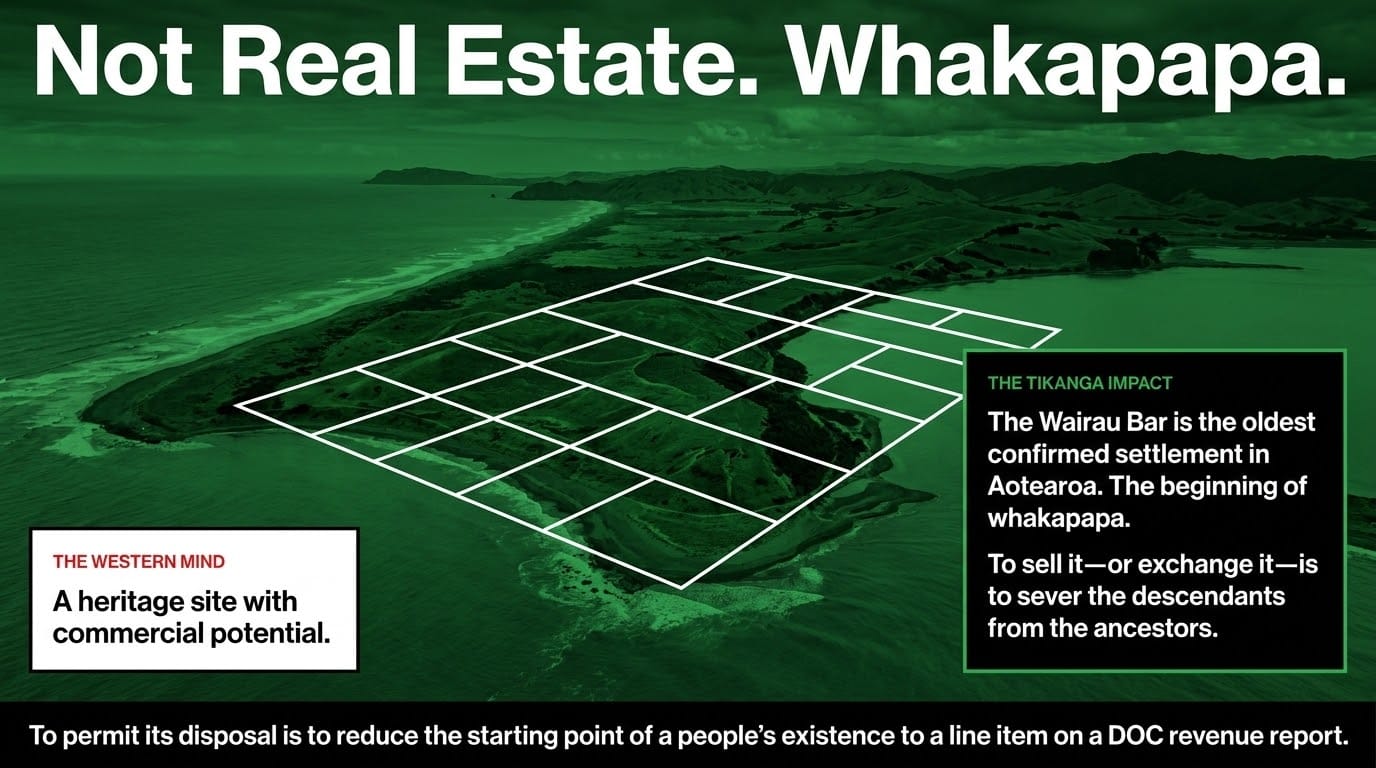
What it is: The Wairau Bar in Marlborough is the oldest confirmed human settlement site in Aotearoa — the place where the first waka from Hawaiki are believed to have made landfall. It holds the remains of the earliest ancestors. It is a site of profound archaeological, spiritual, and genealogical significance to Ngāti Apa, Rangitāne, and the wider Māori world.
Where it sits: On Forest & Bird's map of the Conservation Amendment Bill's impact in Marlborough, the Wairau Bar sits within conservation land exposed to the bill. It is not in a national park. It is not one of the two scenic reserves named for exemption. It is in the zone eligible for sale or exchange.
The quantified harm: Marlborough's conservation estate covers 4,857 km² — 46% of the region. If even a fraction of that land goes through the bill's disposal framework — at the new, lower threshold, without Conservation Board oversight, without Section 4's full force — the cumulative loss of wāhi tapu, archaeological sites, and named ancestral landforms is not measurable in hectares. It is measurable in severed whakapapa.
The tikanga impact: The Western legal system understands heritage listings, archaeological protections, and UNESCO classifications. What it cannot fully grasp is this: for the people of Ngāti Apa and Rangitāne, the Wairau Bar is not a heritage site. It is the literal beginning of their whakapapa in this land. To permit its disposal through a commercial framework — even theoretically — is to reduce the starting point of a people's existence to a line item on a DOC revenue report. That is not policy failure. That is colonial violence with a consent form attached.
Example 3: 70,000 Tamariki Māori — The Real Cost of DOC's "Revenue Shortfall"
The argument Potaka makes: The bill will generate $60 million annually for reinvestment into conservation. DOC is underfunded. The bill fixes the funding gap.
The reality: DOC is underfunded because this government cut it. The same government that is now proposing to sell conservation land assets to fill the gap it created. This is the privatisation playbook — used on health, used on education, used on housing — applied to the conservation estate. As Marlborough Tramping Club president Murray Chapman put it: the bill allows DOC to act as a "real estate agent" and "hock off the silverware" to fund revenue shortfalls without public accountability.
The numbers that do not appear in Potaka's press releases: The top 1% of New Zealanders hold $291 billion in wealth — with 311 of the country's wealthiest families paying tax at less than half the rate of ordinary Kiwis. The government chose not to tax that. Instead, it is proposing to fill the conservation funding gap by lowering the threshold for selling ancestral land.
The tikanga impact: In tikanga Māori, the wellbeing of the people and the wellbeing of the land are inseparable. A government that will not fund the protection of the conservation estate — the same estate that holds the taonga species, the medicinal plants, the mahinga kai that sustain both physical and spiritual health — while simultaneously presiding over growing child poverty, is not making an economic decision. It is making a moral one. And the moral it has chosen is: the land and the children of Māori are both disposable when capital requires it.
Who Is Actually Coming Through That Door?
This is the question Potaka answers with "bits and bobs." Let me answer it with data.
In December 2025, this government enacted Overseas Investment Act amendments creating the "golden visa" — allowing qualifying investor visa holders to purchase or build residential property in New Zealand worth more than NZ$5 million. High-end real estate agents immediately reported a surge in inquiries from wealthy offshore investors, explicitly attracted by New Zealand's distance and stability. New Zealand's billionaire class grew from 3 individuals in 2016 to 18 by 2025, while the top 10% of New Zealanders hold 48% of all wealth — nearly half of it in real estate.
Then Capie asked the question Potaka will not: "Could we see billionaire bunkers constructed in forest parks? Then you put that driver on DOC to be an economic agency to make the most money it can, then I think you know what the answer to that would be."
I will tell you what the answer is: yes. Because that is what economic mandates do. And the RFR rights that were supposed to give iwi first access to ancestral land being disposed of are bypassed by exchanges — as Crystal Valley proved. The Conservation Board seats that iwi won through Treaty settlement are reduced to advisory roles. The Section 4 protections that required the Crown to give effect to Treaty principles are narrowed.
The deck has been cleared. The buyers are on their way. And a Māori minister signed the invitation.
Previous MGL Essays That Trace This Architecture
This essay does not stand alone. The pattern has been building since October 2023 — and I have been documenting it. If you want the full whakapapa of this government's war on Māori rights over land and nature, read these:
- "Potaka: The Neoliberal Māori and the Five-Million-Hectare Betrayal" — The first full essay on the Conservation Amendment Bill. The architecture of the betrayal laid out when the bill first passed. Read it to understand where this began.
- "The Accelerator Has No Brakes: They Deleted the Treaty and Called It Progress" — How this government has systematically erased Treaty obligations from every piece of legislation it touches, including Māori freehold land protections.
- "The Genealogy of Simeon Brown: How a Man Born on Māori Land, Backed by a Baptist Network, Is Dismantling Māori Health" — The same privatisation-by-stealth playbook applied to health. Different minister. Same architecture.
- "The Colosseum of Kingsland: How a White Supremacist Government Built a Gladiator Arena on Stolen Māori Land" — The pattern of publicly-funded infrastructure on land whose colonial acquisition was never honestly accounted for.
- "Removing Māori Rights Is a War on Nature" (E-Tāngata, Dr Kayla Kingdon-Bebb and Dr Carwyn Jones, March 2025) — The academic and legal framework: removing Māori rights removes protections for the natural environment. This is documented causation, not metaphor.
The through-line is always the same: identify what Māori hold, write legislation that transfers decision-making power to a minister, lower the legal threshold, strip the oversight, and monetise the outcome. The faces change. The architecture does not.
The Moral Clarity
I want to speak directly to Māori whānau reading this.
This is not the first time a government has used a Māori face to carry out colonial work. The history of "kind colonialism" — as Dr Kingdon-Bebb names it — is full of Māori individuals recruited to perform dispossession and give it the credibility of Indigenous endorsement. The credibility of whakapapa is weaponised as a shield. When a Māori minister says conservation land is safe, the implication is: he would know, he cares, his identity is a guarantee. It is not a guarantee. It is a tactic.
What Tama Potaka has done with the Conservation Amendment Bill is:
- Centralised all DOC decision-making power in a single minister — himself, and whoever comes after him
- Narrowed Section 4, stripping Treaty obligations from the Crown's management of tribal territory
- Lowered the legal threshold for selling and exchanging conservation land
- Removed iwi from the governance bodies where Treaty settlements had placed them
- Mandated DOC to maximise economic outcomes "to the greatest extent practicable" — creating institutional incentives that will not disappear when he leaves office
- Opened the purchase proposal process to third parties, without establishing any Māori authority over decisions affecting ancestral land
The Waitangi Tribunal said mātauranga Māori cannot survive without the conservation estate. This bill does not protect the conservation estate. It opens it. And it removes the Treaty mechanisms through which Māori might hold the line.
This is not modernisation. This is colonial land reform — administered by a Māori minister, on behalf of a government that has spent three years systematically dismantling every institutional protection Māori have built since 1975 — wearing a DOC jacket and a recycled press release.
The taiaha is made of evidence. The evidence is in. The verdict is not ambiguous.
What You Must Do — Before 2 July 2026
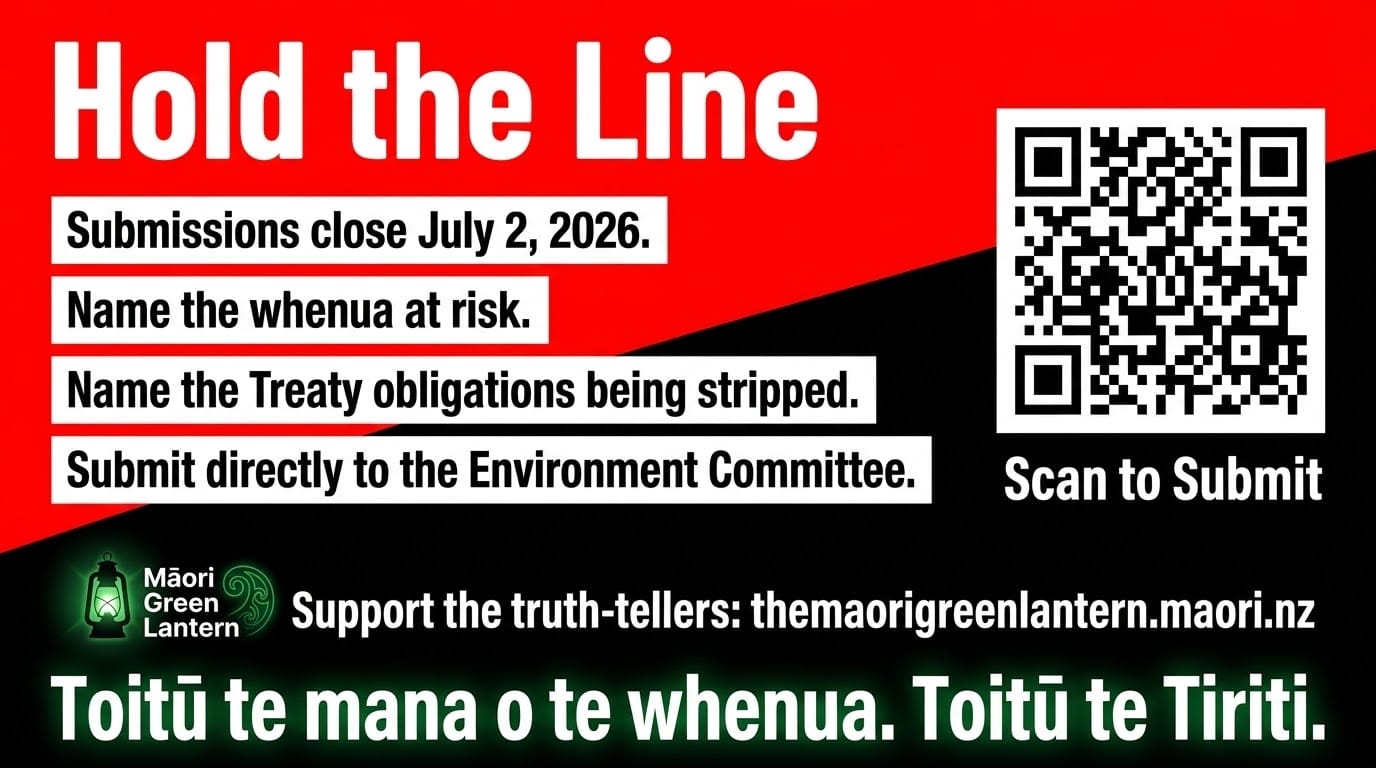
Submissions on the Conservation Amendment Bill close 2 July 2026. That is one week. The bill then goes to select committee. If the public is silent, the committee hears only the voices of those who stand to profit from the disposal.
Make your submission. Name the whenua. Name the Treaty obligations being stripped. Name the mechanism.
- Submit to the Environment Committee — New Zealand Parliament website, Conservation Amendment Bill 2026
- Read the full Forest & Bird analysis: forestandbird.org.nz
- Read the E-Tāngata Treaty analysis: e-tangata.co.nz — "Is This Modernising or Privatising the Conservation Estate?"
Koha Consideration 💚

Every whenua named in this essay — Crystal Valley, the Wairau Bar, Pelorus Bridge, the Marlborough Sounds, the alpine basins of Kā Tiritiri o te Moana — is your whenua. Every Treaty obligation being narrowed was won through your tīpuna's resistance. Every RFR bypassed through the exchange loophole, every Conservation Board seat stripped, every wāhi tapu opened to the market — these are not abstractions. They are specific, quantified harms this bill enables against specific whānau, hapū and iwi across Aotearoa.
This accountability work — tracing the whakapapa of each legislative mechanism, naming the harm before it becomes irreversible, connecting the golden visa to the Crystal Valley precedent to the Wairau Bar to the bill's third-party purchase framework — will not be funded by the Crown. It will not be published by mainstream media. It will not be commissioned by the institutions that benefit from the silence.
It is supported by whānau. By you.
Every koha to The Māori Green Lantern signals that rangatiratanga includes the power to support our own truth-tellers — before the tūpuna land is gone and only the maps remain. If you are able, please support this mahi through one of four pathways:
🌿 Koha directly: app.koha.kiwi — The Māori Green Lantern
📩 Subscribe for essays delivered direct: themaorigreenlantern.maori.nz/support
🏦 Direct bank transfer: HTDM — 03-1546-0415173-000
📘 Facebook: facebook.com/Themaorigreenlantern/subscribe
If you cannot koha — no worries at all, whānau. Share this essay. Name the whenua at risk in your kōrero. Tell your hapū. Kōrero with your whānau and friends. That is koha in itself. The truth travels further when whānau carry it.
Kia kaha, whānau. Ko te whenua, ko te tangata. Ko te tangata, ko te whenua.
Toitū te mana o te whenua. Toitū te mana motuhake. Toitū te tiriti.
— Ivor Jones | The Māori Green Lantern | themaorigreenlantern.maori.nz
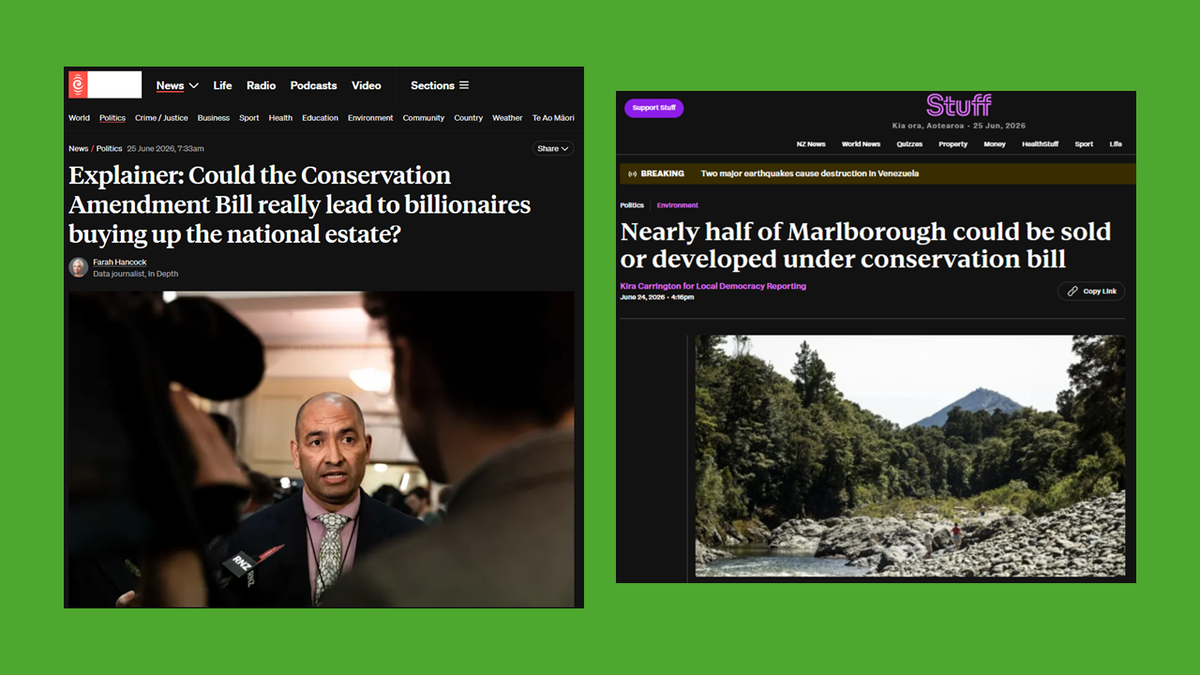
DISCLAIMER: This essay reflects the verified views of Ivor Jones / The Māori Green Lantern based on publicly available sources including: the RNZ explainer by Farah Hancock, 25 June 2026; the Stuff/Local Democracy Reporting article by Kira Carrington, 24 June 2026; the E-Tāngata analysis by Melanie Nelson; the E-Tāngata article by Dr Kayla Kingdon-Bebb and Dr Carwyn Jones, March 2025; the NZ Herald Gilded Age feature, April 2026; the Forest & Bird Conservation Amendment Bill explainer, June 2026; and Bell Gully's Overseas Investment Act legal analysis, December 2025. All Wai 262 quotations are drawn from the Waitangi Tribunal's published findings as confirmed through Melanie Nelson's E-Tāngata analysis. Opinions are clearly flagged as opinions. All individuals named are public figures acting in their public capacity. Right of reply is available via themaorigreenlantern.maori.nz. Retraction protocol applies on verified complaint. Published under New Zealand's public interest journalism framework — Lange v Atkinson 3 NZLR 385; Defamation Act 1992.