"The ATLAS Networks Low-Cost Influence, Our Long-Term Bill" - 15 November 2026
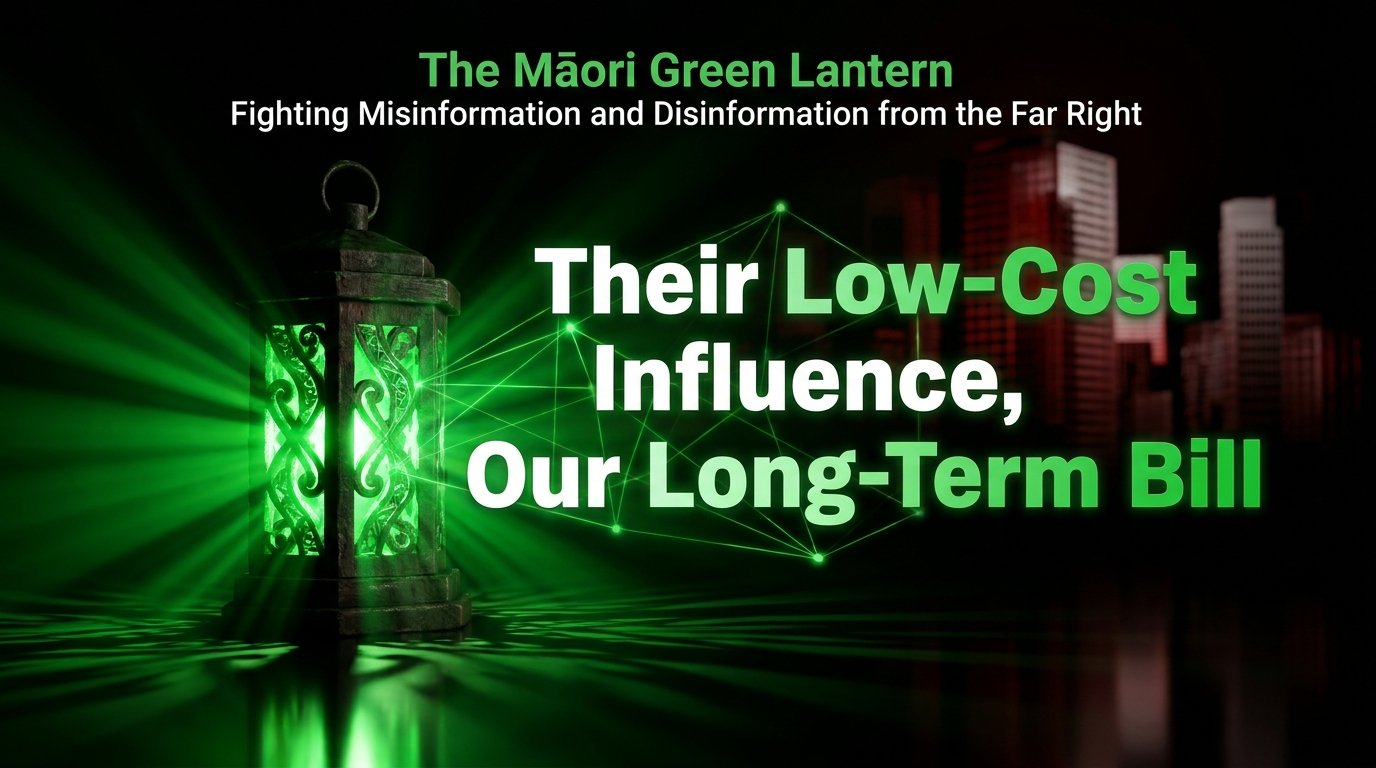
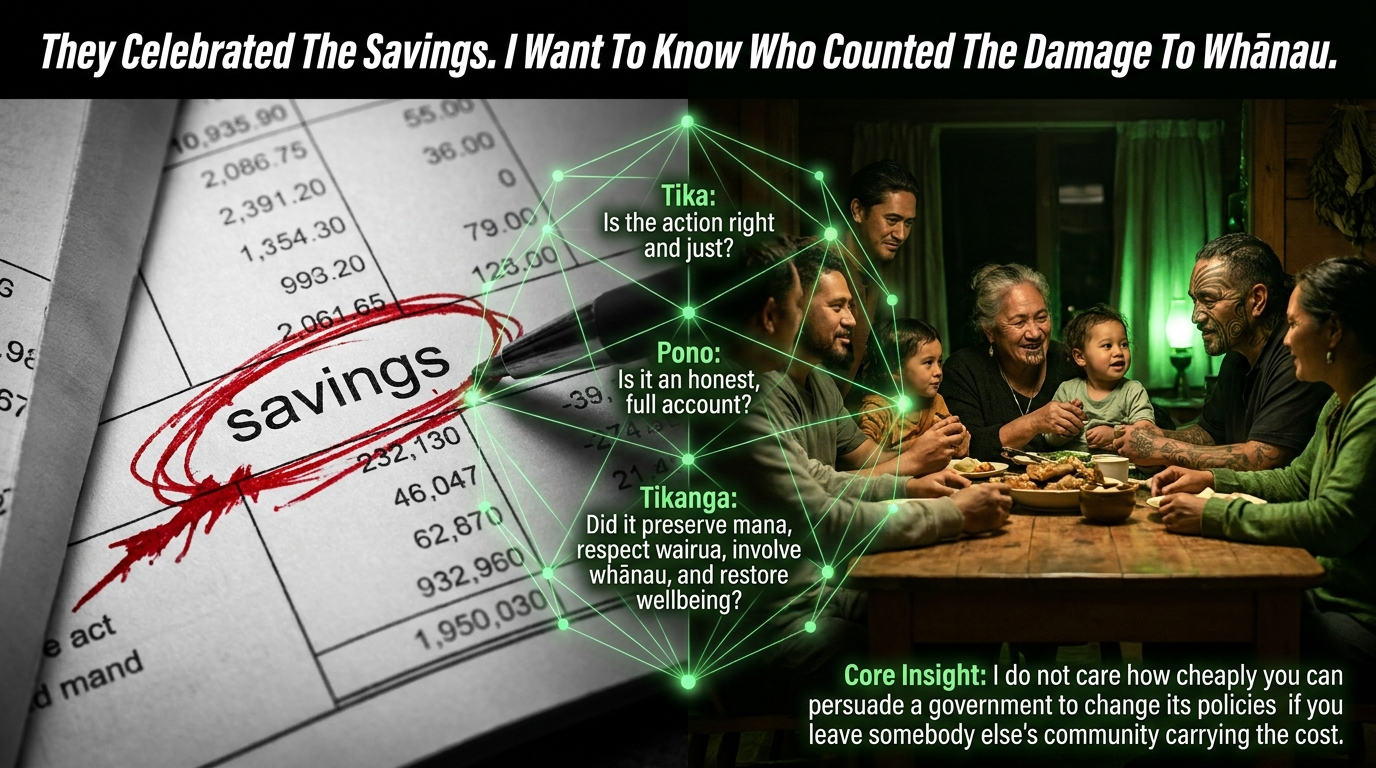
They Celebrated The Savings. I Want To Know Who Counted The Damage To Whānau.

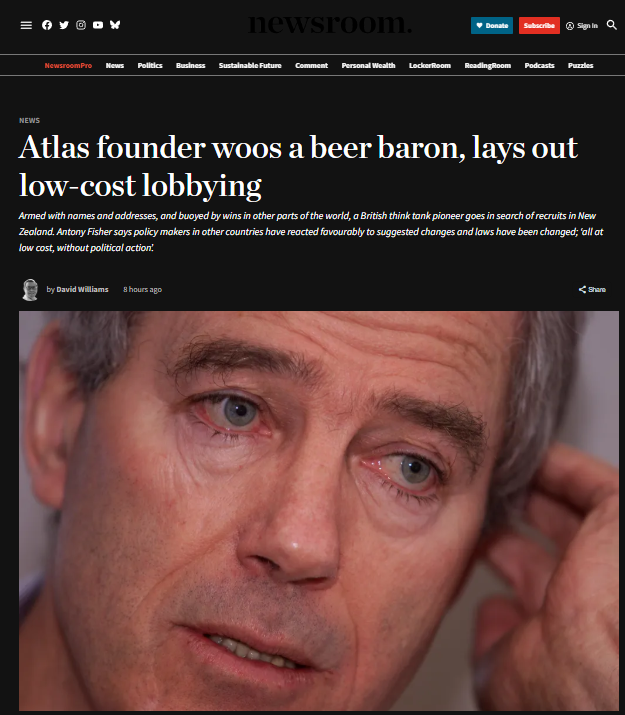
"The ATLAS Networks Low-Cost Influence, Our Long-Term Bill" - 15 November 2026
I do not care how cheaply you can persuade a government to change its policies if you leave somebody else’s community carrying the cost.
That is where this story starts.
 David Williams
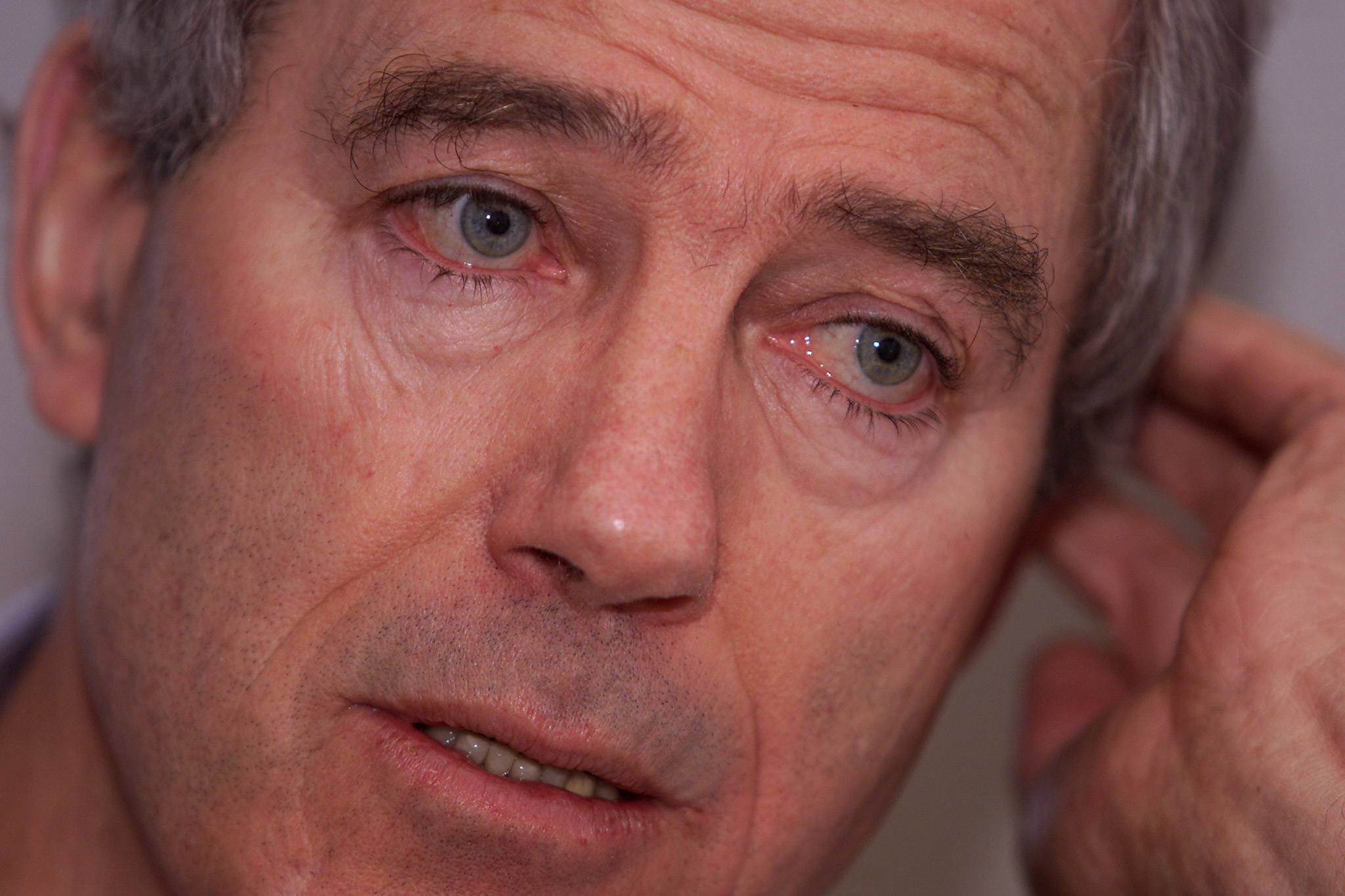
In October 1984, Antony Fisher wrote to brewery chairman Douglas Myers about institutions promoting free-market ideas. His sales pitch included this extraordinary sentence:
“Policy makers have reacted favourably, laws have changed, and all at low cost, without political action.” David Williams reports the passage in Newsroom’s investigation of Fisher’s correspondence.
Without political action?
You influence policymakers. You change laws. Then you congratulate yourself on staying out of politics.
Come on.
Not standing for election does not make your influence apolitical. It means you are working somewhere else in the political process—before the proposal reaches the ballot paper, before the minister announces it, before the public is told what supposedly has to happen.
I want to follow that work: the money, research, workshops, media relationships and cultivated authority. Then I want to take the discussion somewhere less comfortable than a donor’s office: Murupara, where forestry restructuring becomes a question about livelihoods, community and Māori wellbeing.
I will also examine what institutional independence actually means, confront the strongest defence of think tanks, and put today’s government through the same test.
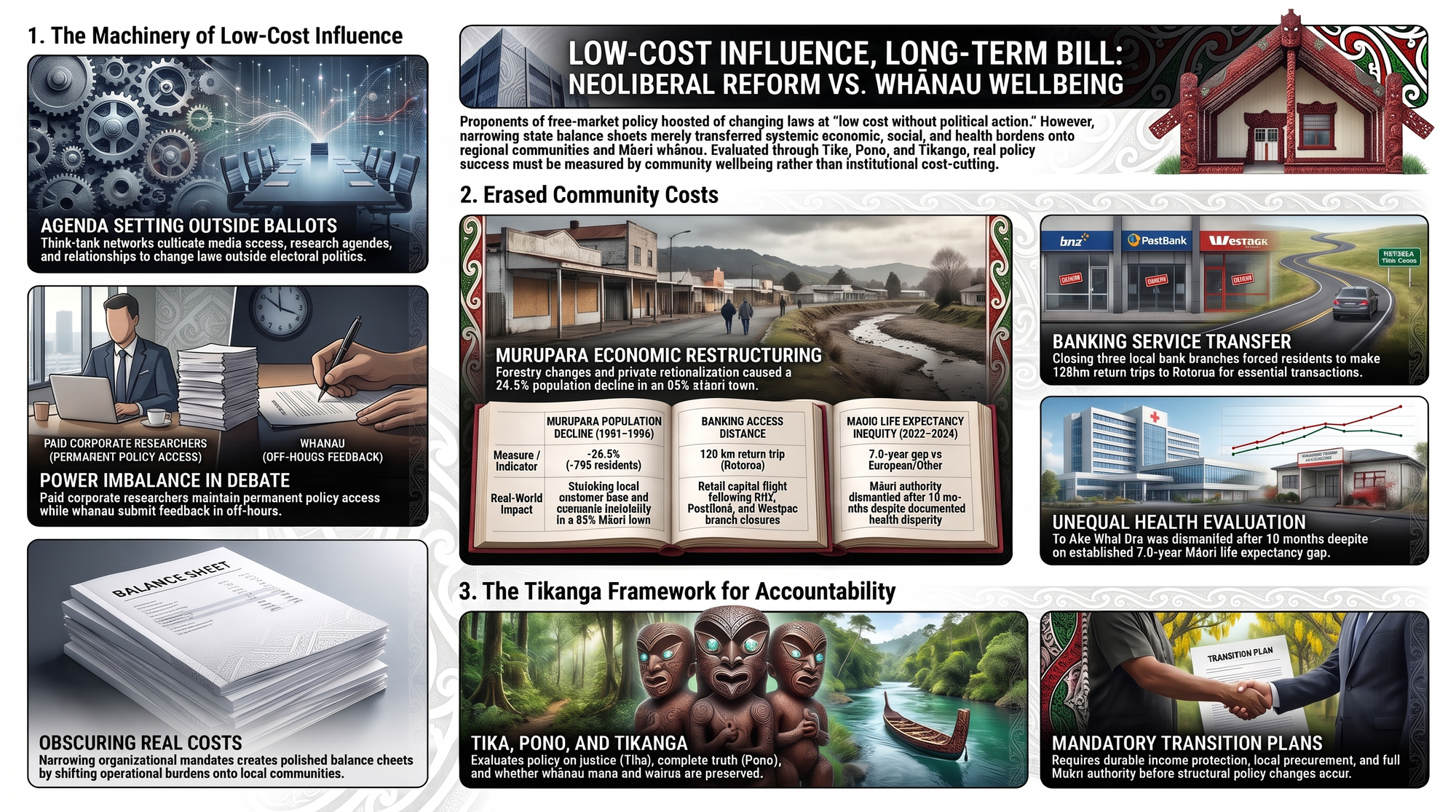
My framework is Tika, Pono and Tikanga, building mauri. Tika asks whether the action is right and just. Pono demands an honest account. And the tikanga question I bring to this essay is whether the system preserved people’s mana, recognised their whakapapa, respected their wairua, involved their whānau and returned them to wellbeing.
Not whether the press release sounded impressive.
Whether people were left able to live.
They Were Building The Machinery
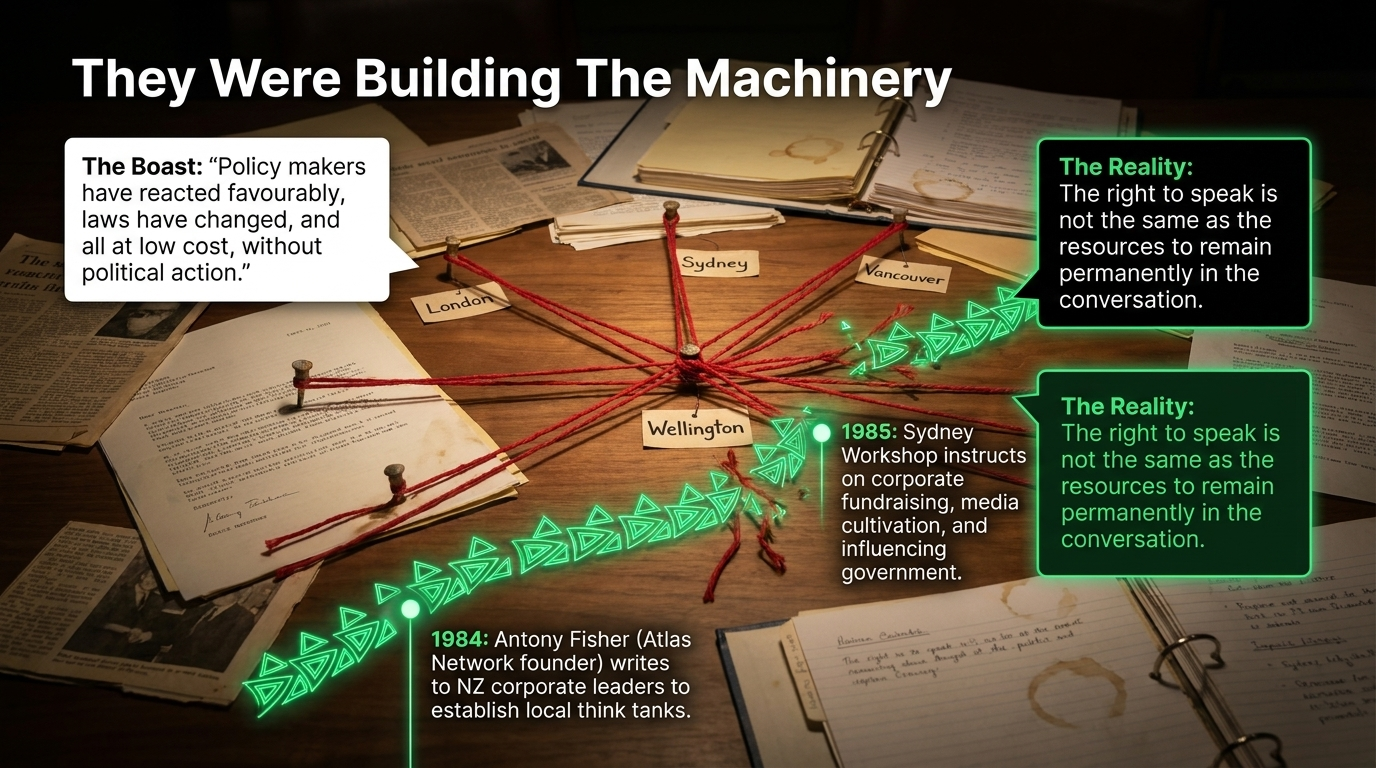
Fisher was not simply hoping that interesting ideas would drift towards Wellington. The correspondence describes deliberate recruitment, introductions, business support and institution-building around a free-market programme. Newsroom’s opening investigation follows that work through the archival record.
The Sydney workshop in 1985 covered fundraising, reaching selected audiences, cultivating media contacts and credibility, writing opinion pieces and influencing government. Its educational suggestions included teacher workshops and teaching materials. Newsroom details the programme and New Zealand participants.
There is the machinery.
Research gives an argument substance. Media work gives it reach. Relationships give it access. A lasting institution keeps returning to the issue after an individual campaign ends.
Nothing about that requires a secret command centre. The documented methods are enough to demand scrutiny.
And here is the democratic problem I want confronted: the right to speak is not the same as the resources to remain permanently in the conversation.
Think about a whānau member preparing a submission after work. Now think about an organisation whose staff are paid to research, publish, meet officials and answer journalists.
Both can speak.
Do not insult us by pretending they arrive with equal power.
Independent Is Not An Answer
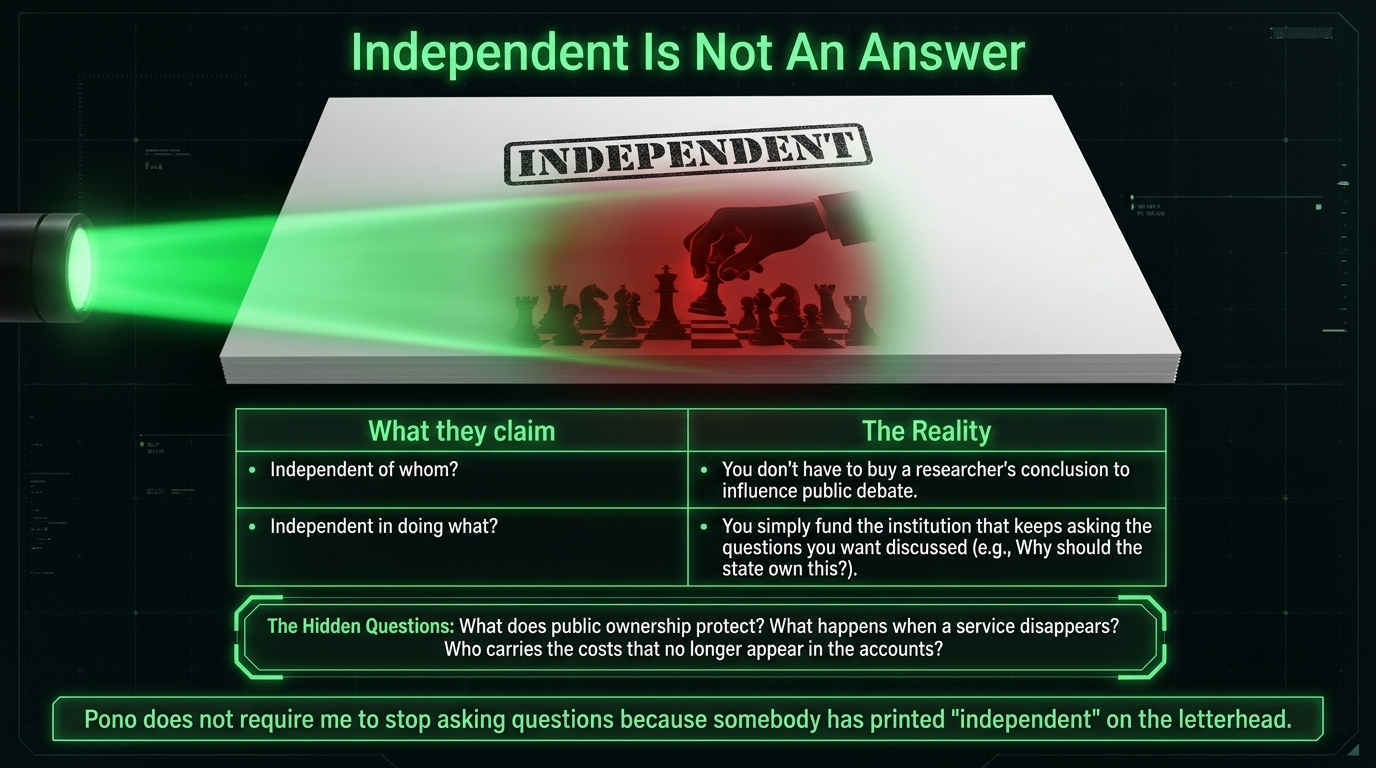
Fisher stressed the importance of scholarly credibility, national identity and institutional independence. He also wrote that sufficient resources could persuade established institutes to concentrate research attention on a selected issue, giving social security as an example. Those positions appear together in Newsroom’s account of his letters.
So when somebody says “independent”, my next question is: independent of whom, and in doing what?
Independent of a political party? Independent in appointing staff? Independent in reaching conclusions? Independent in deciding which questions receive sustained attention?
Those are not interchangeable.
You do not have to purchase a researcher’s conclusion to influence public debate. You can support the institution that keeps asking the questions you want discussed.
Why is public provision expensive? Why should services face competition? Why should the state own this asset?
Now put other questions beside them.
What does public ownership protect? What happens when a service disappears? Who carries the costs that no longer appear in the organisation’s accounts?
The letters do not establish that a donor bought a particular finding. They establish a reason to examine agenda-setting, rather than accepting institutional independence as the end of the discussion. Fisher’s reported proposal concerned concentrating research attention.
Pono does not let me invent evidence.
It also does not require me to stop asking questions because somebody has printed “independent” on the letterhead.
Labour Does Not Get An Alibi
Let us get the history straight.
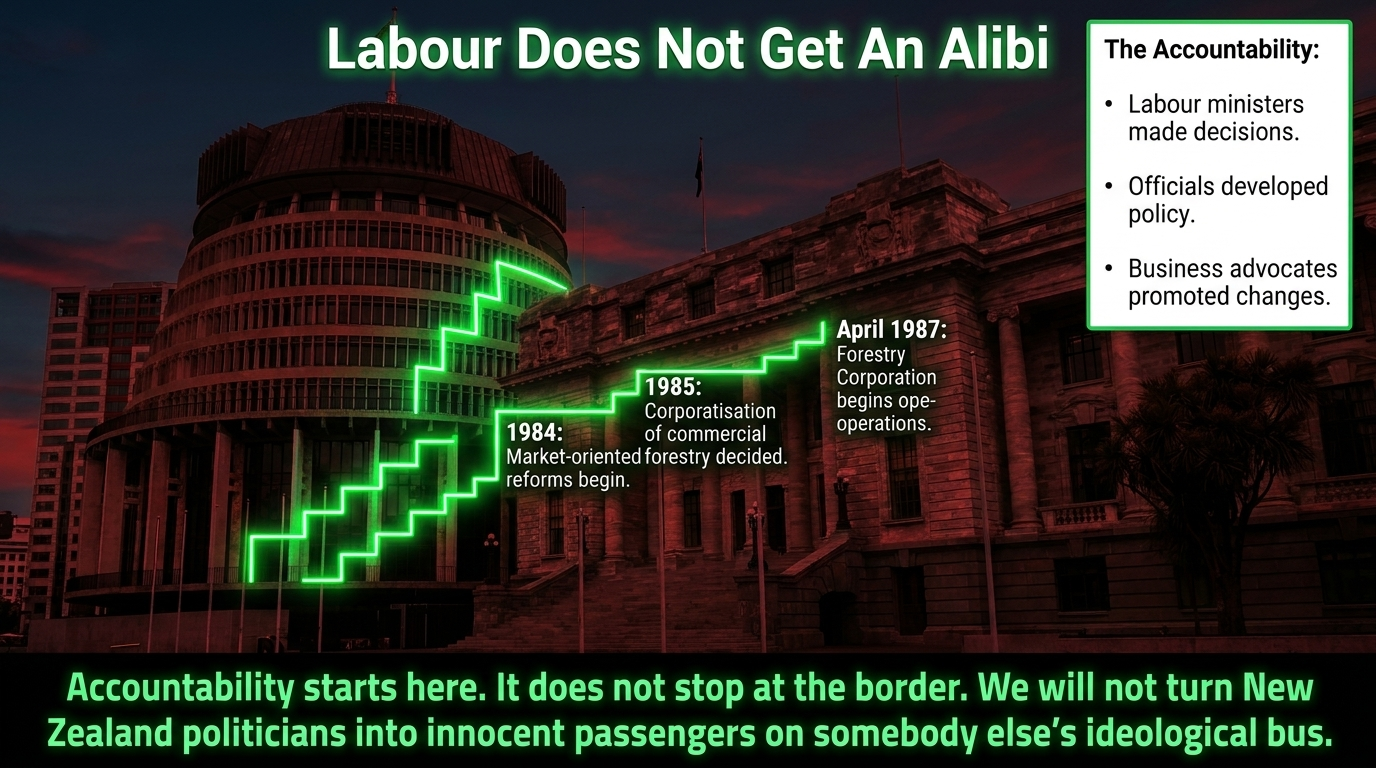
New Zealand’s market-oriented reform programme began in 1984. The decision to corporatise commercial forestry functions followed in 1985. The Forestry Corporation began operating in April 1987, with major asset sales coming later. Mary Clarke sets out that sequence in her FAO-hosted forestry paper.
That matters because Fisher’s celebration outran the legal reality.
In his November 1987 correspondence, he praised Alan Gibbs’s forestry restructuring as privatisation and celebrated favourable voter reaction to dismissals. Newsroom reports Fisher’s description. The commercial operation had become a state-owned corporation, not yet the later privatised arrangement. Clarke distinguishes corporatisation from the subsequent sales.
I will not repeat an inaccurate description merely because it strengthens a punchline.
Nor will I turn New Zealand politicians into innocent passengers on somebody else’s ideological bus.
Labour ministers made decisions. Officials developed policy. Business advocates promoted changes. The record describes a reform programme already underway, not a country waiting for Atlas to invent it. The chronology is explicit in Clarke’s account.
The argument is about reinforcing, promoting and extending that programme.
Accountability starts here. It does not stop at the border.
The Deep Dive Podcast
Listen to a lively conversation between two hosts, unpacking and connecting topics in the sources of this essay. I apologise in advance for the AI's very harsh pronounciation of reo. Please dont shoot me, :).
Youtube Video
Like video? Here is a short video suppporting the essay. Again, don't shoot the messenger please because of AI's pronounciation. :)
Example One: The Town Missing From The Accounts
For the Western mind, start with an ordinary business question.
If a company improves its accounts by transferring costs to somebody else, have those costs disappeared?
Of course not.
Wayne McClintock’s June 1998 study of Murupara used census statistics, documentary research and local interviews to examine the town’s experience. It identified Forest Service restructuring, private-sector rationalisation and mechanisation as overlapping forces behind economic and population change. The complete study explains its methods and findings.
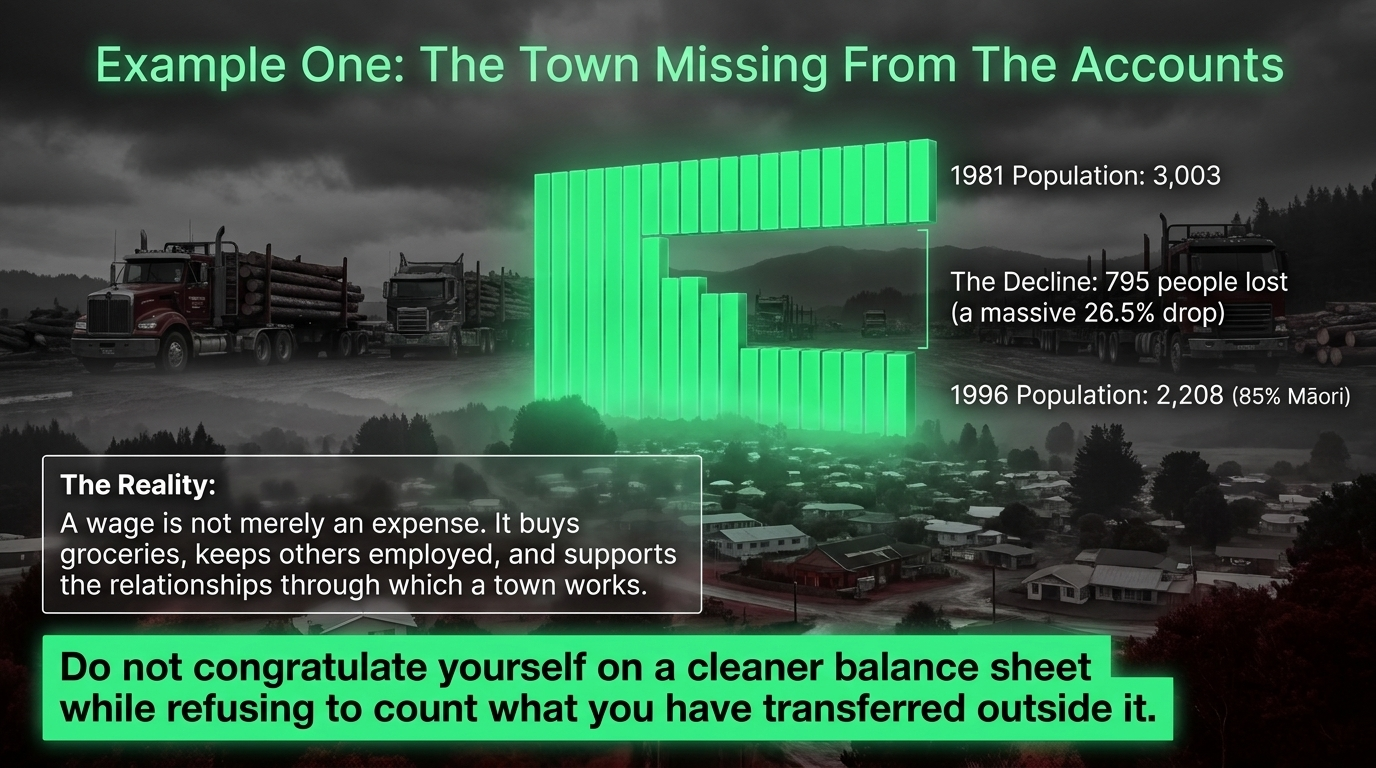
Murupara’s population fell from 3,003 in 1981 to 2,208 in 1996: a decline of 795 people, approximately 26.5%. Those figures come from the study’s census table.
That is population loss, not a redundancy count.
The town had already lost 411 residents between 1981 and 1986, before the Forest Service was abolished. The same table establishes that earlier decline.
Private restructuring belongs in this story. Mechanisation belongs in it. So do the state’s decisions.
Māori comprised 85% of Murupara’s population in 1996. McClintock records that proportion in his demographic discussion.
Now listen to what the local study describes: workers and families leaving, businesses losing customers, purchasing power shrinking, and redundancy payments cushioning the initial blow without rebuilding an enduring local economy. Those consequences are documented in the study’s local-economy section.
A wage is not merely an expense.
It buys groceries. It helps keep another person employed. It supports the ordinary relationships through which a town works.
Through tikanga, the question becomes larger still. What happened to the ability to remain connected, contribute, care for whānau and plan a future? Where is that assessed when dismissals are celebrated as an achievement?
My answer is not to freeze every workplace in time. It is to require a community transition plan before restructuring: income protection, training connected to actual employment, local procurement, investment in economic diversity, and Māori participation with authority.
Do not congratulate yourself on a cleaner balance sheet while refusing to count what you have transferred outside it.
Efficiency Does Not End The Argument
The strongest economic defence deserves to be heard.
Clarke argues that separating commercial forestry from other functions clarified objectives and helped produce a profitable corporation. She also records improvements in competitiveness, while explaining that corporatisation and privatisation could not take all the credit. International log prices mattered too. Her paper makes both the economic case and its limits explicit.
Good. Put those gains on the table.
Then put the other responsibilities there.
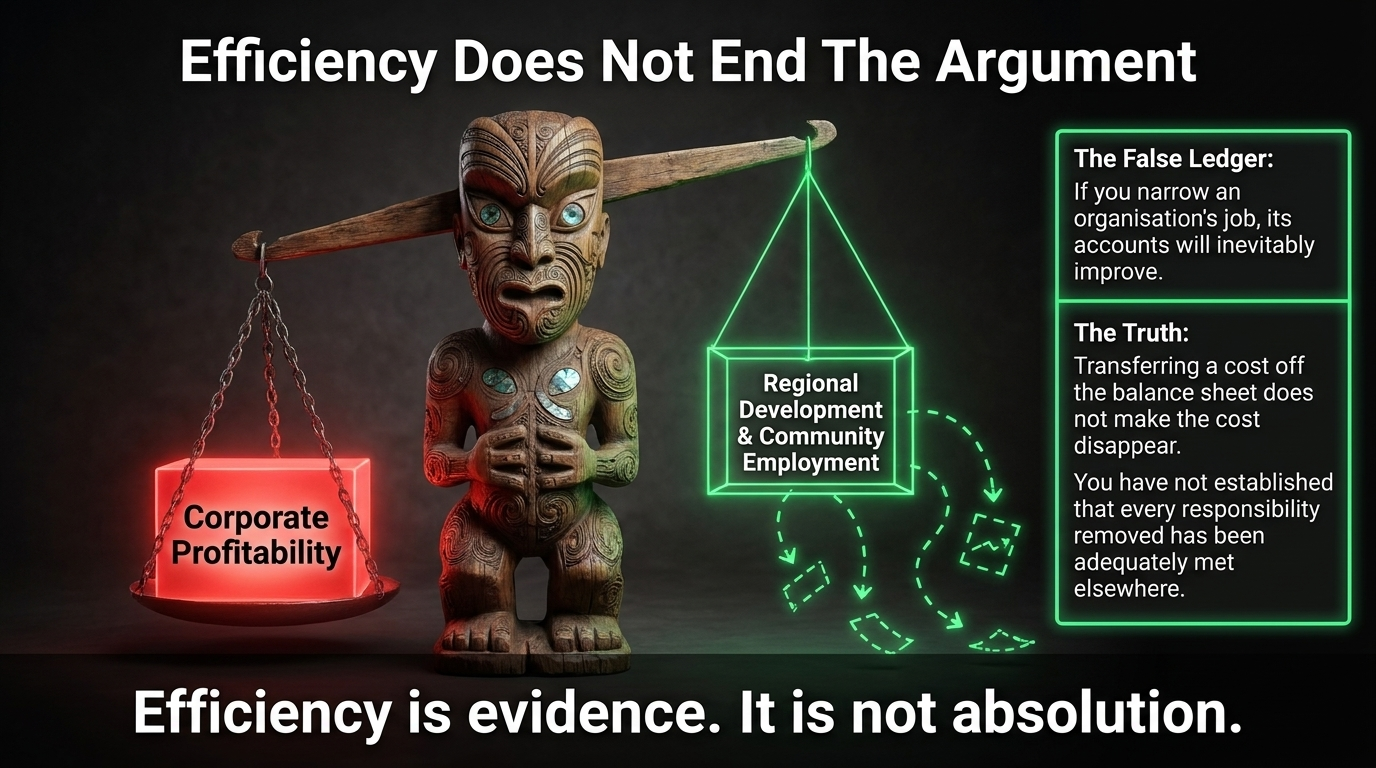
The Forest Service’s mandate had included regional development, employment and environmental objectives alongside commercial production. Those responsibilities were separated in the restructuring. Clarke describes the broader mandate and the institutional changes.
If you narrow an organisation’s job and its accounts improve, you have established something about its commercial performance.
You have not established that every responsibility removed from its accounts has been adequately met elsewhere.
That is where the smugness needs to stop.
Efficiency is evidence. It is not absolution.
Example Two: The Bank Saves, The Customer Travels
Here is another example for readers who want everything translated into business language.
Imagine closing a service point, recording the saving, then leaving customers to supply the transport, time and inconvenience that keep the service usable.
That is cost transfer.
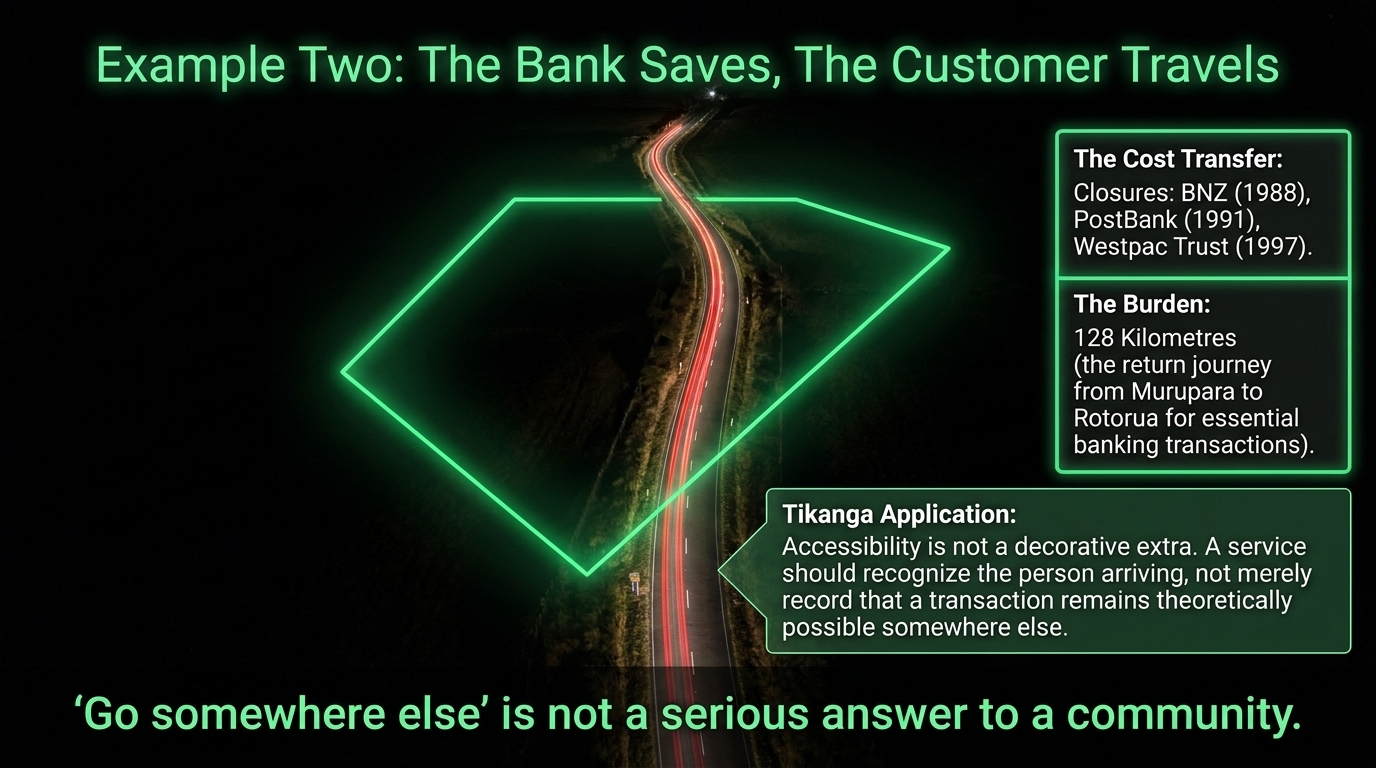
McClintock recorded the closure of BNZ’s local branch or agency in October 1988, PostBank in September 1991 and Westpac Trust in March 1997. He also recorded a credit union opening in 1997 and the continuing use of an ATM. The study names the closures and replacement provision.
The account does not describe a town with no banking.
It describes a community adapting to reduced provision.
The study reports that people from surrounding settlements increasingly travelled to Rotorua for benefit payments and spent money there, taking custom away from Murupara retailers. That connection appears in its local-economy discussion.
Using the study’s stated Murupara–Rotorua road distance of 64 kilometres, a return journey is 128 kilometres. The distance is recorded in the transport section.
I am not pretending every resident made that journey for every transaction.
I am asking why the institution’s saving should be counted meticulously while the customer’s burden becomes background noise.
Through tikanga, accessibility is not a decorative extra. A service should recognise the person arriving, their circumstances and their relationships—not merely record that a transaction remains theoretically possible somewhere else.
My solution is practical: assess the community consequences before closures, protect accessible banking provision, support shared or mobile services, and provide transport and human assistance where required.
Digital access belongs alongside those arrangements, not above them.
“Go somewhere else” is not a serious answer to a community whose economic life you still expect to use.
The Whenua Was Never An Empty Asset
For Māori, forestry involved more than employment.
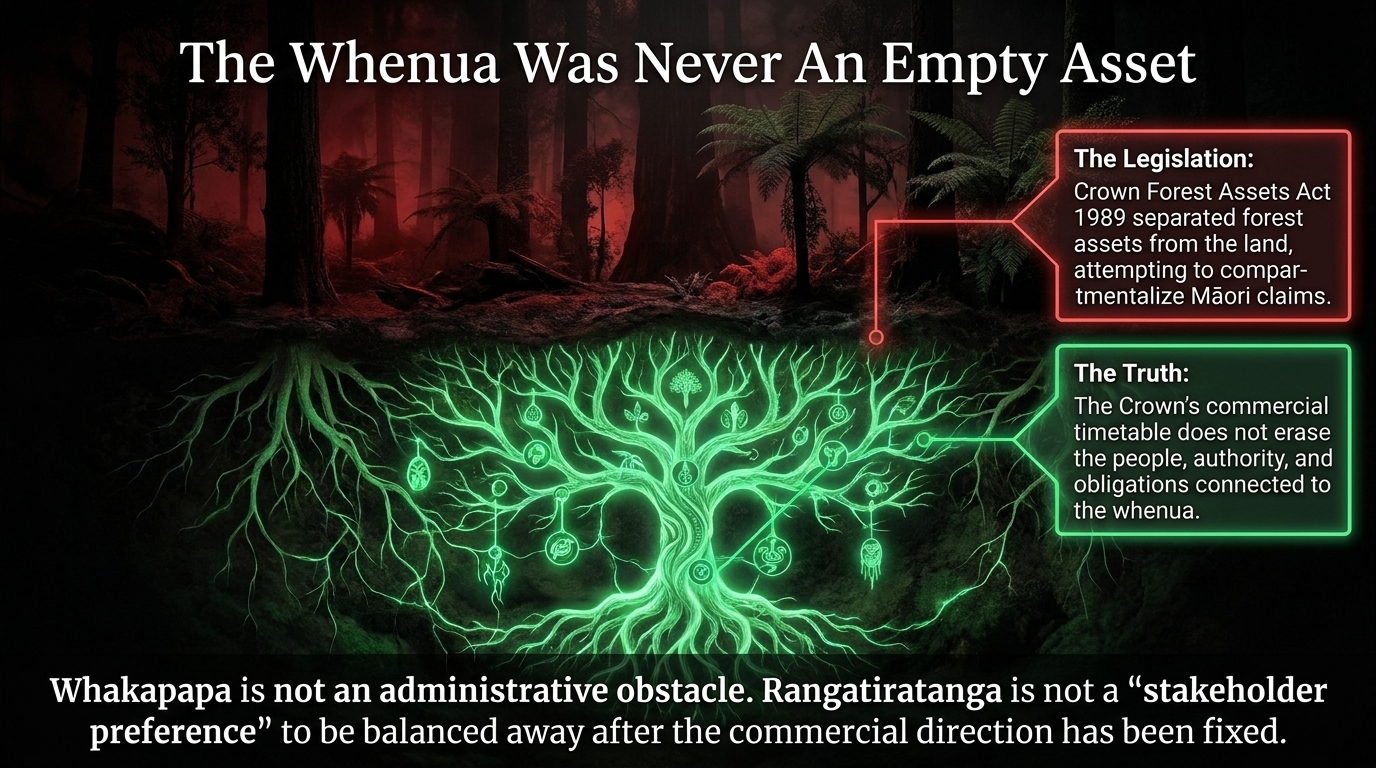
Unresolved claims to the whenua sat beneath the Crown’s proposed forest disposals. The arrangements associated with the Crown Forest Assets Act 1989 separated forest assets from land and provided for rental proceeds and mechanisms protecting Māori claims. Clarke explains those safeguards and their purpose.
That is not a minor complication in a sales exercise.
It is a reminder that the Crown’s commercial timetable does not erase the people, authority and obligations connected to the whenua.
Tikanga refuses the idea that a place becomes fully understood once somebody has valued its saleable components.
Whakapapa is not an administrative obstacle. Rangatiratanga is not a stakeholder preference to be balanced away after the commercial direction has been fixed.
I want Māori involved in deciding the purposes of change—not invited afterwards to discuss how to survive it.
Example Three: The Board Marks Its Own Homework
Take this into the present.
Imagine a board assessing a new specialist institution almost immediately, while insisting the wider system needs more time before anyone judges it.
You would call that unequal treatment.
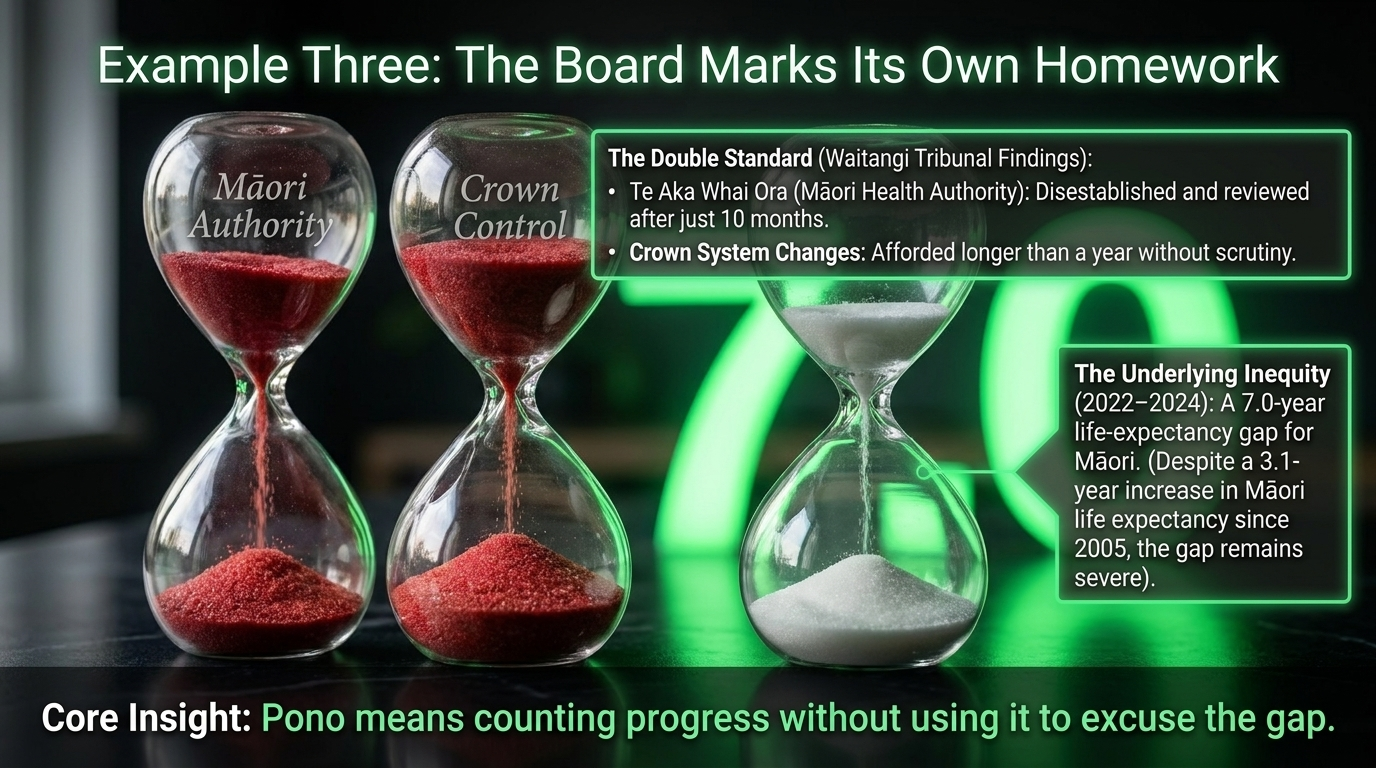
The Waitangi Tribunal found precisely such a double standard: Te Aka Whai Ora was reviewed after only 10 months, while the Crown said other system-wide health changes required longer than a year before review. The Tribunal records that finding in Hautupua Part 2.
It also found that nearly 18 months of statements about developing an alternative were not matched by timely action producing a clear replacement plan, and that meaningful consultation with Māori had not occurred on key elements. Those findings appear in the Tribunal’s official account.
Now put that conduct beside the need.
For 2022–2024, Māori life expectancy at birth was 75.8 years, compared with 82.8 years for European/Other people—a gap of 7.0 years. Stats NZ supplies the figures and explains the measure.
That gap was not created by abolishing Te Aka Whai Ora. It is the established inequity against which the decision must be judged.
Māori life expectancy also increased by 3.1 years between 2005–2007 and 2022–2024. That progress belongs in the account. Stats NZ reports the improvement directly.
Pono means counting progress without using it to excuse the gap.
Through tikanga, this is about authority as well as outcomes. Being invited to offer advice is not the same as having the power to design, commission and hold a system accountable.
My solution is to restore meaningful Māori health authority, consult Māori on its design, resource kaupapa Māori provision durably, and require transparent reporting on equity alongside service performance. The Tribunal itself recommends revisiting a stand-alone authority, extensive consultation and evidence-based decision-making. Its recommendations are explicit.
The Government Does Not Get To Rename The Damage
The Government’s defence is that reform improves delivery.
Simeon Brown has pointed to improving health-target results as evidence of shorter waits and better access. His ministerial announcement sets out that case.
Nicola Willis and Paul Goldsmith have presented a sinking lid on agency operating budgets, fewer agencies and greater digitisation as a route to productivity and better services. Their announcement explicitly excludes teachers, Health New Zealand staff, police and defence personnel from the core public-service reductions. The Government’s own overhaul announcement states the programme and exclusions.
I want shorter waits. I want less pointless duplication.
Neither requires surrendering the right to ask what has been removed, whose authority has been weakened and whether the promised improvements reach Māori.
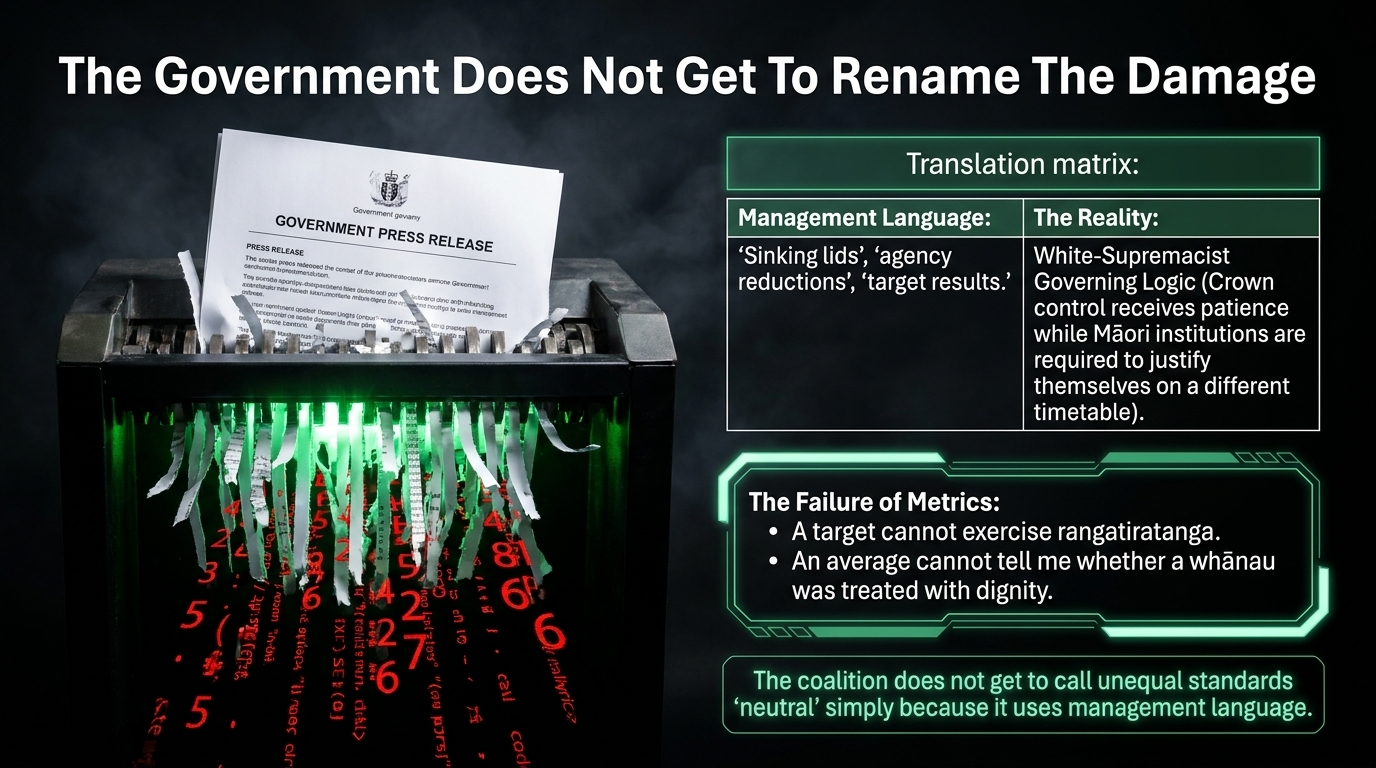
A target cannot exercise rangatiratanga.
An average cannot tell me whether a whānau was treated with dignity.
I call the documented double standard towards Māori authority white-supremacist governing logic: Crown control receives patience while a Māori institution is required to justify itself on a different timetable. That judgment rests on the Tribunal’s findings about unequal standards, consultation and tino rangatiratanga. The Tribunal documents those failures.
The coalition does not get to call that neutral simply because it uses management language.
My Archive Is Not A Substitute For Evidence
 Ivor Jones The Māori Green Lantern

I have examined these questions in “Stop Calling The Network A Coincidence And The Wreckage A Reform”: institutional relationships, organised advocacy and access to power.
My education essays, “Te Kōrero Tūmatanui” and “The Curriculum Con”, examine whose knowledge and expertise shape education decisions.
The related questions appear in my work on Māori mental health, media accountability and te reo Māori in public institutions.
Those essays are connected arguments, not independent confirmation of one another.
Fisher’s historical letters do not prove that Atlas authored a contemporary curriculum decision or directed a particular mental-health allocation.
The original records have to carry each claim.
I will not demand accountability from powerful institutions and exempt my own writing from the obligation to get things right.
Let Them Speak. Make Them Answer.
Atlas says its partners operate independently, bring their own proposals and determine their priorities. It says it does not prescribe their issues or policies. Newsroom includes Atlas’s response.
Oliver Hartwich points to the New Zealand Initiative’s published research, disclosed membership and recorded meetings as evidence of transparency. Newsroom reports his defence.
Fine. People can organise, support research and learn internationally.
Network membership does not make an argument wrong.
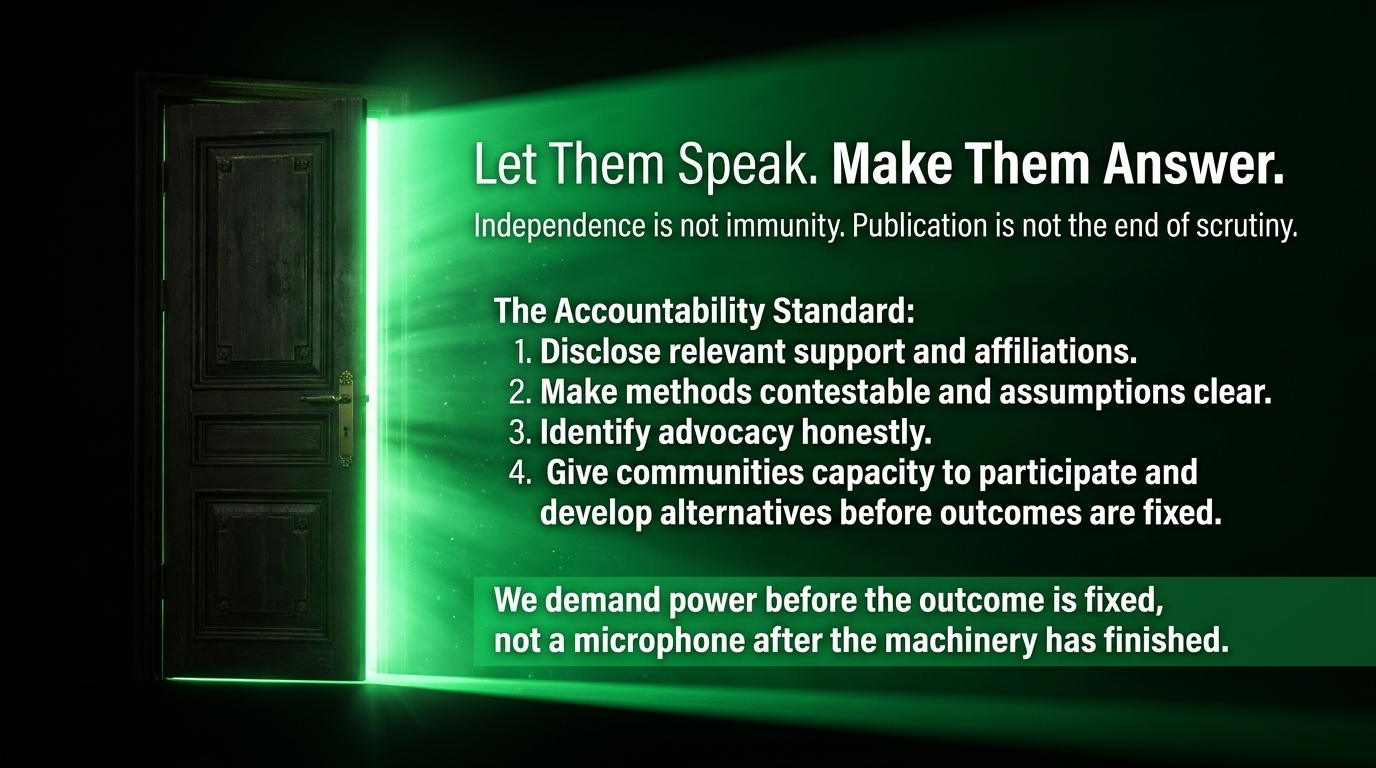
But independence is not immunity. Publication is not the end of scrutiny. A downloadable report does not answer every question about the resources, priorities and relationships behind it.
My standard is straightforward: disclose relevant support and affiliations, make methods and assumptions contestable, identify advocacy honestly, and explain why particular evidence shaped a public decision.
Then give affected communities the capacity to develop alternatives and participate before the decision is settled.
Not a microphone after the machinery has finished.
Power before the outcome is fixed.
This Record Is For Our Mokopuna
I would love you to click into this work and use it.
Take the information into a whānau conversation, a workplace discussion, a submission or a hui. Open the links. Ask the awkward question that the polished announcement skipped.
For the wider kaupapa, my earlier network investigation contains a long-form audio discussion and a short embedded video, alongside the cited essay.
I have described this archive as more than 1,000 essays, built as a repository for our mokopuna. That purpose and publication count are set out in my statement about sustaining the mahi.
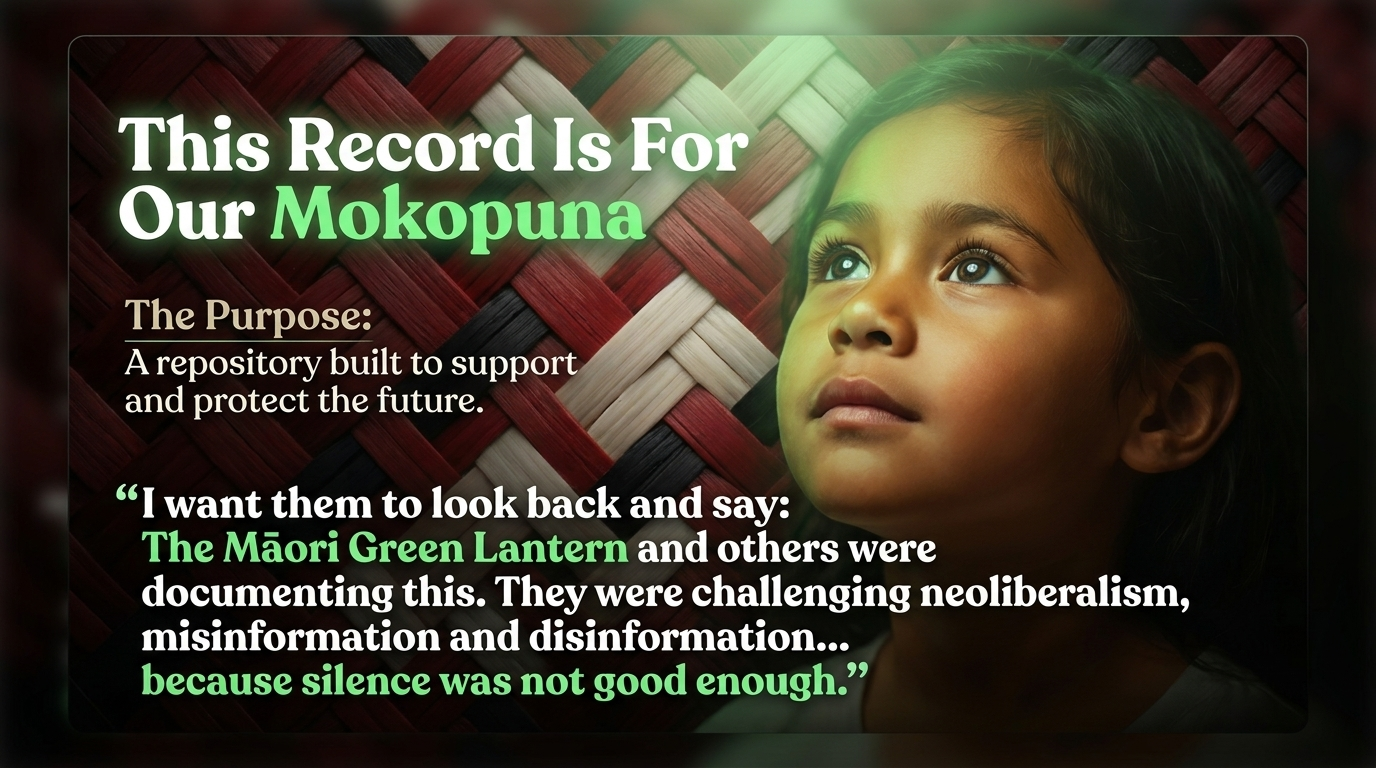
I want them to look back and say: The Māori Green Lantern and others were documenting this. They were challenging neoliberalism, misinformation and disinformation. They were trying to support and protect us.
Not because every answer was already known.
Because silence was not good enough.
Koha Consideration: Help Keep The Whole Bill Visible

Who supports the work of following influence out of the donor’s office and into the communities carrying its consequences?
You do.
There is no corporate queue behind this publication. This mahi is sustained through reader support, koha and subscriptions. That is my published declaration of how The Māori Green Lantern operates.
Every koha helps support and protect the time needed to read the records, check the numbers and keep whānau experience in the account.
If you cannot contribute, keep what your household needs. Read, follow, kōrero and share. That is koha too.
Four pathways exist:
Koha — Support And Protect This Mahi
Subscribe To The Māori Green Lantern
Direct bank transfer: Ivor Jones — 03-1395-0099387-000, as listed in my published support details
Follow And Support On Facebook
Kia kaha, whānau. Stay vigilant. Stay connected.
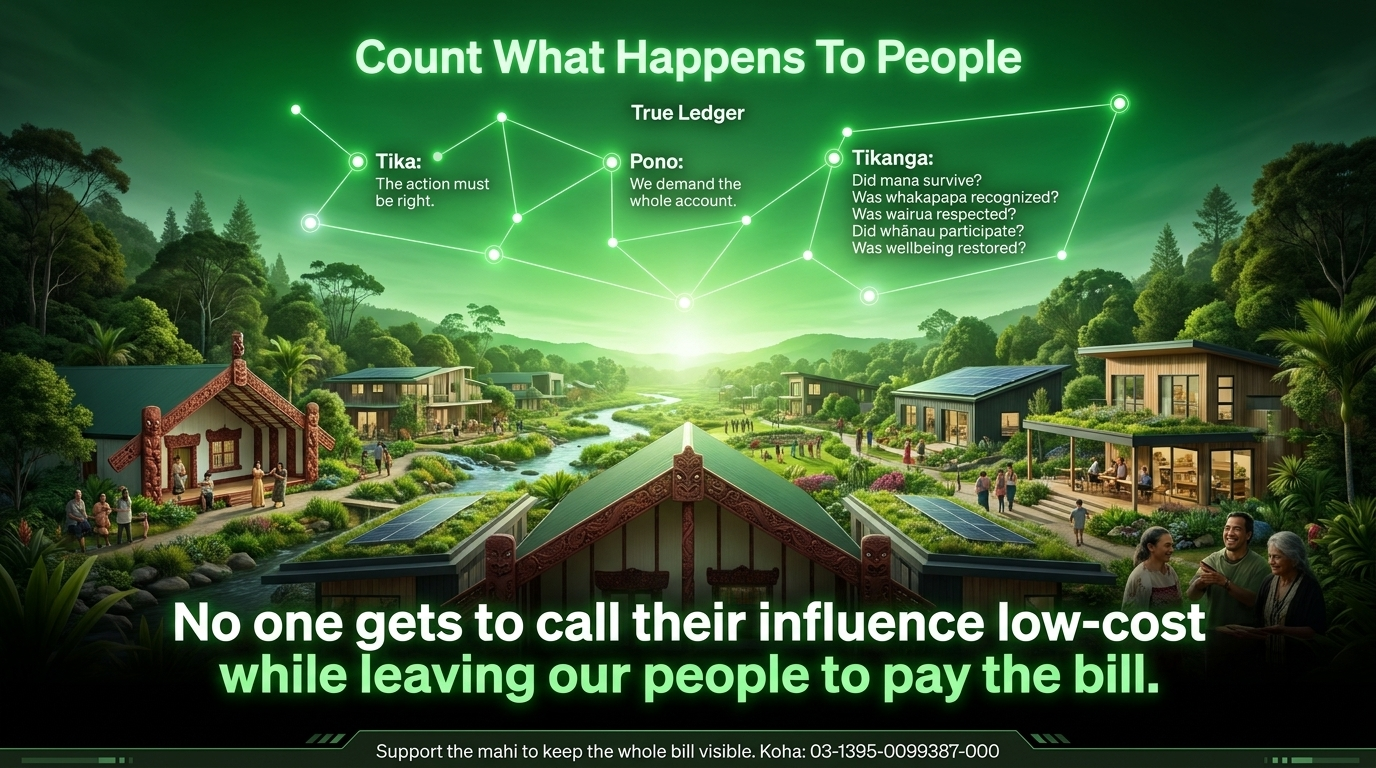
Count What Happens To People
I am not accepting another definition of reform that treats people’s lives as somebody else’s accounting problem.
Show me the commercial gains. Then show me what happened to employment, access, community stability and Māori authority.
Tika demands the action be right.
Pono demands the whole account.
Tikanga asks whether mana survived, whakapapa was recognised, wairua was respected, whānau participated and wellbeing was restored.
That is the test I want applied to every institution claiming success.
A town is not redundant because an employer wants fewer workers. Māori authority is not waste because a minister wants control. Mauri is not built by teaching whānau to admire their own exclusion.
And no one gets to call their influence low-cost while leaving our people to pay the bill.
Disclaimer
This essay combines documented reporting with my political analysis. Terms such as “white-supremacist governing logic” express my assessment of policies and power—not every individual’s personal beliefs. Network connections alone do not establish central control or responsibility for particular decisions. I write as Ivor Jones, The Māori Green Lantern, not on behalf of all Māori, iwi or hapū. Factual corrections supported by evidence are welcome.