"Ipsos vs Curia: Which NZ Political Poll Can You Actually Trust?" - 2 August 2026
A lobby group commissions a pollster with a disciplinary record. A government needs good news on cost of living. Here's how to tell a real poll from a manufactured one — and which one you should actually believe.

Kia ora, whānau.
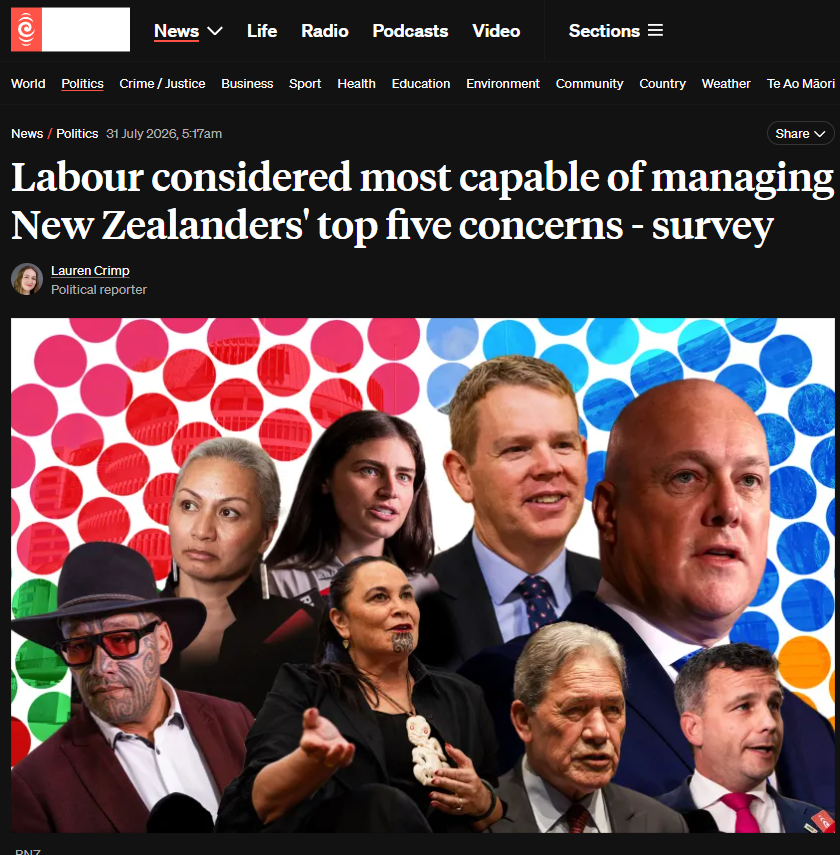
I'm Ivor Jones and my question relating to this article is this: is the poll saying Labour's ahead on cost of living real, or is it the same kind of manufactured result I've documented before?
 RNZ | Te Reo Irirangi o Aotearoa
This essay puts both polls side by side, tests them against the same standard, and reaches one clear conclusion at the end: which set of results you should actually trust.
Why This Matters
Many whānau tell me they can't tell a genuine poll from a manipulated one. That confusion isn't accidental.
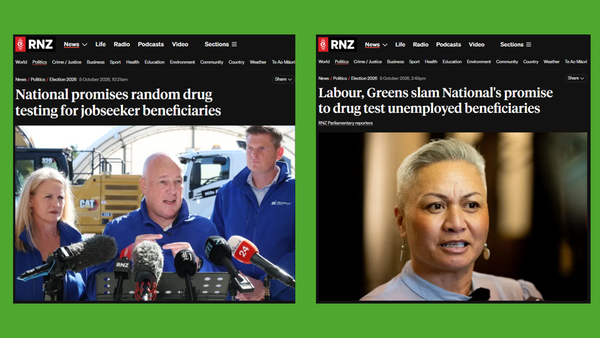
It happens because a lobby group commissions a pollster who has an upheld RANZ complaint against him, and that pollster strips undecided voters from the headline numbers
— a pattern documented in my June 2026 essay on this exact mechanism
— and news outlets then report the result as neutral fact. Meanwhile, Ipsos discloses its weighting variables clearly, as confirmed by Interest.co.nz's reporting, and still gets treated with the same blanket suspicion.
That confusion protects one group above all: the government whose cost-of-living record this poll is measuring.
Background: Two Different Polling Operations
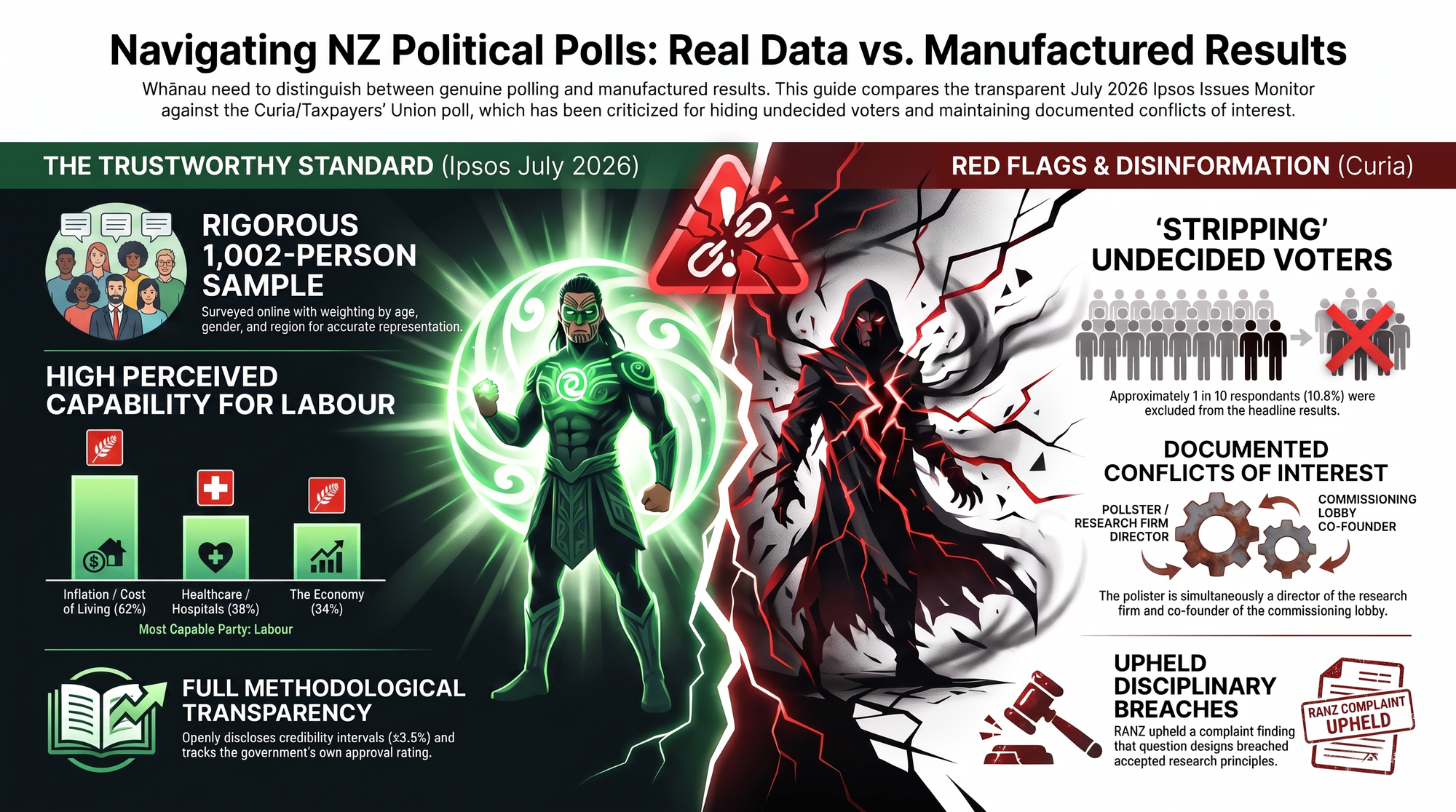
Ipsos surveyed 1,002 New Zealanders through online panels, weighted by age, gender, and region, as confirmed directly by Interest.co.nz, with a stated credibility interval of ±3.5 percentage points reported independently by ODT.
Curia's Taxpayers' Union poll is run by a pollster who is, according to Curia's own published poll notes, simultaneously a co-founder of the lobby group commissioning the poll and a director of the company conducting it. That same pollster carries an upheld RANZ finding stating his questions "are not prepared in accordance with accepted research principles."
The Deep Dive Podcast
Listen to a lively conversation between two hosts, unpacking and connecting topics in the sources of this essay.
I apologise in advance for the AI's very harsh pronounciation of reo. Please dont shoot me, :).
Youtube Video
Like video? Here is a short video suppporting the essay.
Again, don't shoot the messenger please because of AI's pronounciation. :)
Koha Consideration

Every koha for this essay signals that whānau are ready to support the accountability that Crown-friendly pollsters and lobby-commissioned polling will not fund themselves.
It signals that rangatiratanga includes the power to support our own truth tellers — the ones who check a RANZ complaint register before letting a headline pass unchallenged.
Kia kaha, whānau. Stay vigilant. Stay connected. And if you are able, consider a koha to ensure this fact-checking work continues.
If you are unable to koha, no worries! Subscribe or follow The Māori Green Lantern at themaorigreenlantern.maori.nz, kōrero and share with your whānau and friends — that is koha in itself.
Four pathways exist:
Koha — Support: app.koha.kiwi/events/the-maori-green-lantern-fighting-misinformation-and-disinformation-ivor-jones
Subscribe: themaorigreenlantern.maori.nz/#/portal/support
Bank transfer: HTDM, 03-1546-0415173-000
Facebook: facebook.com/Themaorigreenlantern/subscribe
Historical Context
RANZ's stricter 2020 Polling Code wasn't created without reason. RANZ's own political polling page confirms the code was introduced as a direct response to real problems in the industry.
Every disclosure requirement in that code exists because of exactly the kind of practice
— stripping undecideds, keeping the flattering headline
— that I documented in the June 2026 essay on this issue.
The Test: What Makes A Poll Trustworthy
There's a standard checklist for evaluating any political poll: sample size, target population, sampling method, weighting, who commissioned it and who conducted it, timing, margin of error, exact question wording, the percentage of "don't knows," and how electorate-level results are handled.
Measured against that checklist, Ipsos discloses its sample, weighting, and margin of error openly. Curia discloses its commissioner and pollster relationship only in a footnote at the bottom of its December 2025 release, not in the headline.
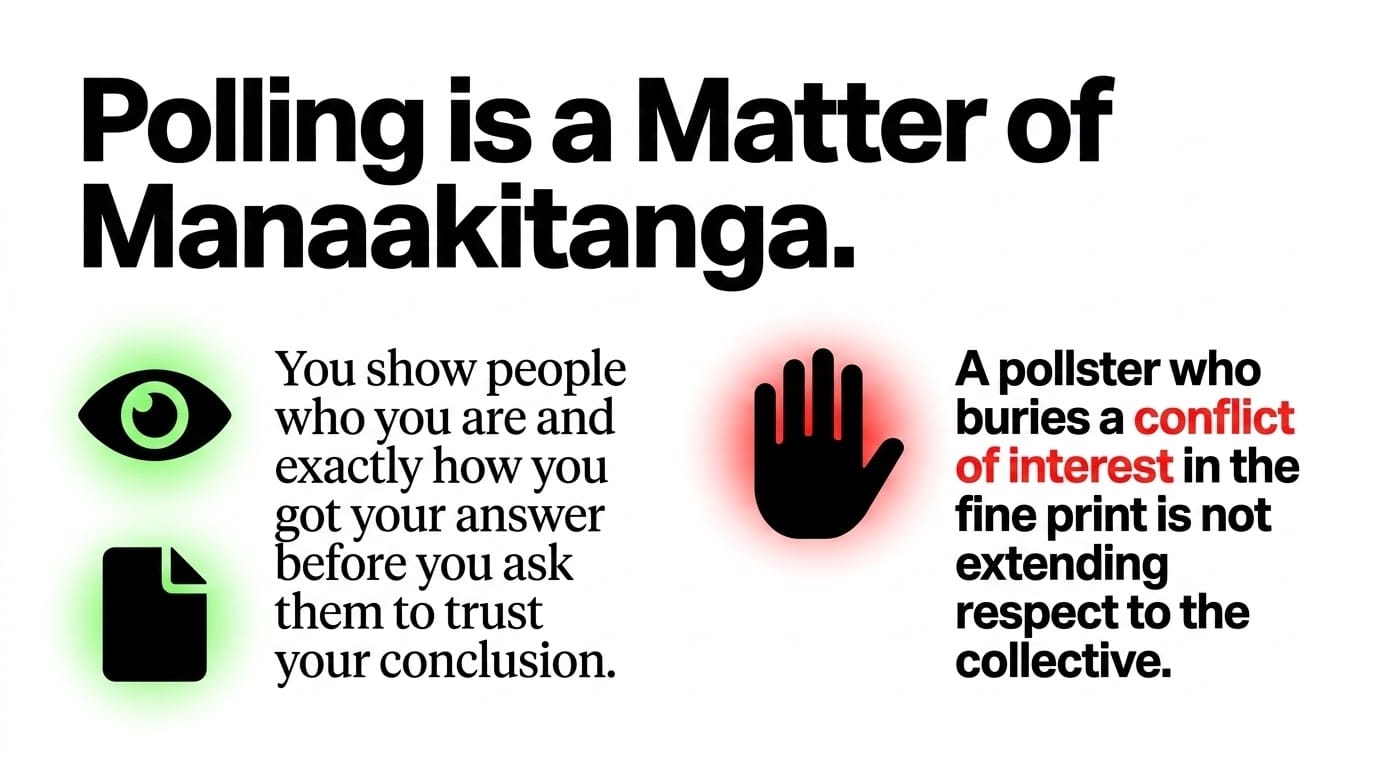
In tikanga terms, this is a matter of manaakitanga: you show people who you are and how you got your answer before you ask them to trust your conclusion. A pollster who buries a conflict of interest in fine print isn't extending that respect to the public it claims to represent.
Three Examples
Example one: hiding the undecided voters.
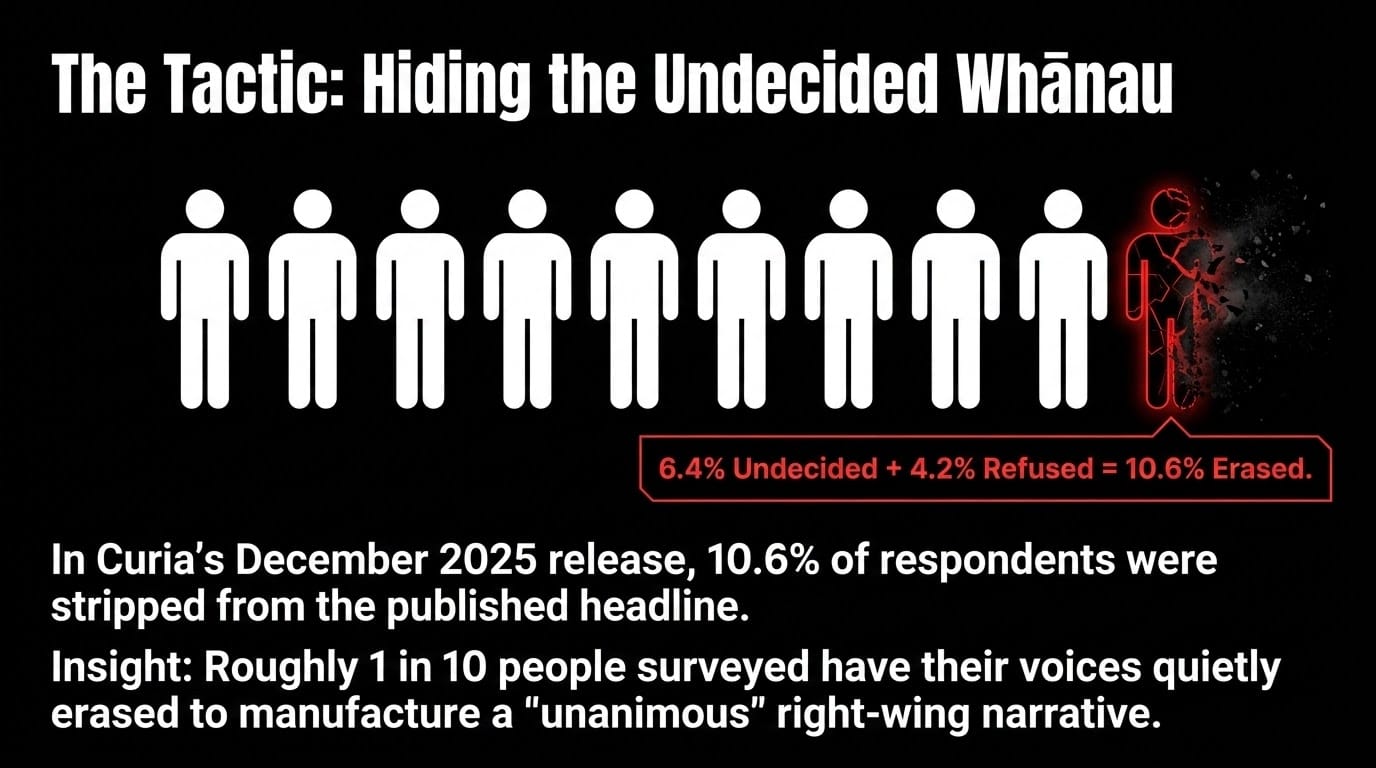
Curia's own December 2025 release shows 6.4 percent undecided plus 4.2 percent refused — a combined 10.6 percent of respondents whose views disappear from the published headline.
That means roughly 1 in 10 people surveyed have no voice in the number the public sees reported as "public opinion."
A fair solution: RANZ should require the undecided percentage to be shown in the same size text as the headline result.
In tikanga terms, this is like recording a decision from a hui after quietly removing a tenth of the people in the room
— the outcome looks unanimous, but it isn't.
This exact mechanism was covered in "The Propaganda Pipeline — Pointed At Your Whānau."
Example two: a pollster with a documented conflict and disciplinary history.
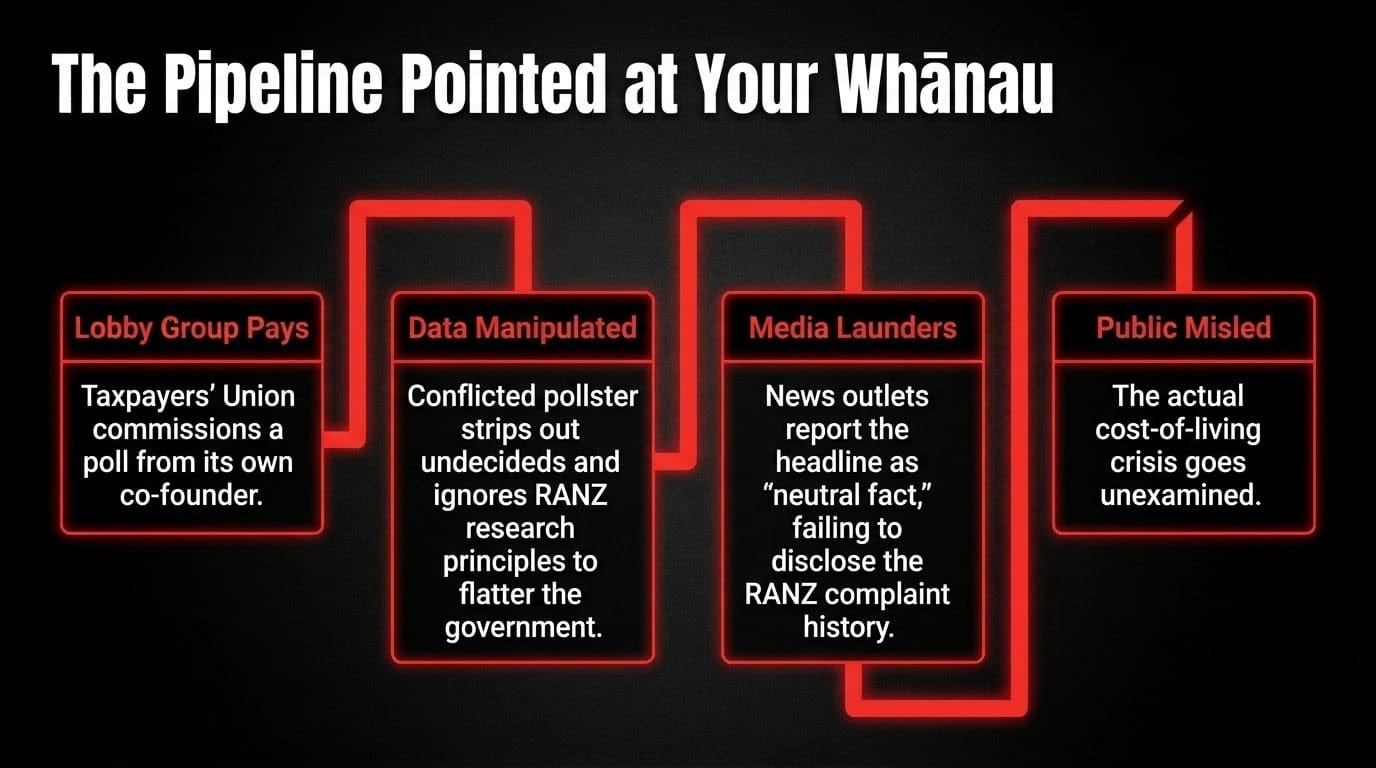
RANZ's upheld complaint confirms Curia's Golden Mile Poll breached accepted research principles, and Curia's own poll notes confirm the same person co-founded the group paying for the poll.
That's a documented, adjudicated finding, meaning every later Curia poll carries that unresolved credibility problem.
A fair solution: media should disclose a pollster's complaint history in the same article that reports their numbers.
In tikanga terms, someone who has broken trust needs to rebuild it openly before speaking for the collective again. This pattern is covered in "The Top Surge That Wasn't."
Example three: a pollster that reports its own limits.
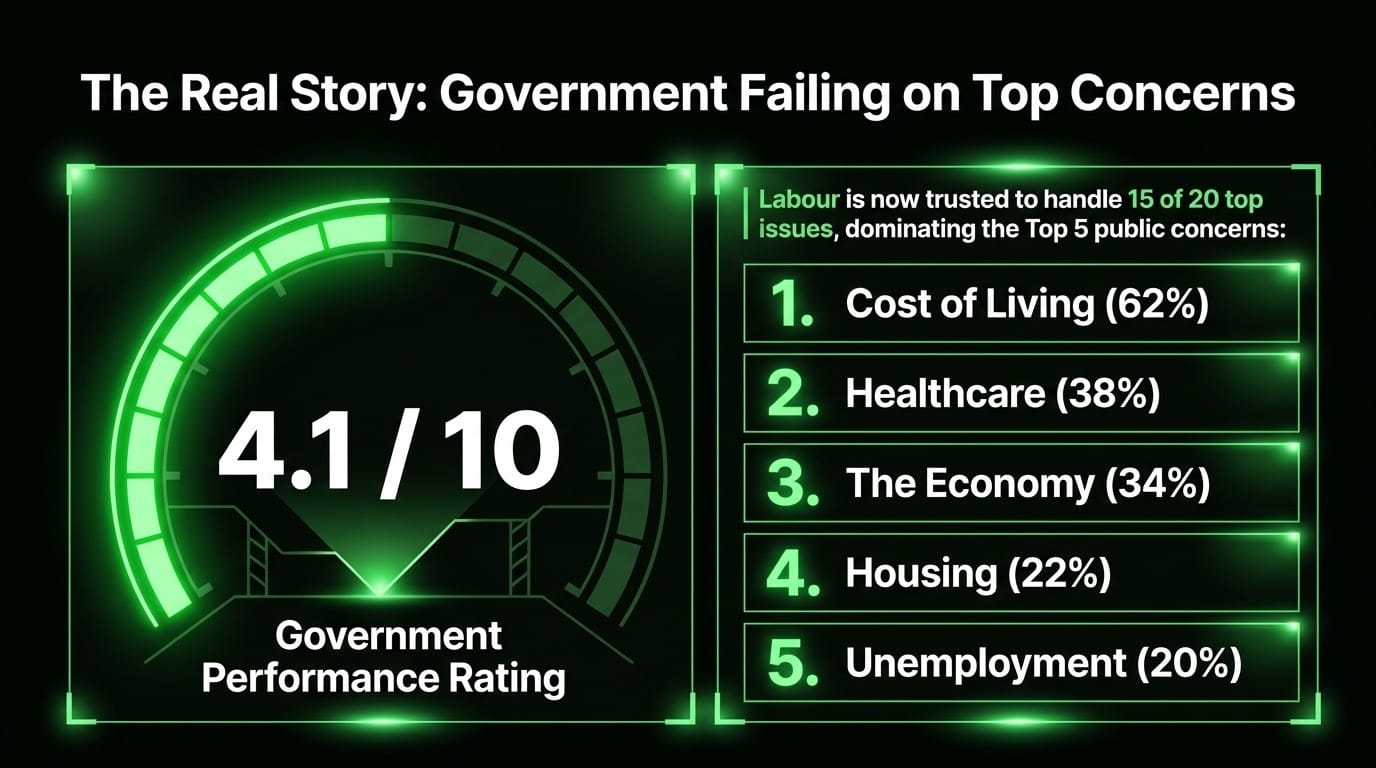
Interest.co.nz's report shows Ipsos tracking the government's own approval rating alongside issue-capability data, giving readers an extra check against inflated momentum for whoever is in power.
That kind of self-scrutiny doesn't appear in Curia's headline releases.
A fair solution: every published poll should include a companion government-performance figure, as Ipsos already does.
This is a basic form of accountability — showing your own limitations rather than only your favourable results.
Implications
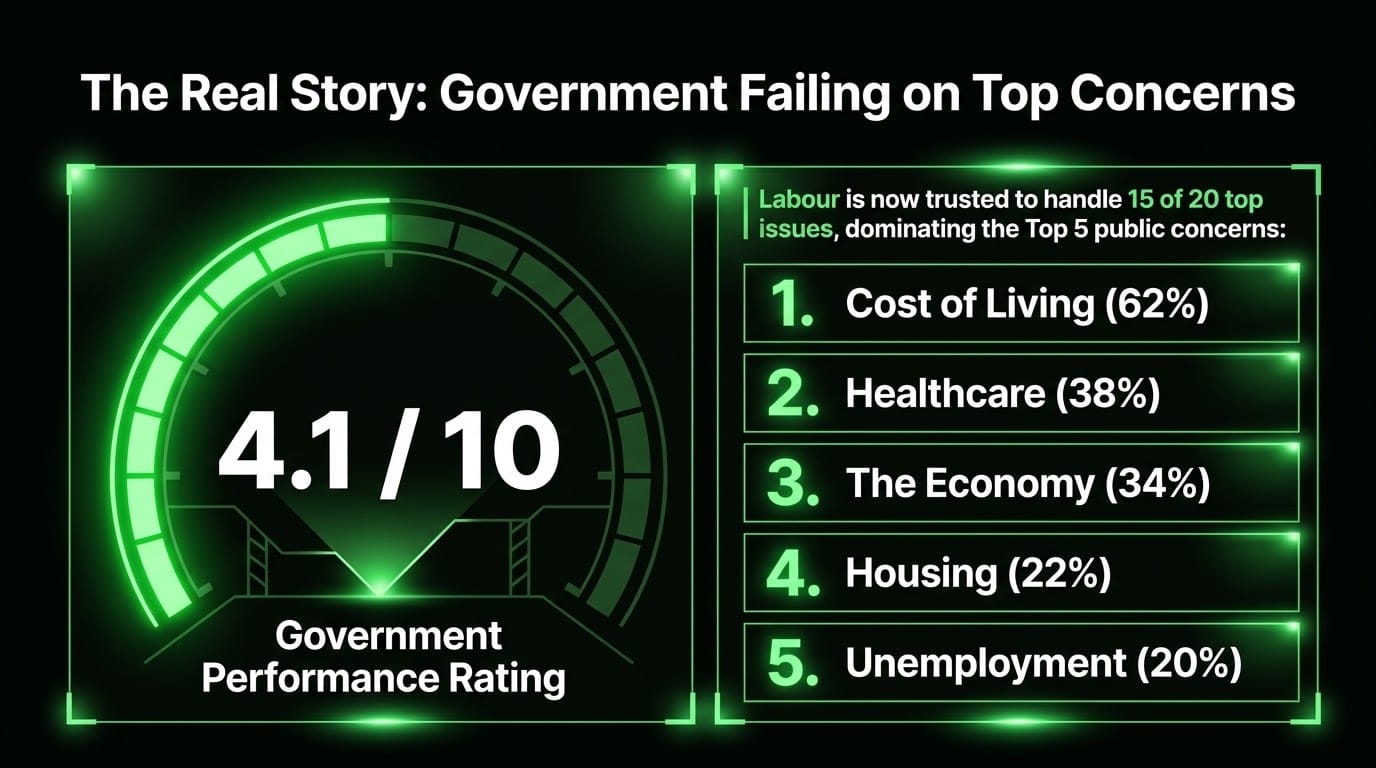
Treating both pollsters as equally suspect helps hide the real story: a transparent poll showing the government's cost-of-living failure, confirmed independently by Interest.co.nz and ODT, gets dismissed with the same scepticism reserved for a poll run by someone with an upheld RANZ breach finding against him.
That's not healthy scepticism — it's a shortcut that lets the actual problem go unexamined.
The Verdict: Trust The Ipsos Results
Here is the conclusion, stated plainly.
On every measurable standard — disclosure of sample and weighting, independence from a commissioning lobby group, absence of a disciplinary record, and willingness to flag its own limitations — Ipsos's July 2026 Issues Monitor meets the bar for a trustworthy poll, and Curia's Taxpayers' Union poll does not.
This is not a matter of which result is more comfortable to hear. It is a matter of which pollster has shown its work and which one hasn't.
Ipsos discloses its weighting variables, its margin of error, and even its own government-performance tracking alongside the headline figures, confirmed independently by Interest.co.nz and ODT.
Curia's pollster has an upheld RANZ breach finding against his own question design, a documented conflict of interest as co-founder of the very lobby group paying for the poll, and a pattern — verified directly from Curia's own published notes — of excluding roughly 1 in 10 respondents from the headline result.
If you read one poll result on New Zealand's top political concerns this year, read the Ipsos Issues Monitor.
If you read a Curia poll, read it with the RANZ complaint history sitting next to it, and treat the topline figure as a starting point for scrutiny, not a finished answer.
That is the standard every poll should be held to — and right now, only one of these two is meeting it.
Ngā mihi,

Ivor Jones The Māori Green Lantern Fighitng Misinformation And Disinformation From The Far Right
Disclaimer
This essay is opinion and analysis on a matter of public interest — the transparency and reliability of political polling in New Zealand. Factual claims are drawn from cited public sources; the comparative judgment on which poll is more trustworthy is the author's honest opinion, genuinely held and based on facts cited within the essay (Defamation Act 1992, s10).
Published under qualified privilege for political and public interest discussion (Lange v Atkinson 3 NZLR 385; Durie v Gardiner NZCA 278). No malice is intended toward any named individual or organisation. Right of reply available on request — contact The Māori Green Lantern for corrections. Not legal advice.