"When the Whenua Bleeds: Contaminated Land, Contaminated Water, Contaminated Futures" - 26 April 2026
The environmental crime scene — dump sites, poisoned waterways, marae land, and the unequal value placed on land over Māori bodies.

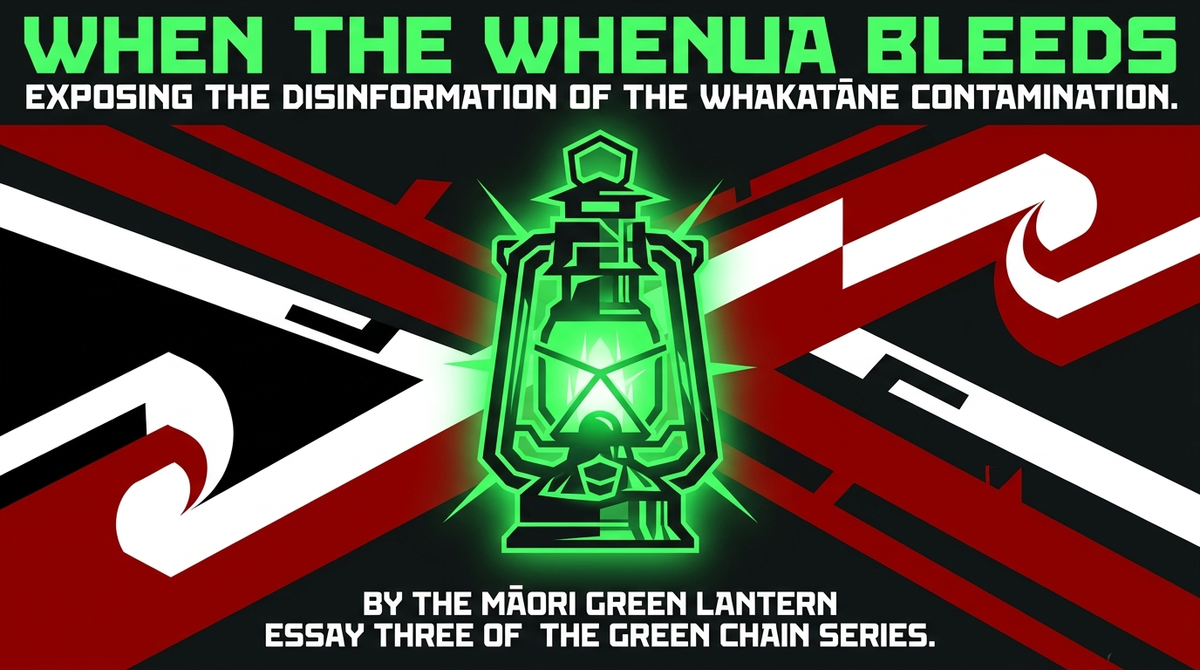
Kia ora Whānau,
Essay Three of The Green Chain Series | By Ivor Jones, Te Māori Green Lantern | April 2026
They dumped PCP into the ground, dioxin into the water, poison into marae land, and then asked Māori to be grateful for cleanup plans that came decades after the crime.
He Kupu Whakataki
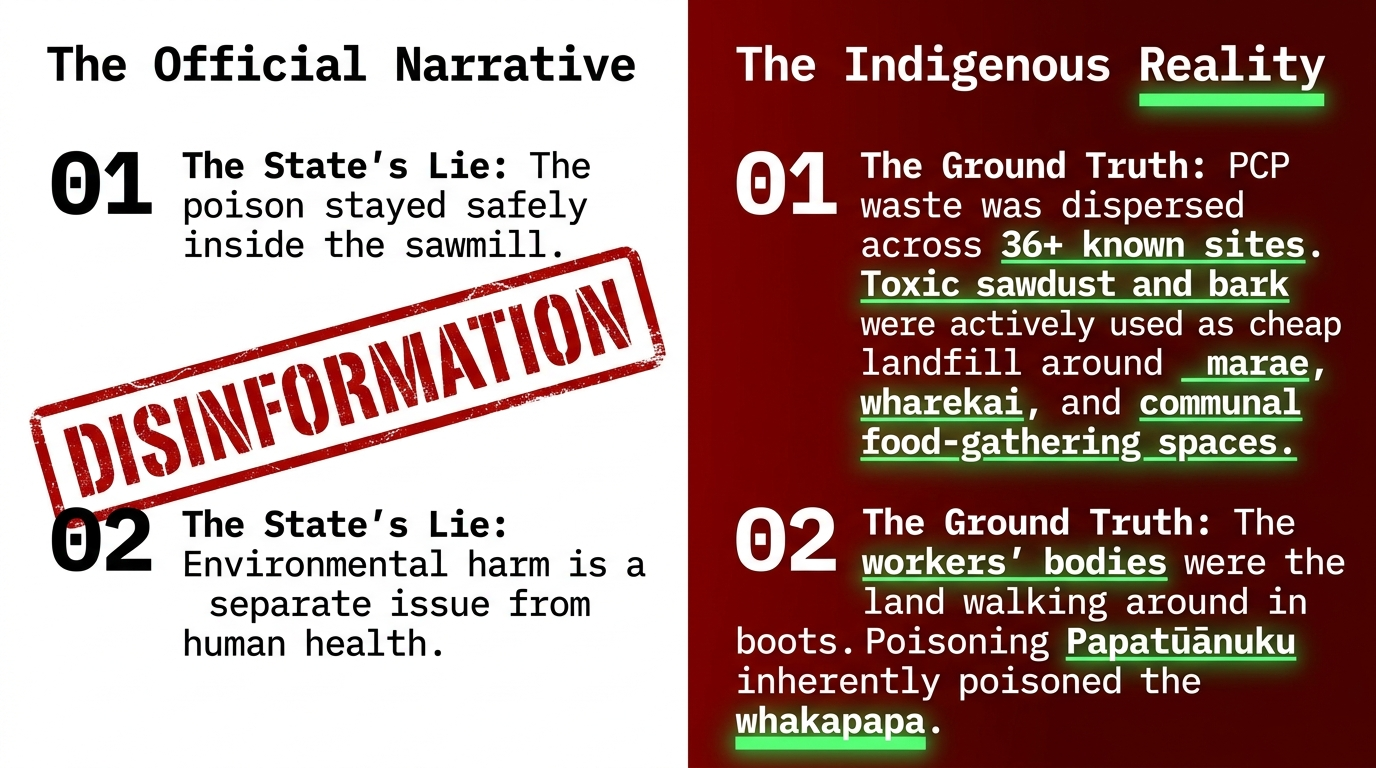
The first lie in Whakatāne was that the poison stayed inside the sawmill. It did not.
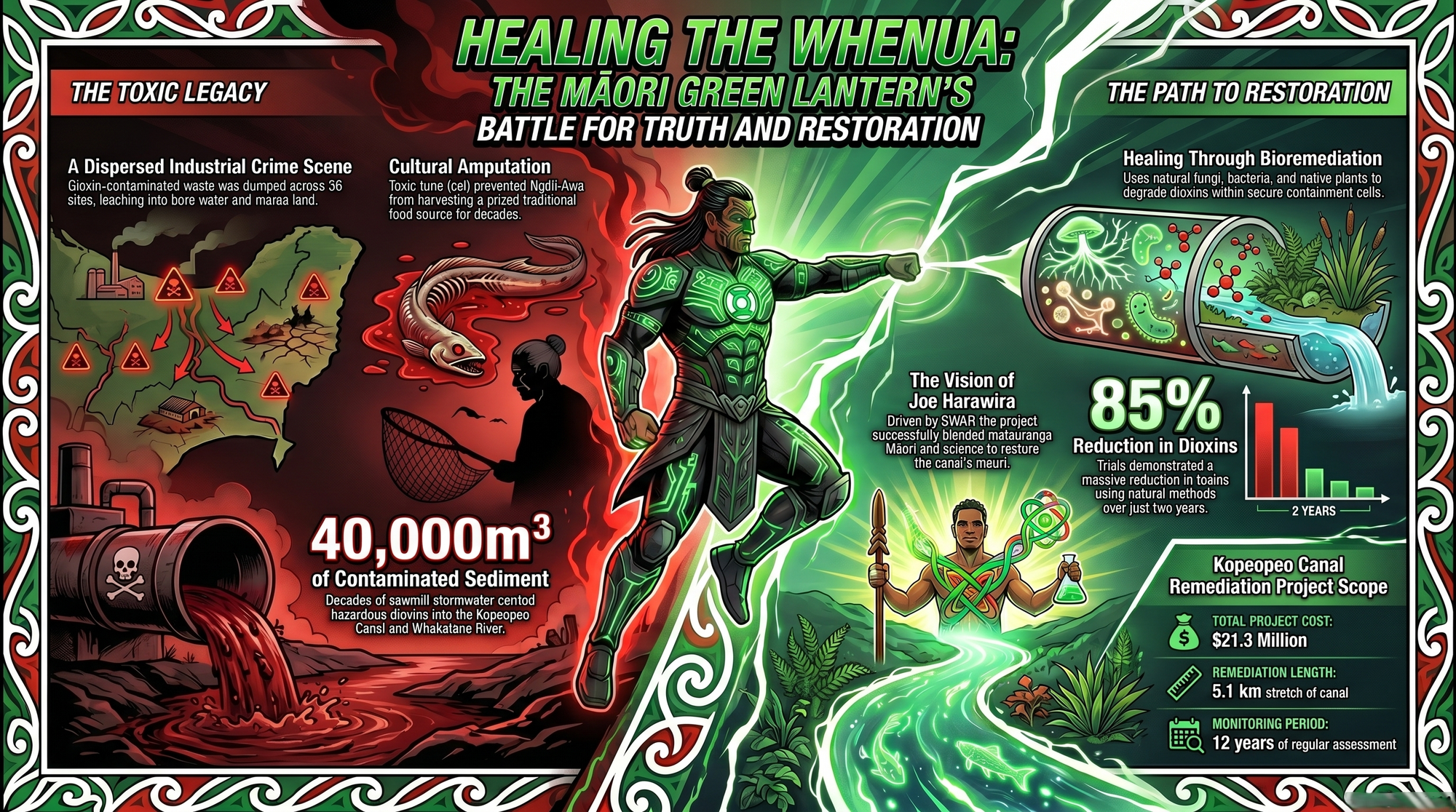
As recorded by Te Ara, PCP waste containing contaminated sawdust, bark, scrap timber, damaged drums, and chemical residues was dumped across more than 36 known sites in the Whakatāne region, and some of that waste leached into bore water, contaminating community supplies at marae including Taiwhakaea. That is not overflow.
That is a dispersed industrial crime scene laid over Māori land like a toxic burial shroud.
The second lie was that the environmental harm was somehow separate from the human harm.
Te Ara shows that Joe Harawira and SWAP always understood the health of the people and the health of Papatūānuku as one struggle, and the SWAP submission to the People’s Inquiry states directly that PCP and dioxin poisoned the whenua, the water, the tuna, frogs, birds, shellfish, and all life. The workers’ bodies were not separate from the land. They were the land walking around in boots.
The Deep Dive Podcast
Listen to a lively conversation between two hosts, unpacking and connecting topics in the sources of this essay.
This essay retains everything in the last response and drives it harder.
Whakatāne was not just contaminated. It was treated like a colonial sponge: a place where profit could be wrung dry and poison could be left behind.
The current white supremacist neoliberal order did not create this logic, but it absolutely inherits it, protects it, and extends it whenever Māori land, Māori water, and Māori suffering get weighed against commercial comfort.
The Dumping Ground Was a Rohe, Not a Rubbish Bin
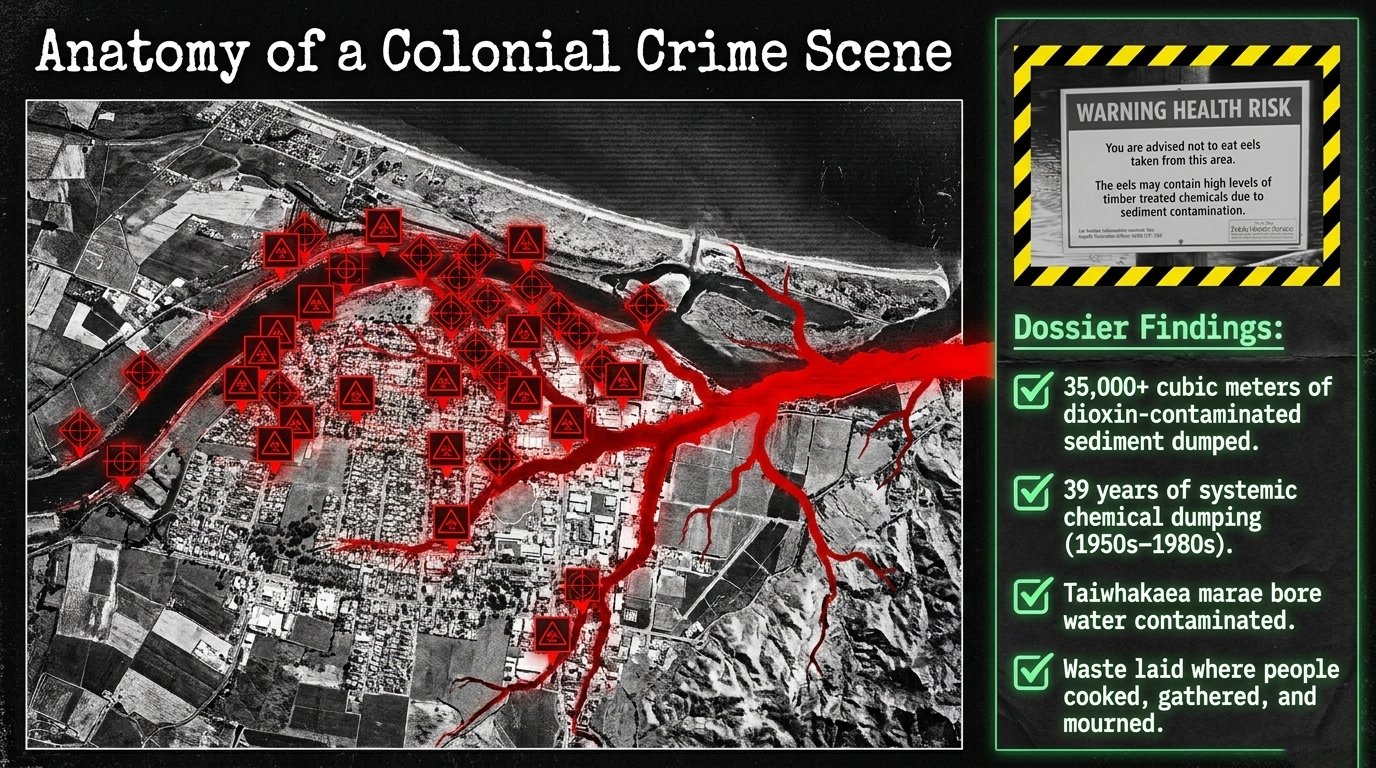
Te Ara records that contaminated mill waste was dumped in more than 36 known sites across the Whakatāne region, and that marae within the Ngāti Awa rohe used contaminated material as landfill.
The MAI Journal essay on Joe Harawira adds that chemicals leached into water near marae, that the whole community water supply at Taiwhakaea was contaminated, and that the waste was used to level land in front of the wharekai and places where hāngī were prepared.
Read that again.
Poisoned timber waste was laid where people cooked, gathered, debated, mourned, and fed one another. That is not bad disposal practice. That is colonial contempt with a bulldozer.
The Ngāti Awa account of the old Whakatāne dumpsite is explicit that the site is a toxic legacy resting on iwi shoulders, tied to a longer history of raupatu and the denial of Māori land rights, and that contamination continued to leach into surrounding land and waterways after closure because remediation was inadequate.
That is what happens when a Crown treats whenua not as ancestor, placenta, and relation, but as a cheap absorbent mat for industrial shame.
For the western mind: imagine a council turning church grounds, cemetery edges, school kitchens, and veterans’ memorial gardens into unlined hazardous fill sites, then discovering decades later that the groundwater and communal food spaces were poisoned. The nation would call it desecration. In tikanga, that word is still too small.
Kopeopeo Canal: The Artery They Filled with Industrial Blood
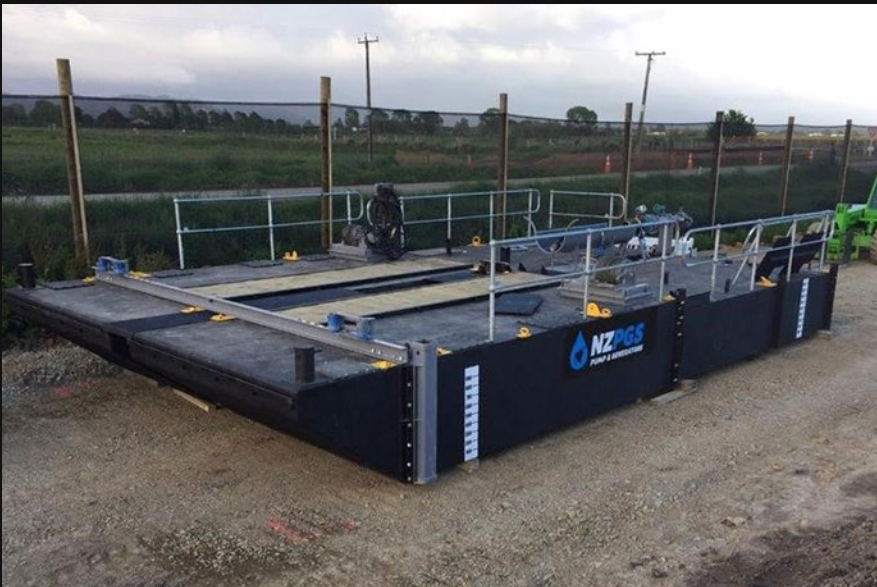
The Kopeopeo Canal is the open vein of this whole history.
Te Ara records that the canal was contaminated by 30 years of sawmill stormwater carrying dioxin into a waterway that drains into the Whakatāne River and estuary. The Bay of Plenty Regional Council states that contamination from timber-treatment discharges occurred between the 1950s and 1980s and that more than 35,000 cubic metres of contaminated sediment have been removed since 2015.
More than 35,000 cubic metres. That is not a stain. That is a body. That is a whole industrial theology made visible in mud.
The Hail Environmental project summary describes the remediation as a $21.3 million project covering a 5.1-kilometre stretch of canal and notes that tuna living there accumulated hazardous levels of dioxins, preventing Ngāti Awa from using a prized traditional food source. The SWAP submission to the People’s Inquiry likewise records elevated PCP concentrations in sediment and contamination in water, sediment, and eel.
That is why this is not merely an “environmental issue.” This is a cultural amputation. When tuna can no longer be safely harvested, the harm is not only dietary.
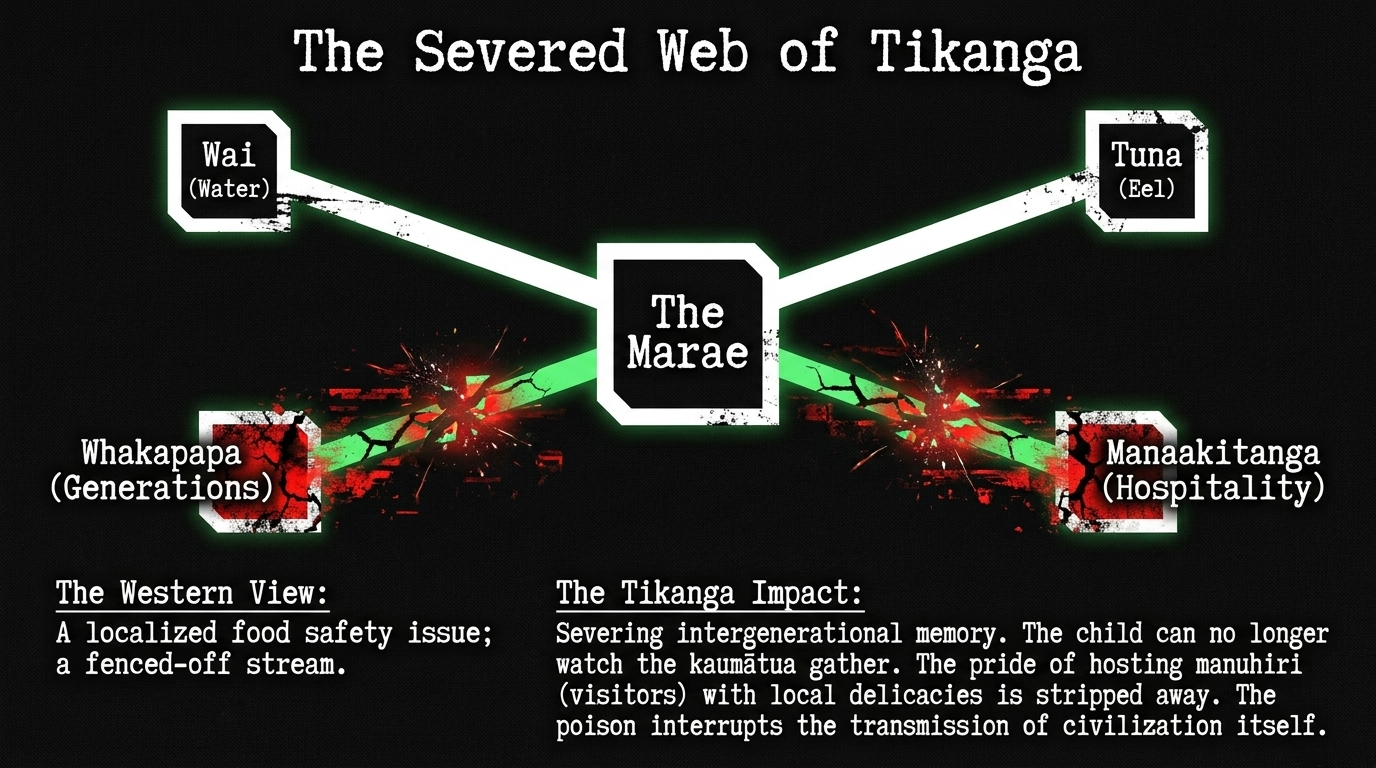
It severs transmission
— the child watching the kaumātua, the rhythm of gathering, the knowledge of where, when, and how, the relationship between river and table. The poison did not just kill organisms. It interrupted memory.
For the western mind, think of it as poisoning the family pantry, fencing off the orchard, salting the recipe book, and then asking why people sound so emotional about sediment.
Marae Land Was Not Collateral. It Was a Target Zone of Indifference.
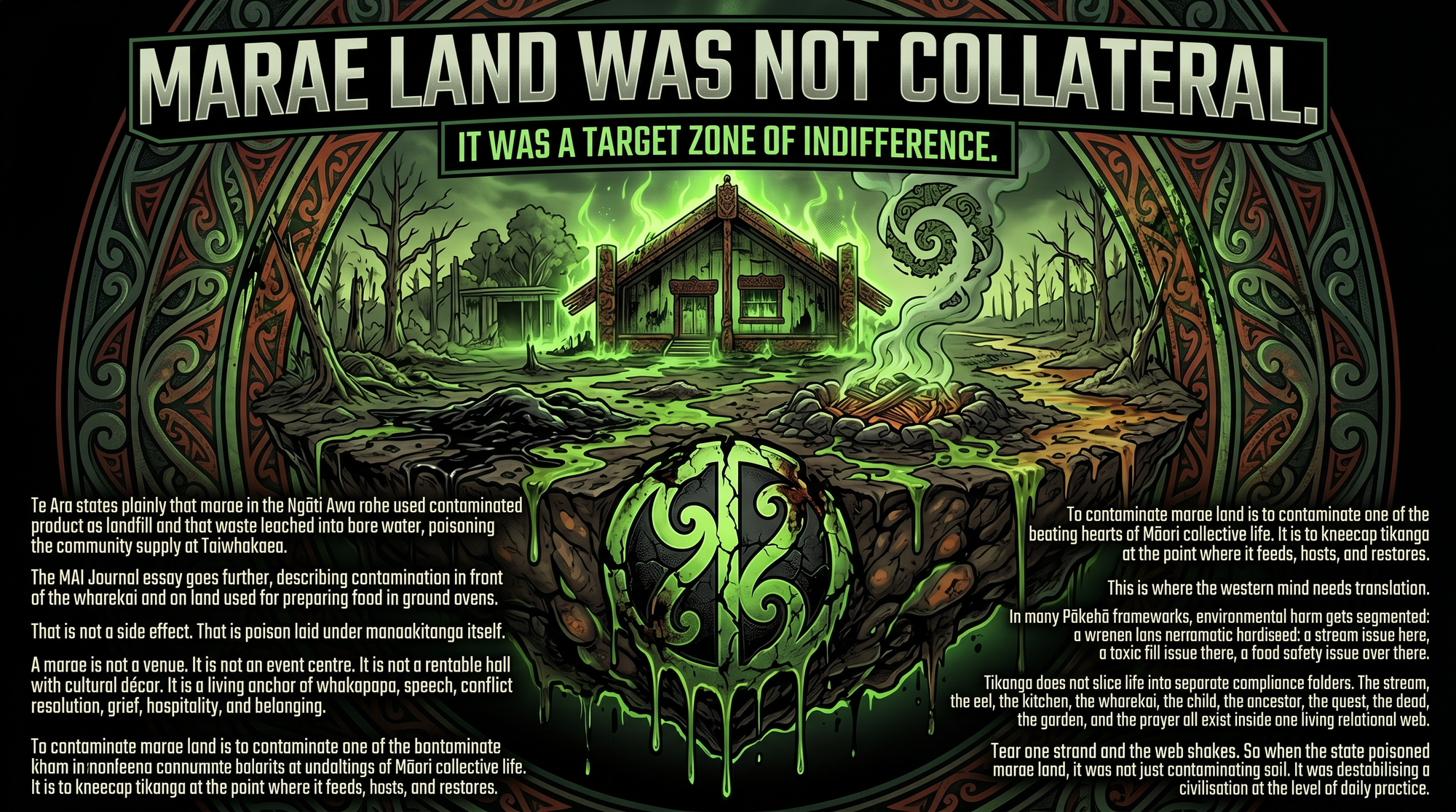
Te Ara states plainly that marae in the Ngāti Awa rohe used contaminated product as landfill and that waste leached into bore water, poisoning the community supply at Taiwhakaea.
The MAI Journal essay goes further, describing contamination in front of the wharekai and on land used for preparing food in ground ovens.
That is not a side effect. That is poison laid under manaakitanga itself.
A marae is not a venue. It is not an event centre. It is not a rentable hall with cultural décor. It is a living anchor of whakapapa, speech, conflict resolution, grief, hospitality, and belonging.
To contaminate marae land is to contaminate one of the beating hearts of Māori collective life. It is to kneecap tikanga at the point where it feeds, hosts, and restores.
This is where the western mind needs translation.
In many Pākehā frameworks, environmental harm gets segmented: a stream issue here, a toxic fill issue there, a food safety issue over there.
Tikanga does not slice life into separate compliance folders. The stream, the eel, the kitchen, the wharekai, the child, the ancestor, the guest, the dead, the garden, and the prayer all exist inside one living relational web.
Tear one strand and the web shakes. So when the state poisoned marae land, it was not just contaminating soil. It was destabilising a civilisation at the level of daily practice.
The Crown Moved Faster for Sediment Than for Māori
This is one of the filthiest truths in the whole file.
The sawmilling industry stopped using PCP in 1988 in response to environmental concerns, and it was deregistered in 1991, as recorded by Te Ara.
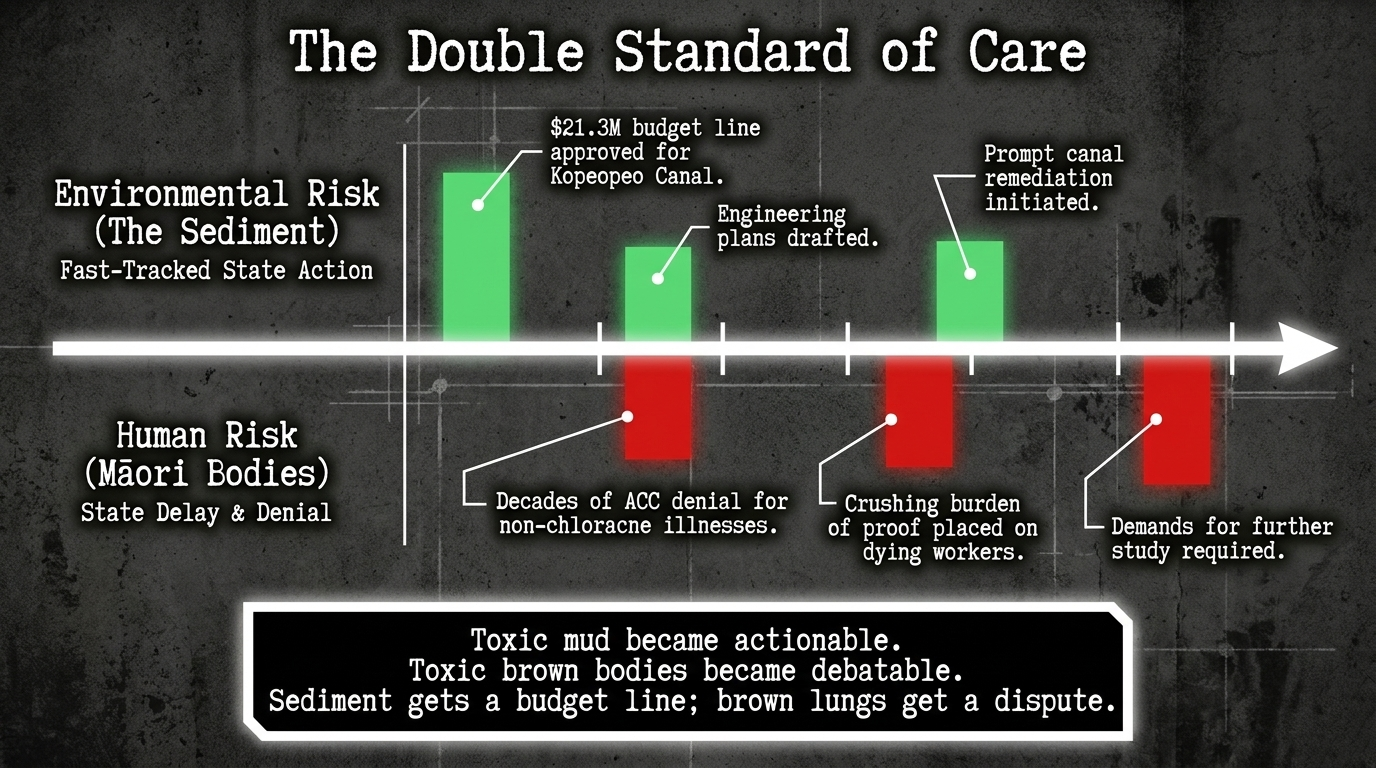
Yet the same institutions that could move once waterways, sediment, and regulatory liability became visible dragged their feet for years on compensation, specialist care, and full recognition for workers and whānau, as documented by Te Ara and E-Tangata.
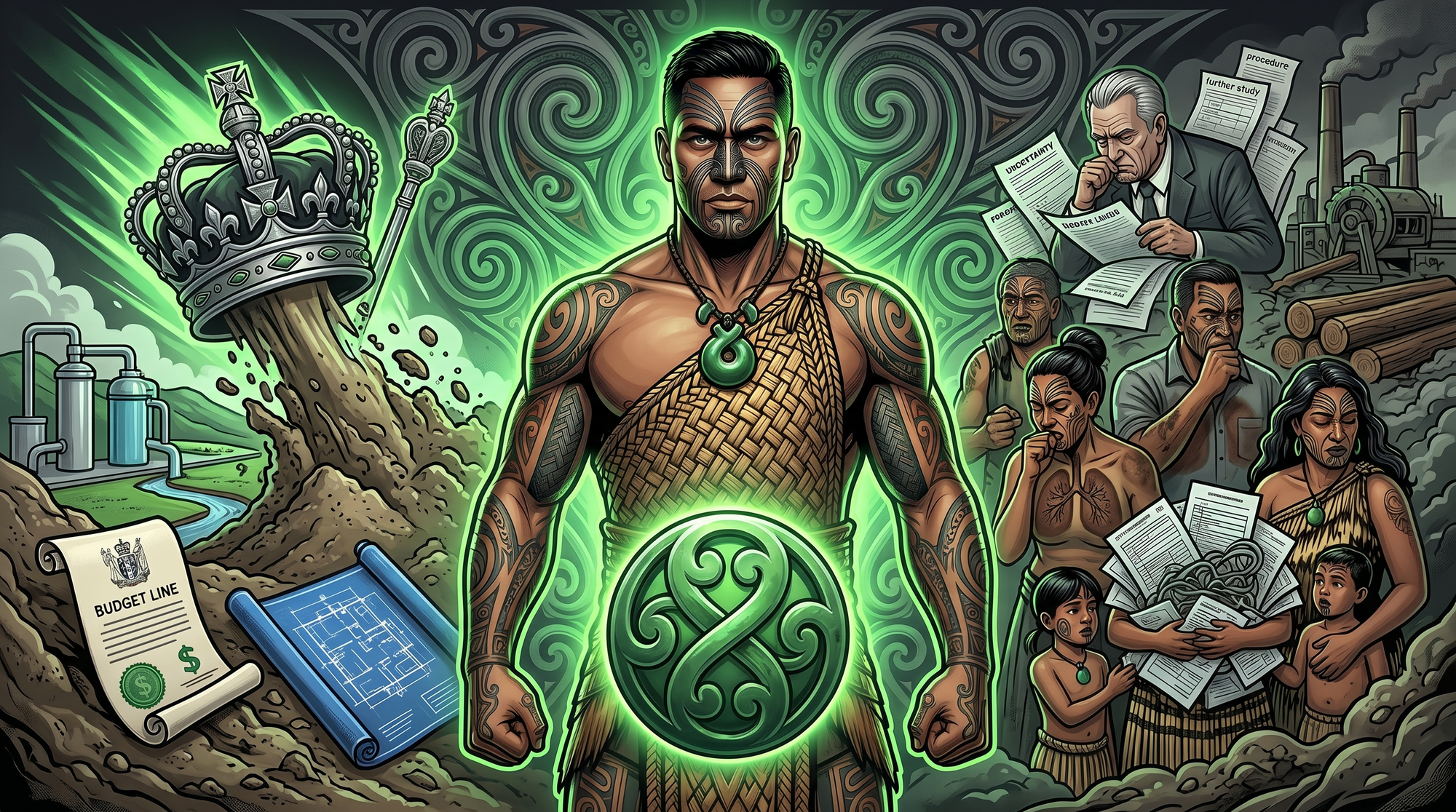
That means the state proved something devastating: when contamination threatened environmental credibility, it could organise.
When contamination was living inside Māori workers, Māori partners, and Māori children, it discovered uncertainty, procedure, and the virtue of further study.
This is colonial arithmetic. Sediment gets a budget line. Brown lungs get a dispute.
Waterways get engineering plans. Whānau get forms.
Toxic mud becomes actionable. Toxic people become debatable.
Do not miss the moral obscenity here. This is not an argument against remediation. It is an indictment of the state’s unequal speed of care. The land became legible the moment the contamination showed up as a governance risk.
Māori pain remained optional because it was politically easier to ignore.
That same logic runs through the current government’s broader treatment of whenua and wai, as exposed in Drill Baby, Drill — Into Your Own Fraud, where fast-track extraction sidelines mana whenua, and in The Colosseum of Kingsland where sacred whenua is commercialised under the banner of growth.
Different projects. Same disease.
Three Examples for the Western Mind
1. The Poisoned Parish
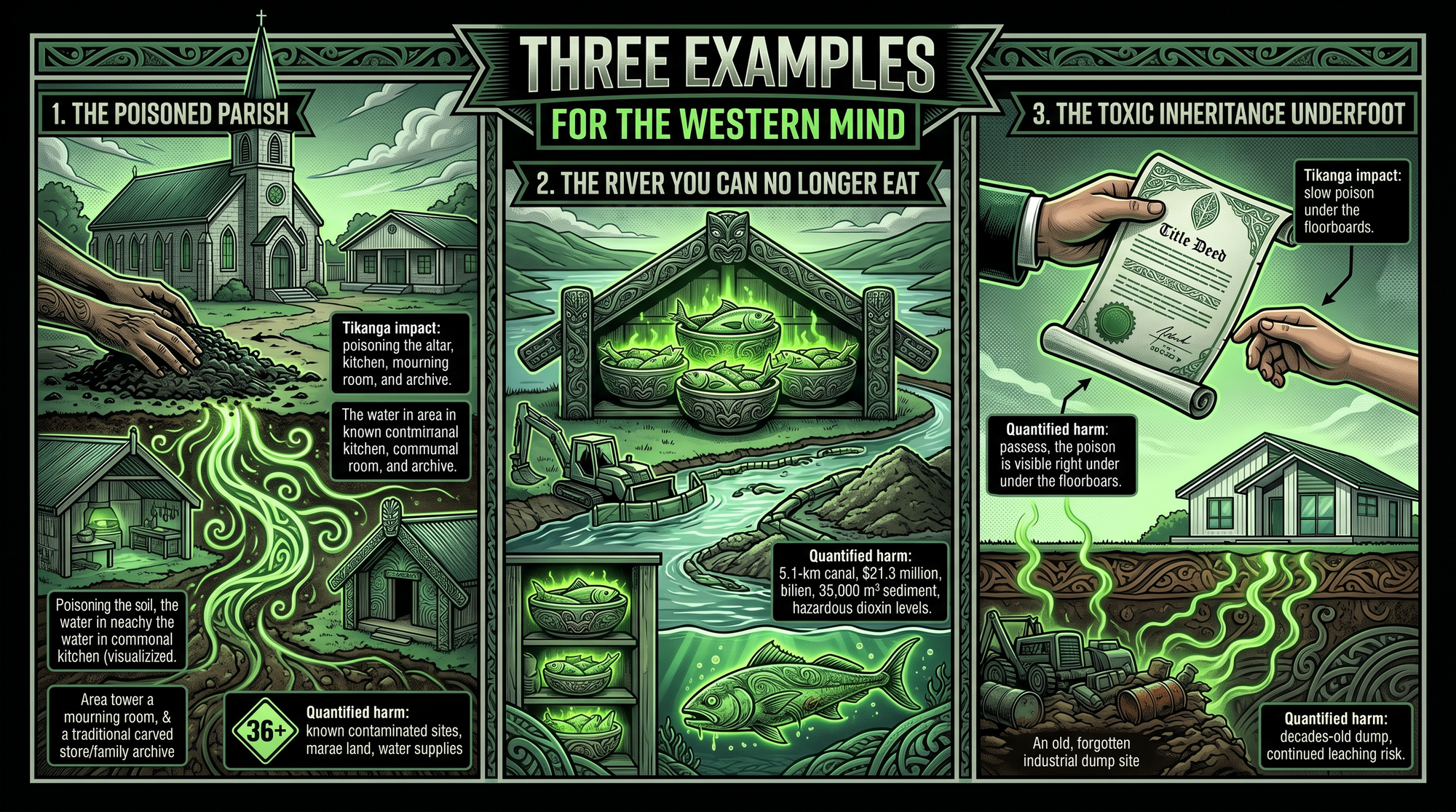
Imagine toxic industrial fill being spread around churches, funeral halls, and community kitchens, then years later learning that the same material had contaminated the shared drinking water and spaces where communal meals were prepared.
Te Ara and the MAI Journal essay show that this is effectively what happened at marae sites in the Ngāti Awa rohe. The western equivalent would trigger outrage, litigation, parliamentary inquiry, and saturation media attention.
Tikanga impact explained for the western mind: this is not just polluting a building site. It is poisoning the altar, the kitchen, the mourning room, and the family archive in one act.
Quantified harm: more than 36 known contaminated sites in the Whakatāne region are recorded by Te Ara, including marae land and contaminated water supplies.
Solution: mana whenua-led mapping, public disclosure, groundwater testing, cleanup, and legal protection against contaminated fill ever being used again on culturally significant sites.
2. The River You Can No Longer Eat
Imagine being told your local river is being “restored” after decades of contamination, but the fish your grandparents taught you to catch are still too toxic to safely harvest.
The Hail Environmental summary states that tuna in the Kopeopeo Canal accumulated hazardous dioxin levels, preventing Ngāti Awa from using a prized traditional food source, while the Bay of Plenty Regional Council reports the removal of more than 35,000 cubic metres of contaminated sediment.
Tikanga impact explained for the western mind: this is like poisoning your grandmother’s pantry and then congratulating yourself for repainting the shelves.
Quantified harm: a 5.1-kilometre canal remediation costing $21.3 million and involving more than 35,000 cubic metres of contaminated sediment, as described by Hail Environmental and Bay of Plenty Regional Council.
Solution: long-term tangata whenua governance over monitoring, customary food safety programmes, and formal recognition that cultural food loss is compensable harm.
3. The Toxic Inheritance Underfoot
Imagine inheriting land only to discover it had been used as a colonial sponge for industrial waste and continues to leach contaminants because closure and remediation were botched.
The Ngāti Awa statement on the old Whakatāne dumpsite says exactly that: the dump remained a toxic legacy and continued to leach contamination because it was not adequately remediated after closure.
Tikanga impact explained for the western mind: this is like being handed your grandparents’ home with the title deed in one hand and a slow poison under the floorboards in the other.
Quantified harm: the dump operated for decades and continued posing post-closure risk, according to Ngāti Awa.
Solution: independent legacy waste audits across the rohe, iwi-led remediation oversight, and legal recognition that contaminated inheritance is ongoing structural harm, not a historical footnote.
The Pattern The Māori Green Lantern Has Already Traced
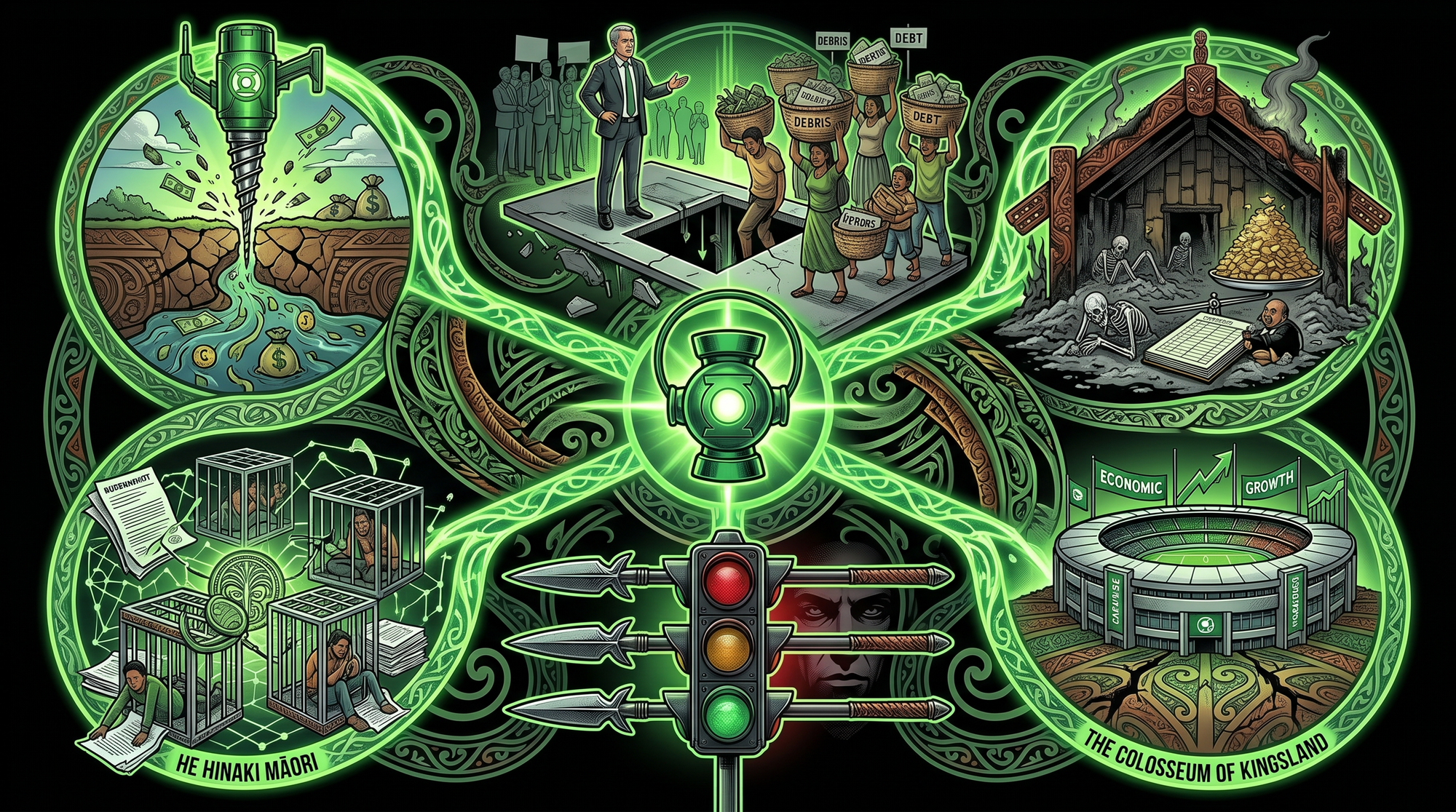
This environmental crime scene is not an isolated chapter. It belongs to the same punishment architecture mapped across earlier Māori Green Lantern essays.
- Drill Baby, Drill — Into Your Own Fraud exposes how extractive policy turns whenua and wai into sacrifice zones whenever profit is on offer.
- The Trapdoor Prime Minister shows how neoliberal governance strips obligation out of leadership and leaves communities carrying the debris.
- The Pātaka Is Ash maps the starvation logic that treats communities as expendable once the ledger is balanced for the wealthy.
- He Hinaki Māori explains how state systems dressed up as support become traps around Māori life.
- The Traffic Light Taiaha names the broader white supremacist punishment logic that hides violence behind process.
- The Colosseum of Kingsland shows how sacred whenua is commercialised and desecrated under the slogan of economic growth.
Different issue. Same theology: extract from Māori land, ignore Māori warnings, delay repair, and call the whole thing responsible government.
The Remedy Joe Harawira Chose
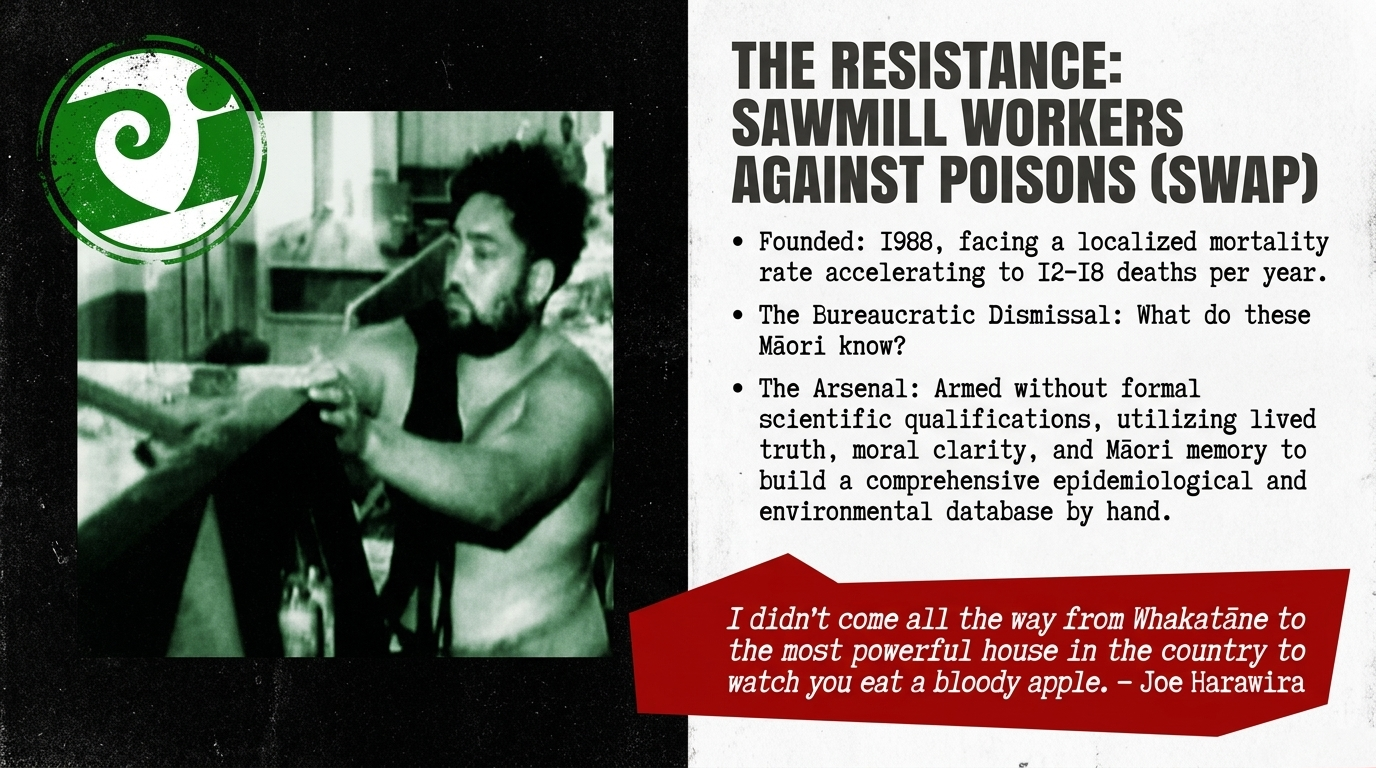
What lifts this story above pure despair is that Joe Harawira and SWAP did not only name the contamination. They built a method of healing.
Te Ara records that SWAP inspired Te Ohu Mō Papatūānuku, a collaborative project blending mātauranga Māori and science to test whether plants and fungi could decontaminate soils and sediments, starting with Kopeopeo Canal. Te Ara also records that the project showed plants and fungi could degrade dioxin in canal sediment.
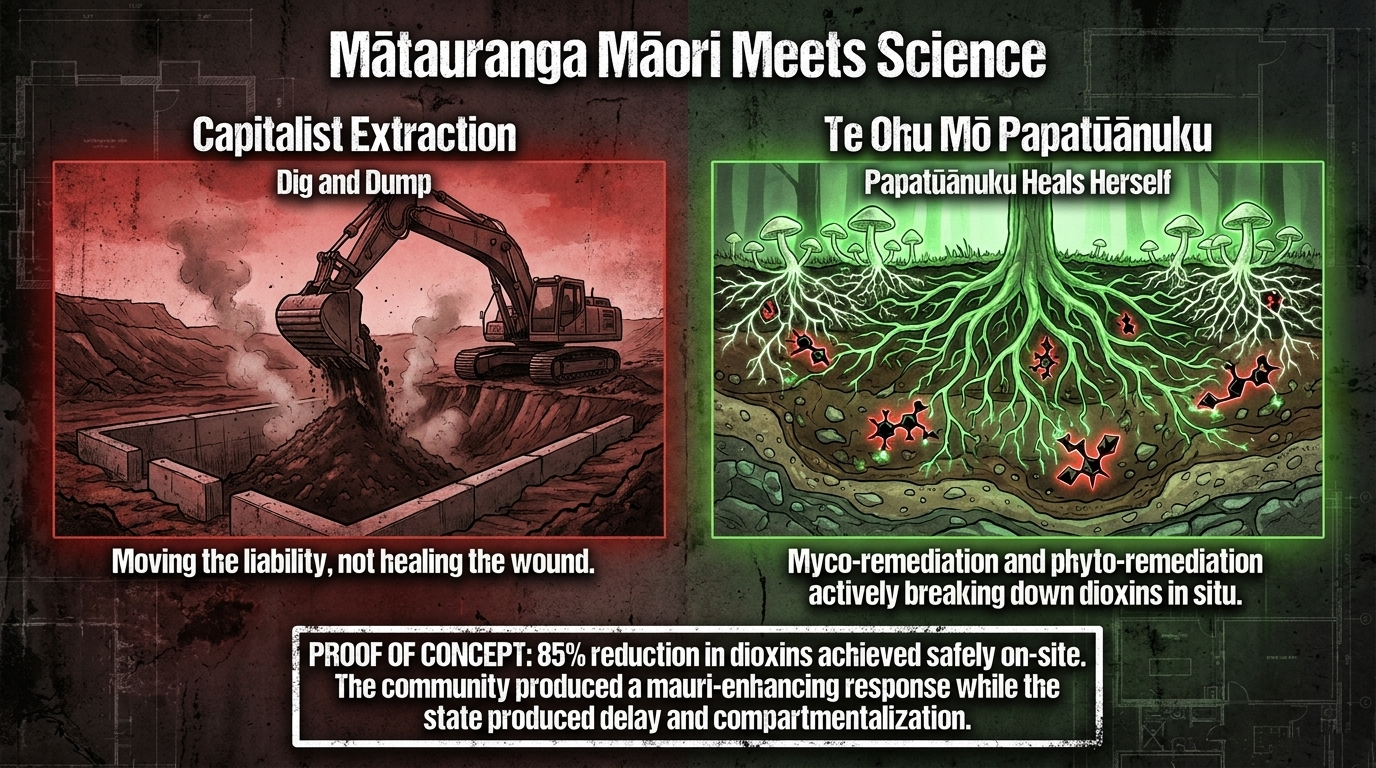
That matters because the community produced a mauri-enhancing response while the state produced delay, compartmentalisation, and partial conscience.
One side asked how to restore relationship. The other asked how to contain liability.
That is why Joe Harawira became, as Te Ara notes,
a legitimate community-based environmental science researcher grounded in mātauranga Māori despite having no academic qualifications.
The Crown had accredited experts. The people had lived truth, moral clarity, and a memory longer than any ministry file.
What Justice Requires
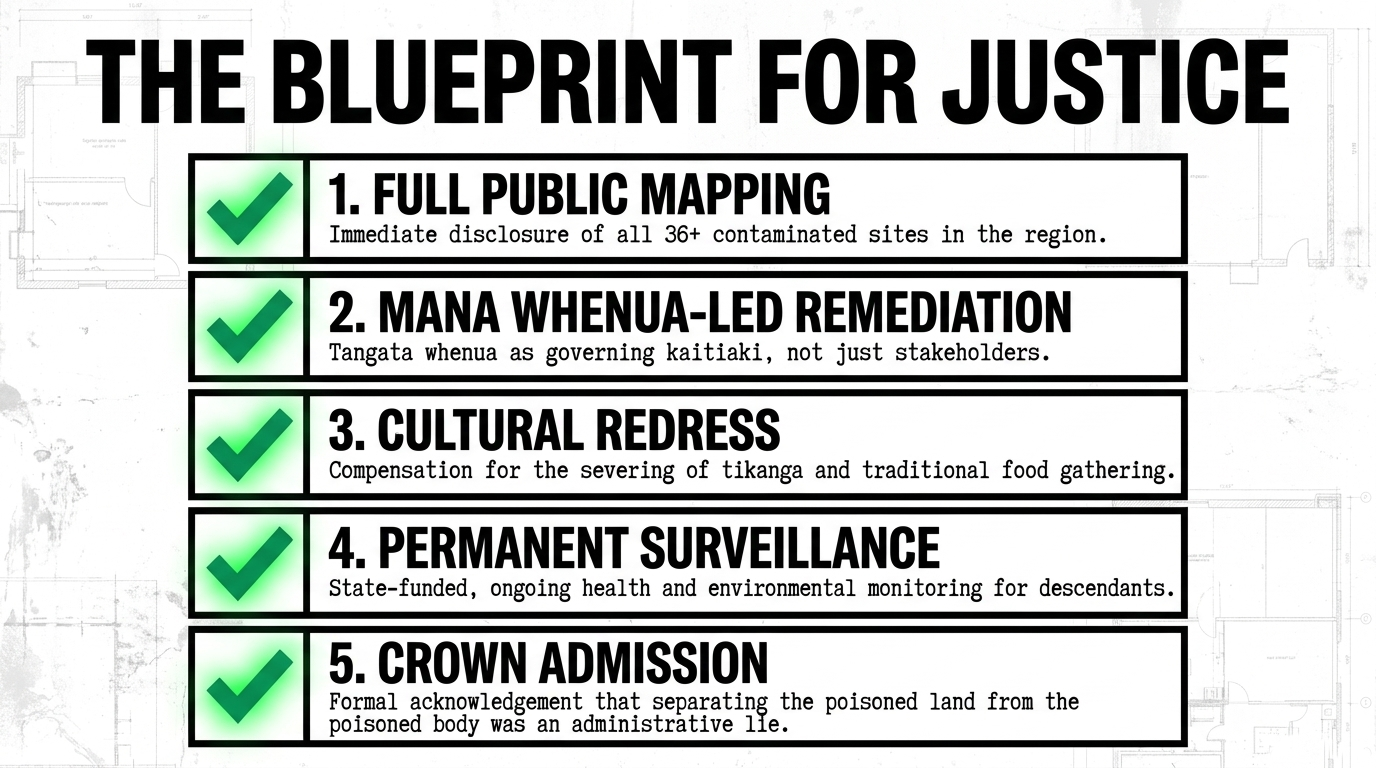
Justice here is not just cleanup. It is restoration with memory, accountability, and power shifted back to those who were forced to carry the poison.
- Full public mapping of all contaminated Whakatāne-region sites, because Te Ara records more than 36 known sites and communities have a right to know where the poison was buried.
- Mana whenua-led remediation and monitoring, because Te Ara and Ngāti Awa show iwi were never just stakeholders; they were and are kaitiaki.
- Cultural redress alongside engineering cleanup, because contamination damaged food gathering, water use, marae function, and knowledge transfer, as described by the SWAP submission.
- Permanent health and environmental surveillance, because contaminants moved through sediment, water, biota, food systems, and whānau over decades, as recorded by Te Ara, the SWAP submission, and the Bay of Plenty Regional Council.
- A formal Crown admission that land and body were poisoned together, because separating environmental remediation from human justice has always been a lie crafted for administrative convenience.
Anything less is landscaping around a grave.
He Whakakapi
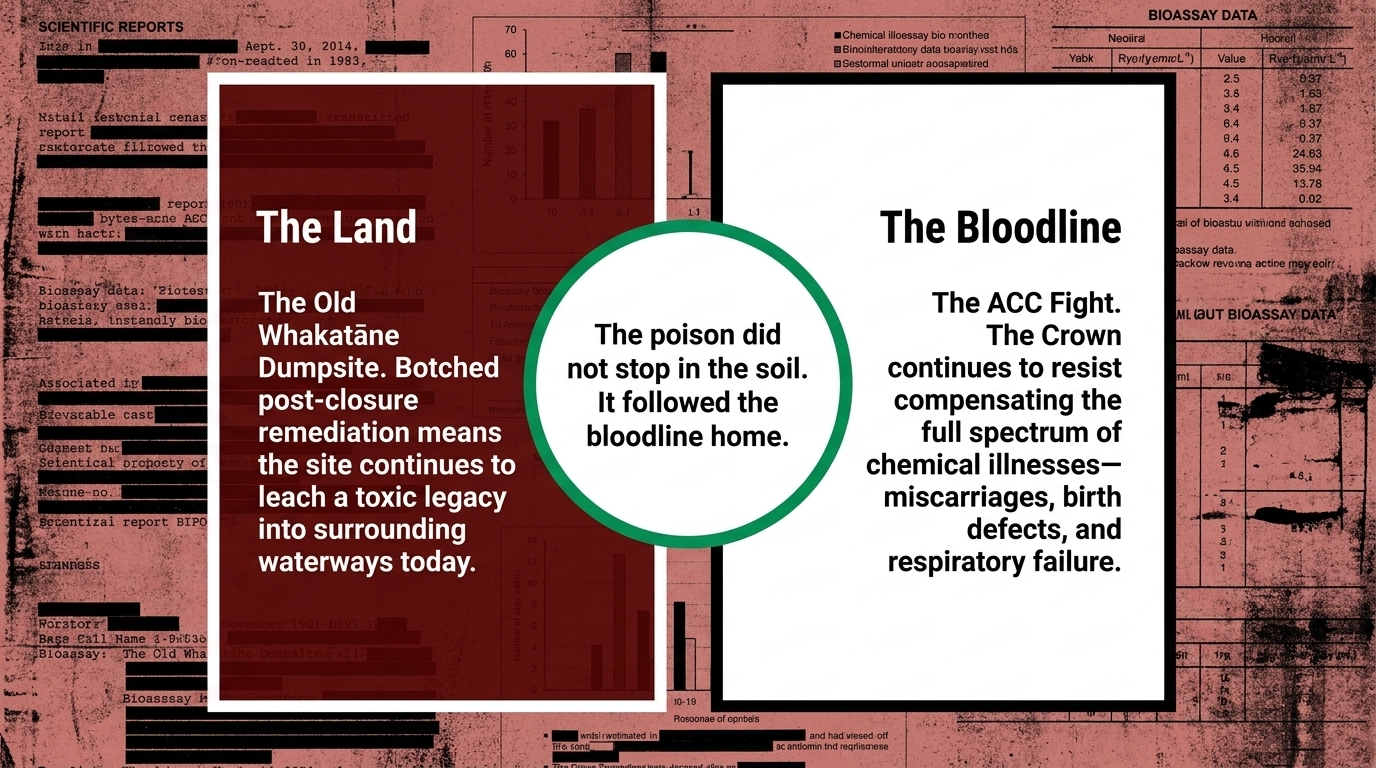
The poison in Whakatāne did not stay in drums. It moved into streams, sediment, tuna, shellfish, bore water, marae fill, and the places where people fed one another.
It sank into the whenua and rose again through the body.
So reject the next lie too: this is not a story of responsible authorities slowly tidying up an unfortunate legacy.
It is a story of a colonial economy that treated Māori land as disposable, Māori water as absorbent, and Māori health as negotiable. The land bled because the system cut it open. The water carried the wound. The people carried it home.
Joe Harawira knew that if Papatūānuku could not heal, the people would not heal either, as recorded by Te Ara.
The only real question now is whether this country is willing to do more than dredge sediment and congratulate itself.
Is it ready to tell the truth? The environmental harm was never background damage. It was the same violence, wearing mud.
Tautoko Mai | Support This Mahi
Every koha for this essay says that poisoned waterways, marae land, and contaminated whakapapa will not be buried under council jargon, regulatory fog, and the polite cowardice of Crown delay.
It says rangatiratanga includes funding our own truth tellers when the official story wants the poison to remain underground.
If koha is not possible right now, subscribe, follow, kōrero, and share this essay with your whānau and friends at The Māori Green Lantern — that is koha too.
Four pathways exist:
- Koha direct: Support the Māori Green Lantern
- Subscribe for essays: Subscribe to the Māori Green Lantern
- Direct bank transfer: HTDM, account number 03-1546-0415173-000
- Facebook: Follow and subscribe on Facebook
Next in the series: Seven Generations turns from poisoned waterways and marae land to poisoned whakapapa — miscarriages, ectopic pregnancies, birth defects, learning difficulties, infertility, and the unbearable truth that the sawmill’s chemicals did not stop with the workers but followed the bloodline home, as recorded by Te Ara and reported by SunLive.