"How Ōpōtiki Chose Truth Over Tourism Dollars at the Church Where They Hanged an Innocent Man" - 8 August 2026
THE KOHA THAT CROWN MONEY CAN'T BUY

Kia ora koutou katoa. I'm Ivor Jones — The Māori Green Lantern.
If you don't know me, my mahi lives at themaorigreenlantern.maori.nz, where I've spent the last 3 years naming names, tracing money, and holding a taiaha up to every neoliberal scheme that wears a Māori face to sell a Pākehā outcome.
But today I'm not writing about a scandal. I'm writing about my own community mahi — because accountability has to start with the person holding the pen.
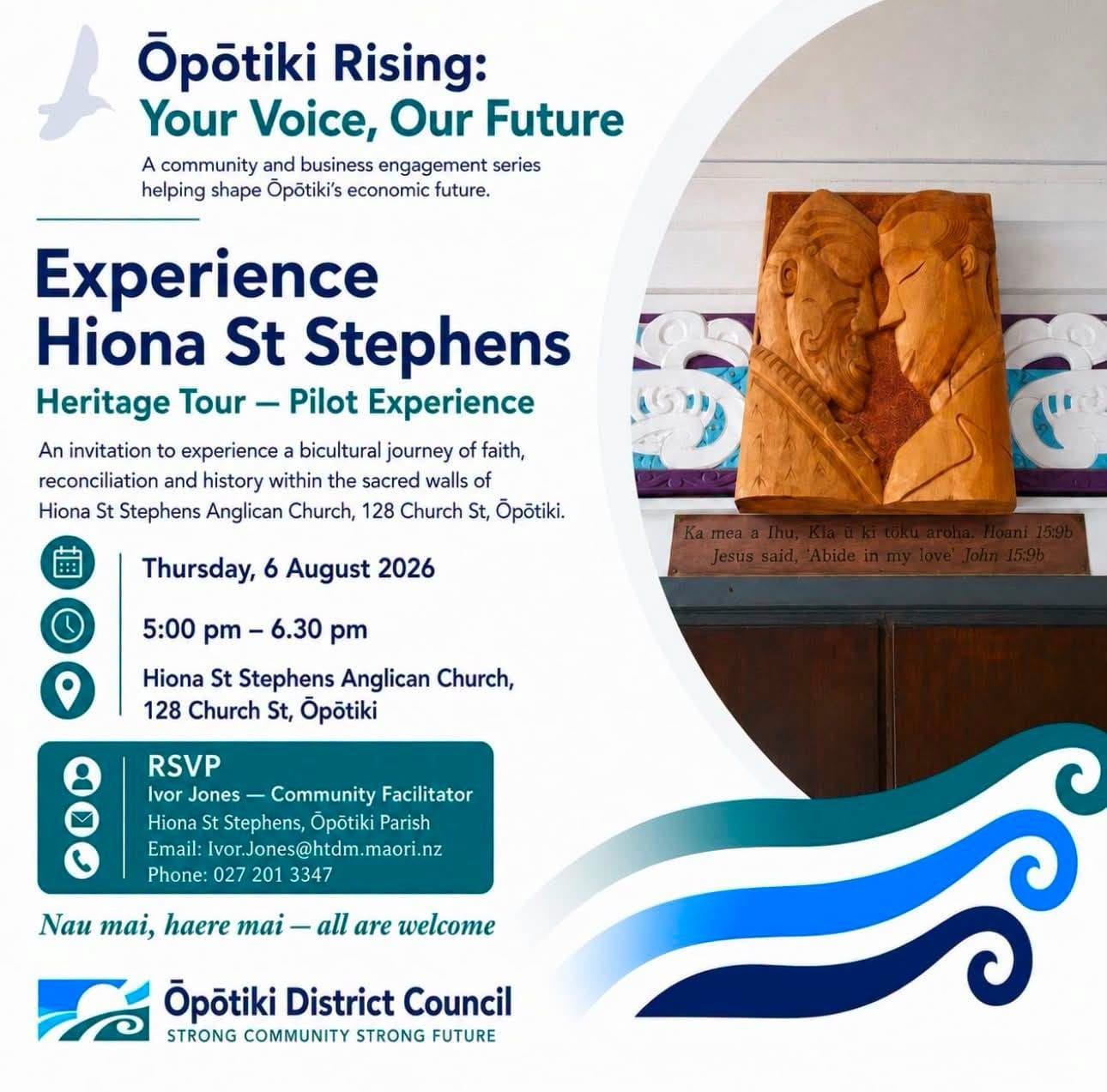
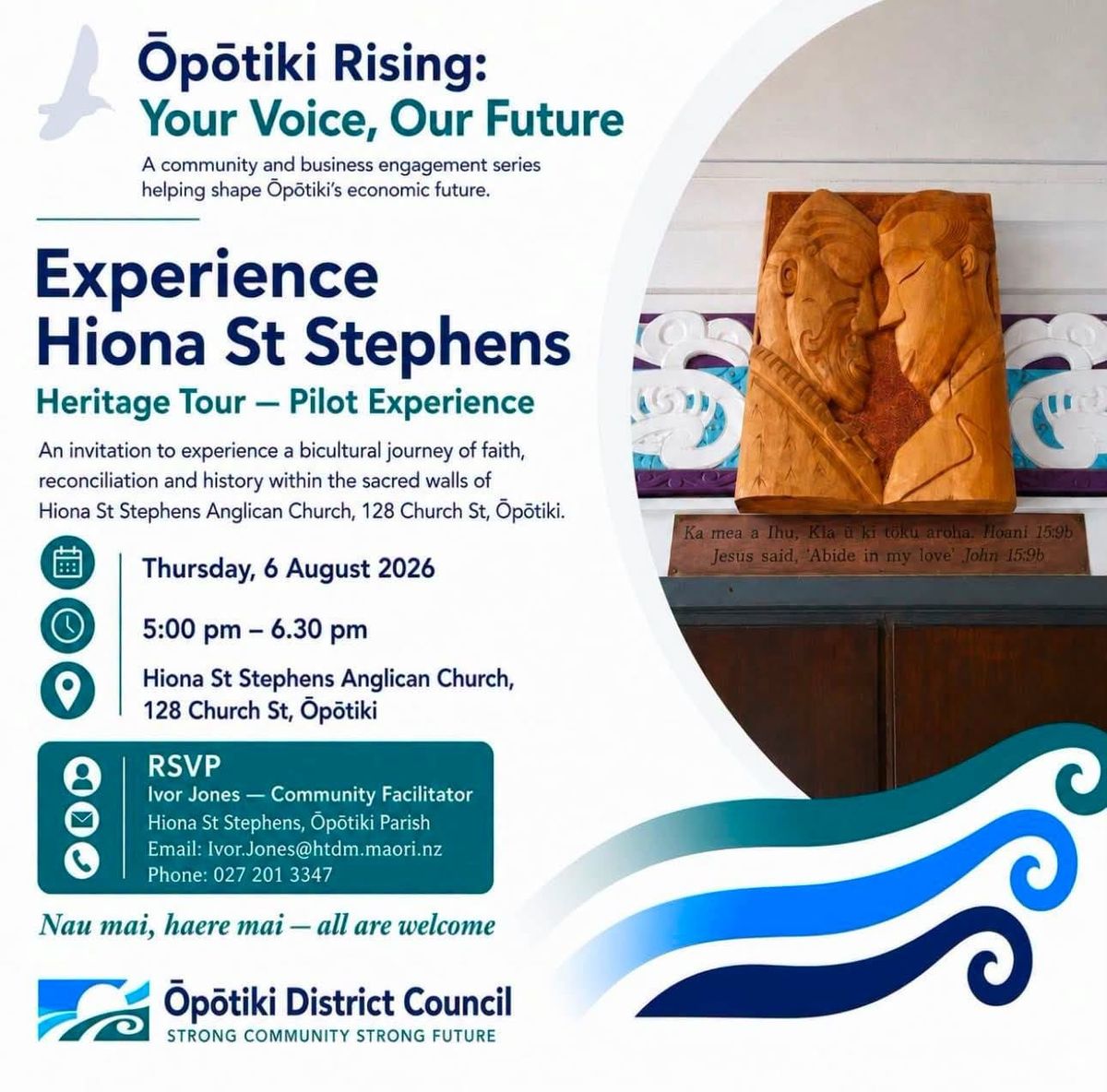
On 6 August 2026, I stood inside Hiona St Stephens Anglican Church in Ōpōtiki and put a proposal to twenty-five of my neighbours: could this whare — built by Whakatōhea hands in 1862, the same building where missionary Carl Völkner was hanged in 1865, the same building whose name was worn by a rangatira wrongly executed for that death — become the foundation of a cultural heritage tourism kaupapa that actually belongs to this community?
Every single person who filled out the survey said yes.
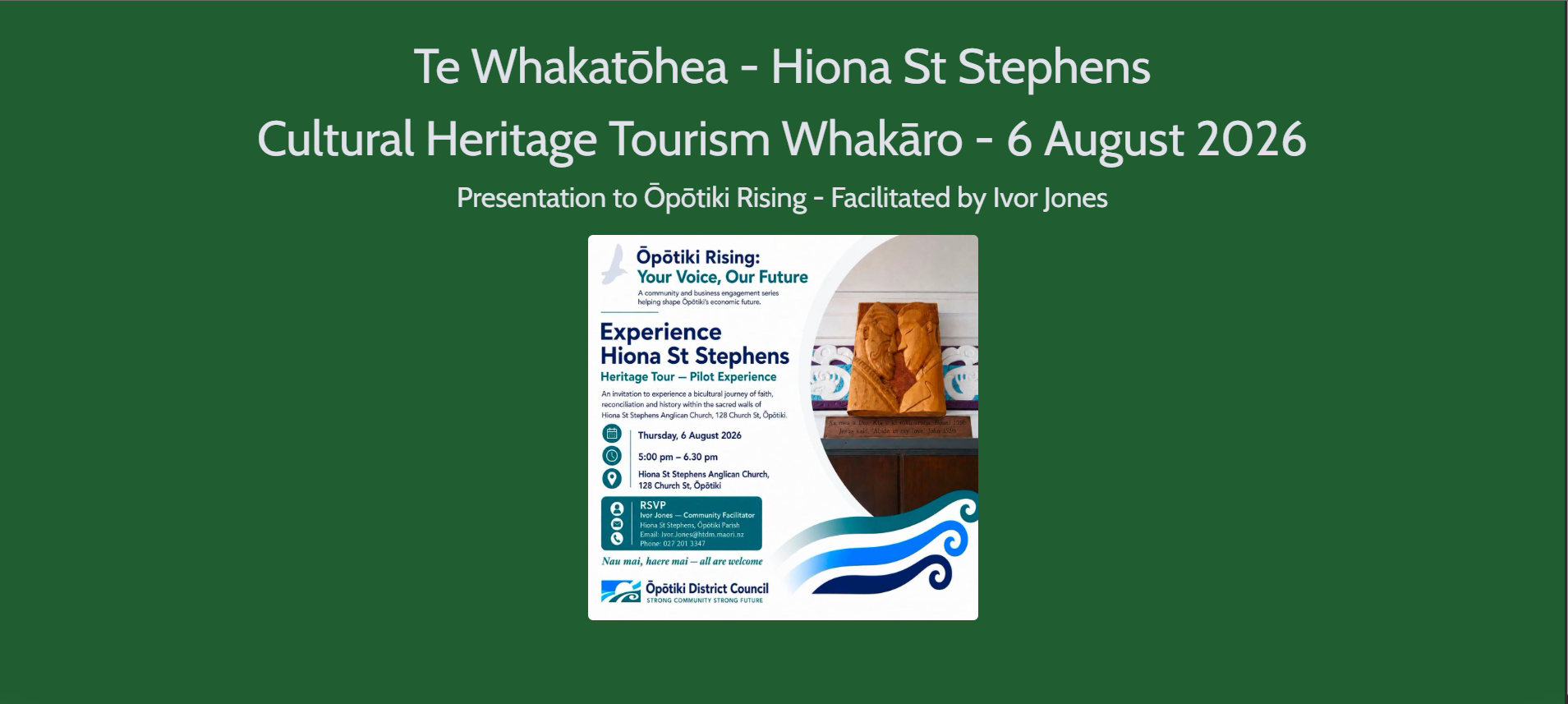
I want to walk you through what that means, what it doesn't mean yet, and why It's beem built in the same accountability I'd demand of anyone else — including myself.
The Whare That Remembers Everything
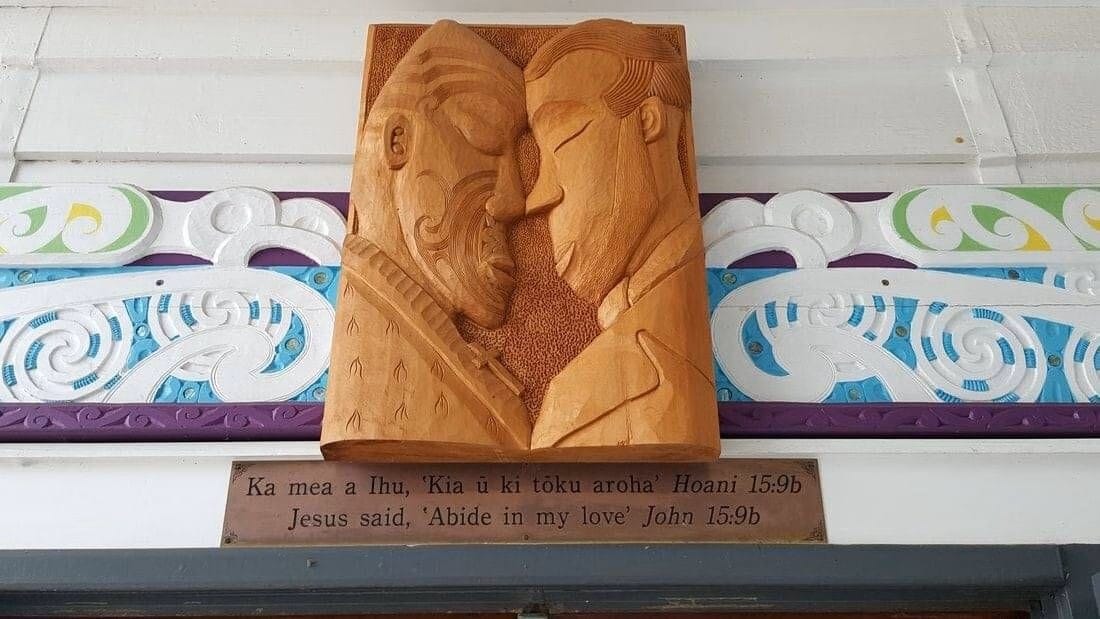
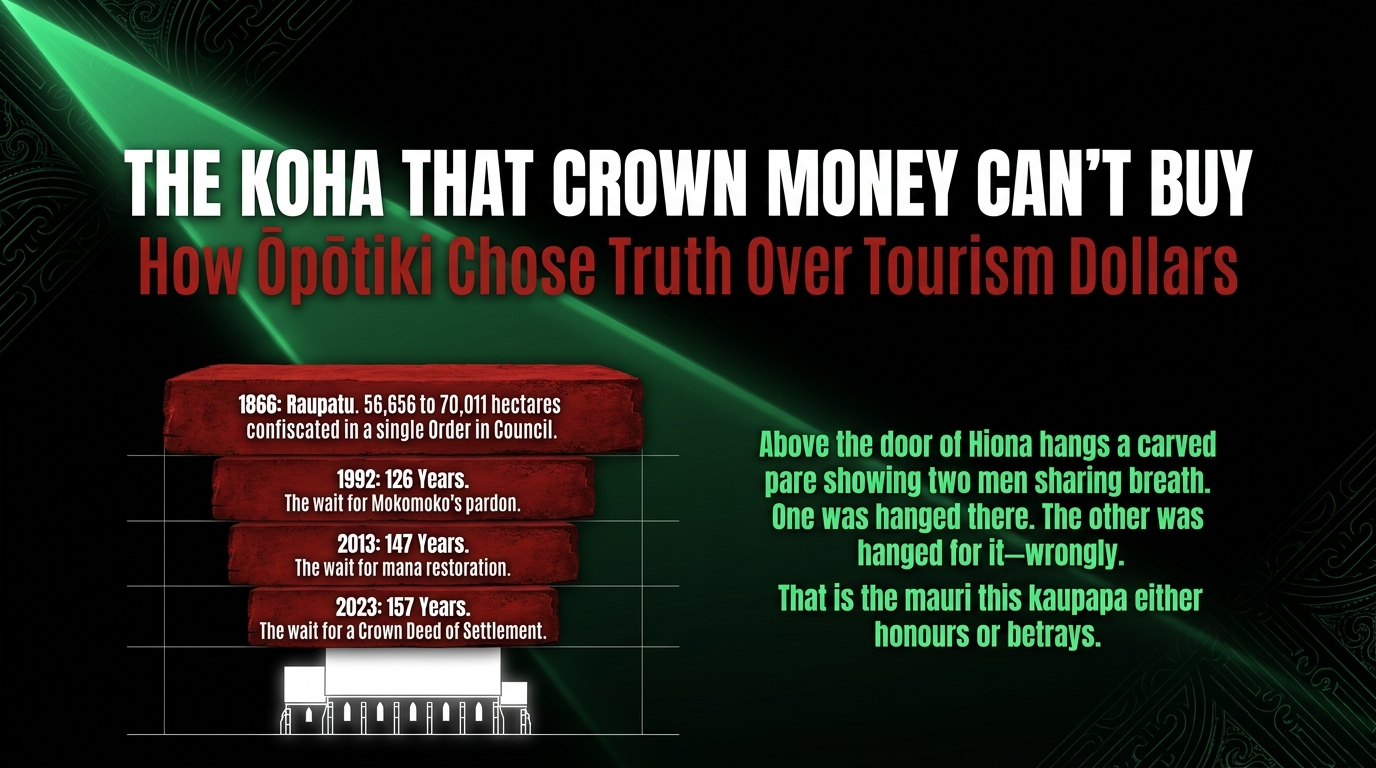
Above the door of Hiona hangs a carved pare showing two men, foreheads pressed together, sharing breath. One is Völkner. The other is Mokomoko — the rangatira hanged at Mt Eden in 1866 for a murder he did not commit, on the word of a horse's rope and a one-day trial in a language that was not his own (the church's own published history — Hiona St Stephens, "The Full Story").
The Crown didn't stop at one death. Within a year of Völkner's hanging, it proclaimed the confiscation of Whakatōhea's coastal lands — an act the Waitangi Tribunal itself has called "among the worst Treaty breaches in this country's history" (MAI Journal, Davis, Morris, Maxwell & Happy, 2026, citing Waitangi Tribunal 2021). Sources differ on exactly how much land was taken — the 1921 Native Land Claims Commission put it at 173,000 acres, or half the tribe's territory (Waitangi Tribunal National Overview), while more recent research cites over 140,000 acres (MAI Journal) — but whichever figure you use, that's between 56,656 and 70,011 hectares of the most productive coastal plains in the Eastern Bay of Plenty, gone in a single Order in Council dated 17 January 1866 (Wai 894 historical record). Nearly the whole iwi was pushed onto the 22,000-acre — roughly 8,903-hectare — Ōpape reserve, chosen specifically because it was unproductive and cut off from the coast (MAI Journal).
Mokomoko waited 126 years for his pardon in 1992, and 147 years for Parliament to pass an Act — written first in te reo Māori — formally restoring his mana in 2013 (RNZ). The Crown didn't sign a full Deed of Settlement and apology with Te Whakatōhea until 2023 — 157 years after the raupatu (MAI Journal).
That's the whare I stood in on 6 August. That's the mauri this project either honours or betrays.
🎙️ THE DEEP DIVE PODCAST
Listen to a lively conversation between two hosts, unpacking and connecting topics in the sources of this essay. I apologise in advance for the AI's very harsh pronounciation of reo. Please dont shoot me, :).
📺 YOUTUBE VIDEO
Like video? Here is a short video suppporting the essay. Again, don't shoot the messenger please because of AI's pronounciation. :)
Koha Consideration
This kaupapa is about a church, not a company — and it's succeeding only because whānau are choosing koha over a Crown contract, transparency over a glossy pitch deck.
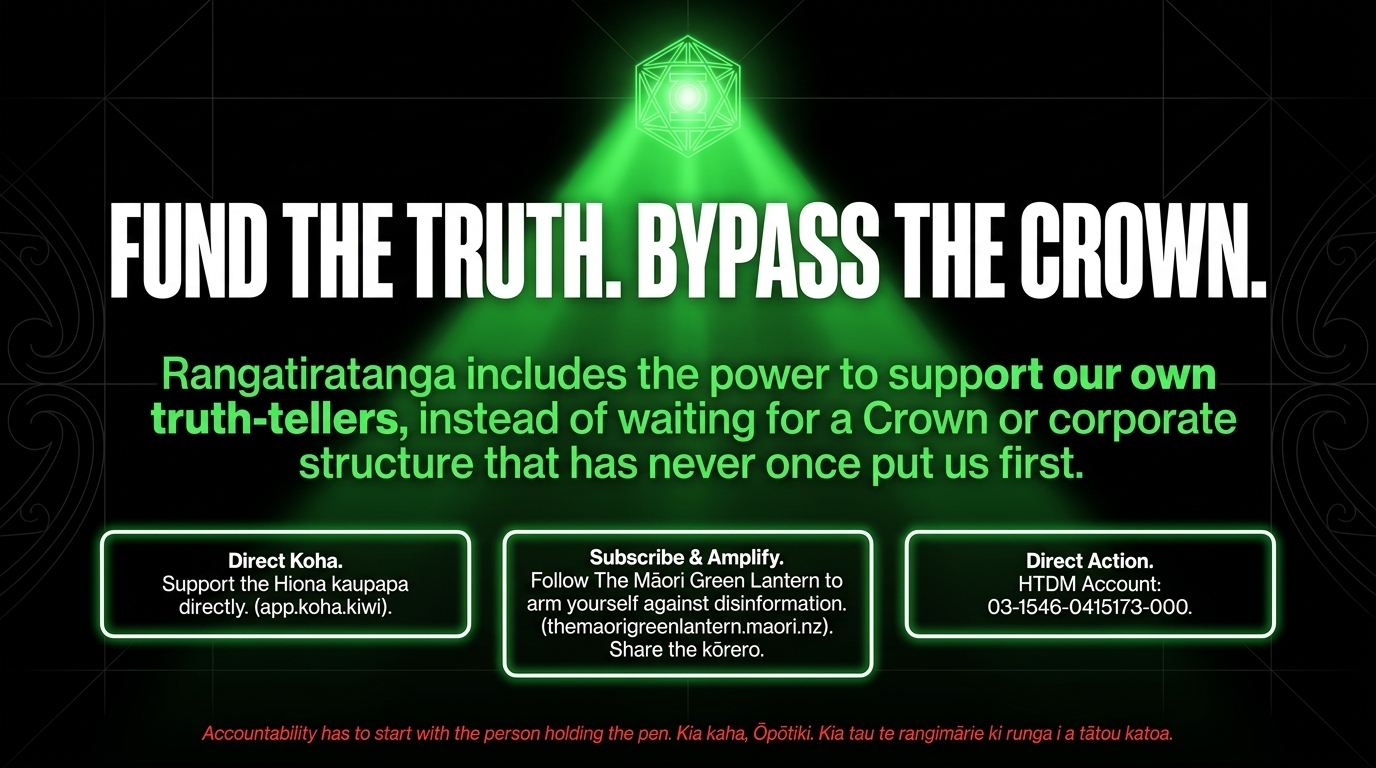
Every koha you give to The Māori Green Lantern says the same thing this hui just said to Hiona: rangatiratanga includes the power to support our own truth-tellers, and our own tikanga-led projects, instead of waiting for a Crown or corporate structure that has never once put us first.
Kia kaha, whānau. Stay vigilant. Stay connected. And if you are able, consider a koha to ensure this voice continues.
If you are unable to koha, no worries! Subscribe or follow The Māori Green Lantern at themaorigreenlantern.maori.nz, kōrero and share with your whānau and friends — that is koha in itself.
Four pathways exist:
For those who wish to support this mahi directly with a koha (voluntary contribution), please visit the Koha platform:
Koha — Support
For those who wish to receive essays directly and support through subscription:
Subscribe to the Māori Green Lantern
For those on Facebook: https://www.facebook.com/Themaorigreenlantern/subscribe/
For those who prefer direct bank transfer, account details are:
HTDM, account number 03-1546-0415173-000.
What Actually Happened at the Hui
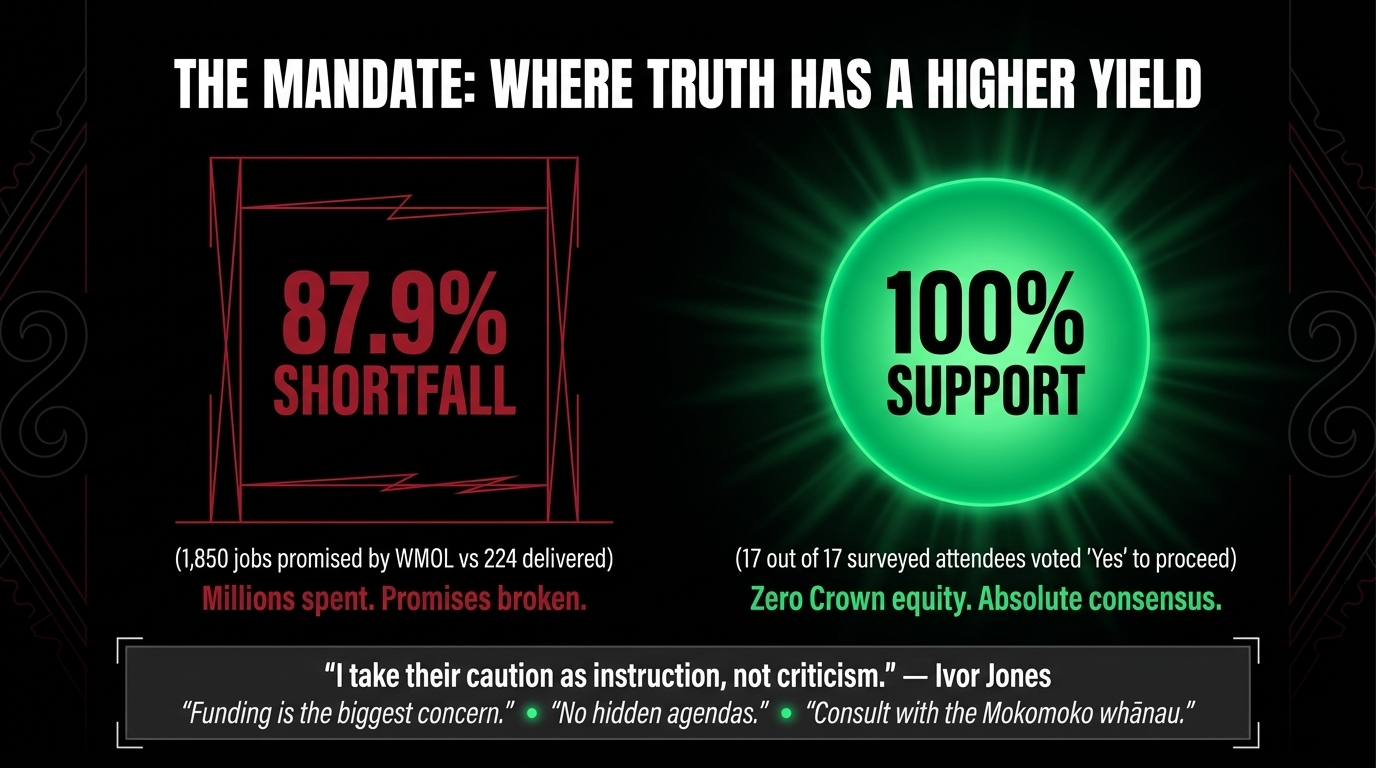
Here's the plain truth, no spin: 25 people signed the register, 17 completed the survey, and 100% backed moving to the next stage (Hiona Hui Report, August 2026).
Of those 17, eight named tour development as their kaupapa of interest — that's about 53% once you account for people who skipped that particular question, or 47% of the full 17 depending how you slice it. Twelve of seventeen — about 71% — said they'd definitely or possibly attend a hui with Te Whakatōhea.
Eight people left comments, and the loudest theme wasn't excitement — it was caution: "funding is the biggest concern," "no hidden agendas," and a direct instruction to "consult with the Mokomoko whānau" (Hui Report).
I take that caution as instruction, not criticism. The next step agreed at the hui is not "Ivor Jones runs tours." It's that I, as Community Facilitator, am supported to lead further hui toward a proper governance and legal structure — one that can hold community-informed cultural heritage tourism accountable, the way no Crown-backed structure ever has to be (Hiona Hui Report).
Three Examples for the Western Mind
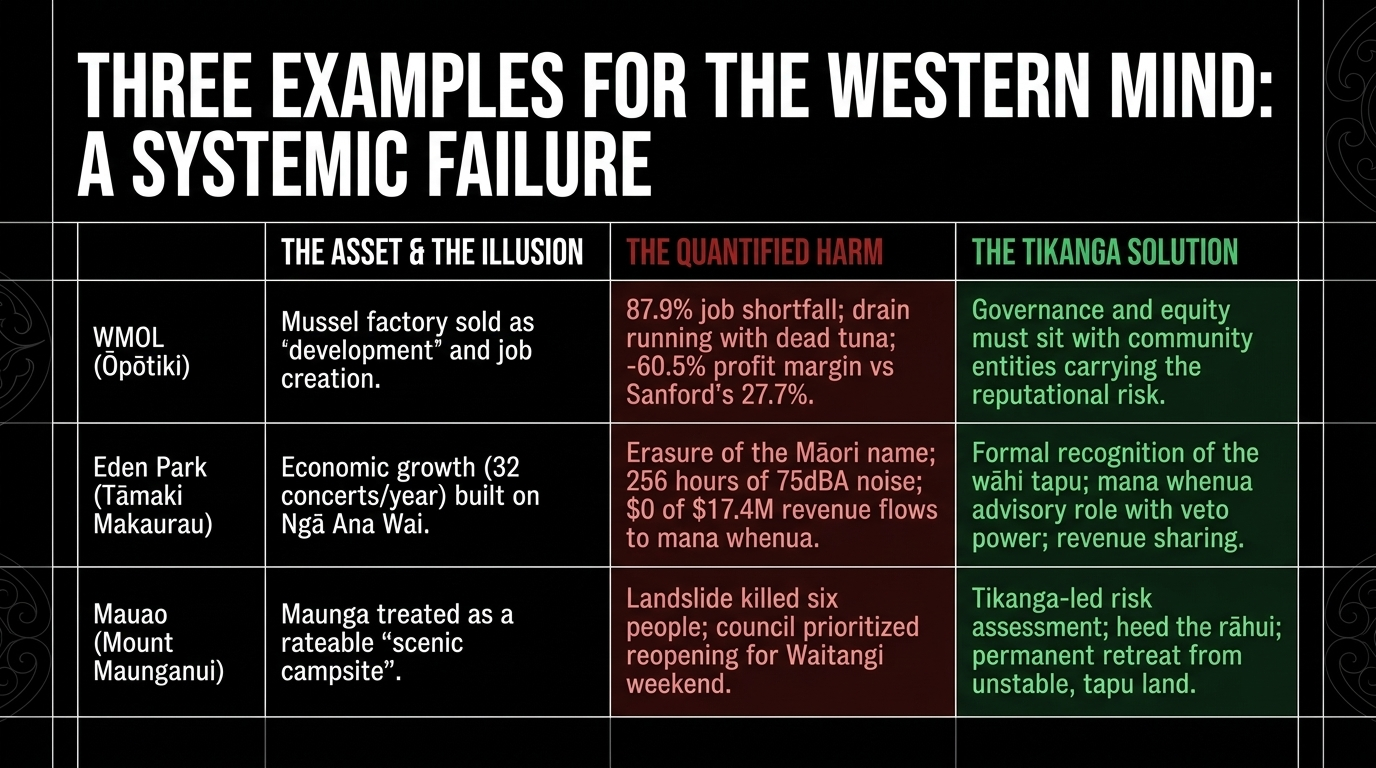
If you were raised inside the Western planning tradition — property titles, KPIs, ticket prices — the difference between "a Māori-branded tourism venture" and "a Māori-led one" might look like semantics.
It isn't. Here are three real, verified examples, quantified, with solutions, and the tikanga underneath explained plainly.
Example 1: The Mussel Factory That Wore a Name It Didn't Earn
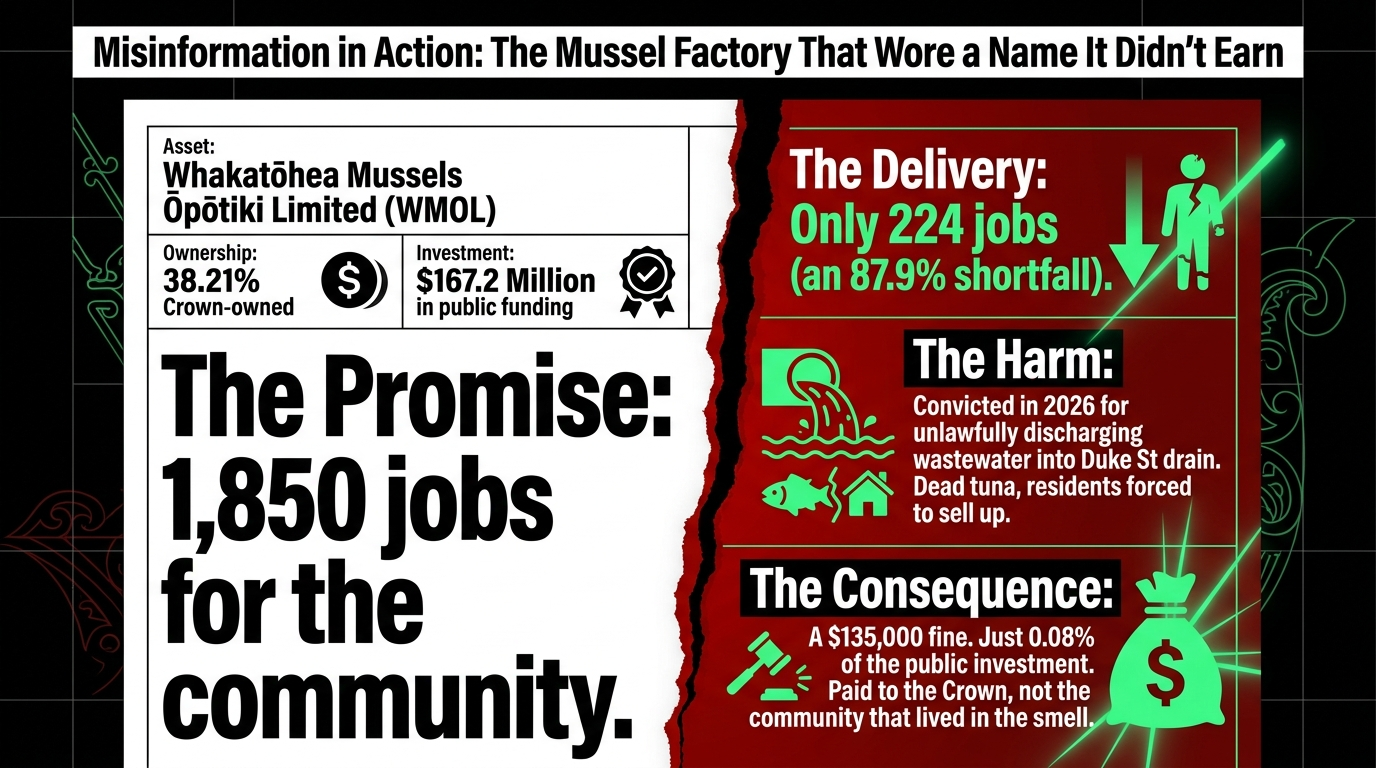
What happened: Ōpōtiki already has a live case study in what happens when a project wears an iwi's name without iwi control. Whakatōhea Mussels Ōpōtiki Limited is 38.21% Crown-owned, received $167.2 million in public investment, promised 1,850 jobs, and delivered 224 — a shortfall of 87.9%. In 2026 it was convicted of unlawfully discharging wastewater into Ōpōtiki's Duke St drain, killing eels, driving a resident from his home, and forcing a neighbour to sell up (The Crown Built A Drain And Called It Development, The Māori Green Lantern, 28 June 2026).
Quantified harm: The court fine was $135,000 — just 0.08% of the $167.2 million in public money behind the project, and paid to the Crown, not the community that lived in the smell (same essay). Meanwhile, the country's biggest listed mussel operator, Sanford, ran a 27.7% profit margin the same year WMOL ran a −60.5% margin — an 88.3 percentage-point gap that has nothing to do with the mussel industry and everything to do with who actually controls the operation.
The solution: Governance and equity have to sit with the community and iwi entities that carry the reputational and cultural risk, not with a Crown holding company that can absorb a $135,000 fine as a rounding error. That's exactly why the Hiona kaupapa's next stage is a legal and governance structure built before a single dollar of koha revenue moves, not after.
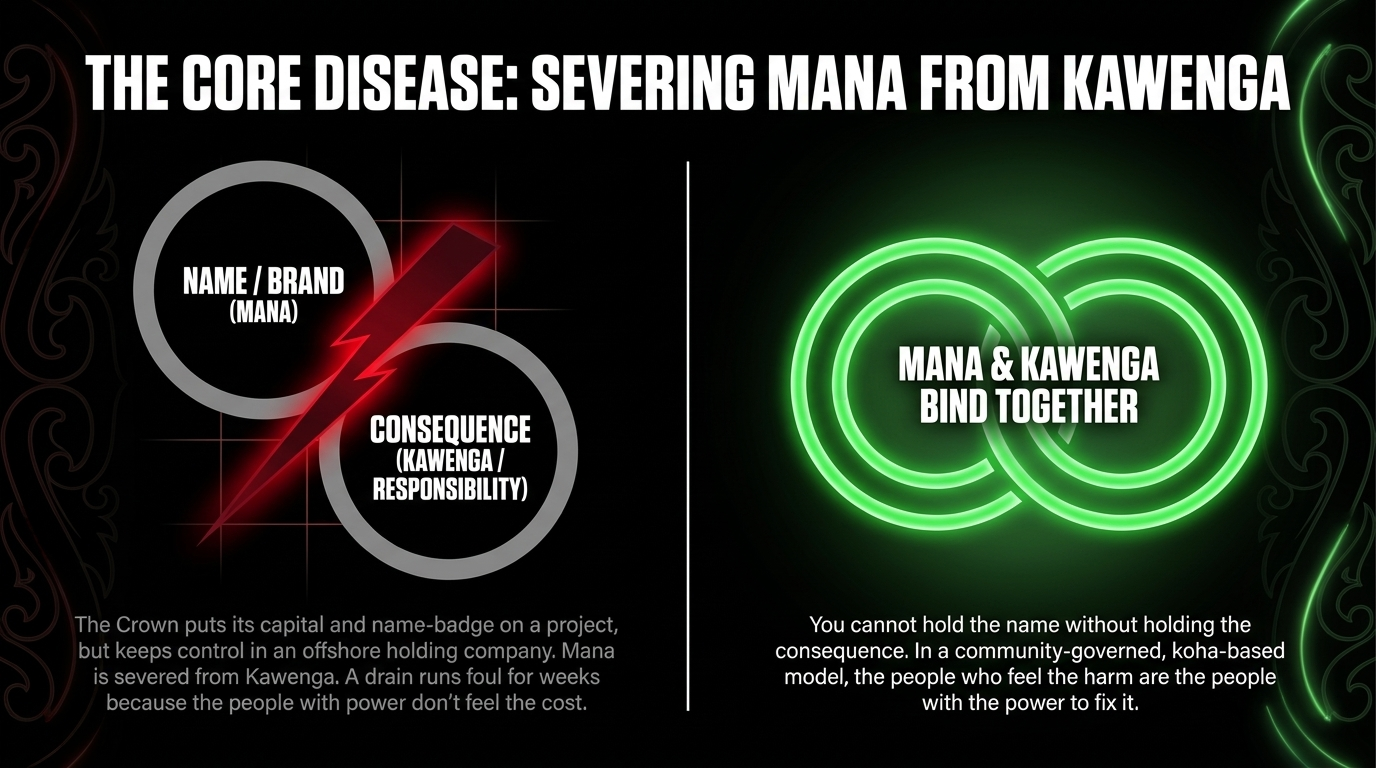
Tikanga impact, explained plainly: In te ao Māori, mana and responsibility travel together — you cannot hold the name without holding the consequence. When the Crown puts its capital and its name-badge on a project but keeps the control offshore in a holding company, it severs mana from kawenga (responsibility). That severing is what let a drain run foul for weeks before anyone with real power felt the cost. A koha-based, community-governed model keeps mana and responsibility in the same hands — which means when something goes wrong, the people who feel it are the people who can fix it.
Example 2: The Sacred Site Sold as a Backdrop
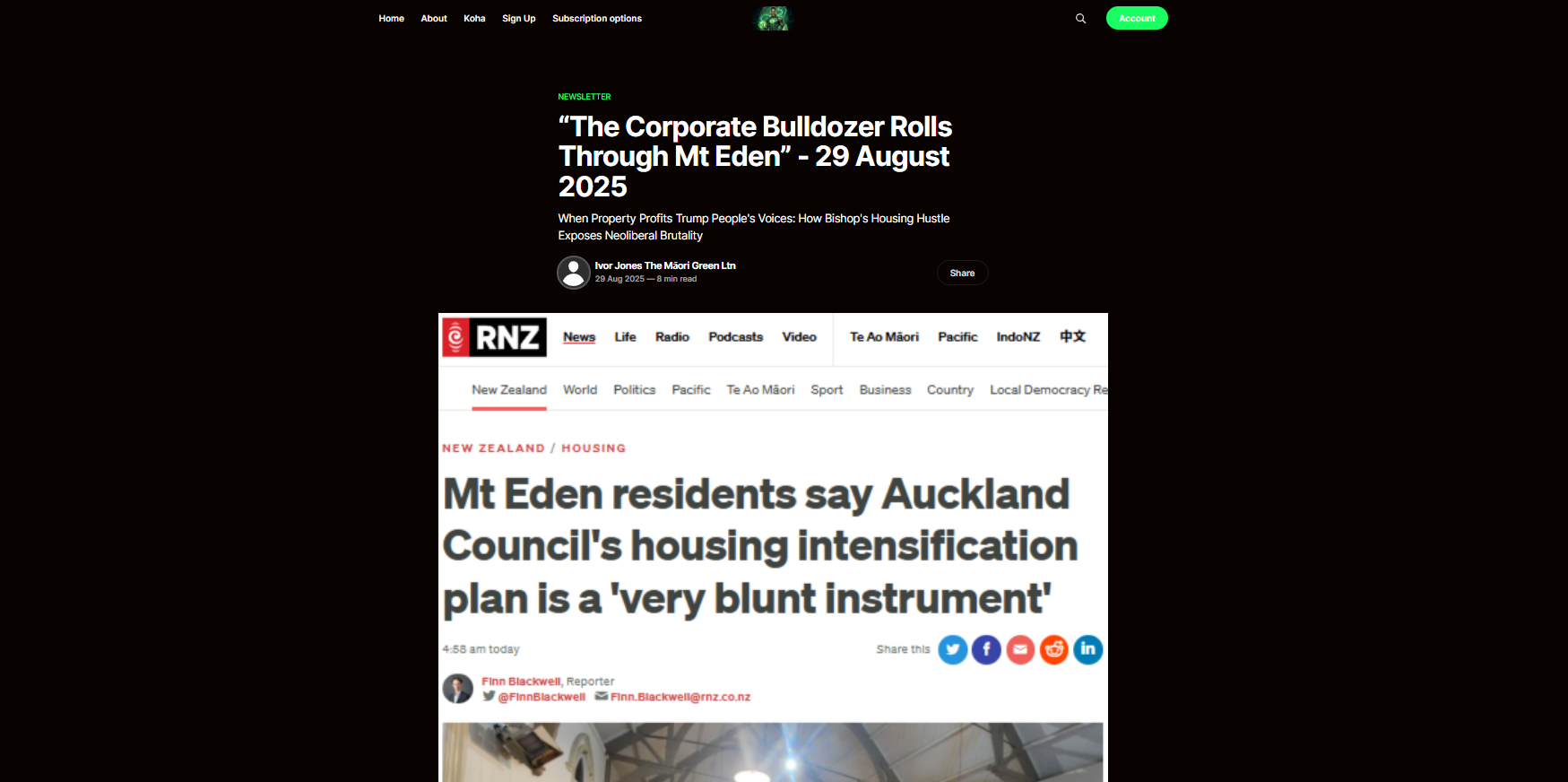
What happened: In February 2026, the government stripped resource consent requirements from Eden Park — built on Ngā Ana Wai, a wetland and cave system that fed and sheltered Tāmaki Makaurau for over a thousand years — to allow up to 32 concerts a year and unlimited night sport, without once naming the whenua's Māori identity in any official release (The Colosseum of Kingsland, The Māori Green Lantern, 16 February 2026).
Quantified harm: Residents now face up to 256 hours a year of concert noise at 75dBA — four times the perceived loudness of the previous 55dBA limit — with none of the projected $17.4 million in event revenue flowing to the iwi and hapū whose tūpuna are woven into that whenua (same essay).
The solution: Formal recognition of the site's Māori name and history in every governance document, a mana whenua advisory role with real decision-making power, and a share of revenue directed to cultural and environmental restoration — none of which happened at Eden Park, and all of which Hiona's own proposal builds in from Stage 2 onward by making Whakatōhea's blessing a precondition, not an afterthought (Ōpōtiki Rising presentation).
Tikanga impact, explained plainly: Whenua also means placenta — the place life comes from. To market a wāhi tapu purely as a stage set, with its Māori name erased from the press release, is to treat the birthplace of a people as invisible scenery. Hiona's proposal does the opposite on purpose: the tour's entire structure — pōwhiri first, documentary second, guided history third — exists specifically so the building's name and story are the point, not the backdrop.
Example 3: The Maunga Treated as a Campsite Until It Killed Six People
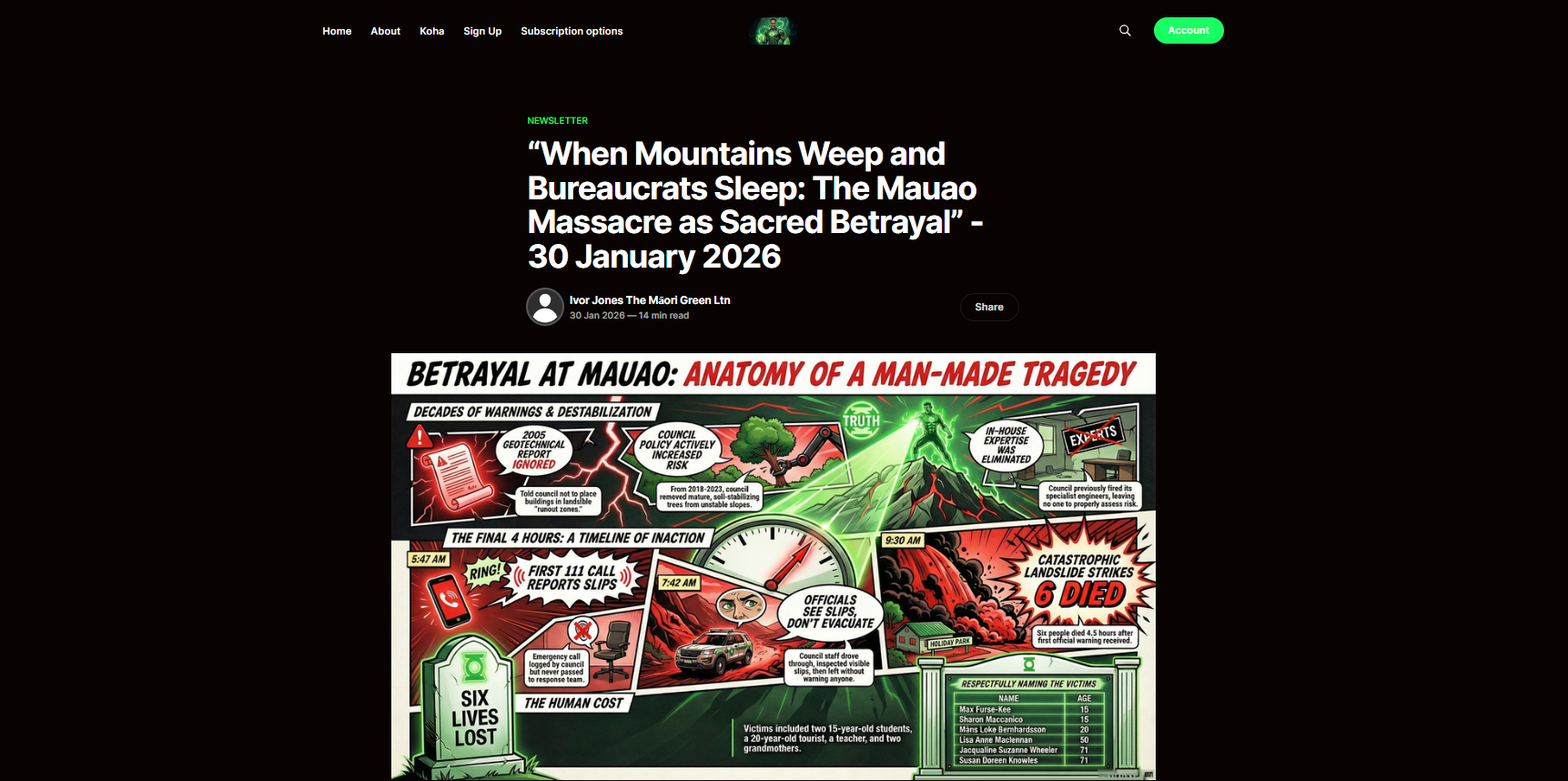
What happened: In early 2026, a landslide at Mauao (Mount Maunganui) — a maunga tūpuna, not a "scenic asset" — killed six people at a campground built beneath an unstable cliff face. The council's first public priority was reopening nearby businesses for Waitangi weekend (Blood on the Sand, The Māori Green Lantern, 7 February 2026).
Quantified harm: Six confirmed deaths, an unquantified but likely tens-of-millions-of-dollar toll in emergency response, lost income, and long-term trauma — costs that never appear in a tourism board's revenue projections (same essay).
The solution: Tikanga-led risk assessment before commercial development, binding — not consultative — decision-making power for mana whenua over sites of significance, and permanent retreat from land known to be unstable or tapu, rather than "safe enough for the brunch crowd" engineering.
Tikanga impact, explained plainly: A maunga is an ancestor, not infrastructure. When Western planning treats a mountain purely as rateable land, it cannot hear the warning a rāhui carries. Hiona's proposal is small enough, and Whakatōhea's oversight is written in early enough, that a sacred site's own history — including its unresolved grief — gets to set the pace of development, instead of a tourism season deadline setting it for us.
He Kupu Whakamutunga — Why It Is Being Built This Way
I could have skipped all of this. I could have written a glossy pitch, quoted the best-case visitor numbers, and left out the fact that a Crown-backed company 3 minutes down the road just got convicted for dumping wastewater into a drain while wearing this iwi's name.
I didn't, because the whole point of Hiona is that the story only has integrity if we tell all of it — the raupatu, the wrongful hanging, the century of silence, and the very real risk that a well-meaning tourism idea can still go wrong if governance comes second instead of first.
That's why the next step isn't a launch date. It's hui. It's a legal structure built with Whakatōhea before a single koha changes hands. It's slow, deliberately, because slow is what real rangatiratanga looks like when it isn't performing for a press release.
Kia kaha, Ōpōtiki. Kia tau te rangimārie ki runga i a tātou katoa.
Ivor Jones The Māori Green Lantern Fighting Misinformation And Disinformation From The Far Right
He Whakamārama — Transparency
Author's conflict of interest: I am the Community Facilitator named throughout this piece and the author of the tourism proposal it describes. This is a first-person account of my own community mahi, not an independent investigation of a third party — weigh it accordingly alongside the primary documents cited.
Right of reply: Hiona St Stephens Anglican Parish, the Diocese of Waiapu, Te Whakatōhea, and Ōpōtiki District Council are all invited to correct or add context via the usual channels.
Disclaimer: This essay reflects publicly available records and project documents as at 8 August 2026, offered in the public interest regarding a community-led heritage and economic development kaupapa in Ōpōtiki.