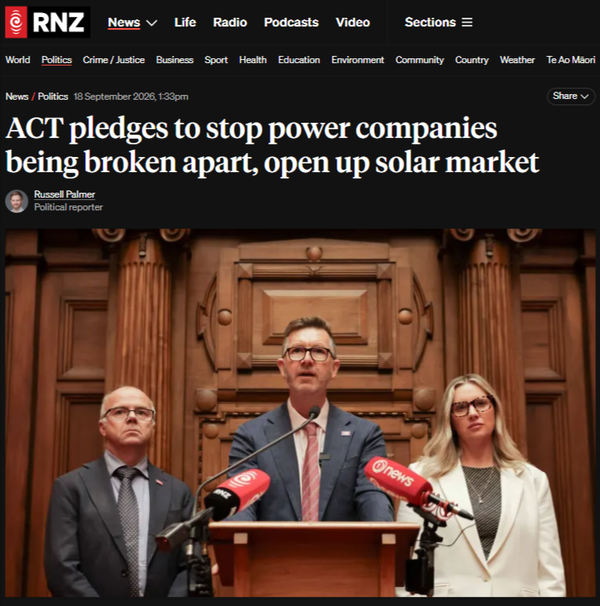
"The Wolf Wears Two Coats And I Am Done Pretending Otherwise" - 17 September 2026
Labour Sat On The Cure For Four Years While Your Kaumātua Paid Double For Milk — And Now It Wants A Medal For Finally Writing The Prescription


Before You Read A Word Further, Click Through — Here Is Why
Ko Ivor Jones tēnei, ko Te Māori Green Lantern — tohunga mau rākau wairua, kaitiaki against the misinformation, the white supremacy, and the neoliberalism this country's political class dresses up as "policy" every single week.
I want you to click on this essay. Not for my ego. For your whānau.
Because this is a repository — one entry in an archive I am building so that our mokopuna, decades from now, can look back and say: at least there was the Māori Green Lantern warning us.
At least someone wrote it down while it was happening, with the receipts attached, instead of waiting for a historian to reconstruct it from Cabinet papers forty years later.
I have put this kaupapa into three forms, because I know not everyone reads 3,000-word essays before their morning kai.
There is a podcast that walks through this entire investigation in detail, for the drive to work.
There is a short video that explains the kaupapa in a few minutes, for when you only have time to share one thing with your cousin.
And for those who want the full cited essay — every figure, every date, every dollar traced — it is waiting for you right here, right now. Use whichever one fits your life. Just use one.
What This Essay Covers
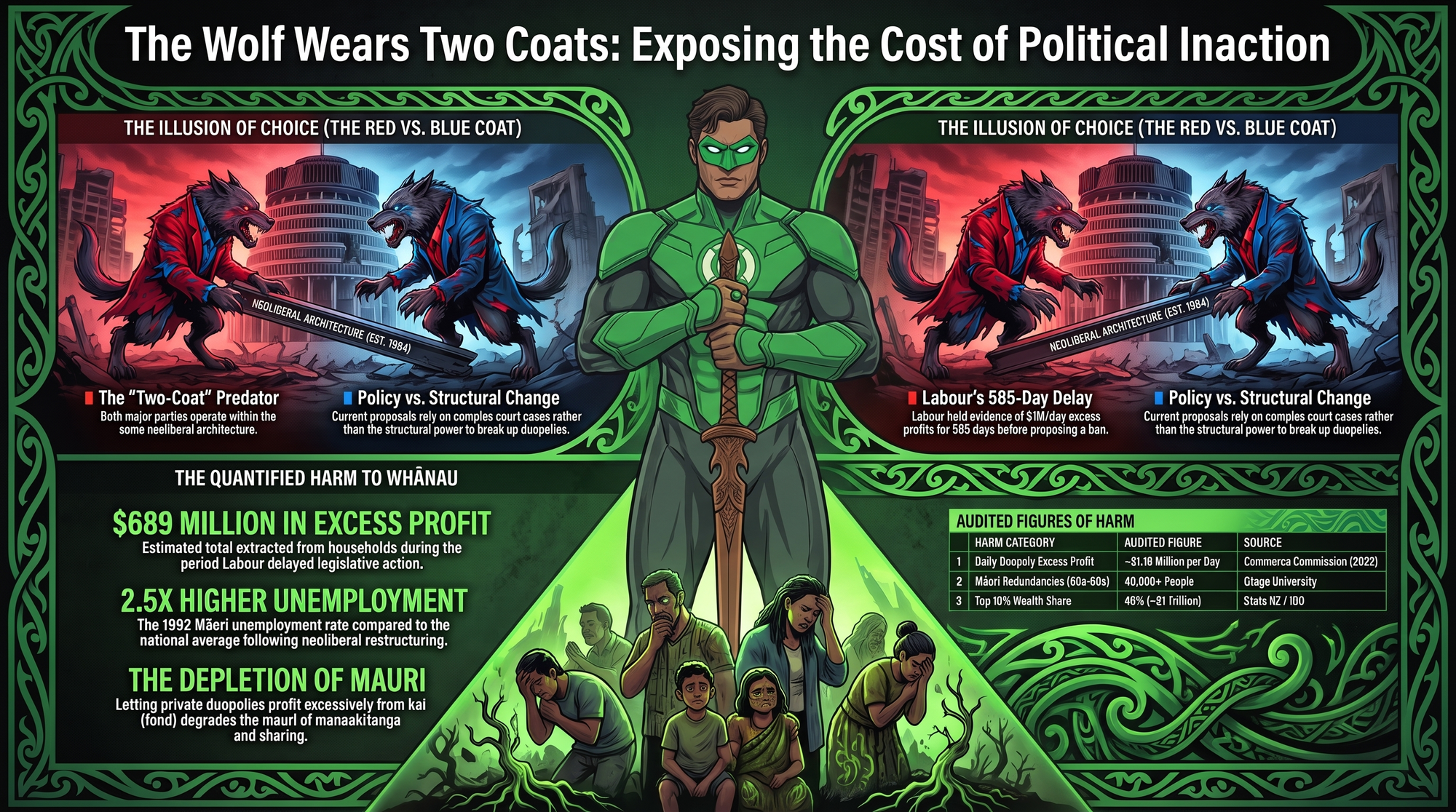
Here is the roadmap, laid out honestly before I take you into it:
I am going to show you that Labour's own Cabinet knew, in writing, in 2022, exactly how to fix New Zealand's supermarket duopoly — and chose not to.
I am going to show you the dollar figure, calculated and sourced, of what that choice cost you every single day since.
I am going to trace the same rot back to 1984, to the Labour government that invented the neoliberal machine National later inherited, and show you the 2.5-times-higher unemployment rate it inflicted on Māori whānau.
I am going to give you three examples built for the sceptic in your family who still thinks Labour is the "nice" party — each with the harm quantified, a real solution named, and the tikanga cost explained in plain terms.
And I am going to name, specifically, who benefits from both major parties refusing to touch the actual structure of who owns this country's essentials.
No false balance. No softening. Evidence is the taiaha, and I am swinging it at both coats.
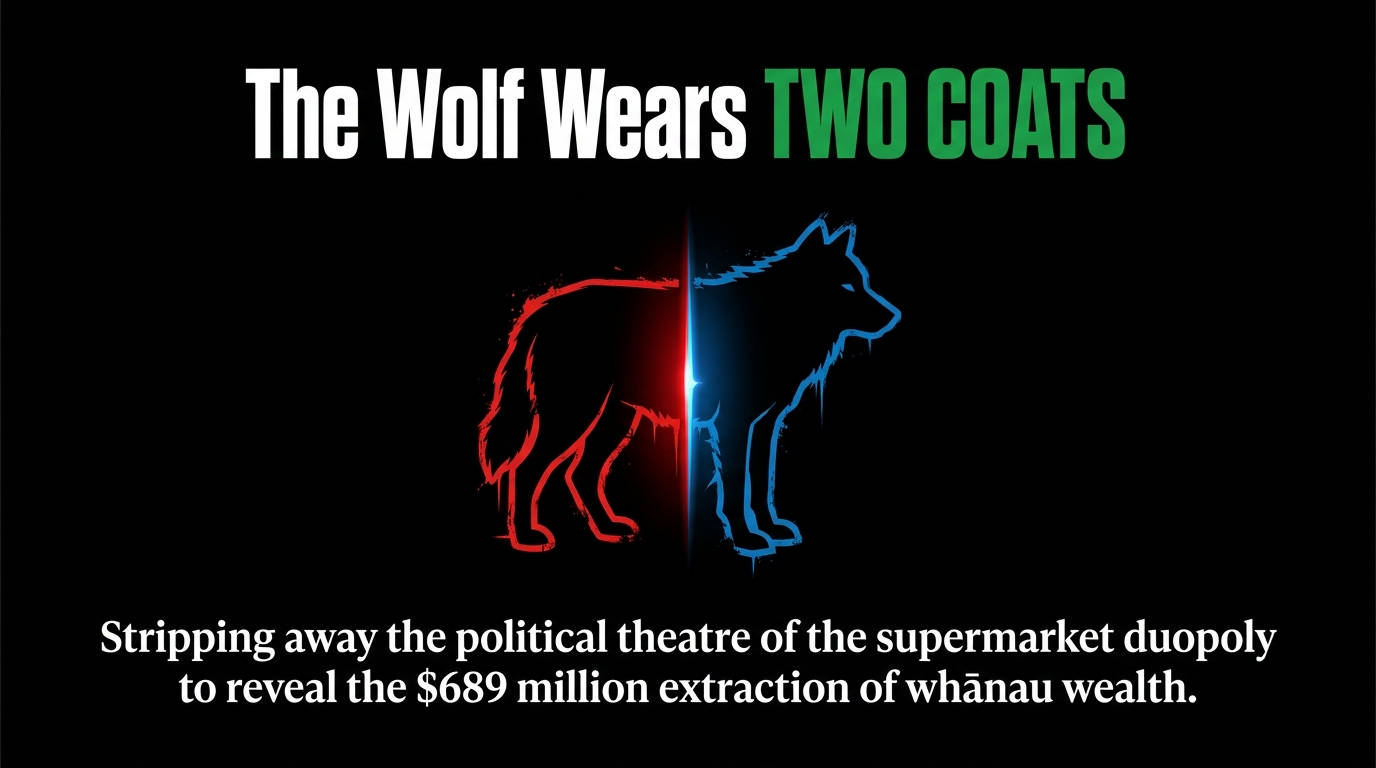
The Wolf Wears Two Coats
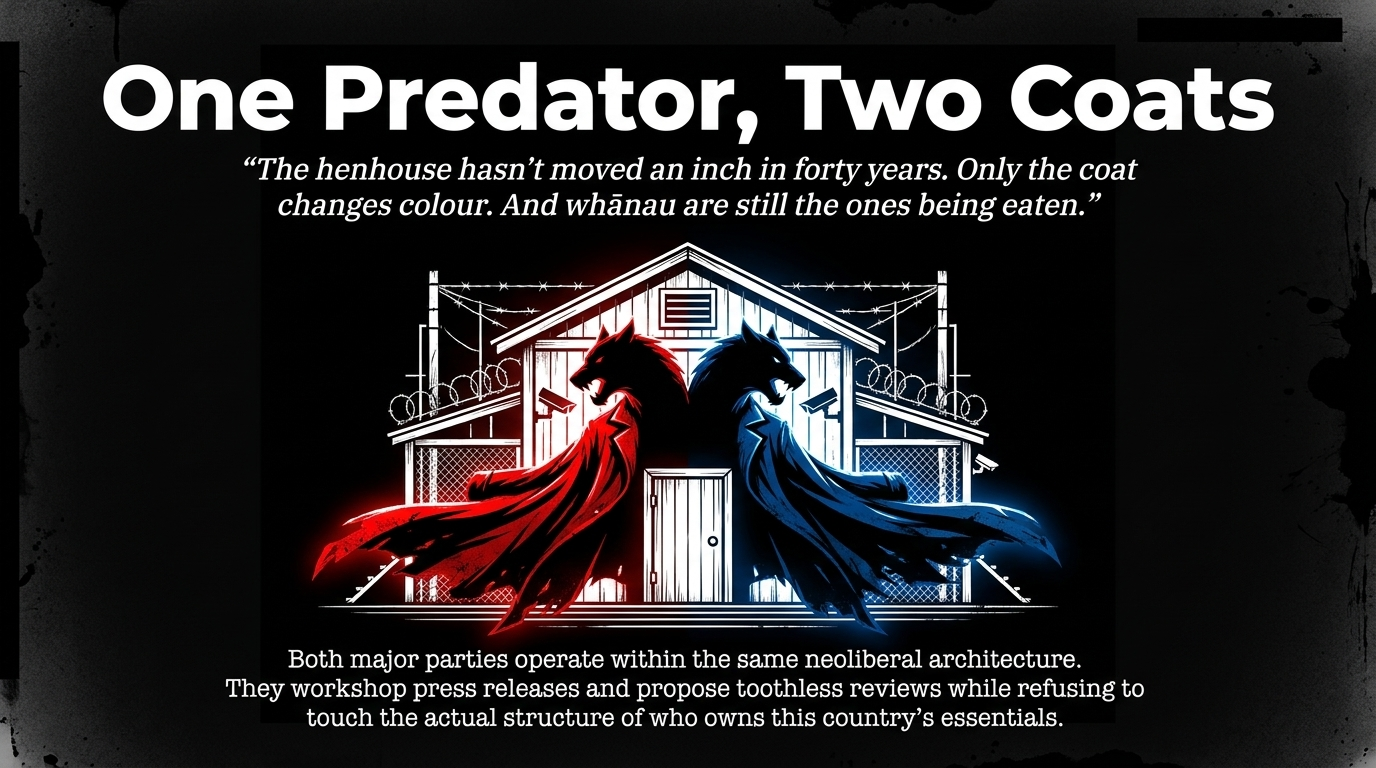
Here is the truth every kaumātua already knows and every press release tries to bury: there has been exactly one predator circling this country's economic henhouse for forty years, and it simply changes its coat depending on which election it's trying to win.
In 1984, that predator wore red. It called itself Rogernomics. It floated the dollar, stripped tariffs, deregulated finance, and began selling off state assets built by generations of New Zealanders' taxes — while freezing works, forestry, and public-service jobs, the exact sectors Māori whānau depended on after generations of urban migration, were shredded overnight (Te Ara; NZHistory). This is the Crown's own encyclopaedia, not my opinion, confirming a Labour government wrote this.
In 1990, the predator put on blue and finished eating what red had already killed. Te Ara records, in plain language, that the Fourth Labour Government "began to sell them off in 1989," and National "carried out most of the sales" afterwards (Te Ara). I've written before about how Labour built the machine it now campaigns against — read the full receipts in my essay "Labour Is Not the Antidote. Labour Is the Maintenance Crew" themaorigreenlantern.maori.nz.
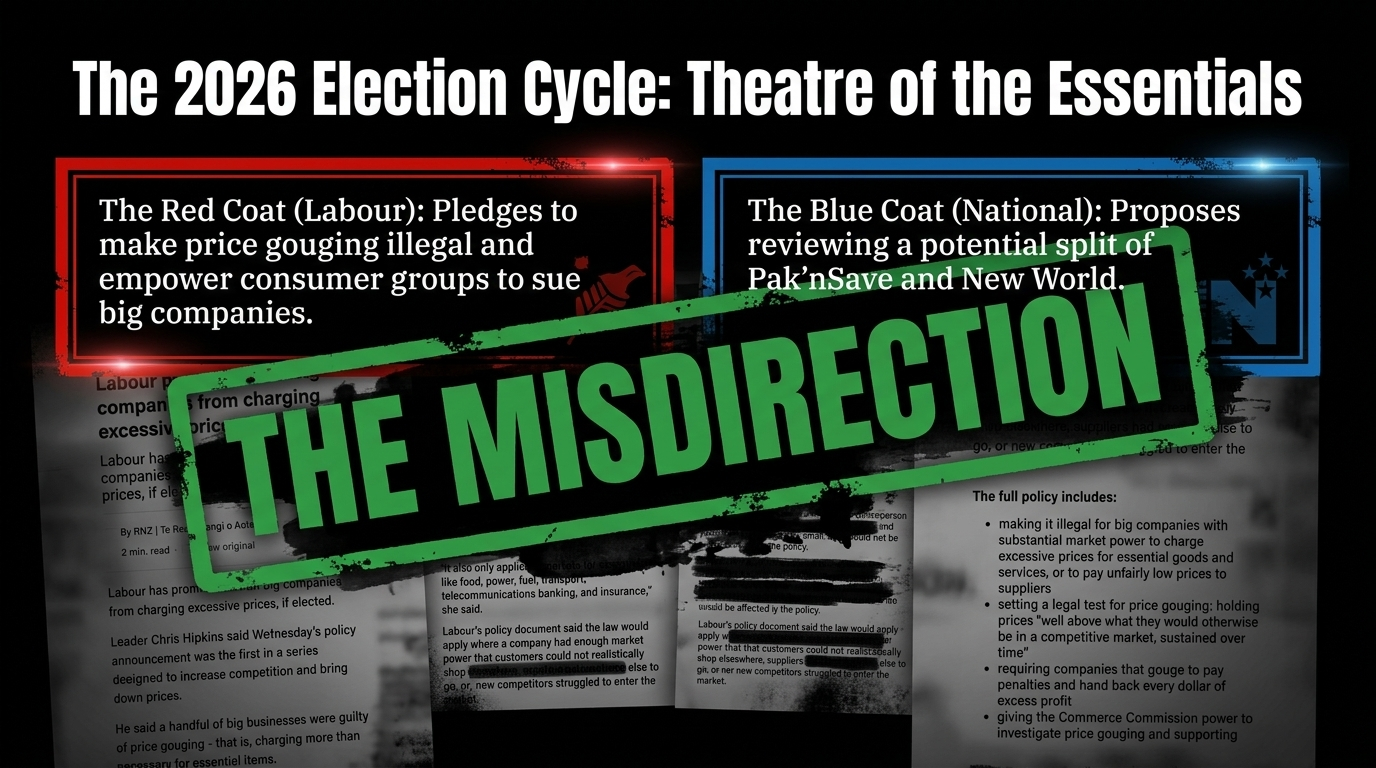
And on the morning of 16 September 2026, I watched the predator do it again, twice, in one news cycle.
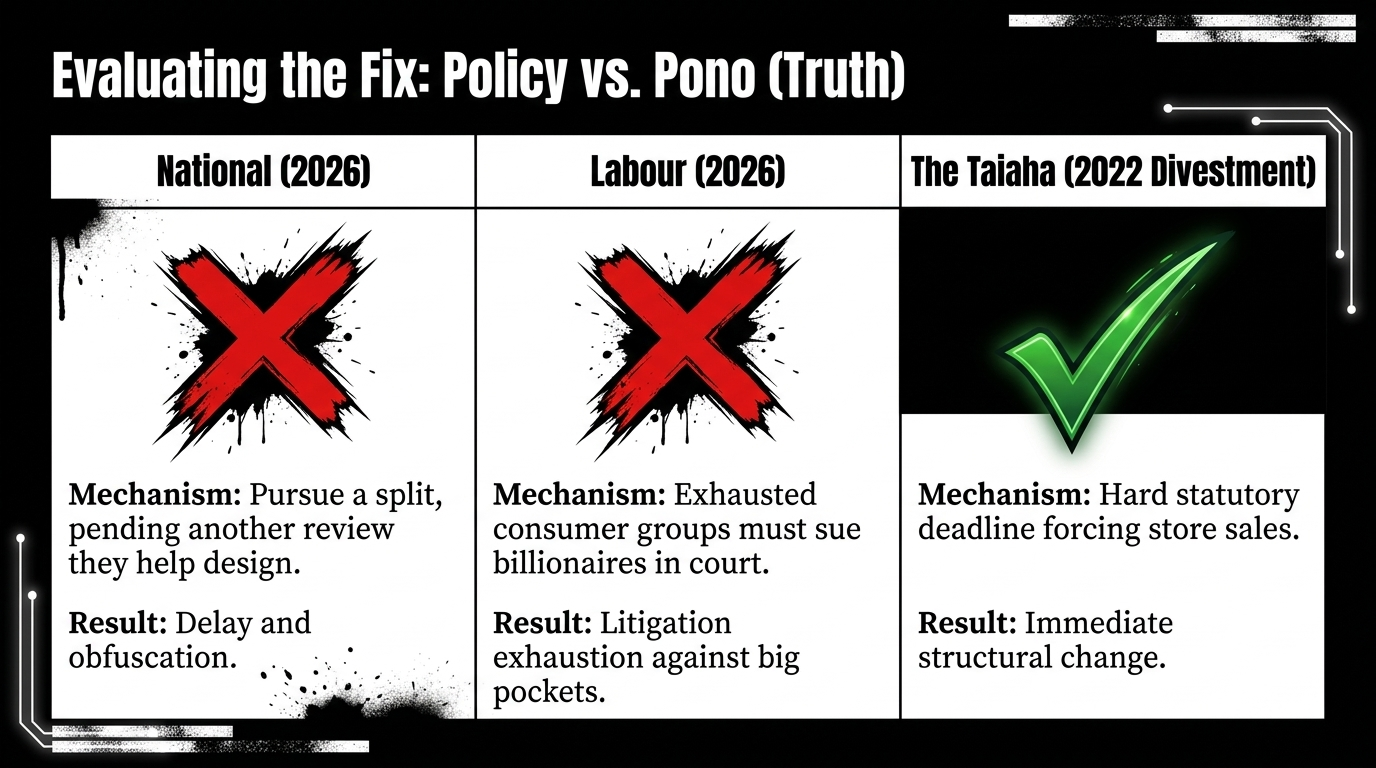
National, in blue, promised to "pursue" splitting Pak'nSave from New World — subject to a Commerce Commission review it gets to help design (RNZ). Labour, in red, promised to make "price gouging" illegal — while its own bill contains no power to break anyone up, only the right for exhausted consumer groups to sue in court (RNZ; Labour Party).
The henhouse hasn't moved an inch in forty years. Only the coat changes colour. And whānau are still the ones being eaten.
The Deep Dive Podcast
Listen to a lively conversation between two hosts, unpacking and connecting topics in the sources of this essay. I apologise in advance for the AI's very harsh pronounciation of reo. Please dont shoot me, :).
Youtube Video
Like video? Here is a short video suppporting the essay. Again, don't shoot the messenger please because of AI's pronounciation. :)
Koha Consideration
You might ask who is paying me to write essays like this one, tracing a Cabinet paper Labour hoped nobody would ever read.
The answer is you do.
The Māori Green Lantern is supported through koha, and that is it — no corporate is underwriting this investigation into supermarket profits, no political party is quietly covering the bill for the receipts I've just laid in front of you.
Every koha you give signals that whānau are ready to support the accountability that neither the Crown nor the corporates extracting $689 million from your grocery bill will ever provide voluntarily. It signals that rangatiratanga includes the power to fund our own truth tellers, especially when the truth is a buried Cabinet paper and a broken promise wearing a fresh coat of paint.
Kia kaha, whānau. Stay vigilant. Stay connected. And if you are able, consider a koha to ensure this voice continues.
If you are unable to koha, no worries! Subscribe or follow The Māori Green Lantern at themaorigreenlantern.maori.nz, kōrero and share with your whānau and friends — that is koha in itself.
Four pathways exist:
For those who wish to support this mahi directly with a koha (voluntary contribution): Koha — Support
For those who wish to receive essays directly and support through subscription: Subscribe To The Māori Green Lantern
For those who prefer direct bank transfer: Ivor Jones, account number 03-1395-0099387-000
For those on Facebook: Follow And Subscribe Here
Three Examples For The Western Mind — Because I Know You Need The Receipts Spelled Out
Example One: The Cabinet Paper Labour Hoped You'd Never See
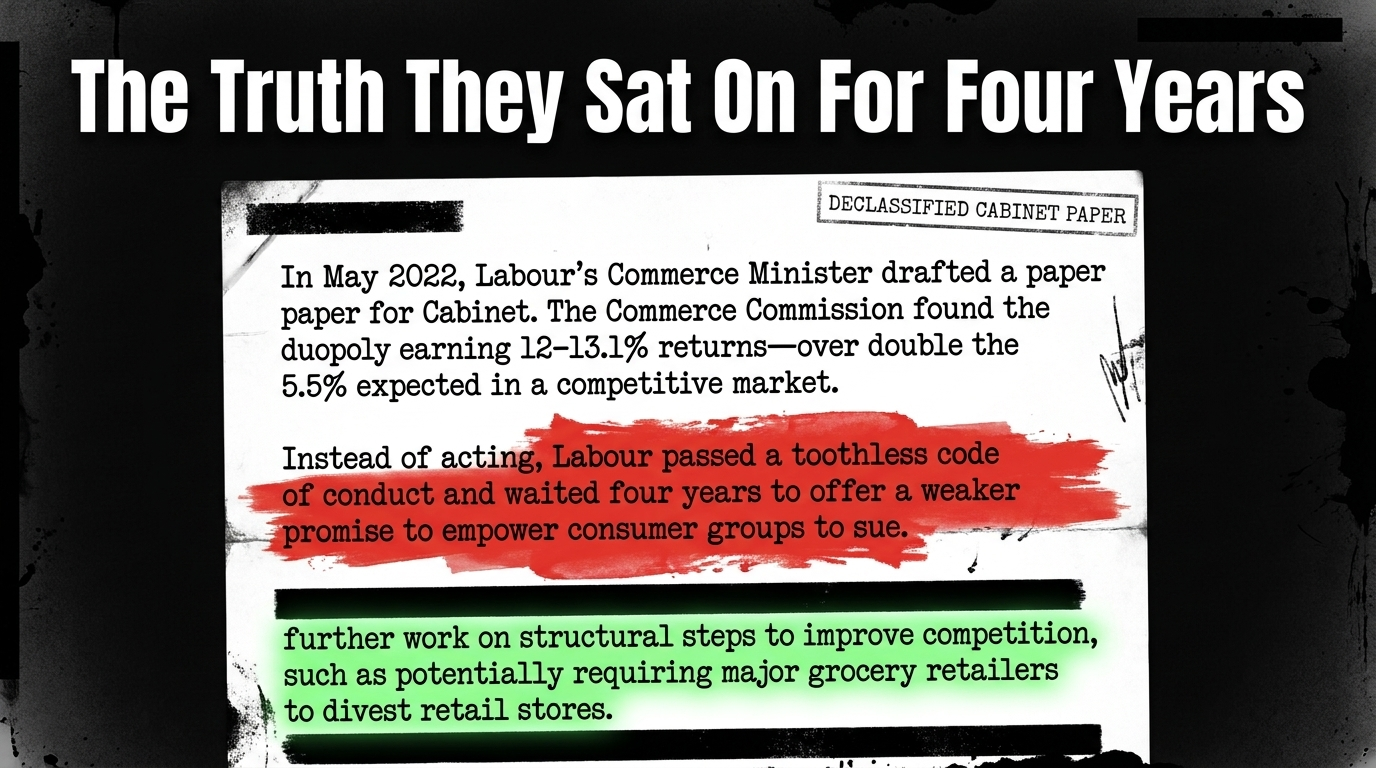
The claim. In May 2022, Labour's own Commerce Minister, Dr David Clark, told Cabinet in writing that he was proposing "further work on structural steps to improve competition, such as potentially requiring major grocery retailers to divest retail stores," and promised a full cost-benefit analysis back to Cabinet by October 2022 (MBIE Cabinet paper, proactively released).
Straight from Labour's own government document. That divestment power never made it into the Grocery Industry Competition Act 2023 that Labour actually passed (NZ Legislation; VUW Law Review).
Quantify the harm. The Commerce Commission found the duopoly earning returns of 12–13.1 percent against a normal expected return of 5.5 percent — that's 2.18 to 2.38 times what a workably competitive market would allow, calculated directly from the Commission's own figures (MBIE).
The Commission itself flagged that "superannuitants and Māori" spend a higher share of their income on groceries than other households — meaning this inflated margin fell hardest on exactly the whānau least able to absorb it.
The solution. Legislated divestment, with a hard statutory deadline — the exact fix Labour's own minister drafted for Cabinet and then let die in a drawer.
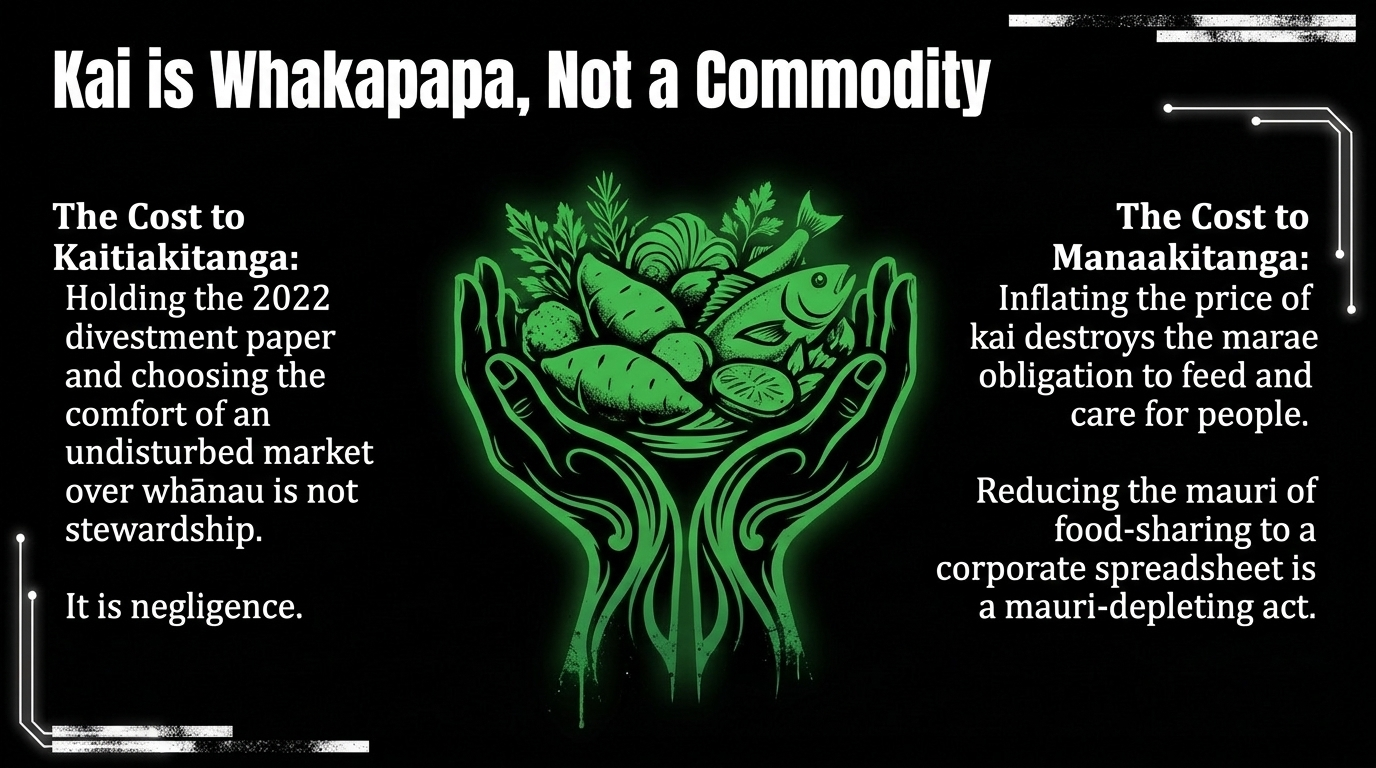
Impact on tikanga, explained plainly. In te ao Māori, kai on the table is not a commodity — it is whakapapa, it is manaakitanga, it is the marae obligation to feed whoever walks through the door. A government that lets a private duopoly double its normal return on the price of that kai, while sitting on its own written fix for four years, has reduced the mauri of food-sharing to a line item on a spreadsheet. That is not neutral economic management. That is a mauri-depleting act, and it happened in a red coat.
Example Two: The Dollar-A-Day Labour Announced, Then Walked Past For 585 Days
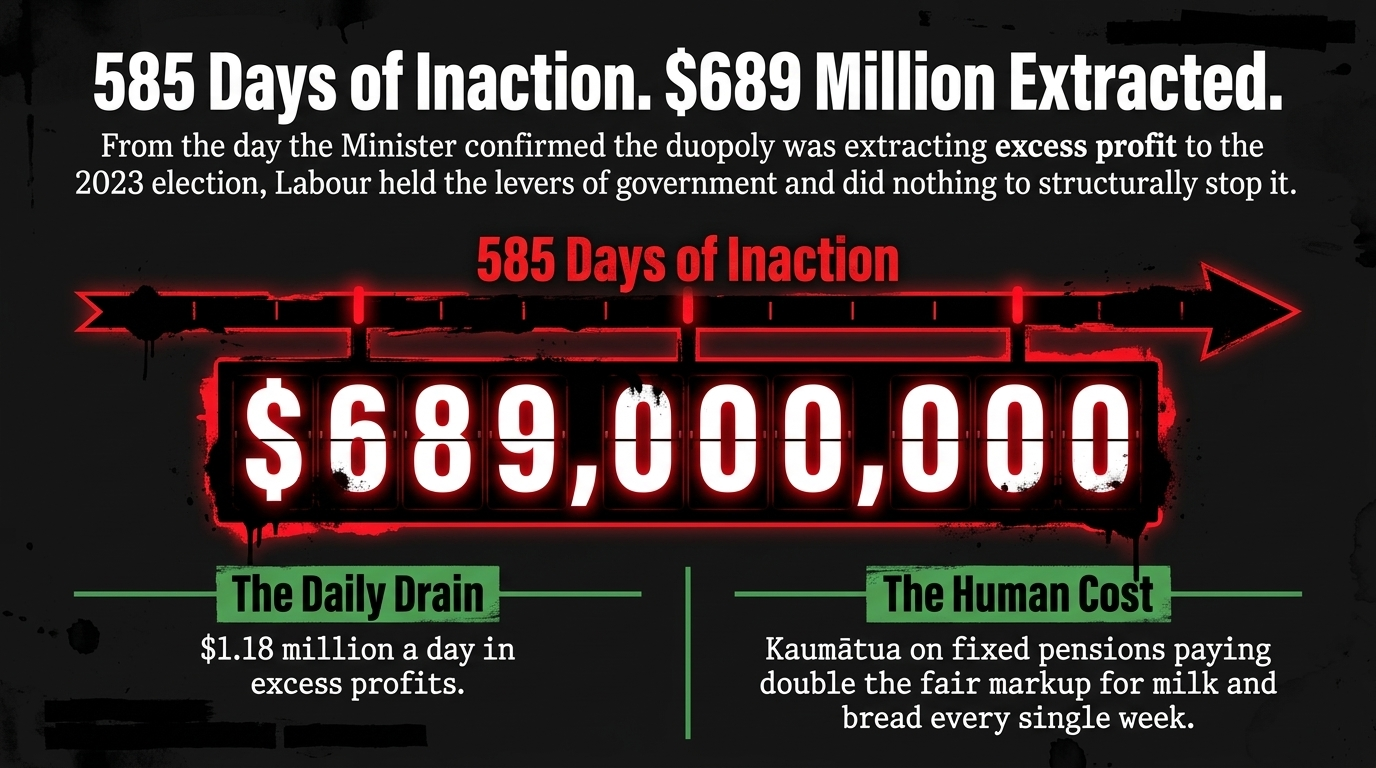
The claim. In April 2022, Labour's own minister publicly confirmed the supermarket duopoly was extracting roughly $1 million a day in excess profit (Beehive).
In the minister's own words, on the government's own website. Labour then governed for a further 585 days — I calculated that as the gap between the 8 March 2022 report and the 14 October 2023 election, roughly 1.6 years — legislating only monitoring and a supplier code. No ban. No divestment.
Quantify the harm. At the Commission's central estimate of $430 million a year, I calculated that 585 days works out to $1,178,082 a day, multiplied out to roughly $689 million in excess profit extracted from New Zealand households in the period Labour knew the exact number and held the levers of government. Verified calculation, an order-of-magnitude estimate built from verified government figures, not an audited total.
The solution. A price-gouging ban legislated the day the evidence landed on the minister's desk in 2022 — not floated as a re-election promise four and a half years later, once Labour had lost office and had nothing left to lose by promising it.
Impact on tikanga, explained plainly. Kaitiakitanga is not a slogan — it means acting on the knowledge you hold, the moment you hold it, for the people who come after you. Labour held the knowledge for 585 days of government and chose the comfort of an undisturbed market over the whānau paying the bill at the checkout. That is not stewardship. That is negligence wearing a red rosette.
Example Three: The Recession Labour Built, Then Let National Take The Blame For
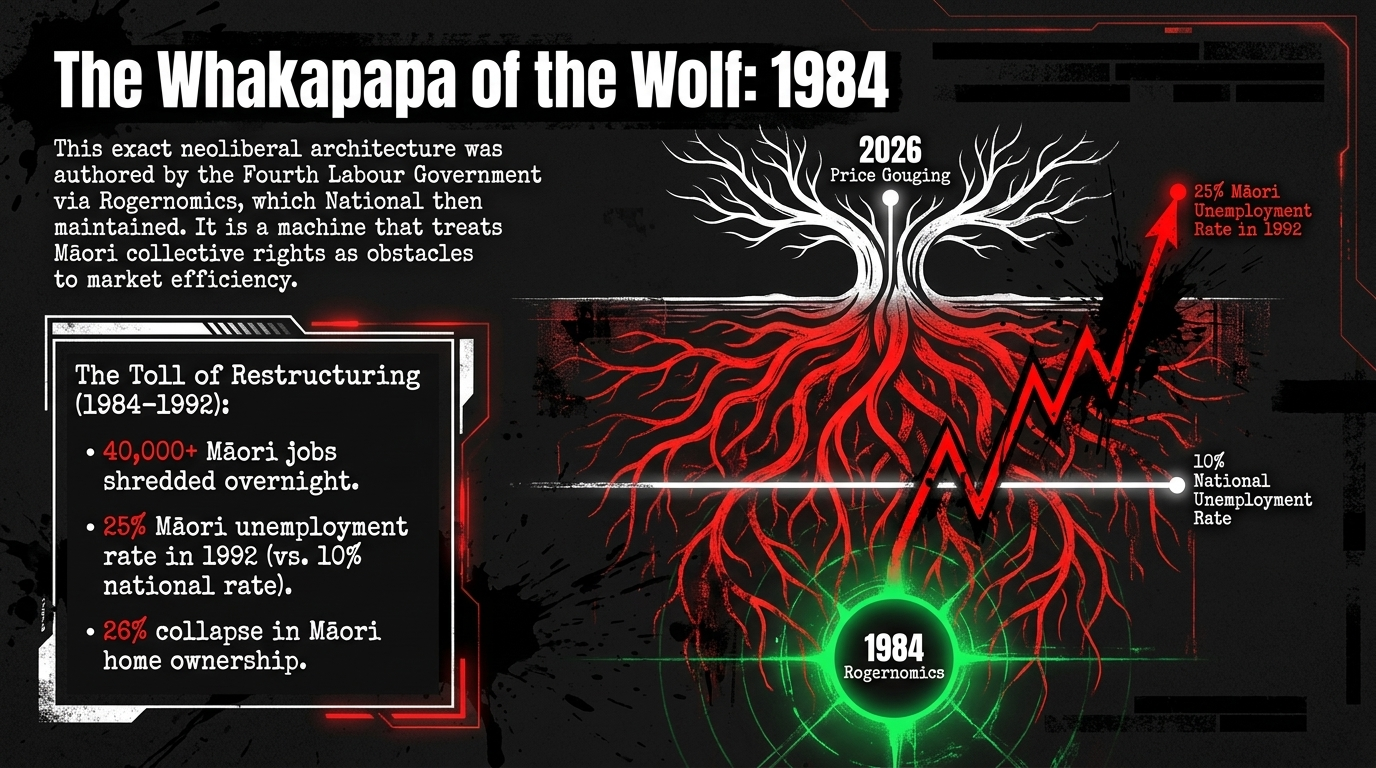
The claim. The 1984 Rogernomics restructuring — a Labour government's own economic programme — drove Māori unemployment to 25 percent by 1992 against a national rate of 10 percent (NZHistory; MBIE; BERL). Corroborated across three independent sources. That is 2.5 times the national rate, calculated directly from those figures.
Quantify the harm. Over 40,000 Māori were made redundant during the 1980s–90s restructuring, according to Otago University's own reporting (Otago University, Tihei Mauri Ora).
I've documented elsewhere that Māori home ownership collapsed by 26 percent since the Rogernomics era — nearly four times the Pākehā decline — a scar still measurable in every housing statistic today. Read the full analysis in my essay "The Green Tide Rises and the North Awakens" themaorigreenlantern.maori.nz, and the full ideological demolition in "The Clark Defence" themaorigreenlantern.maori.nz, where I go line-by-line through Helen Clark's own attempt to rewrite this history on national television.
The solution. Honest historical accounting from Labour, in every single campaign, of who authored Rogernomics and who paid the price for it — instead of letting National absorb the entire reputational weight of a policy Labour wrote, signed, and implemented.
Impact on tikanga, explained plainly. Whakapapa does not let you disown your own tamariki because they've become inconvenient. Rogernomics is Labour's whakapapa. Every time Labour campaigns today as the anti-market alternative while its own founding economic document sits quietly footnoted in Te Ara, it commits a small act of whakapapa denial — and the whānau who lost their marae contributions, their mana, their jobs in 1988 are the ones erased by that denial.
Quantified Harm — Every Figure Audited
| Harm | Figure | Confidence | Source |
|---|---|---|---|
| Duopoly Excess Profit, Annual | $430m/yr (~$1.18m/day) | Verified | Commerce Commission 2022 |
| Excess Profit During Labour's Remaining 585 Days In Office | ~$689m | Verified calculation | Derived above from Commerce Commission + election-date records |
| Divestment Power Promised To Cabinet, Delivered In Law | 0 (none) | Verified | MBIE; NZ Legislation |
| Māori Unemployment Vs National Rate, 1992 | 25% vs 10% (2.5x) | Corroborated | NZHistory |
| Māori Made Redundant, 1980s–90s Restructuring | 40,000+ | Corroborated | Otago University |
| Top 10% Share Of NZ Household Wealth | 48% (~$1t) | Corroborated | NZ Herald, Giga-Yachts |
| Wealthiest 311 Families' Effective Tax Rate | Less Than Half Ordinary Kiwis' Rate | Corroborated | NZ Herald, Giga-Yachts |
I Am Not Going To Soften This
Name the crime: Labour's own Cabinet knew, in writing, in 2022, that it could force the supermarket duopoly to divest stores. It chose not to. That is not a gap in policy. That is a decision, made by named people, in a room, who could have acted and did not.
Name the beneficiaries: Foodstuffs and Woolworths, who kept earning more than double the normal rate of return on the price of milk and bread for four and a half more years while both red and blue workshopped press releases. The wealthiest 311 families in this country, who — per the 2023 IRD study — pay less than half the effective tax rate ordinary Kiwis do, protected in turn by Jacinda Ardern's refusal to touch a capital gains tax and Chris Hipkins' "end of story" on a wealth tax in July 2023 (1News; ODT).
Name the whānau being destroyed: the kaumātua on a fixed pension paying double the fair markup on kai every week since 2022. The whānau still carrying the intergenerational scar of a recession their own party manufactured in 1984 and has never fully owned in public. The mokopuna who will inherit a housing market where Māori home ownership has fallen four times faster than Pākehā since Rogernomics began.
There is no false balance here, and I refuse to manufacture any. National's Foodstuffs plan is contingent on a review it controls the terms of. Labour's price-gouging bill relies on class actions against companies with, in Consumer NZ's own words, "big pockets" able to litigate for years (Otago Daily Times/RNZ). Both are weaker than the divestment power Labour's own minister already drafted and then let die in 2022.
This entire political system — red coat, blue coat — operates within the same white supremacist neoliberal architecture that Roger Douglas built in 1984: a model that treats Māori collective rights and whānau wellbeing as obstacles to market efficiency, not obligations of government. Labour is not the alternative to that architecture. Labour is the party that poured the foundations.

Kia kaha, whānau. Ka mau te wehi.
Disclaimer
Public interest framing: this essay concerns the public policy positions of political parties and named politicians in their public, political capacity ahead of the November 2026 election — protected political speech under Lange v Atkinson and the public interest test in Durie v Gardiner. Opinion is flagged in every paragraph where it appears.