"They Rewrote The Verdict After You Already Won — And Called It Restoring Order" - 6 September 2026
Winston Peters Told Oxford Parliament Outranks The Courts. The Receipts Show He Meant It — And Your Coastline Is What Got Erased To Prove It.


I'm Ivor Jones. Some of you know me as the Māori Green Lantern.
I've just pulled apart this government press release, an Oxford Union transcript, a Waitangi Tribunal report and a Judicial Conduct Panel decision, and laying them next to each other.
 RNZ | Te Reo Irirangi o Aotearoa
I did that so I could tell you plainly, without hedging, what I found: a white-supremacist, neoliberal coalition government took a court case Māori claimants had already won, waited for the win to become inconvenient, and legislated it backward
— retroactively — while their own Deputy Prime Minister told a room of Oxford students that Parliament, not the courts, gets the final word.
That's my opinion of what this pattern amounts to. The facts underneath it are not opinion. They're documented, and I'll show you every one.
Let's be plain about what this is not. This is not a technical adjustment to a 2011 statute.
This is a government watching Māori win in court, deciding it didn't like the result, and rewriting the rules of the game after the final whistle — then bragging about it on a world stage as constitutional philosophy.
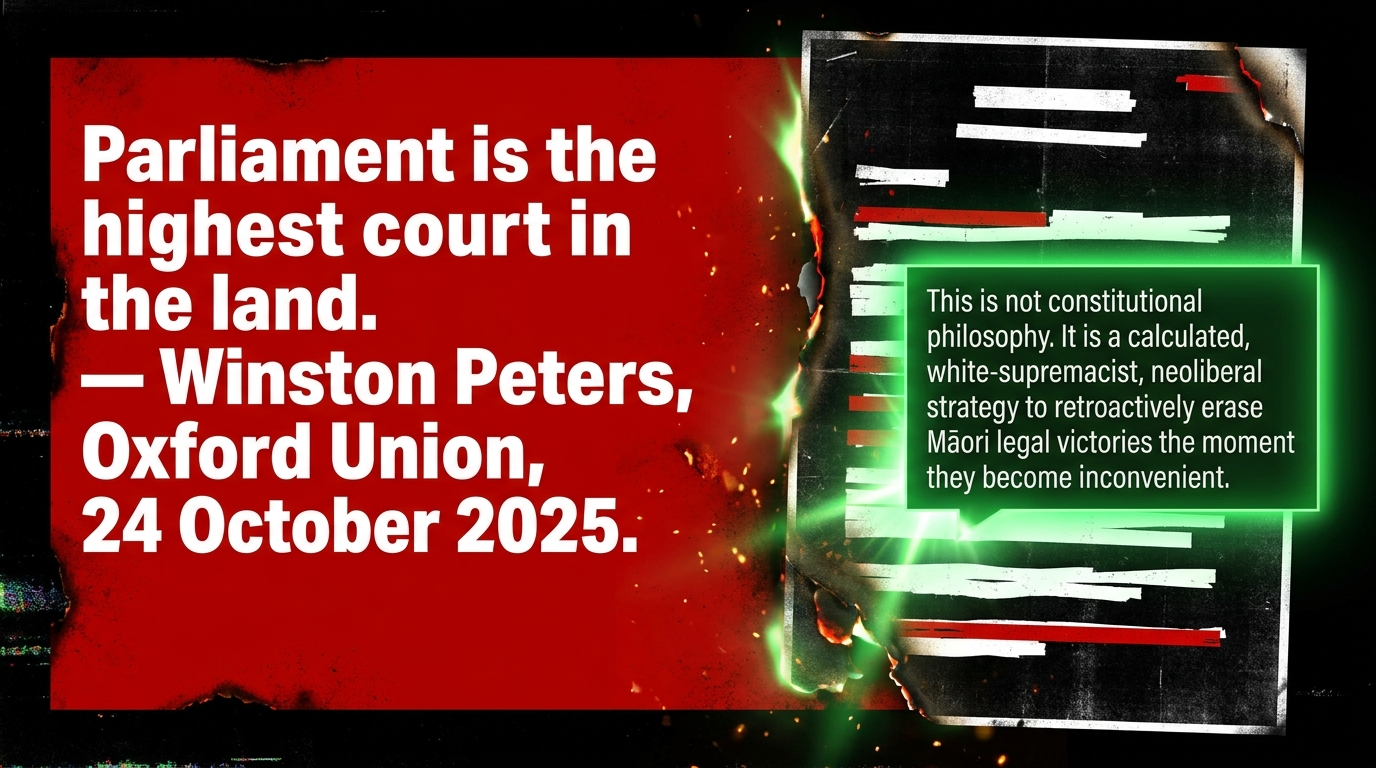
"Parliament is the highest court in the land," Winston Peters said, at Oxford, naming this exact override as his proof (Beehive, official transcript).
Who benefits? A coalition that now knows it can rewrite a court's verdict after the verdict lands. Who pays? Every hapū and iwi who spent years — and their own scarce money — proving in court what their tūpuna never stopped knowing, only to be told the win didn't count.
Te Horopaki — The Timeline, So Nobody Can Say I Made This Up
October 2023: The Court of Appeal, in Re Edwards, makes it easier for Māori groups to prove customary marine title. The ruling lands four days after a general election (RNZ).
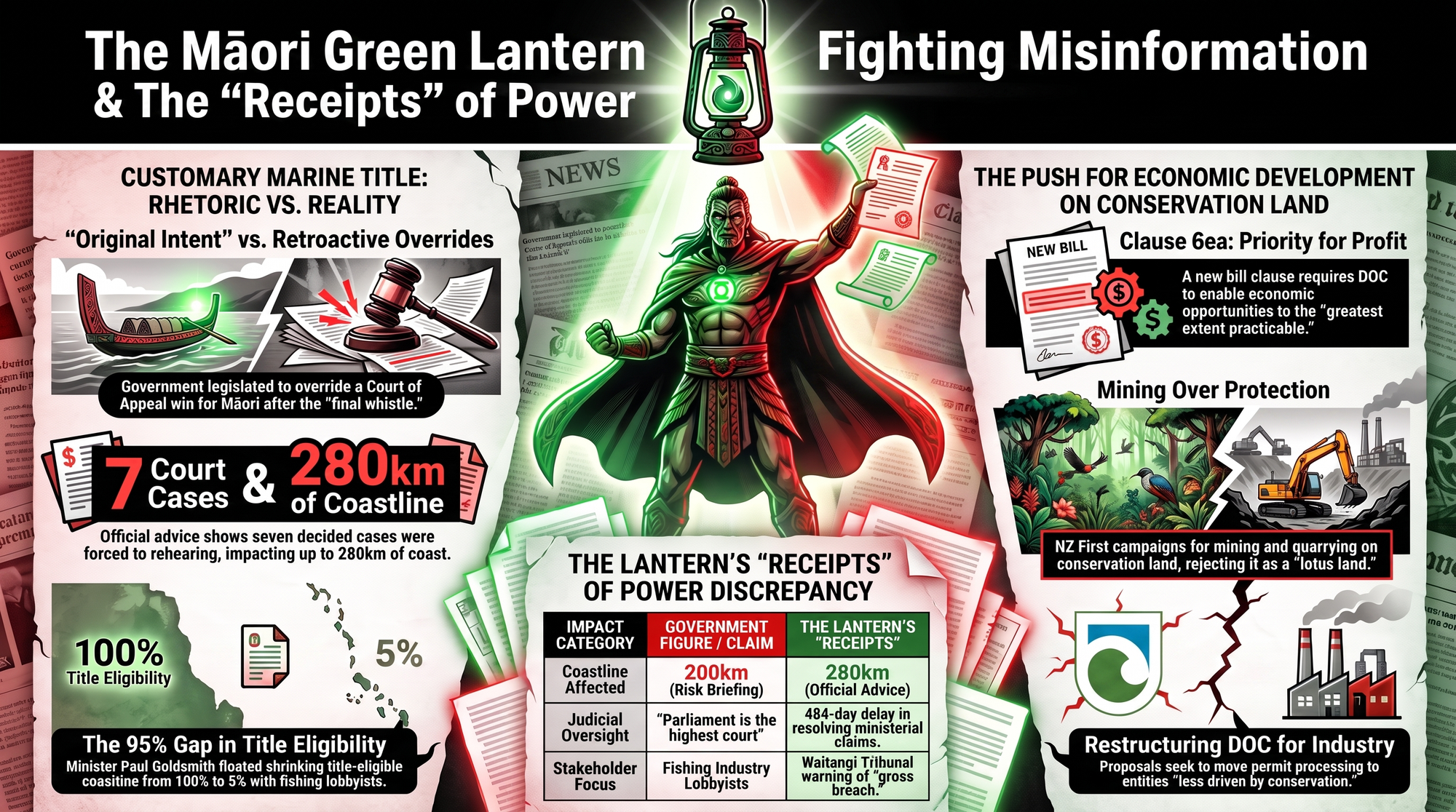
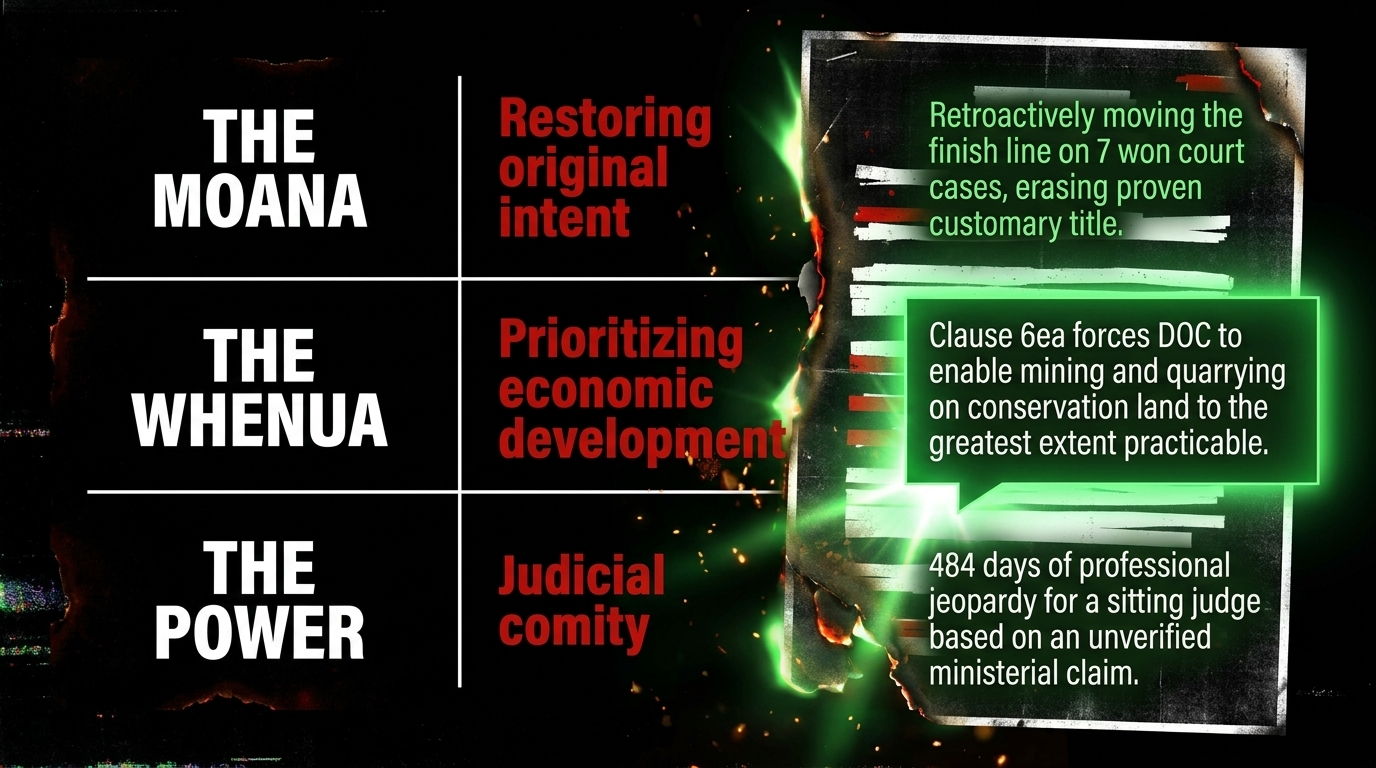
July 2024: Before the Supreme Court has even heard the appeal, Treaty Negotiations Minister Paul Goldsmith announces the government will legislate to override it — "restore original intent," he calls it — and privately tells fishing industry lobbyists the change could shrink coastline eligible for customary title from 100 percent down to 5 percent.
Confronted later, he calls his own number "free-flowing discussion... not based on any analysis" (RNZ).
13 September 2024: The Waitangi Tribunal — the Crown's own Treaty body, appointed by the Crown, not by me — finds the government "dismissed official advice," consulted commercial fishers while shutting Māori out, and warns proceeding would be "an illegitimate exercise of kāwanatanga" that could "significantly endanger the Māori–Crown relationship" (Waitangi Tribunal). — Verified
October 2025: The government does it anyway. Officials had told Goldsmith that seven court cases would likely need re-hearing, "overturning rights across 280km of coastline after years of effort and expense from claimants" — while a separate cost-risk briefing in the same advice referenced 200km of coastline and a fiscal risk of up to $20 million, later revised down to roughly $15 million (1News). — Verified, with the 280km/200km discrepancy stated exactly as officials themselves recorded it, not smoothed over. Ngātiwai leader Aperahama Edwards called the process "horrific" and was removed from Parliament's gallery for interrupting the second reading. Ngāti Tū spokesperson Maia Honetana said it felt "like mocking the judicial system... anytime they can just overwrite it when it suits them" (1News).
24 October 2025, Oxford Union: Peters names his own achievement: "we have been forced to legislate this week to restore the original intent." He is not apologising. He is taking credit (RNZ).
Meanwhile, November 2024–April 2026: District Court Judge Ema Aitken interjects at a NZ First fundraiser, calling Peters a liar. The Attorney-General writes to the Chief Justice, attributing to Peters a claim he later disavows. The Judicial Conduct Panel spends 484 days (nearly 16 months) unable to resolve the contradiction, while clearing NZ First of proven orchestration but calling the discrepancy "very unsatisfactory" (LawFuel; NZ Herald).
The Deep Dive Podcast
Listen to a lively conversation between two hosts, unpacking and connecting topics in the sources of this essay. I apologise in advance for the AI's very harsh pronounciation of reo. Please dont shoot me, :).
Youtube Video
Like video? Here is a short video suppporting the essay. Again, don't shoot the messenger please because of AI's pronounciation. :)
Koha — Rangatiratanga Means Funding Our Own Truth
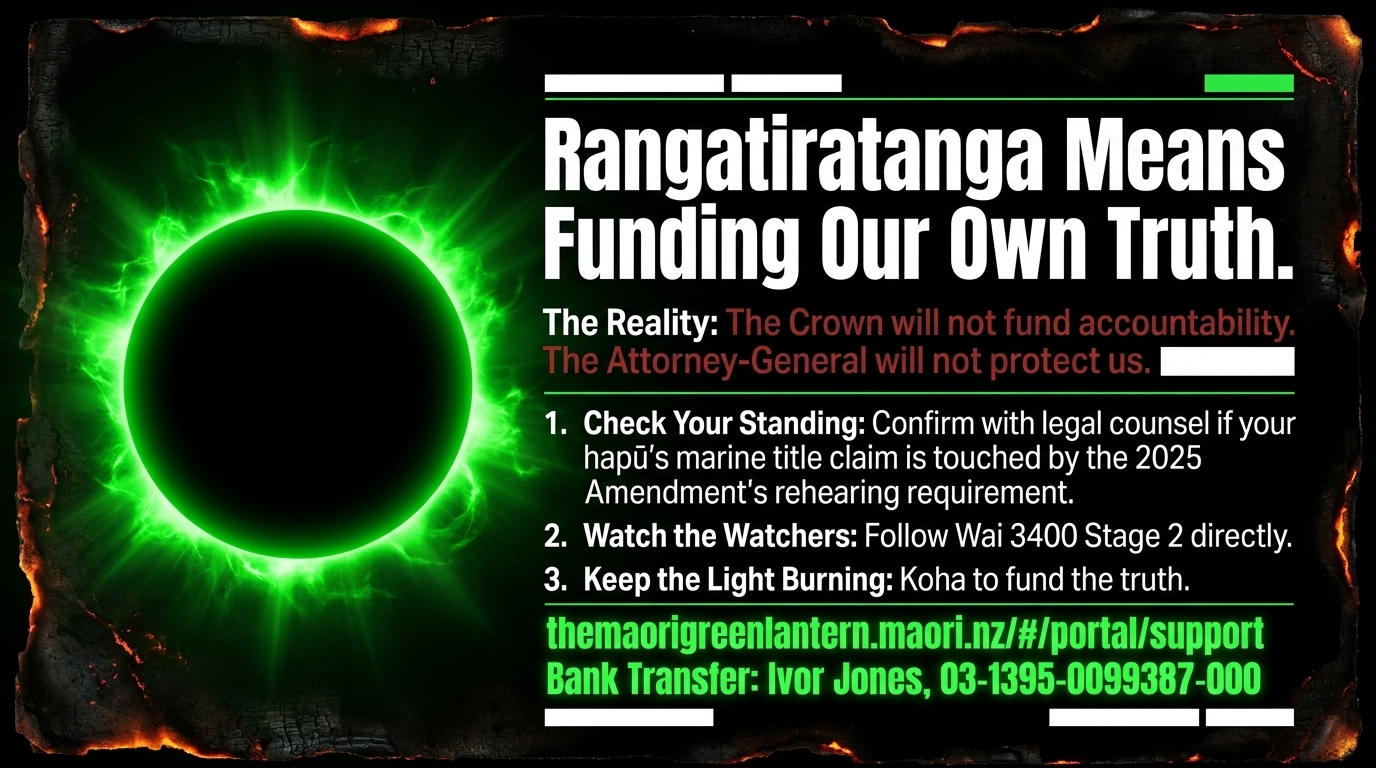
Every koha for this essay signals that whānau are ready to support the accountability the Crown will not fund and the Attorney-General will not write a letter about.
It signals that rangatiratanga includes the power to support our own truth tellers — the ones cross-checking a Treaty tribunal report against an Oxford transcript so that 200 to 280 kilometres of coastline don't get erased quietly.
Kia kaha, whānau. Stay vigilant. Stay connected. And if you are able, consider a koha to make sure this voice keeps naming what the letters to the Chief Justice won't.
If you can't koha, no worries — subscribe or follow The Māori Green Lantern at themaorigreenlantern.maori.nz, kōrero and share this with your whānau and friends. That is koha in itself.
Four pathways exist:
- Koha direct — Koha platform
- Subscribe for essays direct — themaorigreenlantern.maori.nz/#/portal/support
- Direct bank transfer — Ivor Jones, account number 03-1395-0099387-000
- Facebook — facebook.com/Themaorigreenlantern/subscribe
Te Tirohanga Mātauranga — "Original Intent" Is A Coloniser's Word For "Give It Back"
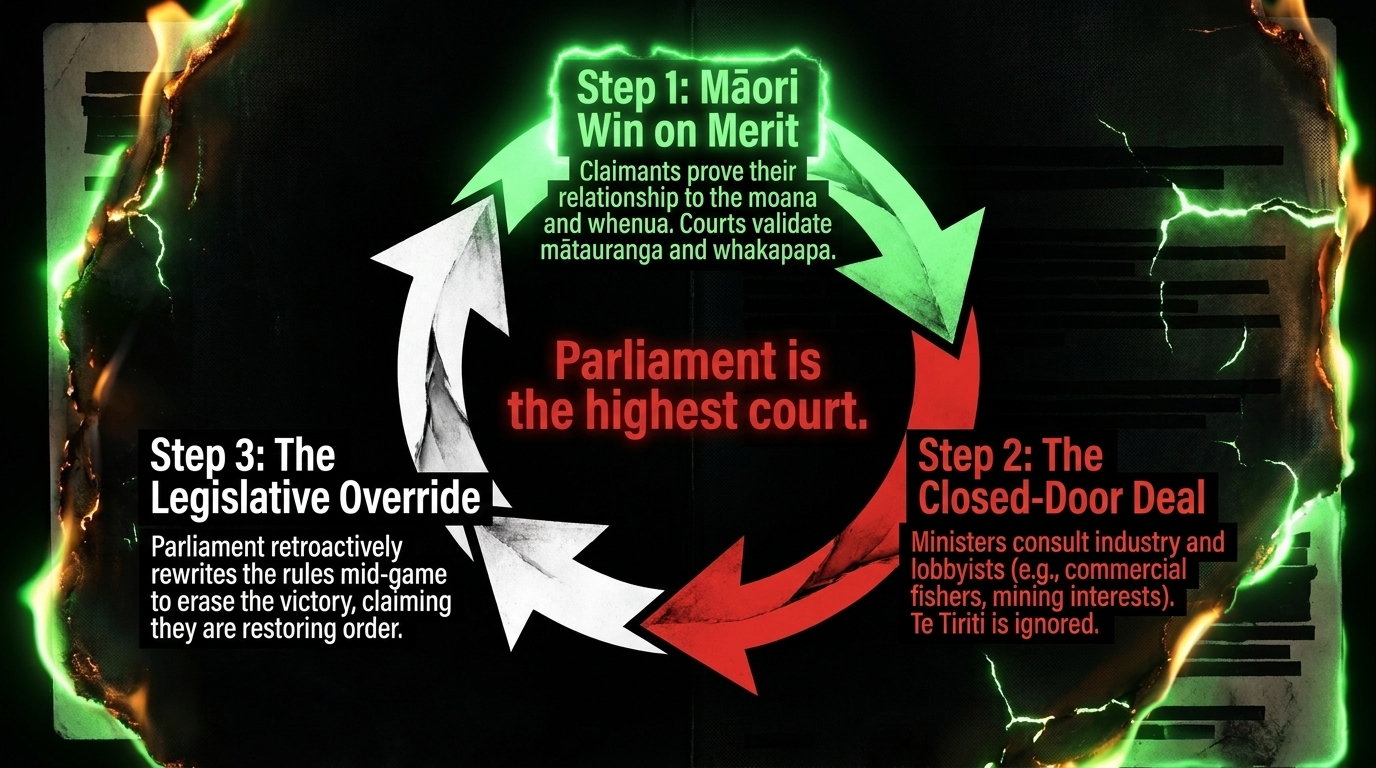
Say it slowly: restore original intent.
It sounds administrative, like fixing a typo. It is not.
The 2011 Act was already a retreat from the 2004 Foreshore and Seabed Act — the law that extinguished Māori customary title outright and put tens of thousands of people on the road to Parliament in the hīkoi that split a government.
"Original intent" doesn't mean 2011's intent here. It means crawling back toward 2004, one court win at a time, and calling every crawl-back a correction.
The Tribunal — the Crown's own instrument for testing exactly this kind of claim — could not find the analysis behind "original intent," because Goldsmith admitted there wasn't one: his headline number was invented in a closed-door meeting with fishing lobbyists, not derived from the statute (Waitangi Tribunal; RNZ).
To the Western mind reading this: mātauranga Māori isn't a competing "belief system" you can override with a percentage someone made up in a room with lobbyists.
It is a documented relationship to whenua and moana, built over generations, that a Treaty tribunal has now formally found this government breached.
Kaitiakitanga is not measured in fishing-industry-friendly percentages. Mauri does not get retrofitted after the press release goes out.
Ngā Tauira mō te Hinengaro o te Uru — Three Examples, No Softening, With The Receipts
Example One — You Win The Case. Then They Move The Finish Line Behind You.
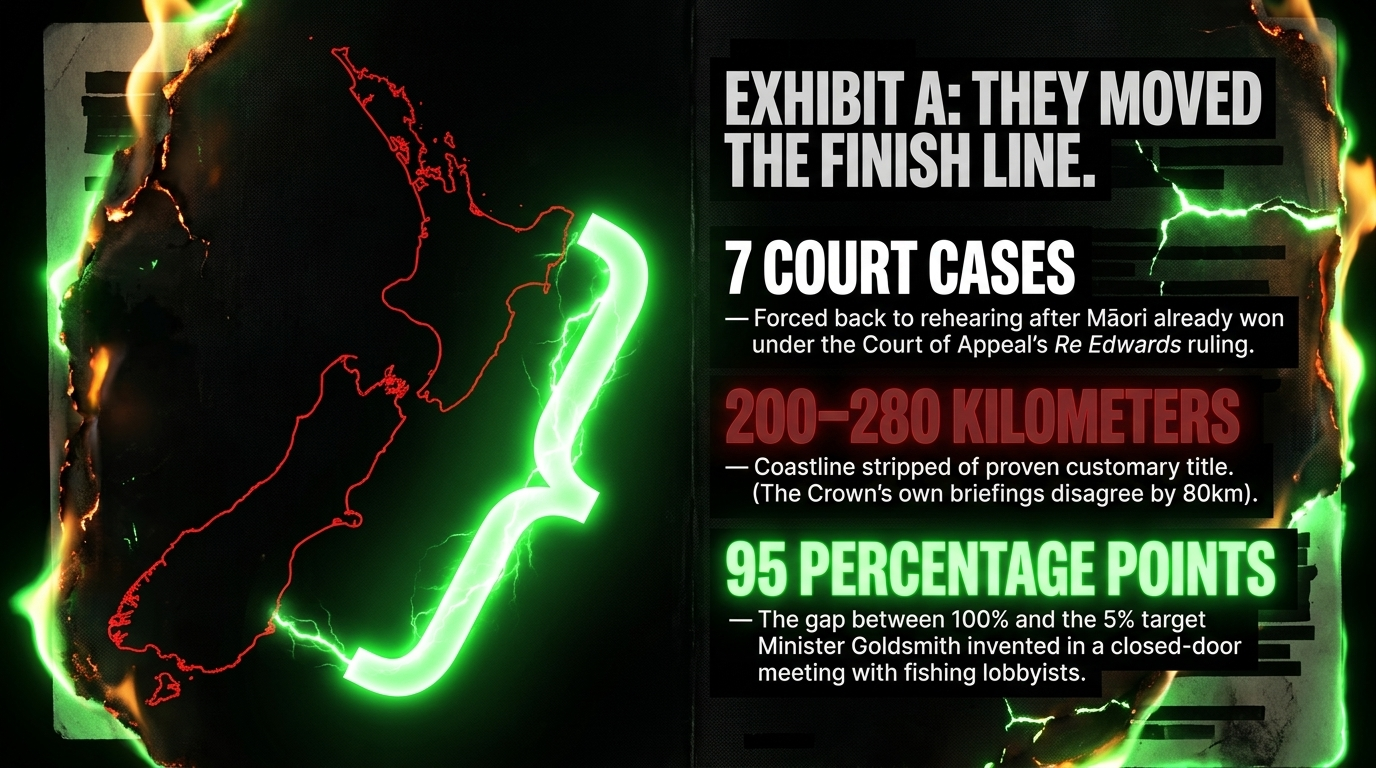
Core claim: Māori claimants who had already won customary marine title recognition in court were told, retroactively, that their win no longer met the new test — a test written after their case was decided.
Quantified harm: seven already-decided court cases forced back to rehearing, covering somewhere between 200 and 280 kilometres of coastline depending on which departmental briefing you read — the government's own advice doesn't agree with itself, and I'm not going to pretend it does (1News).
Solution: a legislative convention banning retrospective override of unresolved or recently settled litigation, absent extraordinary and publicly justified cause — full stop.
Tikanga impact for the Western mind: imagine winning a property dispute after two years in court, then being told the deed is void because Parliament redefined "ownership" the week after your win. Now imagine that "property" is your ancestors' relationship to the sea, proven with genealogy, occupation and testimony a court found credible. That is what got moved.
Prior MGL coverage: I documented this exact legislate-around-the-court-case pattern before, when Justice Minister Paul Goldsmith amended the Climate Change Response Act specifically to kill Smith v Fonterra — a Supreme Court-validated climate liability case — before it could reach trial, in The Taniwha in a Suit and The Defendants Wrote the Law That Killed Their Own Case. Same minister. Same technique. Different court, different plaintiffs, same contempt for a verdict he didn't like.
Example Two — A Letter That Could End A Judge's Career, Built On A Claim Its Own Source Denied Making.
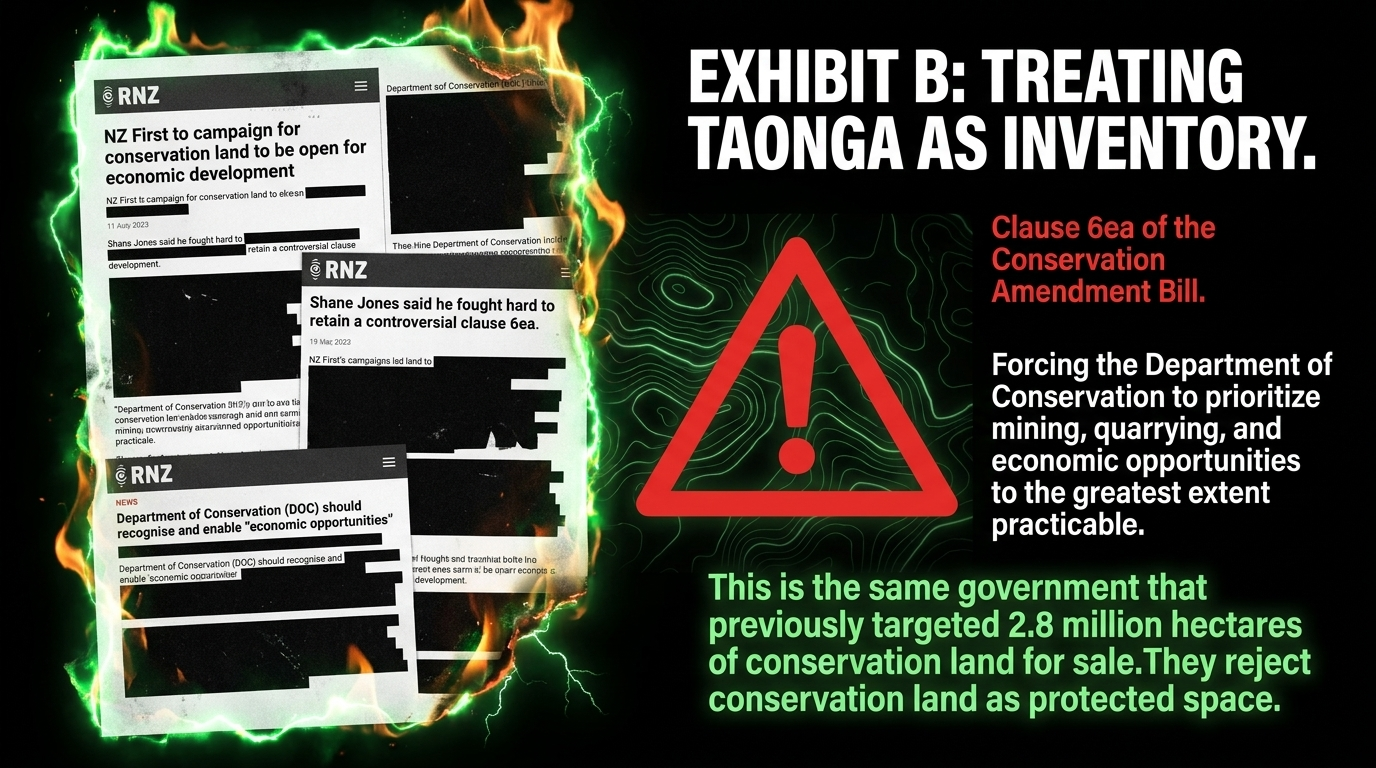
Core claim: the country's top law officer wrote to the Chief Justice about a sitting judge, attributing to the Deputy Prime Minister a statement he later disavowed when someone actually checked with him.
Quantified harm: 484 days — nearly sixteen months — of professional jeopardy for one judge, hanging on a contradiction between two of the most senior officials in the country that nobody in power chose to force into the open.
Solution: mandatory independent verification of any ministerial claim underpinning a judicial conduct referral, before that referral is allowed to proceed at all.
Tikanga impact for the Western mind: imagine your boss's boss writes a formal complaint about you to your industry regulator, based on something a powerful client claims you said — and it turns out the client never actually said that to your boss's boss at all. You'd call that a stitch-up. When it happens to a judge, at the request of a government minister, it's called "comity," and everyone is asked to move on.
Prior MGL coverage: the pattern of using the machinery of state to punish inconvenient scrutiny is the same one I traced in Paul Goldsmith Broke the Law, Lied to Cabinet, Watched the Blaze and Now Holds the Hose, where the same minister overruled a retired Supreme Court judge and his own department to install an unqualified ally — a government that treats independent institutions as obstacles, not checks.
Example Three — Deciding The Verdict Before The Trial Even Finishes
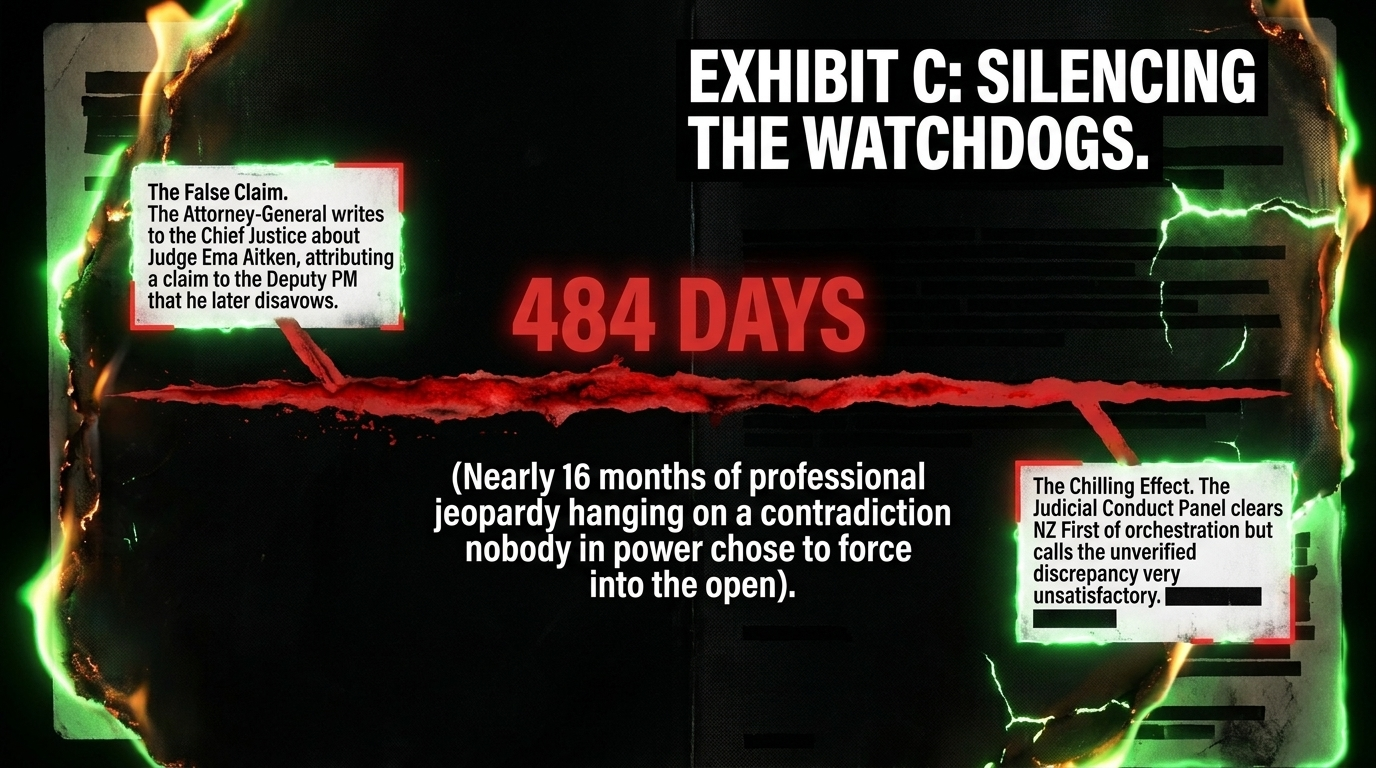
Core claim: the government began drafting an override of a Court of Appeal ruling before the Supreme Court had even heard the case on appeal — pre-empting the country's highest court from doing its job.
Quantified harm: the Crown's own Waitangi Tribunal called this a breach of "active protection and good government" — not my characterisation, theirs, in an official report (Waitangi Tribunal).
Solution: a constitutional pause preventing the executive from legislating in direct response to litigation still active before the courts.
Tikanga impact for the Western mind: it's the equivalent of a defendant's own family drafting a new criminal code mid-trial, timed to acquit them before the jury returns. Tino rangatiratanga requires Māori claims to be decided on merit by an independent judiciary — not pre-empted by the one party holding the pen.
Prior MGL coverage: I traced this same "change the law mid-case to protect power" pattern across three decades in They Changed The Law Again: Paul Goldsmith's Climate Shield Is the Green Chain, Resurrected — 1992's PCP timber-chemical reregistration and 2026's Climate Change Response Act amendment, thirty years apart, same function: protect power from accountability the moment a court gets close to delivering it. And I traced how this government treats the entire conservation estate — the physical taonga landscape underpinning tikanga itself — as inventory to be sold off in Potaka: The Māori Minister Selling Your Ancestors to the Highest Bidder.
Kupu Whakamutunga — Say What This Actually Is
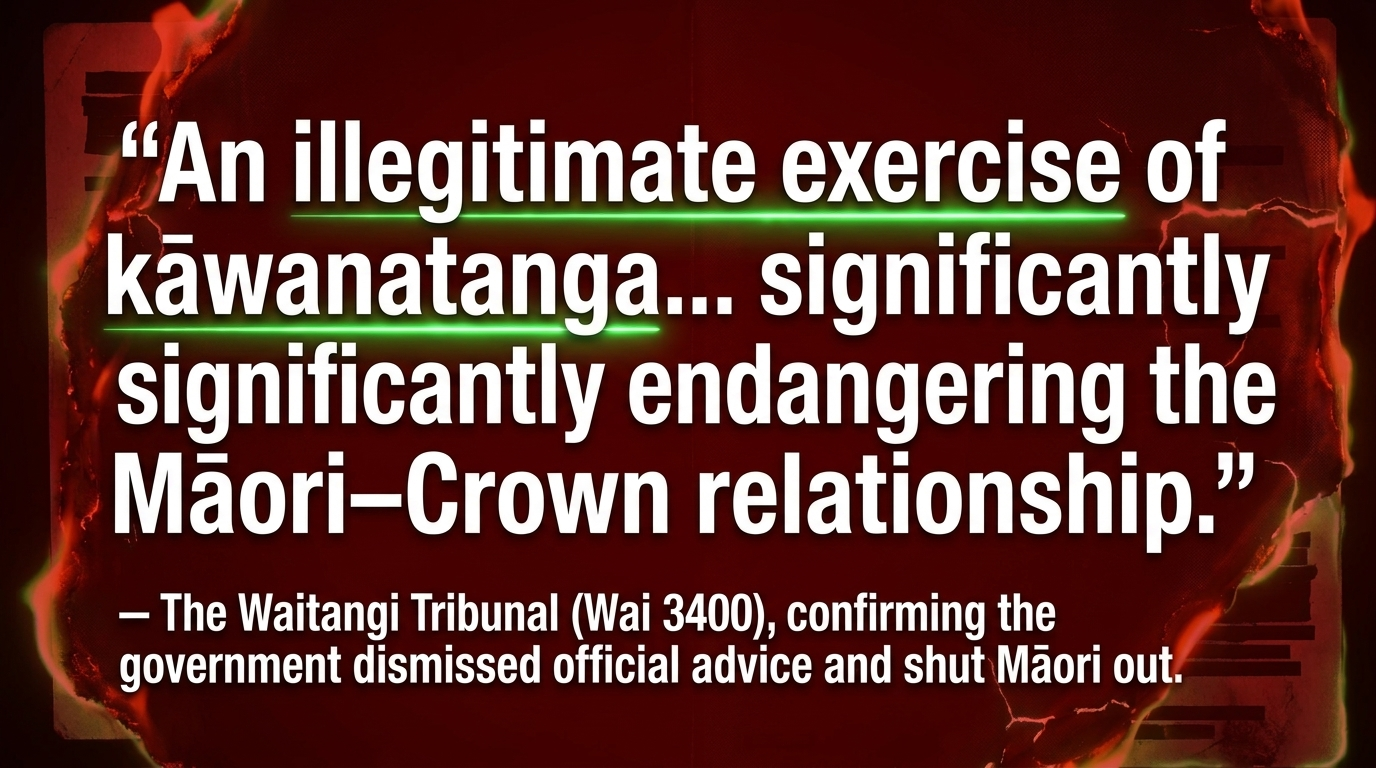
I will not soften this into "a difficult policy trade-off."
A government that drafts an override before its own Supreme Court finishes hearing a case, that is told by its own Treaty tribunal the process is a "gross breach," that proceeds thirteen months later anyway, and whose most senior minister then flies to Oxford to call the doctrine behind it a virtue — that government has told you exactly what it thinks courts are for: an obstacle, when they protect Māori rights, and irrelevant, the moment Parliament disagrees with the result.
That is neoliberal power protecting itself from its own judiciary, dressed in the language of restoration, and it is not the first time this exact minister has used this exact technique — the receipts on Goldsmith alone now span climate liability law, the Human Rights Commission, and the takutai moana.
Ko wai te hua? The coalition that gets to rewrite a verdict after it loses. Ko wai te utu? Every hapū and iwi on that 200-to-280 kilometres of coastline who did everything the law asked of them, won, and were told afterward that winning wasn't enough.
Kia kaha, whānau. Watch Wai 3400 Stage 2. Watch who gets the next letter written about them. Stay vigilant. Stay connected.

Ivor Jones The Māori Green Lantern Fighting Misinformation And Disinformation From The Far Right
Disclaimer: This essay reflects analysis current as at 5 September 2026, based on the sources cited above. Facts are sourced and cited; opinions are the author's own and clearly flagged as such. Corrections are welcomed and will be published transparently.